[Back]

[Index]

[Next]
United States Naval Reserve Intelligence Program
|
[Back] |
[Index] |
[Next] |
Ready-for-Sea Handbook United States Naval Reserve Intelligence Program |
MODULE 2—CARRIER BATTLEGROUP & Amphibious Ready Group (ARG) PLATFORMS AND MISSIONS
2-*
A. Carrier Battlegroup (CVBG) 2-*
B. Amphibious Ready Group (ARG) 2-*
C. Battlegroup Platforms 2-*
D. Carrier Battlegroups Elements 2-*
E. Aircraft Carriers 2-*
1. Nimitz Class (CVN) 2-*
2. Enterprise Class (CVN) 2-*
3. Kitty Hawk and John F. Kennedy Class (CV) 2-*
F. CRUISERS 2-*
1. Ticonderoga (AEGIS) Class (CG) 2-*
2. California Class (CGN) 2-*
3. Intelligence-related spaces aboard Cruisers 2-*
G. Destroyers 2-*
1. Arleigh Burke Class (DDG) 2-*
2. Spruance Class (DDG) 2-*
3. Kidd Class (DDG) 2-*
H. FRIGATES 2-*
1. Oliver Hazard Perry Class (FFG) 2-*
I. Amphibious Warfare ships 2-*
1. Blue Ridge Class (LCC) 2-*
2. Iwo Jima Class (LPH) 2-*
3. Tarawa Class (LHA) 2-*
4. Wasp Class (LHD) 2-*
J. Fast Attack Submarines 2-*
1. Los Angeles & Improved Los Angeles Class (SSN) 2-*
2. Sturgeon Class (SSN) 2-*
K. AUXILIARIES 2-*
1. Sacramento Class (AOE) 2-*
L. AIR WINGS 2-*
M. CARRIER AIR WING PLATFORMS AND MISSIONS 2-*
1. F/A-18C/D/E/F HORNET 2-*
3. F-14 TOMCAT 2-*
4. E-2C HAWKEYE 2-*
5. S-3A/B and ES-3B VIKING 2-*
6. EA-6B PROWLER 2-*
7. SH-60 SEA HAWK (and Variants) 2-*
8. Other Associated Aircraft 2-*
N. Naval Aircraft Trends 2-*
1. Fixed Wing 2-*
2. Rotary Wing 2-*MODULE 2—CARRIER BATTLEGROUP & Amphibious Ready Group (ARG) PLATFORMS AND MISSIONS
Modern carrier battlegroups (
CVBGs) and Amphibious Ready Groups (ARGs) incorporate a diverse mix of platforms to carry out their power projection missions. The typical breakdown for a current carrier battlegroup includes one carrier (CV or CVN), two cruisers (CGs and/or CGNs), three destroyers (DDs and/or DDGs) or frigates (FFs and/or FFGs) and one auxiliary (AE, AOE, or AOR). Some battlegroups also include a fast attack submarine (SSN) operating in a support role. The ultimate content of the battlegroup will depend on the specific mission of the Task Force. Additionally, nuclear powered carriers (CVNs) are often coupled with the most up to date air warfare (AW) and undersea warfare (USW) platforms (surface or subsurface). Nuclear cruisers normally will be attached to nuclear carriers.The modern carrier battlegroup forms a potent power-projection platform. As will be discussed forthwith, the embarked carrier air wing employs a diverse mix of offensive and defensive aircraft capable of carrying out intense and sustained combat operations against targets ashore and on the sea. The assets of the battlegroup itself maintain sophisticated combat systems for conducting local combat actions in defense of the carrier.
B. Amphibious Ready Group (ARG)
Amphibious Ready Groups consist of anywhere from five to twenty-plus amphibious warfare ships carrying between one to fifty thousand marines, depending on the mission. The combined Marine troops and air wing form Marine Air/Ground Task Forces (
MAGTFs) of varying sizes (see below). MAGTFs include their own command staffs, ground troops, close air support (AV-8B Harriers and assault helicopters) and service/maintenance support.The most basic
ARG is the Amphibious Squadron (PHIBRON) consisting of three to five ships and a Marine Expeditionary Unit (MEU) of two thousand marines with enough supplies for fifteen days of combat. Advantages of the PHIBRON/MEU team include quick response and forward deployment. This makes them ideal for evacuation of U.S. personnel abroad facing hostile conditions (see below) or amphibious raids. The next operational level up is the Amphibious Group (PHIBGRU) consisting of sixteen to twenty-four ships and a Marine Expeditionary Brigade (MEB) of fifteen thousand marines equipped for thirty days of combat. This group is capable of larger, extended operations. The ships in the PHIBGRU include Maritime Pre-positioning Ships (MPS) loaded with ammunition, supplies and material. Finally, there is the Amphibious Task Force (ATF) consisting of twenty ships and a full Marine Expeditionary Force (MEF) of twenty-five to fifty thousand marines capable of sixty days sustained combat operations. This is the largest, most powerful MAGTF.Typical
ARG missions include non-combatant evacuation (NEO), in extremis hostage rescue (IHR), tactical recovery of aircraft and personnel (TRAP), and maritime interdiction force operations (MIFO). A Navy/Marine Corps PHIBGRU performed a NEO to evacuate U.S. citizenry from Liberia during the 1991 civil war. U.S. Navy warships performed an extended MIFO in support of United Nations economic sanctions against Iraq during operations Desert Shield and Desert Storm also in 1991-2.Typical platforms found in the battlegroup include:
Carrier (CV/CVN)—The carrier’s primary mission is air power projection, either to targets ashore or at sea. The carrier is the center around which the other ships in the battlegroup evolve. CVN indicates a nuclear powered carrier.
Cruiser (CG/CGN)—Cruisers attached to a battlegroup primarily perform air-warfare (AW) missions to protect the carrier and other ships from air threats. Cruisers are also equipped with missiles for surface-warfare (SUW), and Light Airborne Multi-Purpose System (LAMPS) helicopters for undersea-warfare (USW). CGN indicates a nuclear powered cruiser.
Destroyer (
DD/DDG)—Most modern destroyers are optimized for a particular warfare task, such as USW, AW or SUW; typically, they also have some capability to conduct the other two as well. DDG indicates the destroyer can fire guided missiles.
Frigate (
FF/FFG)—The main mission of the frigates is USW, although they usually have some capability for conducting AW and SUW. FFG indicates the frigate can fire guided missiles.D. Carrier Battlegroups Elements
Eleven carrier battlegroups and one training carrier operate in the fleet. At the core of each group, reporting directly to the battlegroup commander, is a permanently assigned carrier (
CV or CVN), carrier air wing (CVW), a carrier group (CARGRU), a cruiser/destroyer group (CRUDESGRU), and a tactical destroyer squadron (TACDESRON). Submarine support for each battlegroup usually consists of one or two nuclear powered attack submarines (SSNs). The summary of a typical carrier battlegroup follows below:
Ship Type
Primary Mission
Typical Number in Battlegroup
Aircraft Carrier Power Projection 1
Cruiser AW 1-2
Destroyer USW/SUW/AW 2-3
Frigate USW/SUW/AW 2-3
Submarine USW 1
Auxiliary Support 1
E. Aircraft Carriers
CVN) Displacement: 72,916 tons light, 96,000 - 102,000 full load.
Length: 1040 feet along the flight deck (317 meters).
Beam: 252 feet (76.8 meters).
Speed: 30+ knots (34.5+ miles per hour).
Power Plant: Two nuclear reactors, four geared steam turbines, four shafts (thirteen to fifteen years between re-fuelings or 800,000 to 1,000,000 miles).
Complement: 3,200 regular ship’s compliment + 2,480 aircrew.
Defense: Four
NATO Sea Sparrow, three to four 20mm Vulcan Phalanx (CIWS).Air wing: 80 aircraft including F-14s; F/A-18s; EA-6Bs; E-2Cs; S-3A/Bs; SH-60Fs, HH-60Hs.
Nimitz
CVN
-68 (LANTFLT)Dwight D. Eisenhower
CVN
-69 (LANTFLT)Carl Vinson
CVN
-70 (PACFLT)Theodore Roosevelt
CVN
-71 (LANTFLT)Abraham Lincoln
CVN
-72 (PACFLT)George Washington
CVN
-73 (PACFLT)John C. Stennis
CVN-
74 (PACFLT)Harry S. Truman
CVN-
75 (LANTFLT)Ronald Reagan
CVN-
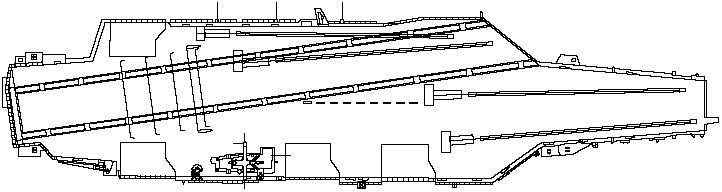
76 (Building)The Nimitz class nuclear powered aircraft carrier is the largest, most powerful, capable aircraft carrier class in the world. The general arrangement of these ships is similar to the previous Kitty Hawk class with respect to flight deck, hangar, elevators, and island structure, e.g., the island is aft of the Number 1 and 2 elevators, with the Number 4 elevator on the port side aft of the angled deck and opposite the Number 3 elevator (see illustration below). The angled deck is canted to port at 9°3’ and is almost 800 feet long. The general excellence of the Nimitz design precluded major changes to later ships in the class.
CVN-71 and subsequent ships incorporate improved magazine protection; CVN-73 and later ships feature improved topside ballistic protection; CVN-74 and later ships are constructed with HSLA-100 steel. There are eight ships of this class commissioned in various states of readiness, and one under construction.
Figure 3.1. Nimitz Class
CVN Top View.*Figure 3.2. Nimitz Class CVN Side View.
The
U.S.S. John C. Stennis (CVN-74), the seventh of the class, was commissioned in 1996. The eighth of the class and the newest aircraft carrier in the U.S. Navy, the U.S.S. Harry S. Truman (CVN-75), was commissioned in July 1998. The final ship of the class, U.S.S. Ronald Reagan (CVN-76) is also under construction and is scheduled to be commissioned in 2008.Displacement: 73,502 light; 75,700 standard; 93,970 full load
Length: 1,040 feet along the flight deck (317 meters).
Beam: 133 feet (39.9 meters).
Speed: 30+ knots (34.5 miles per hour).
Power Plant: Eight nuclear reactors, four geared steam turbines, and four shafts.
Complement: 3,215 regular ship’s compliment + 2,480 aircrew.
Defense: Three
NATO Sea Sparrow, three 20mm Vulcan Phalanx (CIWS).Air wing: 75 aircraft, including F-14; F/A-18; EA-6B; E-2C; S-3A/B; SH-60F; HH-60H.
There is one ship in this class:
Enterprise
CVN
-65 (LANTFLT)
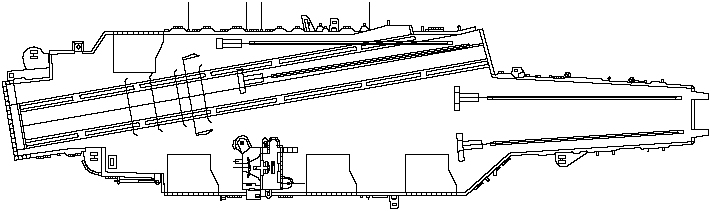
Figure 3.3. Enterprise Class
CVN Top View.
Figure 3.4. Enterprise Class
CVN Side View.Built to a modified Forrestal class design,
Enterprise was the world’s second nuclear-powered warship (the cruiser Long Beach (CGN-9) was completed a few months earlier). The first of the eight reactors installed achieved initial criticality on 2 December 1960, shortly after the carrier was launched. After three years of operation during which she steamed more than 207,000 miles, Enterprise was refueled from November 1964 to July 1965. Her second set of cores provided about 300,000 miles steaming. Refueled again in 1970 the third set of cores lasted for eight years until replaced in 1979-82 overhaul. There are two reactors for each of the ship’s four shafts. The eight reactors feed 32 heat exchangers. Aviation facilities include four deck edge lifts, two forward and one each side abaft the island. There are four 295 foot C-13 Mod 1 catapults. Hangars cover 216,000 sq. ft with 25-ft deck head. The Enterprise carries 8,500 tons of aviation fuel (12 days flight operations). She recently completed a fourth refueling.CV) Displacement: 60,100 tons light, 81,773 full load.
Length: 1,063 feet along the flight deck (323.8 meters).
Beam: 130 feet (39 meters).
Speed: 30+ knots (34.5 miles per hour).
Power Plant: Eight boilers, four geared steam turbines, four shafts, and 280,000 shaft horsepower.
Complement: 3,150 regular ship’s compliment + 2,480 aircrew.
Defense: Three
NATO Sea Sparrow, three 20mm Vulcan Phalanx (CIWS).Air wing: 75 aircraft including F-14; F-18; EA-6B; E-2C, S-3A/B; SH-3G/H or SH-60F
There are three ships in this class:
Kitty Hawk
CV
-63 (PACFLT)John F. Kennedy
CV
-67 (LANTFLT)Constellation
CV
-64 (PACFLT)
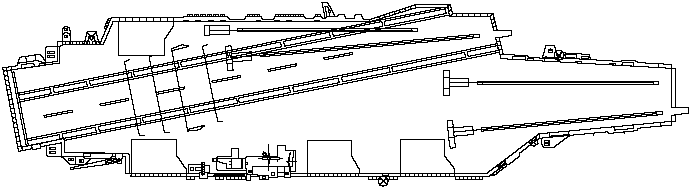
Figure 3.5. Kitty Hawk Class
CV Top View.
Figure 3.6. Kitty Hawk Class
CV Side View.These carriers are based on an improved Forrestal class design featuring improved elevator and flight deck arrangement. Both
Kitty Hawk (CV-63) and Constellation (CV-64) were modernized recently under the service life extension program (SLEP), which extends their projected service life fifteen years beyond their original thirty year service life. America (CV-66) will not be upgraded and probably will be decommissioned in 1996. These ships are larger than those of the Forrestal class and have two elevators forward of the island structure and portside elevator on the stern quarter rather than at the forward end of the angled flight deck.Note: The
John F. Kennedy has a number of modifications not inherent to the Kitty Hawk class and is therefore referred to as its own class.AEGIS) Class (CG) Displacement
: 7,015 tons light, 9,590 full load.Length: 567 feet (172.8 meters).
Beam: 55 feet (16.75 meters).
Speed: 30+ knots (34.5 miles per hour).
Power Plant: Four General Electric LM 2500 gas turbine engines; two shafts, 80,000 shaft horsepower total.
Complement: 364 (24 officers + 340 enlisted).
Weapons: Tomahawk land attack and anti-ship missiles, eight Harpoon SSMs, ASROCs, SM-2MR SAMs, two 20mm Vulcan Phalanx (CIWS), two Mk 45 127mm (5 inch) DP guns, six MK-46 torpedoes (two triple launchers).
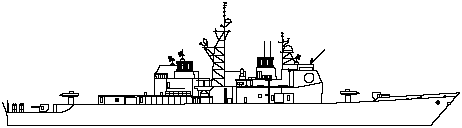
Figure 3.8. Ticonderoga (
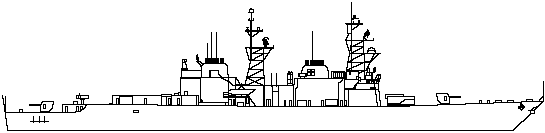
AEGIS) Class CG Side View.Note: this view shows the external twin Mk 26 Mod 1 launchers on
CG-47through CG-51.Ticonderoga class guided missile cruisers are the world’s most capable air warfare (
AW) ships, developed to provide extensive carrier battlegroup defense against aircraft and anti-ship missiles. There are twenty-seven ships of this class active in varying states of readiness (CG-47 through CG-73) and are the only remaining U.S. Navy cruisers remaining in active service. Built to a modified Spruance class destroyer design, they are equipped with the state-of-the-art SPY-1 phased array radar system that forms part of the AEGIS AW weapon system. For this reason, they often are referred to as AEGIS class cruisers and form the backbone of the AW mission for battlegroups they are assigned to. Additionally, these ships have major undersea warfare (USW) and strike capabilities. The wide array of weaponry carried, including surface-to-air missiles (SAMs), surface-to-surface missiles (SSMs), anti-submarine rockets (ASROCs), five-inch deck guns, 20mm Phalanx, and embarked LAMPS III helicopter, make these ships among the most versatile in the Navy.The first six ships of the class (
CG-47 through CG-52) have two external twin Mk 26 Mod 1 launchers for the Standard SM-2MR SAM. Subsequent ships have two 61-cell Mk 41 vertical launch system (VLS) capable of firing the SM-2MR, the Tomahawk Land Attack Missile (TLAM), and anti-submarine rockets (ASROC).At least eight ships of this class fired in excess of one hundred Tomahawk land attack missiles at targets in Iraq during Operation Desert Storm and the period immediately after. One of these ships, the
U.S.S. Princeton (CG-59), struck an Iraqi bottom-laid influence mine on 19 February 1991. Although she took damage to her hull, her AEGIS weapon system remained operational. She was subsequently towed to Dubai, UAE for repairs.
Ticonderoga
CG-47
Monterey
CG-61
Yorktown
CG-48
Chancellorsville
CG-62
Vincennes
CG-49
Cowpens
CG-63
Valley Forge
CG-50
Gettysburg
CG-64
Thomas S. Gates
CG-51
Chosin
CG-65
Bunker Hill
CG-52
Hue City
CG-66
Mobile Bay
CG-53
Shiloh
CG-67
Antietam
CG-54
Anzio
CG-68
Leyte Gulf
CG-55
Vicksburg
CG-69
San Jacinto
CG-56
Lake Erie
CG-70
Lake Champlain
CG-57
Cape St. George
CG-71
Philippine Sea
CG-58
Vella Gulf
CG-72
Princeton
CG-59
Port Royal
CG-73
Normandy
CG-60
Displacement: 10,450 tons (full load).
Power Plant: Two General Electric nuclear reactors, two geared turbines, and two shafts.
Length: 596 feet (181.8 meters).
Beam: 61 feet (18.6 meters).
Speed: 30+ knots (34.5+ miles per hour).
Complement: ~584 (~40 officers + ~544 enlisted).
Aircraft: Helicopter landing capability: landing area only, no support facilities.
Weapons: Four Harpoon
SSMs, eighty SM-1MR SAMs, two 20mm Vulcan Phalanx (CIWS), two Mk 45 127 mm (5 inch) DP guns, eight ASROCs, four MK-32 torpedoes (single launcher).
California
CGN
-36 (PACFLT)South Carolina
CGN
-37 (LANTFLT)
Figure 3.10. California Class
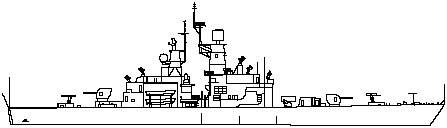
CGN Side View.This was the first class of nuclear-propelled surface warships intended for series production. These ships essentially are nuclear-propelled version of guided missile designs proposed in the early 1960s. They have the older
SM-1 series SAM on single arm, Mk13 Mod 3 launchers (fore and aft), two 5 inch guns (fore and aft), anti-ship capability with Harpoon SSMs, and USW capability with ASROCs, These do not carry TLAMs. Both of the remaining two ships of this class remain in commission, but are being held in a reserve status in a stand down status.Some cruisers have the Ship’s Special Exploitation Space (
SESS) capability, which allows them to conduct cryptologic support mission for the battlegroup. Enlisted Cryptologic (CT) specialists who form a cryptologic direct support element (DSE) man the SESS. Cruisers do not have dedicated onboard intelligence centers.DDG) Displacement
: 6,625 tons light, 8,315 full load.Length: 466 feet (142 meters).
Beam: 59 feet (18 meters).
Speed: 31 knots (35.7 mph, 57.1 kph).
Power Plant: Four General Electric LM 2500-30 gas turbines; two shafts, 100,000 total shaft horsepower.
Complement: ~323 (23 officers + 300 enlisted).
Aircraft: None. LAMPS III electronics installed on landing deck for coordinated DDG 51/helo USW operations.
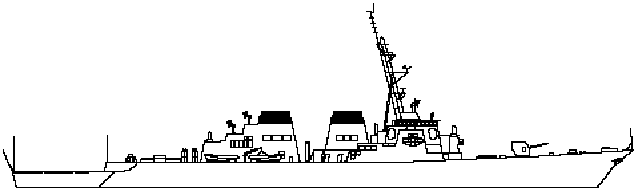
Weapons: 90-cell VLS for TLAM, ASROC, SM-2MR. Eight Harpoon SSMs, two 20mm Vulcan Phalanx (CIWS), one Mk 45 127mm (5 inch) DP Gun, six MK-32 torpedo (two triple launchers).
Figure 3. 11. Arleigh Burke Class DDG Side View.
Arleigh Burke
DDG-
-51 (PACFLT)John Paul Jones
DDG-
53 (PACFLT)Curtis Wilbur
DDG-
54 (PACFLT)Stout
DDG-
55 (LANTFLT)John S. McCain
DDG-
56 (PACFLT)Mitscher
DDG-
57 (LANTFLT)Laboon
DDG-
58 (LANTFLT)Russell
DDG-
59 (PACFLT)Paul Hamilton
DDG-
60 (PACFLT)Ramage
DDG-
61 (LANTFLT)Fitzgerald
DDG-
62 (PACFLT)Stethem
DDG-
63 (PACFLT)Carney
DDG-64
(LANTFLT)Benfold
DDG-65
(PACFLT)Gonzalez
DDG-66
(PACFLT)Cole
DDG-67
(LANTFLT)The Sullivians
DDG-68
(LANTFLT)Milius
DDG-69
(PACFLT)Hopper
DDG-70
(PACFLT)Ross
DDG-71
(LANTFLT)Mahan
DDG-72
(LANTFLT)Decatur
DDG-73 (Under Construction)
Mc Faul
DDG-74
(LANTFLT)Donald Cook
DDG-75 (Under Construction)
There are twenty-two ships in commission with seven more building (a total of forty ships are planned). The Arleigh Burke class will form the backbone of the U.S. destroyer fleet for the twenty-first century. The class features the
AEGIS AW system and an all steel hull construction following lessons learned from the devastating Exocet SSM attacks on the H.M.S. Sheffield, during the Falklands War, and the U.S.S. Stark (FFG-31) in 1987 in the Persian Gulf. Additionally, all hull exterior surfaces employ stealth design techniques such as angled construction to minimize radar cross section. It is also the first class of U.S. Navy ship with an integrated system for defense against the fallout associated with NBC warfare. Like their larger Ticonderoga class cousins, this class also employs the SPY-1D phased array radar fire control system for use with up to ninety SM-2MR surface-to-air missiles. The class also is equipped to handle, fuel and rearm SH-60B/F helicopters but do not have any on board hanger capacity. Later ships of the Flight II variant in this class (DDG-68+) will include a number of combat capability improvements such as the Joint Tactical Information Distribution System (JTIDS), Tactical Information Exchange Subsystem (TADIXS), upgraded sonar, and the SM-2MR Block-4 SAM.Displacement: 5,770 tons light, 8,040 full load.
Length: 563 feet (171.6 meters).
Beam: 55 feet (16.8 meters).
Speed: 33 knots (38 mph, 60.8 kph).
Power Plant: Four General Electric
LM 2500 gas turbines, two shafts, 80,000 shaft horsepower.Complement: 383 (30 officers + 353 enlisted).
Aircraft: Two SH-60 Seahawk
LAMPS III helicopters.Weapons: Eight
TLAM (two quad launchers) in seven ships, 61-cell VLS for TLAM and ASROC in twenty-four ships, eight Harpoon SSMs (two quad Mk 141 canisters), twenty-four NATO Sea Sparrow, two 20mm Vulcan Phalanx (CIWS), two Mk 45 127mm (5 inch) DP Guns, six MK-32 torpedoes (two triple launchers).Figure 3.12. Spruance Class DDG--Side View.
Note: this view shows the external Mk 16
ASROC launcher aft of the forward 5-inch gun (replaced on later units with Mk 41 VLS).
Spruance
DD
-963 (LANTFLT)Connolly
DD
-979 (LANTFLT)Paul F. Foster
DD
-964 (PACFLT)Moosbruger
DD
-980 (LANTFLT)Kinkaid
DD
-965 (PACFLT)John Hancock
DD
-981 (LANTFLT)Hewitt
DD
-966 (LANTFLT)Nicholson
DD
-982 (LANTFLT)Elliot
DD
-967 (PACFLT)John Rodgers
DD
-983 (LANTFLT)Arthur W. Radford
DD
-968 (LANTFLT)Leftwich
DD
-984 (PACFLT)Peterson
DD
-969 (LANTFLT)Cushing
DD
-985 (PACFLT)Caron
DD
-970 (LANTFLT)Harry W. Hill
DD
-986 (PACFLT)David R. Ray
DD
-971 (PACFLT)O’Bannon
DD
-987 (LANTFLT)Oldendorf
DD
-972 (PACFLT)Thorn
DD
-988 (LANTFLT)John Young
DD
-973 (PACFLT)Deyo
DD
-989 (LANTFLT)Comte De Grasse
DD
-974 (LANTFLT)Ingersoll
DD
-990 (PACFLT)O’Brien
DD
-975 (PACFLT)Fife
DD
-991 (PACFLT)Merrill
DD
-976 (PACFLT)Fletcher
DD
-992 (PACFLT)Briscoe
DD
-977 (LANTFLT)Hayler
DD
-997 (LANTFLT)Stump
DD
-978 (LANTFLT)Spruance class
DDGs originally were built as specialized USW ships, with only point defense missiles in the AW role. They have subsequently been provided with anti-ship and strike capability using Harpoon SSMs and TLAM, respectively. Other improvements include the installation of a Mk 41 vertical launch system (VLS) capable of firing SM-2MRs, TLAM, and ASROCs, upgrade of the electronic warfare suite to SLQ 32V(2), LAMPS III recovery system, the Halon 1301 fire fighting system and improved anti-missile and target acquisition systems.Of note,
SM-2MR surface-to-air missiles fired by Mk 41 VLS equipped vessels can be controlled by separate AEGIS fitted vessels such as Ticonderoga class CGs and Arleigh Burke class DD-s, thus further increasing battlegroup AW capability.Five ships of this class fired over one hundred
TLAMs at targets in Iraq during Operation Desert Storm. The U.S.S. Paul F. Foster (DDG-964) fired the first TLAM and hence the "opening shot" of the Gulf War on 17 January 1991. The U.S.S. Fife (DDG-991) fired sixty TLAMs, virtually emptying her sixty-one cell Mk 41 VLS.Displacement: 6,950 tons light, 9,574 full load.
Length: 563 feet (171.8 meters).
Beam: 55 feet (16.8 meters).
Speed: 33 knots (38 mph, 60.8 kph).
Power Plant: Four General Electric
LM 2500 gas turbines, two shafts, 80,000 shaft horsepower.Complement: 363 (31 officers + 332 enlisted).
Aircraft: One
SH-2F LAMPS.Weapons: Eight Harpoon
SSM (two quad launchers), sixty-eight SM-2MR SAM (two twin Mk 26 Mod 0/1 launchers) ASROC, two 20mm Vulcan Phalanx (CIWS), two Mk 45 127mm (5 inch) DP Guns, six MK-32 torpedo (two triple launchers).Figure 3.13. Kidd “Ayatollah” Class DDG--Side View.
Chandler
DDG
-996 (PACFLT)Originally designed for the Royal Iranian Navy, the
U.S. Navy acquired the ships in July 1979 after the fall of the shah (for this reason they are often referred to as the "Ayatollah class"). The fours ships of this class are the most powerful multi-purpose destroyers in the fleet. Specific capabilities include AW (using SM-2MR SAMs), USW (using LAMPS-I helicopter, ASROCs, torpedoes, and sonar), and SUW (using octuple Harpoon launcher and two Mk 45 five inch guns). Additionally, these ships feature advanced air-intake and filtration systems in order to handle dust and sand prevailing in Persian Gulf operating area as well as greater air-conditioning capacity. The Kidd features a distinctive pale gray paint scheme for operations in the Persian Gulf. Both the Kidd and Scott took part in Operation Desert Storm. Only one ship of this class remains active U.S. Navy service. The remaining three ships of this class, the USS Kidd (DDG-993), USS Callaghan (DDG-994), and USS Scott (DDG-995) are scheduled for transfer to a foreign navy under the Security Assistance Program (SAP).FFG) Displacement: 2,750 tons light, 3,638 full load.
Length: 445-453 feet (133.5-135.6 meters).
Beam: 45 feet (13.7 meters).
Speed: 29 plus knots (33.4+ miles per hour).
Power Plant: Two General Electric LM 2500 gas turbine engines; 1 shaft, 41,000 shaft horsepower total.
Complement: 300 (13 officers + 287 enlisted).
Aircraft: One
SH-2F LAMPS (FFG- 7, 9-27,30, 31,34), two SH-60B LAMPS III (FFG- 8,28,29,32,33,36-61).Weapons: Up to forty Harpoon and
SM-1MR (one single Mk 13 Mod 4 launcher), one 20 mm Vulcan Phalanx (CIWS), one OTO Melara 76mm gun, six MK-46 torpedoes (two triple launchers).
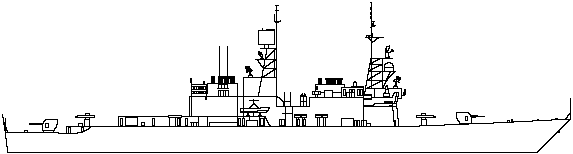
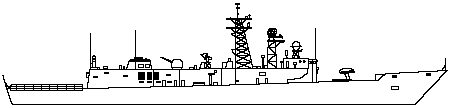
Figure 3.14. Oliver Hazard Perry Class
FFG Side View.There are a total of fifty-one ships built for this class, but only 39 ships remain in active naval service. Ten of these ships are part of the Naval Reserve force. The Perry class
FFG forms a capable USW platform with the LAMPS-III helicopter onboard. The Mk 13 Mod 4 missile launcher provides secondary AW and SUW capability. Ships of this class are often referred to as "FFG-7" (pronounced FIG-7) after the lead ship, U.S.S. Oliver Hazard Perry (FFG-7). Of note, two ships of this class suffered heavy damage while patrolling in the Persian Gulf. On 17 May 1987, two Iraqi fired Exocet SSMs hit the U.S.S. Stark (FFG-31), one of which detonated near berthing spaces resulting in heavy loss of life. On 14 April 1988 the U.S.S. Samuel B. Roberts (FFG-58) struck a mine which detonated an estimated 250 pounds of TNT. The explosion heavily damaged propulsion systems and blew a nine-foot hole under the keel. In both attacks, the ships suffered intense fires aggravated by the all aluminum construction of the hull. Nevertheless, exceptional damage control efforts carried out by their crews kept both ships on the surface and enabled them to reach friendly ports in the Persian Gulf. The Stark returned to the United States on her own power and underwent repairs. The Roberts was transported to the United States on the Dutch-flag heavy-lift ship, Mighty Servant 2.
McInerney
FFG
-8Curts
FFG
-38 (Naval Reserves)Wadsworth
FFG
-9 (Naval Reserve)Doyle
FFG
-39Duncan
FFG
-10 Disposed of through SAPHalyburton
FFG
-40Clark
FFG
-11 (Naval Reserve)McClusky
FFG
-41George Phillip
FFG
-12 (Naval Reserve)Klarkring
FFG
-42Samuel Eliot Morrison
FFG
-13 (Naval Reserve)Thach
FFG
-43John H. Sides
FFG
-14 (Naval Reserve)De Wert
FFG
-45Estocin
FFG
-15 (Naval Reserve)Rentz
FFG
-46Clifton Sprague
FFG
-16 Disposed of through SAPNicholas
FFG
-47John A. Moore
FFG
-19 (Naval Reserve)Vandergrift
FFG
-48Antrim
FFG
-20 Disposed of through SAPRobert G. Bradley
FFG
-49Flatley
FFG
-21 Disposed of through SAPTaylor
FFG
-50Fahrion
FFG
-22 Disposed of through SAPGary
FFG
-51Lewis B. Puller
FFG
-23 Disposed of through SAPCarr
FFG
-52Jack Williams
FFG
-24 Disposed of through SAPHawes
FFG
-53Copeland
FFG
-25 Disposed of through SAPFord
FFG
-54Gallery
FFG
-26Elrod
FFG
-55Boone
FFG
-28 (Naval Reserve)Simpson
FFG
-56Stephen W. Groves
FFG
-29 (Naval Reserves)Reuben James
FFG
-57Stark
FFG
-31Samuel B. Roberts
FFG
-58John L. Hall
FFG
-32Kauffman
FFG
-59Jarrett
FFG
-33Rodney M. Davis
FFG
-60Underwood
FFG
-36Ingraham
FFG
-61Commelin
FFG
-37LCC) Displacement: 18,874 tons (16,987 metric tons) full load.
Length: 636 feet (190 meters)
Speed: 23 knots (26.5 miles, 42.4 km, per hour).
Power Plant: Two boilers, one geared turbine, one shaft; 22,000 horsepower.
Complement:
LCC-19; 780 (19 officers) + 170 flag staff. LCC-20; 777 (50 officers) + 193 flag staff.Weapons: Four 76.2 mm
DP guns, two Mk 25 Sea Sparrow launchers, two 20 mm Mk 15 Vulcan Phalanx.Aircraft:
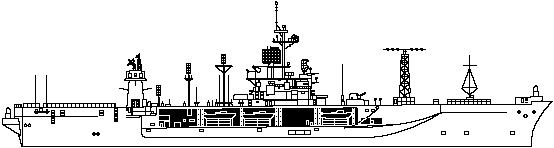
none embarked, stern helicopter deck capable of accommodating any helicopter except CH-53.Figure 3.17. Blue Ridge Class LCC Side View.
The
LCC is an amphibious command ship. There are two ships in this class. LCC 19 is the flagship of the forward deployed Seventh Fleet in the western Pacific. LCC 20 is flagship of the Second Fleet in the Atlantic. The ships have a good cruising speed of 20 knots as well as excellent satellite communications and analysis systems as befits command ships. Embarked craft include two LCVP landing craft and one 10 meter personnel launch carried in Welin davits. There is no helicopter hanger but a rear landing pad can accommodate large helicopters such as the CH-53. The LCC is based on the Iwo Jima class described above. Both ships feature air conditioned spaces and fin-stabilizers. The ships differ from the Iwo Jima class in that they have a large central superstructure vice an island. There are prominent fore and aft communications masts.
Blue Ridge
LCC
-19 (PACFLT)Mount Whitney
LCC
-20 (LANTFLT)Displacement: 11,000 tons light, 17,515-18,300 tons full load.
Length: 611 feet.
Speed: ~5,000 nautical mile range at 23 knots.
Power Plant: Conventional steam plants (two boilers).
Complement: 685 (47 officers) + 2,090 Marines (190 officers).
Weapons: Four 76.2 mm
DP guns, two Mk 25 Sea Sparrow launchers, two 20 mm Mk 15 Vulcan Phalanx, four to eight 12.7 mm machine guns.Aircraft:
embarked CH-46 Sea Knights, CH-53 Sea Stallions, UH-1 Iroquois and AH-1 Sea Cobras (can also carry RH-53/MH-53 minesweeping helicopters or AV-8B Sea Harrier).
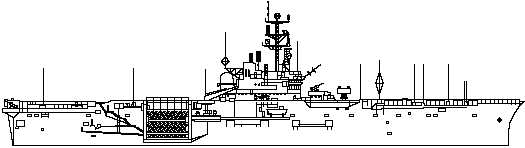
Figure 3.16. Iwo Jima Class
LPH Side View.The
LPH is an amphibious assault helicopter carrier. Like most amphibious assault ships (see below) the LPH has the general appearance of a conventional aircraft carrier including an island superstructure, straight flight deck and associated aircraft elevators. Unique to the LPH is its folding side elevator located forward to port; and one to starboard, aft of the island. The ship features excellent medical facilities including a 300 bed hospital. LPH 9 has an Air-Surface Classification and Analysis Center (ASCAC). LPH-12 carries two LCVP landing craft in side davits. There are seven of these ships active commissioned between 1961 and 1970. They are named in honor of famous Marine Corps amphibious assaults. None of these ships remain in U.S. Naval Service. One ship of this class, the USS Guadalcanal (LPH-7), has been retained by the Navy for use as a museum.Displacement: 25,120 tons light, 39,400 full load.
Length: 833 feet (249.9 meters)
Speed: 24 knots (27.6 miles per hour)
Power Plant: Two boilers, two geared steam turbines, two shafts, 70,000 total shaft horsepower.
Complement: Ships Company: 58 officers, 882 enlisted; Marine Detachment: 1,900 plus.
Weapons: Two Mk 45 127 mm (5 inch)
DP Guns, two Vulcan Phalanx (20 mm), six Mk 67 AA 20 mm guns.Aircraft:
embarked CH-46 Sea Knights, CH-53 Sea Stallions, and UH-1 Iroquois.
Figure 3.18. Tarawa Class
LHA Side View.The
LHA is a multi-purpose assault transport, combining many of the characteristics of the LPH and LHD configurations. The ship has the general profile of an aircraft carrier with its superstructure starboard, straight flight deck, helicopter elevators to port (folding) and aft, as well as a large well deck for accommodating landing craft. In addition to aircraft and landing craft, the LHA can carry substantial amounts of palatalized cargo, dry stores, and 1,200 tons of JP-5 fuel. The boilers are the largest ever installed on a U.S. Navy warship and are highly automated. Communications systems include SATCOM as well as long range HF. The entire ship is air conditioned. This class also features a 300 bed hospital. There are a total of five ships in this class:
Tarawa
LHA
-1 (PACFLT)Nassau
LHA
-4 (LANTFLT)Saipan
LHA
-2 (LANTFLT)Peleliu
LHA
-5 (PACFLT)Belleau Wood
LHA
-3 (PACFLT)Displacement: 28,233 tons light, 40,532 full load.
Length: 844 feet (253.2 meters).
Speed: 20+ knots (23.5 miles per hours).
Power Plant: Two boilers, two geared steam turbines, two shafts, 70,000 shaft horsepower.
Complement: Ship’s Company: 104 officers, 1,004 enlisted; Marine Detachment 1,894 troops.
Weapons: Three Vulcan Phalanx (20 mm), six Mk 67
AA 20 mm guns, two Mk 29 Sea Sparrow launchers.Aircraft:
embarked CH-46 Sea Knight (Assault), CH-53 Sea Stallion (Assault), AV-8B Harrier (VSTOL), SH-60B Sea Hawks (USW).
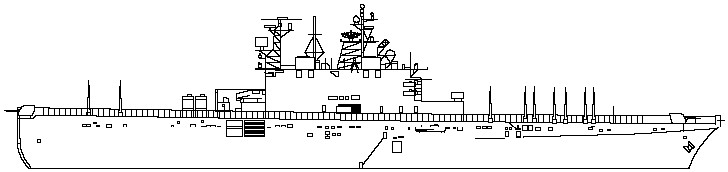
Figure 3.19. Wasp Class LHD Side View.
The Wasp class
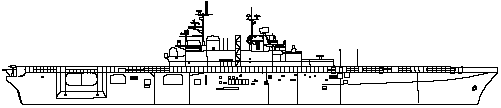
LHD is based on the LHA 1 class described above, but is intended to be convertible from an assault ship to an USW ship with embarked LAMPS helicopters. Like the LHA class, it resembles an aircraft carrier with a straight flight deck, aircraft elevators, and Starboard Island superstructure. It also has a stern mounted well deck for landing craft. The omission of 5 inch guns for and aft results in a "squared off" flight deck. The LHD can carry 1,200 tons of JP-5 jet fuel and copious amounts of dry and palatalized cargo. The ship accommodates three large 200 bed hospitals.There are six ships planned for this class with four in service:
Wasp
LHD
-1 (LANTFLT)Kearsarge
LHD
-3 (LANTFLT)Essex
LHD
-2 (PACFLT)Boxer
LHD
-4 (PACFLT)Bataan
LHD-
5 (Construct.)Bon Homme Richard
LHD-
6 (PACFLT)Displacement: 6,080 tons standard, 6,927 dived.
Length: 360 feet (109.73 meters).
Speed: 20+ knots dived (23+ miles per hour).
Power Plant: One nuclear reactor, two geared steam turbines, one shaft.
Complement: 13 officers, 116 enlisted.
Missiles: Tomahawk Land Attack Missile including nuclear, conventional, and submunitions variants (
TLAM-N/C/D), Tomahawk Anti-Ship Missile (TASM), and Harpoon.Torpedoes: 4 - 21 in (533 mm) tubes amidships. Mk 48 torpedo.
Mines: Can carry and deploy mines.
Weapons Complement: Total of 26 weapons can be tube-launched, for example - 8 Tomahawk, 4 Harpoon, 14 torpedoes.
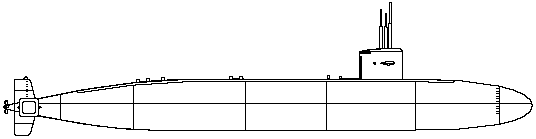
Figure 3.20. Los Angeles Class SSN Side View.
There are a total of eighty-five boats active in this class (
SSN-688 through SSN-773) with four more scheduled for commissioning. Those boats from SSN-719 onward are known as the "Improved" Los Angeles class. They are equipped with a Vertical Launch System (VLS), placing 12 Tomahawk-capable launch tubes forward and external to the pressure hull. Additionally, dive planes are mounted on the bow (vice sail) for under-ice operations.The Los Angeles class
SSN is the finest attack submarine in the world and features superior quieting technology coupled with versatile weapons systems ranging from traditional torpedoes to land attack cruise missiles. The Los Angeles class SSN performs a number of important missions including USW, SUW (firing Harpoons), Strike (using TLAMs), and general carrier battlegroup support.A number of third world countries are acquiring modern state-of-the-art non-nuclear submarines, potentially posing a threat to deployed carrier battlegroups. The
SSN supports battlegroup operations by providing USW detection and sanitization, intelligence collection, special forces delivery, surface warfare, and strike warfare. During Operation Desert Storm, two Los Angeles class SSNs launched TLAM missiles at targets in Iraq.SSN) Displacement
: 4,260 tons standard, 4,960 dived.Length: 292-300 feet (89-91 meters).
Speed: 20+ knots, dived (23+ miles per hour).
Power Plant: One nuclear reactor, two steam turbines, one shaft. .
Complement: 12 officers, 95 enlisted.
Missiles: Tomahawk Land Attack Missile including nuclear, conventional, and submunitions variants (TLAM-N/C/D), Tomahawk Anti-Ship Missile (TASM), and Harpoon.
Torpedoes: 4 - 21 in (533 mm) tubes amidships. Mk 48 torpedoes.
Weapons Complement: Total of 23 weapons, for example 4 Harpoon, 4 Tomahawk and 15 torpedoes. Up to 8 Tomahawks can be carried in most of the class in place of other weapons.
Figure 3.21. Sturgeon Class
SSN Silhouette.There are four of this class still in active naval service. The Sturgeon class is slightly smaller than the Los Angeles class and slightly larger than the older Permit class. Despite their age, boats of the Sturgeon class will continue to play an important part of the Navy’s
USW program until the end of the century. In addition to the traditional role of USW, the Sturgeon also performs SUW and Strike. Several Sturgeons have been modified to carry both Swimmer Delivery Vehicles (SDVs) as well as Deep Submergence Rescue Vehicles (DSRVs)Displacement
: 19,200 tons light, 51,400 - 53,600 full load.Length: 793 feet.
Speed: 26 knots; 6,000 nautical mile range at 25 knots.
Power Plant: Conventional steam plant.
Complement: 601 (33 officers).
Weapons: two Vulcan Phalanx, NATO Sea Sparrow (Mk 29 octuple launcher).
Cargo Capacity: 177,000 barrels of fuel; 2,150 tons munitions; 500 dry stores; 250 tons refrigerated stores.
Figure 3.22. Sacramento Class
AOE Side ViewThis type of auxiliary is typical of the ships used by the battlegroup for underway replenishment of petroleum, munitions, provisions, and fleet freight. Two embarked
UH-46E Sea Knight helicopters provide vertical replenishment (VERTREP) capability. Long suspended fuel lines provide underway replenishment (UNREP) capability of fuel. This class consists of four units.
Sacramento
AOE
-1Seattle
AOE
-3Camden
AOE
-2Detroit
AOE
-4As mentioned earlier, the carrier air wing forms the primary offensive capability of the deployed carrier battlegroup. The air wing is a balanced force that performs a multitude of missions for the battlegroup commander. These include fleet air defense, attack and strike missions, early airborne warning, electronic warfare,
SUW, USW, AW, and day-to-day logistics. The air wing is a self-contained unit with its own commanding officer and administrative support (air wing organization will be discussed in Module 6). Listed below is a typical carrier air wing (CVW). Note that it contains both fixed and variable wing aircraft of different class and capability. Actual CVW compositions may vary.Typical Carrier Air Wing (
CVW)
AC Type
AC Name
Mission
No. of Squadrons
Planes per Squadron
F/A-18
Hornet
AW/Strike
3
10-12
F-14
Tomcat
Air Superiority
2
10-14
E-2C
Hawkeye
Surveillance
1
4
S-3A/B
Viking
USW/Attack/EW
1
8
ES-3B
Viking
EW Surveillance
1 (detachment)
2
EA-6B
Prowler
EW
1
4
SH-60 (helicopter)
Sea Hawk
USW/OTH/SAR
1
6
C-2
Cod
Cargo/Transport
1 (detachment)
2
Note: All A-6E Intruder aircraft and squadrons were retired in 1997. At that time, the typical
CVW was changed to three F/A-18 squadrons and two additional S-3 aircraft were added per squadron to absorb the A-6E’s former missions.M. CARRIER AIR WING PLATFORMS AND MISSIONS
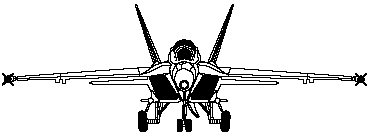
The F/A-18 is a single seat, twin engine, supersonic, strike/fighter aircraft. It combines a multi mode air-to-air or air-to-ground capability. While in air-to-air mode, the Hornet carries Sparrow, or Sidewinder AAMs. In air-to-ground mode the Hornet can deliver up to 9,000 lb. of ordnance on target including HARM, Shrike MK 80 series GP, Walleye, Rockeye, APAN, Gator, LGBs, MK 82 - 500 pound bomb, MK 83 - 1000 pound bomb, and MK 84 - 2000 pound bombs. The 490 pound MK 20 Rockeye contains 247 individual bomblets, which can penetrate six inches of, steel plating. The 750 pound APAM CBV 59 contains 717 bomblets can penetrate four inches of steel plate. The AGM-62 Walleye is a Vietnam-era TV guided bomb. Launched from a standoff distance of 15 nautical miles, it is an extremely accurate weapon. The AGM-45 Shrike is a 400 pound anti-radiation missile with a 51 pound warhead. The more capable 800 pound HARM (High Speed Anti-Radiation Missile) carries a 146 pound warhead and actively homes in at Mach 3+ on hostile radar sources (e.g., SAM sites). For very close encounters (e.g., less than 2,000 feet from an enemy plane), the Hornet has an M-61 Vulcan cannon capable of firing 578 rounds of 20 mm ammunition at a blistering rate of 6,000 rounds per minute.
The Hornet flies with the Navy and Marine Corps team in several variants. The most widely deployed version is the F/A-18C. The two-seat F/A-18D version is used mostly in a training role but retains full combat capability.
In the future, the newer, re-engined and redesigned F/A-18E and F "Super Hornets" will replace the older C/D models. The new engines in the Super Hornet improve fuel consumption and extend combat range by 40 percent while also increasing payload capability by 20 percent. Additionally, the Super Hornet employs low observable construction which make them stealthier to radar detection than the original Hornet.
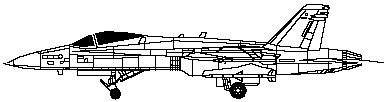
Figure 3.25. F/A-18E Hornet Front and Side Views.
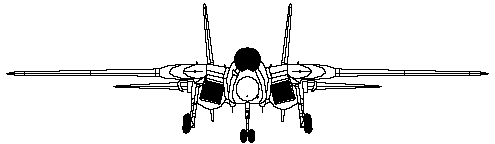
*The F-14 Tomcat is a two seat, supersonic, all weather fighter/interceptor. Its primary mission is fleet air defense from hostile aircraft. Carrying 20,000 pounds of fuel, the Tomcat has an un-refueled combat radius of 400 nautical miles. The Tomcat is designed to take out air threats at long distances using its power
AWG-9 radar system and AIM-54 Phoenix AAM. Closer in targets can be engaged with the medium and short range AIM-7 Sparrow and AIM-9 Sidewinder AAMs respectively. Like the Hornet, the Tomcat also has an M-61 Vulcan cannon capable of firing 20 mm shells.
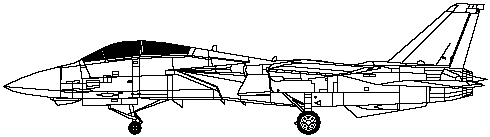
Figure 3.26. F-14A Tomcat Front and Side Views.
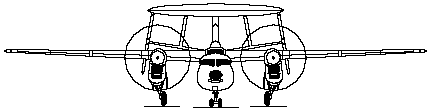
The E-2C Hawkeye is an all weather, twin turbo-prop, early warning command and control aircraft. It is easily recognized by its huge, distinctive rotating radome. It is sometimes referred to as a "mini-
AWACS." Transit speed ranges from 200 to 250 knots, dropping to 140 to 170 knots while on station. Its combat radius extends to over 200 nautical miles (roughly five hours of flight time). It is crewed by two pilots and three naval flight officers (NFOs). A typical squadron deploy with five aircraft and seven full crews.
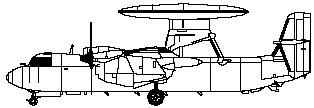
Figure 3.27. E-2C Hawkeye Front and Side Views.
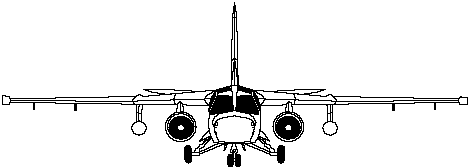
The Viking is an all weather, twin engine
USW platform. The Viking is crewed by two pilots and two naval flight officers (NFOs). On station time is up to 7.5 hours. The Viking has in-flight refueling capability which can extend its on station time even longer. With the ability to also act as a tanker, the S-3 often supports other aircraft by providing fuel to extend their combat radius. Maximum speed is 450 knots. While on station, its cruising speed ranges from 180 to 220 knots. The Viking is a very capable USW platform that frequently takes on multi-mission roles such as refueling, AEW, and SUW (e.g., shooting Harpoon missile and dropping MK 80 series bombs). The S-3B features advanced sensing systems and radars that make it a capable SUW platform. Of note, an S-3B successfully sank an Iraqi Hovercraft with iron bombs during. Operation Desert Storm.The USW optimized S-3A/B is being replaced in the fleet by a new, electronic warfare version model, the ES-3B. This variant features a host of sophisticated electronic sensors, including a powerful Inverse Synthetic Aperture Radar (ISAR) for near photographic quality radar imaging.
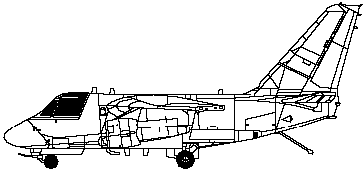
Figure 3.28. S-3 Viking Front and Side Views.
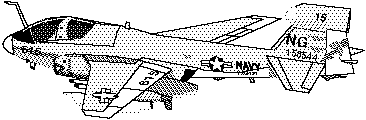
The EA-6B conducts airborne ESM and ECM operations as well as radar search to support battlegroup surveillance and attack operations. It can fire both the TALD and HARM missiles. It is crewed by two pilots and two NFOs, which control various radar and EW jammers. Top speed is 570 knots with a cruising speed of 400 knots. The Prowler is designed to support both offensive and defensive combat operations. Its powerful radar, ESM, and ECM jammers can completely confuse enemy command and control radars. Should the enemy decide to illuminate, the Prowlers can launch a volley of destructive HARMs that will follow hostile electronic signals to their origin.
Figure 3.29. EA-6B Prowler.
7. SH-60 SEA HAWK (and Variants)
The SH-60 Sea Hawk and its variants replace the older SH-2 Sea Sprite and SH-3 Sea King now being phased out of active service. The
SH-60B Sea Hawk holds the designation of LAMPS III and is an important asset in the over-the-horizon (OTH) targeting platform with secondary USW capability The SH-60F Ocean Hawk is a carrier based USW helicopter equipped with dipping sonar. While in the USW role, the Ocean Hawk carrier 25 sonobuoys and 2 Mk 46 torpedoes. The HH-60H Sea Hawk performs combat search and rescue (SAR) duties.
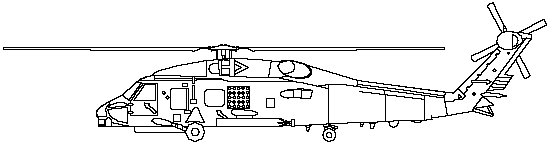
Figure 3.30. SH-60 Seahawk Front and Side Views.
The following two helicopters are not assigned technically to the carrier air wing but nevertheless play an important role in naval aviation.
a. CH-53 SEA STALLION/SEA DRAGON/SUPER STALLION
The
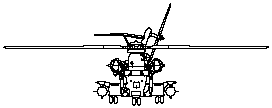
CH-53 is a massive, two engine, seven bladed heavy lift helicopter. The Navy and Marine Corps team operates several variations of this platform. The CH-53 Sea Stallion performs heavy lift, minesweeping and assault missions and is based mostly on large deck amphibious warships. The Sea Stallion can carry 38 troops in assault mode and four tons of freight in cargo mode. Additionally, the Navy and Marines operate the MH-53 Sea Dragon and CH-53 Super Stallion variants which also perform assault and minesweeping missions. Operating in assault mode the CH-53E Super Stallion carries 52 fully equipped troops. While acting in a minesweeping role, the CH/MH-53 carries two 12.7 mm machine guns and tows the Mk 103 mine cutter, Mk 104 magnetic minesweeper, Mk 105 hydrofoil system, or Mk 106 acoustic sweep array. All of these minesweeping systems utilize the AQS-14 mine-hunting sonar system.
Figure 3.31. CH-53 Sea Stallion Front and Side Views.
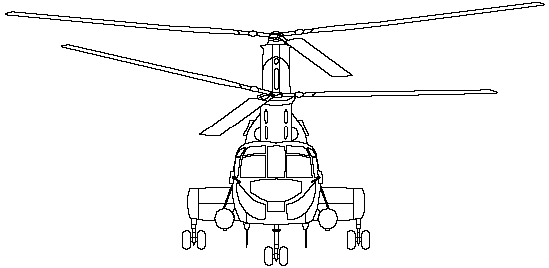
The venerable CH-46 is a large two engine, twin rotored cargo and assault helicopter in use since the Vietnam War era. The cargo/lift variant can be found on many amphibious and auxiliary ships and forms the backbone of the vertical replenishment (
VERTREP) effort. While in the replenishment role, the Sea Knight can carry almost 3,000 pounds of cargo internally. The Marines also operate an assault version that carries eighteen fully equipped troops. It is based on amphibious warships.
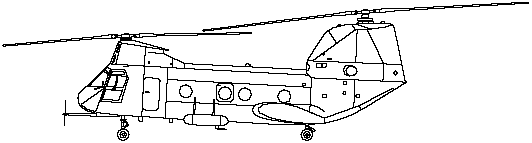
Figure 3.32. CH-46 Sea Knight Front and Side Views.
With the end of the Cold War, many critics claim that the days of the super-carrier are over. Although designed for a war with the now defunct Soviet Union, Navy carrier battlegroups nevertheless retain an important edge in post Cold War operations. These include quick response to regional crises, virtually unlimited staying power in regional problem areas where there is no infrastructure for other U.S. forces, flexibility for power projection operations, high degree of self-sustained capability, support for joint and U.N. actions, and general deterrence. In order to maintain this edge, naval aviation must modernize to meet the specific challenges posed by the post Cold War world.
The CVX, the planned follow-on to the current Nimitz-class carriers, is currently in the discussion phase. Planned as new ship design from the keel up, the mission is to design a carrier that will provide the U.S. Navy with a platform well into the next century. In fact, the design team is actually soliciting the ideas and lessons learned of former and current carrier sailors and marines so that the design can be as functional as possible.
With the failure of the A-12 program and the decommissioning of all of the A-6E Intruder squadrons, the F/A-18 C will maintain the carriers’ attack capability. After that, an existing or new attack platform must be ready to take over. Initially, that aircraft will be F/A-18(E/F) Super Hornet strike fighter which improves on the original Hornet design. In the end, maintaining a viable attack capability is crucial to the continued mission of the carrier battlegroup.
As more Third World and so called "non-aligned" countries develop or buy advanced air-to-air fighter aircraft, the mission of fleet air defense becomes more important. At least six other nations operate aircraft carriers only four of which are
NATO members. These countries include: The U.K., France, Italy, Spain, India and Russia. Each of these countries operate a variety of fighters from these platforms. U.S. fleet air defense falls under the aegis of the F-14 Tomcat, a fighter whose performance and flexibility remain unmatched by any other naval aircraft. Using the Tactical Aerial Reconnaissance Pod System (TARPS)*, the F-14 adds reconnaissance, battle damage assessment, and PHOTINT collection to its mission. Although capable of carrying air to ground weapons, its primary role remains that of a fighter.Of course, the best synthesis of air-to-air/air-to-ground missions can be found in the F/A-18 Hornet as mentioned above. Critics of the F/A-18 cite its relatively short combat radius (with full ground load). It is hoped that the re-engineering the F/A-18 will overcome many of the F/A-18’s original shortcomings. The latest version of the F/A-18 named Super Hornet was rolled out of the assembly plant in September of 1997 and is currently undergoing testing. Of note, the only Navy air-to-air kills during the 1991/1992 Persian Gulf War against Iraq were scored from F/A-18s originally slated for an attack mission.
With the demise of the Soviet Union, the global
USW threat virtually disappeared overnight. Ironically, the biggest USW threat now facing U.S. naval forces comes from Russian and German built diesel-electric export submarines (SSs). The general decrease of worldwide deployed submarines affected two U.S. USW platforms, the land-based P-3 Orion and the carrier-based S-3A Viking. P-3 squadrons face stiff reductions in the near future while most all S-3A Viking aircraft will be modified to the ES-3B electronic warfare variant. The ES-3B features Inverse Synthetic Aperture Radar (ISAR) which makes it a potent OTH platform. The ES-3B performs both SUW and EW missions.In general, older sea-based platforms, such as the SH-2 Sea Sprite and SH-3 Sea King, will be phased out of fleet inventory and be replaced by the newer SH-60 Sea Hawk. The Sea Hawk embodies the third upgrade to the Light Airborne Multi-Purpose helicopter program (
LAMPS III). Other naval helicopters include the CH-46 which forms the backbone of vertical replenishment (VERTREP) efforts and the CH/MC-53 which tackles mine clearing, assault, and heavy cargo lift duties. Neither of these two platforms is scheduled for retirement soon.
|
[Back] |
[Index] |
[Next] |