FOREIGN LEGAL AND REGULATORY LANDSCAPE:
ITS EFFECT UPON THE DEVELOPMENT AND GROWTH OF E-COMMERCE
14 July 2000
Prepared for the
NATIONAL INTELLIGENCE COUNCIL
By
BOOZ·ALLEN & HAMILTON
3190 Fairview Park Drive
Falls Church, Virginia 22042
I. Introduction
In the past few years, the information revolution has ceased to be an issue of concern only to a few groups of specialists and has become a part of millions of people’s daily lives. Information and communications technologies (ICTs)[1] have been gaining in visibility, primarily as a result of the growing use of the Internet and the proliferation of e-commerce businesses. These technologies are playing a leading role in the globalization of the world economy and in the rapid growth of what is known as the “New Economy."
The "New Economy" refers to a knowledge-driven economy where e-commerce and the Internet permeate all industrial, service and retail sectors, leading to new sources of competitive advantage based on the ability to create new products and exploit new markets. It is based not only on innovative business methods and highly skilled labor, but the support and participation of a forward-looking government and the presence of a knowledgeable population buying ever-evolving products and services. Creating the "New Economy" requires nothing less than a revolution in thinking for government, business and the public.
Because e-commerce is emerging as an important element in the New Economy, an understanding of the present state and the future outlook for the e-commerce environment will contribute significantly to an overall understanding of a particular country's economic potential. To systematically evaluate the e-commerce environment, a Model Framework has been developed to identify and analyze the important factors driving growth in this area.
This paper is divided into eight sections. Following this introduction, the second section will describe the main traits of the new information and knowledge-based economy and explain the Model Framework and the regulatory, technical and operational factors comprising the building blocks of an efficient and effective environment for e-commerce. In the third section, a brief overview will be given of the current global economy and the state of the elements of the New Economy – the telecommunications sector, Internet infrastructure and usage, and current e-commerce development. The next four sections address with particularity the e-commerce readiness of three countries (China, India and Japan) and one multilateral entity (the European Union) with reference to the factors outlined in the Model Framework. For each case, attention will be given to current economic conditions, government structures and political atmosphere and the characteristics of ICTs in that country or region as they apply to an analysis of e-commerce readiness.[2] The final section will draw conclusions from the country studies regarding future prospects for e-commerce development.
II. E-commerce Model Framework for Legal and Regulatory Landscape
The pace at which a country or multinational organization achieves network connectivity and moves toward becoming an information and knowledge-based society depends on its own particular situation and special characteristics. To predict the potential for success of e-commerce, these conditions must be assessed relative to other national entities using an objective measuring system.
The following e-commerce Model Framework provides an overview of the conditions necessary to promote the growth and development of e-commerce. The Model Framework, illustrated in Appendix 1, is derived from a "building blocks" concept. The "building blocks" concept describes the foundations upon which a country's e-commerce capabilities are built and fully illuminates the strengths and weaknesses of the e-commerce environment in that country. Each building block builds upon the results of the previous one. Thus, the strength of the e-commerce Model Framework depends upon the sum of all its parts.[3]
The Model Framework is divided into three tiers to reflect the interconnectedness of the telecommunications, Internet and e-commerce sectors. The success of a country's e-commerce environment is largely dependent on its Internet capacity, cost and access which, in turn, depend on low-cost and widely available telecommunications infrastructure and services in that country. Within each tier, certain regulatory, technical and operational factors influence e-commerce readiness.
A. Telecommunications Regulatory Factors
Regulatory Authority
The price of telecommunications services and the extent to which universal service coverage has been attained, both of which must be considered when assessing a country's progress toward becoming a knowledge-based society, depend on how the regulatory framework is designed and what role is assigned to the regulatory authorities.The independence of the regulatory body in overseeing the telecommunications industry is vital to the success of the infrastructure. An independent regulatory body not susceptible to political pressures will be able to perform its functions consistent with the interests of the industry and the public. In some countries, the key regulatory functions may be shared with or under the control of the ministry for that sector, thus limiting the independence and negotiating power of the regulator. Often, the independence of a regulatory body is more apparent than real.
Government regulators in the telecommunications industry must strike a balance that will allow for the proper development of the market in the new economy. In many instances, where privatization has taken place, state-run monopolies have been replaced by private monopolies or dominant, government-supported "national champions." In these cases, the regulators must take appropriate steps to open the market to new, possibly smaller providers and supervise the dominant firms to ensure healthy competition. The regulator should prevent anti-competitive and price-fixing practices of the monopolies and operate as a counterweight to large conglomerates of domestic and transnational corporations.
At the same time, minimizing regulatory intervention in the telecommunications industry also promotes the public interest. Minimization of regulations allows for competition and is considered necessary for innovation and development. In order for the telecommunications infrastructure to adapt to the increasing demands and needs of its customers, the regulatory environment must be flexible enough to promote convergence of telecommunications technologies. Burdensome regulatory restrictions that strongly favor a nation's incumbent telephony provider or restrict product development stifle innovation and entrepreneurship. Barriers to entry and high access costs must also be limited in order to spur growth of e-commerce.
Licensing
Throughout the world, the government licenses participants in the telecommunications industry. The ease or difficulty with which a license can be obtained, the transparency of the licensing system and the fees imposed on licensees are factors influencing who can and who will participate in the industry. In addition, the degree to which the licensing system is used by the government to control participation in and development of the infrastructure will impact the development of competition in the market.Accounting System
In telecommunications, the existence of an accounting system for providers and the degree of transparency in that system provides stability and viability for telecommunications providers that is necessary to create a competitive environment. In an effort to extend telephony to a greater proportion of its population, a government may impose a universal service requirement on telecommunications providers. The terms of such a requirement and the scheme established to pay for it may help or hinder the development of e-commerce.Local Competition
Growth in the telecommunications sector will come in the form of increased competition, by allowing large companies as well as those with minimal capital and resources, to offer a full package of services. The availability of interconnection, the ability of a new provider to use the resources of an established local telephone company, greatly enhances the growth and innovation of the telecommunications infrastructure. Innovation will be promoted by allowing specialized companies to remain focussed on their own research and development efforts. The tariff terms imposed on interconnection and the degree to which tariff terms favor the incumbent provider will also influence the growth of the telecommunications infrastructure.Available Services
The development and availability of new technologies designed to provide access to communications and the Internet will greatly influence e-commerce growth. Fixed landlines provide a major means of access but are often limited by high costs for the consumer. Where alternatives including mobile wireless telephony and cable television exist, access costs are expected to decrease and Internet usage and e-commerce are expected to increase.Foreign Competition and Ownership
In order to protect local or national providers or maintain government control over access and content, many governments restrict the level of foreign competition and ownership in their telecommunications sector. More and more, however, countries are recognizing that foreign competition and ownership provide funding through investment and access to new technologies that are vital to developing a strong telecommunications infrastructure and greater services.B. Telecommunications Technical and Operational Factors
Spectrum Efficiency and Management[4]
Spectrum efficiency and spectrum management are absolutely crucial to the burgeoning demands being placed upon the telecommunications infrastructure. Although fiber and wireless represent two viable alternatives to constructing a wireline infrastructure, a host of other obstacles remain. One of these, the failure to manage spectrum, will result in interference issues that will likely limit the usefulness and capability of telecommunications technologies.Network Architecture
The existence of an open network architecture or a telecommunications architecture that promotes access for anyone on equal footing promotes competition and encourages new entrants. With the existence of competition and new entrants, prices will drop from artificially high levels. Additionally, an open network architecture will provide manufacturers with the information necessary to create variations and improvements upon existing technology.Infrastructure and Rights-of-Way[5]
The efficient and accelerated construction of an advanced telecommunications infrastructure capable of delivering Internet technologies relies upon the utilization of exiting infrastructure. The railroad and electric infrastructures provide a large number of necessary rights-of-way that the telecommunications infrastructure needs in order to provide Internet bandwidth.C. Internet Regulatory Factors
Regulatory Authority
The chilling effect that a regulatory body can have upon the growth and development of the Internet can be significant. Due to the vaunted "borderless" nature of the Internet, if one country establishes regulations perceived as unnecessary or burdensome, Internet providers and businesses may simply relocate to a more hospitable environment. Therefore, a country should establish an Internet-friendly reputation if it wishes to achieve and maintain a significant degree of Internet market participation.Cost of Access
Again and again, in the countries surveyed, a significant factor in the growth of Internet usage and e-commerce is the cost of access to the Internet. Cost of access includes the price of computer equipment; the cost of alternative means of access including mobile phones, wireless and cable television; and the cost of connecting to the Internet via an ISP which can include a connection fee and an hourly rate for access to the Internet.Labor and Immigration Policies
Innovation of the Internet requires sufficiently knowledgeable individuals to create, support and repair products and services. Maintaining a talented pool of individuals within a country may necessitate relaxation of immigration policies, allowing the free flow of information. The easing of a country's immigration policies can come in a variety of forms including reducing visa restrictions, academic waivers and IT-specific exemptions.Government Incentive Programs
Although regulations are often perceived as a governmental proscriptive tool, regulations may also provide a vehicle for promoting specific technologies. Under the "universal service" model used in the United States, the government subsidizes telecommunications providers, allowing them to provide services to customers who would not normally be serviced. The "universal service" model represents one of many models that could be used to extend access to the Internet and the benefits of being connected to everyone.Content Control/Censorship
Censorship of pornography, anti-government topics and other controversial topics may have wide-ranging impact upon Internet usage. Traditional laws and regulations also have the potential of affecting a country's Internet development through content control. Filtering programs and government monitoring will likely result in decreased usage or attempts to subvert restraints.D. Internet Technical and Operational Factors
Protocol Standards and Development
Although the Internet relies heavily on the technical and operational factors of the telecommunications infrastructure, a number of Internet-specific technical and operational factors are of some consequence. Technical issues surrounding protocols including open development allowing for adequate testing and analysis, flexible or mandatory implementation and government involvement in development are crucial for software manufacturers in maintaining compatible and current software.Language Barriers
The reluctance of a particular country or government to accept multiple languages for Internet applications will not only limit the availability of content to the public, but will also stifle the growth and development of the country's own Internet industry. A country's web designers, ISPs and information technology (IT) manufacturers will be limited to producing products that are only beneficial to customers that are literate in that country's language.Skilled Labor Force
When an economy undergoes a transition as complex and potentially far-reaching as the transition to the New Economy, businesses will change the way they operate so that some employment opportunities are created and some are lost. The shift to higher technologies will thus require retraining and migration of skilled labor so the work force can adapt to the demands of the new technology. Where a skilled labor force is already available, the development of the Internet capability will be greatly enhanced.Government Incentive Programs
Many believe that the government has a role in adapting the workforce to the new economy. Retraining the present workforce and establishing programs aimed at providing whole populations with greater education and access to the Internet and e-commerce opportunities are ways the government can promote public awareness and encourage Internet use and e-commerce growth. Moreover, the extension of Internet access in some regions of the world, where the middle and lower segments of society have relatively low levels of income, will depend more on the involvement of the government in subsidizing the dissemination of information and communications technologies.E. E-Commerce Regulatory Factors
Taxation
One of the most critical building blocks for e-commerce is the level of regulatory involvement and intervention in development of the new system. The most visible e-commerce regulatory issue is whether to tax goods and services sold over the Internet. Although the most successful e-commerce countries have placed a moratorium on e-commerce taxes, the effects upon the tax base have not gone unnoticed. In the United States, it has been reported that state and local governments are losing US$170 million in potential tax revenues each year due to e-commerce sales. However, an e-commerce tax moratorium provides a powerful financial incentive for certain businesses and individuals, otherwise reluctant to venture into the electronic marketplace, to go online.Privacy
The ability to access a great wealth of information with a few keystrokes has, in some cases, suppressed the growth of e-commerce. Apocryphal stories of data mining and the selling of personal information cause consumers to envision an Orwellian society where personal data is sold to the highest bidder. A country must strike a delicate balance between preventing private and governmental abuse of personal information and giving industry the tools necessary to tailor its products and services to meet consumer demands.Content
Content policy issues include the extent of government involvement in controlling content on the Internet and the liability of ISPs and companies for content posted and transmitted on their networks. Limiting both government involvement and provider liability will encourage participation in e-commerce.Content - Intellectual Property Rights (IPRs)
The growth of the Internet heightens traditional intellectual property concerns (e.g., unlicensed copying of copyrighted material, trademark violations) because of the ease with which copyright and trademark laws can be circumvented online. There are also entirely new concerns as laws suited to the non-Internet world often have unforeseen technical ramifications. Distributors such as telecommunications and Internet service providers wish to transmit material without worrying about whether it is crossing national borders or infringing on laws other than those of their home country.The application of trademark and copyright law to e-commerce must be resolved against the fact that these authorities are largely country-specific. For instance, while one country may allow for automatic copyright, another country may require copyright registration. Therefore, in order for a country to be successful, its laws should be consistent with the major e-commerce countries' copyright and trademark legal authorities or with provisions of the international agreements governing IPRs. The major international agreements are the World Intellectual Property Organization (WIPO) Copyright Treaty, the WIPO Performances and Phonograms Treaty and the WTO Trade-Related Intellectual Property Rights (TRIPS) Agreements.
Security - Encryption and Authentication
In any secure verifiable electronic transaction, some methods of encryption, authentication and repudiation are all necessary. The laws and regulations that govern these activities must bring the same level of assurance to consumers as if the transaction had occurred in the brick-and-mortar world. Digital signatures, a form of authentication and repudiation, must be considered the equivalent to a written signature in order for e-commerce to flourish. Additionally, laws and regulations must allow for encryption programs that are compatible (e.g., technology-neutral) with other countries' standards in order to be considered viable e-commerce technology.Security - Payment Mechanisms
Governments can encourage participation in e-commerce by providing policies to recognize and develop secure electronic payment mechanisms. Knowing that security mechanisms are in place, businesses are more likely to offer products and services in that country and customers are more likely to use available forms of payment to purchase through the Internet.Participation in New International Standards Development
In addition to international agreements addressing IPR issues, other standards agreements aimed at promoting Internet capability and e-commerce development are under consideration by multinational bodies such as the WTO, the UN and other regional bodies. Where a country is actively engaged in developing international standards and is willing to adapt its own laws and policies to comply with those standards where possible, e-commerce in that country will benefit from greater market access and ease of transactions throughout the border-less e-commerce world.
F. E-Commerce Technical and Operational Factors
Protocol (Standards) Making Process
A well-established telecommunications and Internet infrastructure provides many of the necessary building blocks for development of a successful and vibrant e-commerce marketplace. An open protocol standards-making process will contribute to the technical development of e-commerce.Product Restrictions
Restrictions upon purchasing certain legal products (e.g., prescription drugs) may have the unintended effect of forcing consumers to purchase restricted products and, incidentally, other unrelated products in other countries. Other products may be restricted for political or cultural reasons with similar effect.Delivery Infrastructure
Successful e-commerce requires a reliable system to deliver goods to the business or private customer. Customers may be attracted by the convenience of ordering online but if their purchases are not delivered in a dependable and prompt manner, this advantage of e-commerce may be lost. The development of the transportation and postal infrastructures of a particular country will impact e-commerce heavily on this point.Availability of Payment Mechanisms
Secure forms of payment in e-commerce transactions include credit cards, checks, debit cards, wire transfer and cash on delivery. The availability of these forms of payment, the development of new forms (e.g., smart cards, Internet banking accounts) and public confidence in using them are all factors in how quickly e-commerce will become part of a country's commercial environment. The absence of methods of secure forms of payment will prevent true "virtual" transactions from taking place.General Business Laws
The application of general business laws to the Internet will serve to promote consumer protection by insuring the average consumer that the Internet is not a place where the consumer is a helpless victim. E-contracts should have the force of law, dispute resolution forums should be available and grievances should be remedied. Securities laws and financing regulations should allow for ease in obtaining investment to develop e-commerce businesses.Public Attitude to E-Commerce
The public attitude toward using e-commerce in daily life is a significant factor in the success of e-commerce. In some societies, face-to-face dealing and bargaining at the point of sale are traditional elements of retail transactions. Shopping may be valued as an opportunity for social interaction where more than just goods and payment are exchanged. Even the age of the general population may influence e-commerce development, though many differ on how it might do so. A younger population may be more open to using the new technology while an older population may be better able to afford access to the Internet and the goods sold through e-commerce.Business Attitude to E-Commerce
The willingness of companies to move away from traditional ways of doing business and develop methods and models that include e-commerce is essential. E-commerce-friendly business laws, including securities laws, financing laws and commercial contracting laws must be in place to encourage these sorts of changes in business attitudes.Governments and businesses wishing to encourage and develop e-commerce must be aware of less tangible cultural factors in business and society at large. Since these factors often are particular to a country or region, a more localized and flexible approach will be necessary to fully exploit market opportunities.
III. The Global Economy and E-Commerce: An Overview
In 1999, the global ICT market topped US$2 trillion and maintained 9 percent growth. The industry is expected to break US$3 trillion total by 2004.[6] Ninety million Internet devices were brought on line in 1999 bringing the world total to 260 million. The number of personal computers (PCs) rose to nearly 400 million by the close of 1999. Since PC prices are expected to continue to fall, this trend is likely to continue.
Presently, North America leads the world in Internet use and e-commerce. In March 2000, the total number of Internet users worldwide was estimated at 304 million - 45 percent in the U.S. and Canada, 27 percent in Europe, 23 percent in the Asian-Pacific, 3.5 percent in Latin America, 1.5 percent in Africa and the Middle East.[7] Internet users are estimated to top 350 million by the end of year 2000.
Though North America will continue to lead in Internet use, growth will be significantly faster in other regions where ICT infrastructure is less developed. By the year 2005, North America will represent 30 percent of all Internet users, Western and Eastern Europe will account for about a third and Latin America and Africa/Middle East are estimated at 7.3 percent and 3.8 percent respectively.[8] Almost a quarter of the worldwide online population will reside in the Asia-Pacific region. In that region, Internet use is expected to double in the next five years to almost 190 million in 2005. China is expected to contain the largest number of Asian Internet users by 2005.
Total Internet purchases in 1999 were estimated at US$130 billion and are projected to reach US$2.5 trillion by 2004. In 1999, companies invested US$280 million in e-commerce infrastructure and Internet presence and venture capitalists in the U.S. risked US$32 billion in web-based businesses.[9]
In the short term, e-commerce and advertising revenues will remain largely within the United States. By 2003, the U.S. will retain more than half of all e-commerce revenue, with Europe representing about a third.[10] Advertising is even more U.S.-centric. The U.S. accounted for 85 percent of all online ad revenues last year, according to Forrester Research, and will keep more than two-thirds through 2004.
As in North America, worldwide growth in Internet usage will be followed by increases in online transactions and e-commerce revenue. In Asia, online revenues are expected to grow from US$6.6 billion in 1999 to US$340 billion in 2003. In Japan, business-to-business (B2B) e-commerce grew by 400 percent in 1999 and is expected to grow by as much as 20,000 percent between 1999 and 2003.
It is to be noted that while e-commerce is expected to continue its remarkable growth, it still represents only small percentage of total retail sales. In 1999, e-commerce in the U.S. accounted for 1 percent of total retail sales and is expected to reach only 15 percent by 2010.[11]
IV. CHINA
A. IntroductionNo country has been more eager to embrace electronic commerce yet more fearful of its impact, than China. During the last three years, Chinese business and government have pursued an aggressive plan to prepare the country for electronic commerce. At the same time, regulators have imposed strict information controls and economic regulation on the Internet to protect the current government regime. Reconciling these two forces dominates discussion of the Internet and e-commerce in China.
China is a communist country yet over the past 20 years, the government has been moved its economy purposefully from a planned to a market-based system. As a result of reforms undertaken since 1978, the economy has grown more than tenfold. The gross domestic product is expected to increase 7.2 percent from 1999 to 2000. Foreign trade has increased by the same factor as Chinese manufacturers have begun to compete in the global marketplace in goods including personal computers.[12]
Lately, China has had limited success maintaining its economy in the face of the Asian financial crisis. Structural problems, the problem of reducing employment levels in the state enterprise system, unemployment in general and low rates of income especially in rural areas all pose serious challenges to long-term economic growth.
The potential market for e-commerce in China is huge but the investment risks are great as well. China has virtually none of the regulatory, technical and operational elements that, taken together, will allow and promote e-commerce growth in the near future. Also, content issues will continue to impede growth of the Internet and e-commerce.
B. Telecommunications in China
China is the world's fastest growing telecommunications market.[13] Growth has resulted from widespread economic reforms that rely on advancing high-technology industries. According to an official government report, the Chinese communications industry earned over 289 billion yen (US$34.9 billion) in 1999, up nearly 25 percent from the year before.[14] Since 1992, China's ICT spending has experienced a compound annual growth rate of approximately 30 percent. At this rate, China would present a US$174 billion ICT marketplace by 2004. In comparative terms, China's share of worldwide ICT spending has increased more than any other country but Brazil. In 1992, China accounted for just 0.6 percent of the global ICT spending. By 1999, this percentage had jumped four-fold to 2.3 percent.[15]
The Chinese government recognizes that continued development requires market liberalization and technological advances in the telecommunications and information technology sectors. Infrastructure investment is also a key element of China's economic growth potential with major infusions planned for the telecommunications sector. China’s forward-looking, centrally-planned and infrastructure-focused development program means that the country will continue to make major investments in high-capacity, high-speed and advanced technology. The government's approach to reforms, however, has retained a very active role for regulators and state-owned enterprises which is likely to impede Internet and e-commerce growth.
As with most things in China, there is a divergence in infrastructure between urban areas and rural areas. Overall, China has 8.7 fixed phone lines per 100 people, but in urban areas the number rises to 27.7. At the end of 1999, China had 6.4 cellular subscribers per 100. Although cellular penetration trails fixed-line at the moment, by 2001, cellular penetration will exceed fixed line penetration (12.8 to 12.1 per 100). Because of this, mobile telephony is expected to play a large role in the development of e-commerce in China.
1. Regulatory Factors
Regulatory Authority
The Chinese government is torn between the desire to create a modern telecommunications infrastructure and concerns about security and control of information. Recent actions to liberalize the domestic telecommunications market notwithstanding, the industry remains highly regulated. The three telecommunications providers are operated by state-run organizations, all with close ties to the Ministry of the Information Industry (MII), the industry's chief regulator.China Telecom, the state-run monopoly, continues to dominate the fixed-line services market, including local, long-distance, international and data transmission services. Historically, the company has controlled the industry by restricting access to its network. As a government monopoly, it also influences policy through its close association with regulators.
Licensing
Research did not uncover any information.Accounting System
Research did not uncover any information.Local Competition
Competition, however, is emerging in China. In 1994, an alternative, state-designated telecommunications competitor, China United Telecommunications (Unicom), began offering services in urban areas. Together, China Telecom and Unicom control the wireless sector (with 100 percent of the market) and dominate the paging sector (with nearly 70 percent of the market). Last year, China's third domestic provider, China NetCom, introduced limited service, primarily in metropolitan areas. Once complete, NetCom's sophisticated fiber-optic network will offer enhanced services at lower prices than its competitors.In preparation for China's entry into the WTO, the Chinese government has begun to make changes in the telecommunications industry. The MII replaced the Ministry of Posts and Telecommunications as the industry overseer in 1998 and the telecommunications sector was split from the postal sector. The MII has encouraged greater competition between China Telecom and Unicom, using administrative means to create a more level playing field. China Telecom itself will be restructured into four separate operational entities focussing on fixed-line, mobile, paging and satellite services.
Available Services
Research did not uncover any information.Foreign Competition and Ownership
The communications market in China remains closed to foreign investors. Foreign interests are prohibited from holding a direct equity position in Chinese telecommunications service companies, or having any degree of operational control without permission from the State Council, which has been resolute in denying permission. As a result, foreign involvement has been limited to arms length agreements whereby foreign companies surreptitiously provide investment in exchange for a share of operating revenue. Until it was able to obtain state funding last year, China Unicom entered into this type of agreement as a way to circumvent the investment ban. Toward the end of 1998, these arrangements came under scrutiny from the MII, which reaffirmed that foreign investors are not allowed "to participate in the design, construction, operation and management of telecommunications networks."These rules, however, should begin to change later this year in preparation for China's accession to the WTO. First, as a WTO member, China will be required to adhere to the WTO Basic Telecommunications Agreement, implementing certain regulatory reforms and opening basic telecommunications to other members of the WTO. Additionally, as part of its November 1999 agreement with the U.S. government, the Chinese government will relax foreign ownership restrictions immediately upon its accession to the WTO. The agreement allows up to 50 percent foreign ownership in value-added services in two years and 49 percent foreign ownership in mobile and fixed-line services, domestic and international, phased in over five to six years after accession.[16]
The development of telecommunications technology presents yet another dilemma for the Chinese government. The MII would like to foster the development of a domestic manufacturing industry, and has used its control over China Telecom to ensure that purchasing favors locally-made products. However, to acquire best-in-class technology from the global market, the MII cannot afford to favor domestic companies to the exclusion of foreign technology firms. Foreign investors must be allowed sufficient access to the China market to continue investing and transferring technology. To this end, under the 1997 Guidelines for Foreign Investment in Industries, micro-electronic technology and information and communications system network technologies are listed as two newly emerging industries in which foreign investments are encouraged. The Guidelines also list the manufacture of digital communications multi-media systems and the manufacture of equipment for network accessing communications systems as industries in which foreign investments are encouraged.
The government still directs the type of technology adopted in China through its stringent control of frequency and standards. For various wireless technologies, this is a major hurdle. The recent surge in popularity of IP telephony in China challenged the MII’s desire to protect its traditional long-distance business. The speed with which technology is evolving and converging is making it increasingly difficult for the MII to maintain its control.
The MII’s aim to establish a nationwide broadband multimedia network will continue to drive the market, although China’s large, still under-served market means the MII will need to devote the bulk of its efforts to basic telecommunications infrastructure over the next three to five years. Convergence trends have a long way to go before they become evident in China, except in the more prosperous provinces and economic zones, where networks are being upgraded to prepare for emerging convergence technology.
2. Technical and Operational Factors
Spectrum Efficiency and Management
Research did not uncover any information.Network Architecture
Investment in new equipment and extension of the country's communications infrastructure have only recently become priorities for policy makers as telecommunications is increasingly linked with continued economic growth. Currently, China lags behind its Western and East Asian counterparts in the availability of telecommunications services. According to official government reports, teledensity reached 13 percent nationwide in 1999 with the level closer to 30 percent in major urban areas. The telephone lines connect nearly 80 percent of villages across the country, making limited telecommunications available to most Chinese.[17]It is clear that China’s telecommunications regulator has been very concerned with public security. It has taken measures to ensure that there is ample control over the flow of information on its networks. However, strict control over telecommunications, the Internet and electronic commerce is likely to hinder Internet use and e-commerce development.
Infrastructure and Rights-of-Way
Research did not uncover any information.C. The Internet in China
The Internet presents significant opportunities for Chinese economic development, but free access to news and information poses challenges to the current political regime. Though the government has said a comprehensive nationwide set of rules will be released in 2000, recent rapid growth of China's Internet industry has so far outpaced the government's ability to regulate it. As a result, Beijing has undertaken a unique approach to the Internet: promote its development while restricting its content and availability. In China, 1999 was proclaimed "The Year of Getting on the Internet."[18]
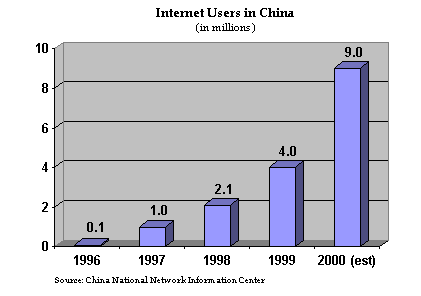
Internet use in China is growing at a rate three times faster than the global average.[19] Since 1996, the number of Internet users has increased 300 percent annually. According to government reports, Internet users more than doubled from 4 million to 8.9 million during the last six months of 1999 alone.[20] These Internet users are now able to access nearly 150,000 mainland-based Chinese Web sites, and over 2,300 registered government-sponsored sites.[21]
Internet use is largely concentrated in urban areas around Shanghai, Beijing, and Guanzhou where computers, communications infrastructure, and wealth are concentrated. According to the U.S. Department of Commerce, Shanghai has the highest computer penetration level. The city has 1.3 million computer users, representing 10 percent of the city's population.[22] According to China Computerworld, 18 percent of urban Chinese households have purchased a PC, with ownership as high as 35.4 percent in the city of Guangzhou.
Estimates for China’s potential Internet growth are staggering: it is estimated that the number of Internet accounts will grow to 116 million in 2004, making China one of the largest Internet markets in the world. This will be made possible by widespread use of mobile phones and personal electronic assistants (such as the PalmPilot) to access the Internet. Personal computers are still prohibitively expensive for most Chinese and should remain an urban phenomenon for the medium term.
In an effort to control the flow of information over the Internet, the Chinese government has developed a hierarchical system of companies and organizations controlling access to the Internet. China's dominant Internet backbone, CHINANET, operates as a subsidiary of China Telecom. Construction of the backbone began in 1995. By June of the following year, CHINANET had been extended to all thirty provincial capitals. Three years later, it had been extended to all major cities in China making it the nation's most extensive network by a large margin. In most of the country, it is the only digital access available. Today, the network carries 82 percent of China's Internet traffic and is suitable for e-commerce.[23] The CHINANET backbone primarily supports China Telecom Internet traffic with excess capacity sold to a limited number of smaller ISPs. However, the monopolistic power of China Telecom has enabled the carrier to charge very high leasing fees, limiting the market share of competing service providers.
Portal sites have become popular, and the state-controlled China.com had an extremely successful IPO on the NASDAQ in late 1999. Other widely-visited portals include Sina, 8848, and Madeforchina. Most provide both Internet content and physical goods. Their content and operations, however, are subject to increasing state scrutiny.
1. Regulatory Factors
Regulatory Authority
In an attempt to control the Internet in China, the government has created an unwieldy regulatory environment. In 1998, the MII was formed to regulate Internet activities and spur the growth of the domestic Internet. Under the auspices of the MII, the government closely oversees telecommunications, multimedia, broadcasting, satellites and the Internet. The MII also manages licensing, security, content and access. Other government agencies are also involved in regulating ICPs and e-commerce activities.[24] Many observers believe this regulatory system will ultimately collapse under its own weight as providers and users proliferate and methods to circumvent government intervention become widely known. For the time being, however, the government has taken a heavy hand towards regulation.Chinese ISP services are controlled by a few backbone service operators (e.g., China Telecom, China Unicom and JiTong Telecom) under licenses directly by the MII. ISPs must complete rigorous licensing procedures. Once licensed, the provider must register with communications and security agencies at both national and regional levels. New laws require providers to complete an additional licensing procedure with the Administration for Industry and Commerce, which then grants a logo that must be posted on the provider's web site.[25]
The process of securing licensing from the various agencies and departments responsible for Internet regulation is a complex process. For many companies interested in serving the Chinese market, simply obtaining a copy of all the applicable rules presents a significant entry barrier. The other primary impediment to licensing is the continued dominance by China Telecom, the country's incumbent telecom provider and primary ISP.
In addition to licensing, Beijing recently issued new rules requiring all Internet companies to register for government verification. Companies that handle online advertising, design or electronic commerce must list details such as their registered capital, address, server name and business range on a web site run by the Administration for Industry and Commerce. After confirming the information, the Administration will give companies a special electronic seal of approval that will appear on the companies' web sites. Every qualified online trading company is required to use the logo on its home page so consumers and other companies can decide whether to do business with the company.
In late January 2000, the government suddenly promulgated the Regulation of Commercial Encryption Codes, requiring all businesses using encryption technology to register their encryption software at the National Commission on Encryption Codes Regulations by January 31st. It also mandated that firms must eventually register the names and e-mail addresses of all users of encryption technology. In mid-March, China reversed this strict regulation that would surely have put a chill into foreign investment in China and hurt its prospects for WTO membership.
The Chinese government's ambivalent attitude toward the Internet as a whole is reflected in recent advances and retreats in regulation of foreign investment. While recognizing that the Internet can be a major engine of growth, perhaps quickly leveling the playing field with more developed economies, the government is concerned about maintaining control of the economy and of information. In September 1999, the government announced a ban on foreign investment in Internet Content Providers (ICPs), following an earlier ban on foreign investment in ISPs. A week after the MII promulgated the ban, however, the ICP Yahoo! launched its China service. In November 1999, the MII announced draft regulations that would allow direct foreign investment in e-commerce, but would prohibit ICPs from using content from non-Chinese sources. In January 2000, the government relaxed its ban on foreign ISP investment and announced that foreign firms would be allowed to invest in three cities. This is to expand to 14 additional cities next year and eventually to all cities and regions.
The effect of these changes in the regulatory environment is unclear. The Chinese government is either unwilling or unable to enforce fully many of the Internet and e-commerce regulations it has established. Barriers to foreign money in the IT sector were lowered upon the realization that growth would require at least some foreign investment. Data show that as much as US$100 million in foreign investment has poured into China’s Internet sector and that more than 50 percent of ICPs have foreign funding. Most popular Chinese-language portals, such as Sina.com, Netease.com and Sohu.com, have received substantial amounts of foreign capital investment.
China’s policy on investment by foreigners as ISPs or ICPs should change with its accession to the WTO. According to the agreement between China and the United States, once China joins the WTO, it will allow foreign investment in China-based Internet companies. Foreign service suppliers will be able to provide a variety of services including electronic mail, voice mail, online information and data base retrieval, electronic data interchange, online information and data processing (including transaction processing), and paging services. Foreign service suppliers may hold 30 percent foreign equity share upon accession, 49 percent after one year, 50 percent after two years. Foreign service suppliers may provide services to designated cities and regions according a schedule which depends on the date of accession to the WTO. After two years, foreign service providers will be allowed to provide service to the entire country.
As part of its accession into the WTO, China has also pledged to sign the Information Technology Agreement (ITA). The agreement commits China to eliminate its tariffs, currently as high as 13 percent, on information technology products by 2005. The agreement will dramatically increase access to China's domestic market for goods and services and is expected to will spur competition, enhance service offerings, and reduce costs.
Despite the WTO agreement between China and the United States, however, the MII states that foreign investors still will need government approval and licenses to enter China’s Internet market. The MII will be responsible for examining and approving foreign investment projects in the ISP sector. Content provided by ICPs will be reviewed by other agencies before MII approves it for public networks. An ICP licensing system will be established, the details of which have yet to be clarified.
In another move to control content, information and foreign investment, the government is restricting non-state-owned concerns from going public overseas and is developing state-owned Internet competitors. For instance, the state telecommunications regulator has set up the portal CCIDNET.com as a competitor to any independent portals serving the China market. With these bureaucratic hurdles blocking competition from the private sector, state-owned web sites will clearly be at the front of the line for some time in China.
There are several reasons why China’s Internet policies are often self-contradictory. While certain laws may seem entirely clear on paper, in practice the government exercises considerable discretion in enforcement. Delineation between the operations of ICPs, ISPs, Application Services Providers (ASPs) and e-commerce ventures is not always clear, complicating government efforts to control discrete areas of Internet activity. Foreign investors avoid bans on investment by using moribund but listed Hong Kong enterprises as a front or using Chinese citizens educated and residing abroad to give the appearance of Chinese ownership. Not least of all, Internet regulation is subject to turf battles among various government agencies including the MII, which regulates ISPs; the State Bureau of Secrecy, which enforces the ban on transmission of state secrets; and the State Administration of Radio, Film and Television, which oversees content provision generally.
Until recently, Chinese Internet users were forced to rely on slow connections via the telephone system. A directive of September 1999 stipulated that the businesses of the telecommunications (currently providing Internet access) and cable TV companies (which can provide faster cable modem access) must remain separate. This effectively banned cable modems, but in January 2000 the city of Shanghai was given an exception, allowing the entry of cable modem technology into the market.
Soon thereafter, Legend, the state-backed PC maker, was given permission to market home systems that combine broadband Internet access and online investing, further eroding the 'convergence' ban. Now MeetChina, an e-commerce venture in cooperation with Legend and Motorola, is set to offer wireless e-commerce service, accessible to consumers using only a relatively cheap device such as Motorola’s MobilePad. In contrast with its earlier attitude, the state seems increasingly willing to let the market decide what form Internet access technology will take.
Cost of Access
Access to the Internet remains a luxury for the privileged few. Users must obtain a permit to access the Internet. Once licensed, users face high access charges, which are set by the government. Recent restrictions on access to the Internet demonstrate the Chinese leadership's desire to exploit the Internet for business while constricting information it considers threatening to Communist Party rule.[26]China Telecom is the only Internet backbone service provider and reseller of capacity to other ISPs. High access fees in the past have meant that many fledgling ISPs have not survived, and have also kept end-users’ fees high, stunting Internet growth. For this reason, China Telecom made two major cuts in their rental rates to ISPs in 1999 as part of the MII attempt to expand the number of Internet users.
Labor and Immigration Policies
Research did not uncover any information.Government Incentive Programs
Research did not uncover any information.Content Control/Censorship
The government requires all web sites to undergo security checks by the government to prevent the release of sensitive national information to foreign nationals. The State Bureau of Secrecy closely monitors Internet activity to ensure that it is not jeopardizing state security. On January 25, 2000, the State Security Bureau issued the State Secrecy Protection Regulations for Computer Systems on the Internet, retroactive to January 1, 2000. The Bureau announced that "all organizations and individuals are forbidden from releasing, discussing, or transferring state secret information on bulletin boards, chat rooms, or in Internet news groups."[27]The regulation concerns 'state secrets', defined in official government parlance so vaguely that it could mean any material not specifically authorized by the government for publication. Under previous laws, individuals posting such information on bulletin boards, chat rooms, or news groups were responsible for it. Under the new rules, however, any individual or company transmitting such information can be held responsible. This will, if enforced, effectively require ISPs and web sites to police the content passing through their domain, even that for which they have no original responsibility. To ensure compliance, information providers and transmitters will have to check any data published or disseminated with an appropriate government agency. Web sites and ISPs that do not remove offending information after one warning may be shut down.
Given the number of users, web sites and e-mails on the Internet, it will be virtually impossible to monitor all of the content that could contain 'state secrets' under the government’s definition. But the new regulations stand as the first direct application of China's state secret laws to the Internet.[28]
In March, the MII established the Internet Information Management Bureau to restrict Internet content accessible by Chinese Internet users to prevent the "infiltration of harmful information on the internet."[29] The Ministry also barred the dissemination of foreign news on Chinese portals.
While governments around the globe wrestle with questions of Internet regulation, the Chinese government is exercising significantly broader control by exerting its ownership influence on content as well. To curb the flood of foreign media, the government has developed its own web sites.[30] Chinadotcom, a state-affiliated web portal, now dominates the domestic Internet market. Xinhua, the official Chinese news agency and one of Chinadotcom's shareholders, strictly censors the portal's content.[31] Other government-backed web sites, including Qianlong, which groups nine major media-companies, and CCIDNET.com, operated by the MII, supply state-approved content and receive preferential regulatory treatment. In addition, the Chinese government has set up a special police force to monitor activity on the Internet.
Many observers doubt whether China's plans to control the Internet will be effective. The government's own web sites are less popular than their private counterparts and Chinese web users are becoming more sophisticated in circumventing the censors, partly by using 'proxy' servers to retrieve blocked sites.[32]
2. Technical and Operational Factors
Registration of domain names in China is governed by the Provisional Administrative Measures on Registration of China Internet Domain Names (promulgated May 1997). In the market of Chinese-character domain names, two institutions register domains: the Singapore-based I-Dns, and China’s own China Internet Network Information Center (CNNIC). CNNIC has been authorized to register '.cn' domain names and make rules governing the standards and management of Chinese domain names. Foreign companies are not permitted to register a domain name in China unless they use their Chinese subsidiaries or representative offices as the applicants. CNNIC itself currently is commercializing the domain name market in cooperation with a U.S. strategic partner.
Protocol Standards and Development
Research did not uncover any information.Language Barriers
Research did not uncover any information.Skilled Labor Force
Research did not uncover any information.Government Incentive Programs
Research did not uncover any information.D. E-Commerce in China
The emergence of electronic commerce has quickly caught the attention of Chinese regulators. Many view e-commerce as a necessary component of the country's plan for continued economic development. However, as with other aspects of the Internet, the Chinese government has taken a unique approach to regulation with regards to e-commerce.
In many ways, China seems suited for the rapid development of e-commerce. Driving forces that make e-commerce attractive includes the explosion of Internet use and the government's interest in developing e-commerc.
Current E-Commerce Activity in China
Along with growth in Internet users has come increased e-commerce revenues. There are now over 200 e-commerce web sites in China, employing over 5000 people. E-commerce revenues on the Chinese mainland grew from about US$8 million to US$24.2 million in 1999, according to the MII. Others estimate revenue could grow to US$96.7 million in 2000, and US$1.2 billion by the end of 2002.China’s e-commerce sector is still technologically unsophisticated, particularly in the areas of security of transactions. Sophisticated 'storefront' sites require that consumers have credit cards and trust the security of online ordering, neither of which is usually the case in China. Typical e-commerce transactions involve ordering a product online and paying cash on delivery. Changes in payment form may be on the way. There are already 100 million bank cards in China which accounted for US$100 million in purchases in 1998. Though credit card penetration is low, Visa International expects the number to grow to several million in the next few years.
Several Chinese web sites, including Sina.com, 8848, Focus, and A1B, have already begun e-commerce activities. Most of these are supporting business-to-business (B2B) e-commerce. Since 1998, however, business-to-consumer (B2C) e-commerce has emerged in industries ranging from book sales to airline tickets. A wider variety of products is becoming available as the e-commerce sector grows.
Most e-commerce is taking place in Chinese urban centers, particularly Shanghai. As the country's main financial center, Shanghai has become China's e-commerce hub. The city has the country's highest concentration of personal computers and Internet connections. Shanghai is also unique in the availability of electronic payments methods, another critical component of e-commerce. Shanghai currently has 10 million credit and debit card holders, 5,000 Point of Sale (POS) systems, and 2,600 Automatic Teller Machines (ATMs).[33]
In November, an e-commerce institute was established in Guanzhou at the South China University of Science and Technology in conjunction with Carnegie-Mellon University and the Chinese University of Hong Kong. This institute will advise government officials on how to foster electronic commerce and regulate online transactions.
Infrastructure for E-Commerce
China is rapidly deploying a network to accommodate electronic commerce. China began installing e-commerce servers in 1998. Since that time, the number of e-commerce servers has increased at an annual rate of more than 1,000 percent.[34]In 1997, the China International Electronic Commerce Center was established within the Ministry of Foreign Trade and Economic Cooperation to build the necessary infrastructure to accommodate electronic commerce. They have successfully created the infrastructure to link companies and state agencies with the world, but developments within the organizations have not kept pace. According to the Chinese State Economic and Trade Commission, only 10 percent of China's state-run firms run computer networks that can be used for digital business.[35]
1. Regulatory Factors
Where most countries are adopting the U.S. model of a deregulated, decentralized Internet, China is trying to promote e-commerce while imposing the same type of regulation imposed on other facets of its economy.
Regulation of e-commerce is proving difficult. The Chinese leadership seems to be increasingly aware of the fact that sustained economic growth requires the reduction of the restrictions that have constrained the private sector of the economy.[36] For example, under the PRC Contract Law (promulgated March 1999), valid contracts can be formed through the exchange of "data messages." The contract law also contains provisions that are specifically tailored to e-commerce. Moreover, the 1994 Law of the People's Republic of China Concerning Protection of the Rights and Interests of Consumers sets forth a number of general principles applicable to the sale of goods and the provision of services in China applicable to all transactions, including electronic transactions. The manner of implementation of this law and the efforts to enforce it are yet to be determined.
Taxation
China has not yet developed full tax regulations for e-commerce and the Internet, but as most e-commerce takes place via cash-on-delivery transactions, existing laws should be sufficient to handle transactions conducted over the Internet. It is not yet clear how these laws will be implemented and enforced. The government has undertaken research on the matter. In March 2000, China National People’s Congress started to consider legislation on taxation of e-commerce.The classification of transactions goes to the heart of a turf war within the Chinese government. The Ministry of Information Industry oversees the provision of Internet access, while the State Administration of Radio, Film, and Television oversees content. No firm divisions have been established between service and content provision, and therefore there are no clear rules regarding which tax category a company’s product may fall. The government is actively working on this issue.
Finally, tax evasion is a serious problem in China and the government is investigating ways of forcing foreign invested companies to pay more in taxes.
Privacy
Compared with Western countries, the Chinese government is less concerned with the protection of consumers' privacy on the Internet. No data protection legislation has been enacted. Customers have no rights to review data collected on them, to ask for correction of such data or to control to whom that data is made available.Content
Research did not uncover any information.Content - Intellectual Property Rights
China has joined the major international conventions on protecting intellectual property rights. Generally, intellectual property protection falls under the current, inadequate Copyright Law of 1990. The Copyright Law covers dissemination of copyrighted material through traditional means such as print media. It does not, however, cover new possibilities for intellectual property theft such as the unauthorized use of a web site’s material by another web site or the publication on the Internet of material stolen from traditional sources.Security – Encryption and Authentication
The problem of how to secure online transactions raises two main questions. What type of encryption technology should be used to encode transaction data? Who has the right to decide this and enforce its use among banks and vendors? Despite U.S. export restrictions, encryption technologies capable of supporting online payments are readily available to Chinese companies from international network security providers. However, citing concerns over the security of financial information and the importance of developing domestic expertise, the Chinese government has declared its intention to develop its own encryption protocols.Security – Payment Mechanisms
The Ministry of Information Industry and the People's Bank of China are currently establishing guidelines for the establishment of certificate authorities. Certificate authorities issue 'digital IDs' allowing vendors, buyers and financial institutions to identify each other online and verify authenticity of transactions. At the same time, without benefit of central guidance, a number of institutions, including MOFTEC, China Telecom, and several major commercial banks, are working to establish alternative certificate authorities.[37]Development of financial mechanisms to support online transactions is another critical issue. Developing online payment systems for e-commerce requires reform of the most fundamental areas of China's financial and banking system. For example, some financial settlements between Chinese banks are conducted only once every few months, leaving plenty of time for fraud to take place. Moving banking onto the Internet could provide an even greater opportunity for fraud.
Participation in International Standards Development
Research did not uncover any information.2. Technical and Operational Factors
Protocol (Standards) Making Process
Research did not uncover any information.Product Restrictions
Research did not uncover any information.Delivery Infrastructure
Research did not uncover any information.Availability of Payment Mechanisms
The use of credit cards is not widespread in China. This limits much B2C e-commerce to transactions where ordering is online but payment is by traditional means such as cash on delivery or wire transfer. On the other hand, China has over 100 million debit cards that can be used as a form of payment for online transactions. This form is limited, however, by a lack of integration between financial institutions throughout the country. In contrast, the B2B sector, which does not rely on a credit card payment system, is expected to grow more rapidly than the B2C sector in the short-term. All e-commerce will be held back by China's lack of fully integrated computer networks, which makes it impossible to process transactions across different regions and between different banks.General Business Laws
China's legal system is not e-commerce-friendly. China has limited experience with drafting e-commerce legislation for issues such as transactional security, intellectual property rights protection and tax regulations. Regulations supporting areas critical to the development of e-commerce (such as privacy, consumer rights, validation of electronic contracts and recognition of digital signatures) have yet to be written. Such regulations are all the more important given the wide areas e-commerce cuts across. Government bodies involved in everything from telecommunications, finance and public security have a clear interest in its development. The potential for regulatory conflicts is therefore enormous.Public Attitude to E-Commerce
China's consumer market is still too immature to make e-commerce attractive. Remote purchasing by consumers is rare in China. Internet users will approach e-commerce with little or no previous experience using mail-order catalogues, TV-shopping or similar systems. Since debit or credit card purchasing is still relatively new, consumers are even more sensitive to the possibility of fraud when purchasing online. But China's Internet users have, simply by using the Internet, already demonstrated that they are 'early adopters' open to new methods of interaction.Business Attitude to E-Commerce
By contrast, China's large number of inefficient state-owned enterprises are unlikely adopters of new technology. Many state enterprises operate in protected markets where incentives to innovate are minimal. Many are also locked into a web of entrenched purchasing relationships that e-commerce threatens to upset.But an even larger number of Chinese enterprises are eager to find more markets, particularly in export, for their products. However, they lack the resources to make large capital investments and are not yet equipped to accept online orders, let alone offer online payment facilities. For them, e-commerce may one day be an ideal solution.
E. Conclusion
The regulatory environment in China is strict and often contradictory. The government recognizes the value of building a modern telecommunications infrastructure but fears losing control of the sector and the information coming into and leaving China. China's accession to the WTO is supposed to encourage China to relax its regulatory restrictions and open its telecommunications and Internet markets. Some observers caution, however, that what China actually does in the way of liberalizing its markets remains to be seen.
Estimates for China's potential growth are staggering. These are generally based on a belief that the use of wireless devices to access the Internet will continue to spread, making access to the Internet and e-commerce easier and less expensive for businesses and the public. However, since the government controls the type of technology adopted throughout China through control of frequency and standards, the development of mobile telephony is likely to be limited. Also, mobile telephony and wireless access devices remain as expensive and as unattainable for the average Chinese as PCs.
Other major obstacles to e-commerce exist in China. The divergence in telecommunications infrastructure between urban and rural areas must be overcome to improve access and connectivity. The development of a telecommunications and Internet infrastructure will be limited by the ban on foreign direct investment and foreign ownership. China's e-commerce sector is technologically unsophisticated, particularly in terms of the security of transactions. The poorly developed infrastructure of railroads, ports and postal systems hinders access to equipment and reduces the efficiency of the e-commerce method of shopping.
China's legal system is at an immature stage. Legislation related to ICTs has not kept pace with the development of new technology and increased use. Enforcement of laws and regulations is unpredictable and subject to abrupt and often disquieting changes. To address these problems, MII said in early 2000 that it would promulgate a series of new regulations to provide a comprehensive regulatory framework for Internet-related activities including e-commerce. Until such new regulations are in place, B2C will remain a thing of the future in China.
The Chinese government continues its attempts to reconcile the decentralized, deregulated, dynamic and global nature of Internet commerce with its efforts to maintain tight control on information and communications within the country. The speed with which telecommunications technology is evolving, especially with regard to the convergence of traditional voice with datacommunications technology, is making it increasingly difficult to sustain this approach. China's accession to the WTO, expanded international trading partnerships, and increased Internet usage among Chinese consumers may also be factors forcing the government to relax its restrictions of the Internet. Until and unless the government does so, those restrictions are likely to strangle the development of a medium that many in China feel is critical to the country's continued economic development.
V. The European Union

A. Introduction
At the European Council meeting held in Lisbon on March 23 and 24, 2000, the European Union (EU) set the ambitious objective to become the most competitive and dynamic economy in the world. The Council recognized the urgent need for Europe to exploit the opportunities of the New Economy and in particular the Internet. History has shown, however, that European initiatives are many, but their actions are few.
Currently, businesses face many barriers establishing an e-commerce presence in Europe. Differing technical standards and varying regulatory models and approaches to market liberalization have diminished the returns these companies can expect while North American participants in e-commerce are reaping increasing rewards.[38]
Progress is being made. In 1998, the EU began to deregulate several sectors including telecommunications. On January 1, 1999, the EU adopted the euro as the currency unit for the eleven member states who satisfied the macroeconomic conditions necessary to join the European Monetary Union and who opted to participate immediately. As the EU moves toward a single market and a single currency, more trade barriers will be lowered. These factors, combined with unprecedented increase in Internet access and use throughout Europe, are believed to bode well for the development of European e-commerce.
B. Telecommunications in the European Union
In the last few years, the European telecommunications services sector has been undergoing radical changes designed to liberalize the industry. Since 1998, the market has been opened to allow interconnection agreements between incumbent operators and new market entrants, building a European data network of huge capacity.
Incumbents hesitant to lose their lucrative analog and ISDN business are dragging their feet over roll-out of broadband services such as DSL. Cable TV operators are beginning to gain market share, though too many are still owned by the state incumbent, a situation generally unfriendly to competition. The EU plans to provide "generalized electronic access to main basic public services by 2003" and "to make available in all European countries low-cost, high-speed interconnected networks for Internet access and other telecomm networks as well as the content for those networks."[39]
The European mobile telephony market is strong, leading the U.S. both in manufacturing (Nokia and Ericsson are the world's first and third largest manufacturers of hand sets) and technology (95 percent of European mobile phones use digital technology compared with under 50 percent in the U.S., where analogue dominates). Europe also leads the U.S. in application and use of Wireless Application Protocol (WAP), which allows access to the web via hand-held devices such as the Palm Pilot and smart phones.[40]
1. Regulatory Factors
Regulatory Authority
In mid-2000, the European Commission intends to launch the next round of directives updating the rules and regulations governing the sector. These directives include simplifying licensing conditions, giving national regulators greater flexibility to impose access and interconnection obligations, boosting consumer protection and obliging mobile operators to offer number portability.[41]The new proposals are aimed at regulating the behavior of powerful telecommunications firms. Under the plan, the Commission would issue a notice listing those areas of the telecommunications sector where regulation might be necessary to promote competition. National regulators then must decide whether those areas targeted by Brussels warrant regulation in their own national markets. National regulators would only be able to impose regulations in areas on the Commission's list.
The EU would also ask national regulators to indicate sectors where individual firms actually enjoy "substantial market control." If EU officials agree with the national regulators' assessment, they would approve the imposition of "appropriate regulatory obligations" on the companies concerned to prevent them from abusing their market power. Clear, unambiguous rules would be set out for national regulators regarding possible sanctions for violators of the regulations.[42]
In a significant move, the Commission recently recommended that national telecommunications regulators call on operators with large local networks to offer rival operators 'unbundled' access to the local loop, the copper wiring which runs directly into homes and offices.[43] The rival companies would be able to offer new and advanced services, such as lightening-fast data transmission, without having the massive expenditure needed to build their own local loop. This would encourage technological innovation and increase competition among providers, lowering the cost of access to the customer.
If and when the relevant section of this recommendation is accepted, national regulators would be required to ensure operators make facilities available to their competitors on the same terms as their subsidiaries.[44] The Commission has set a recommended deadline of December 2000, but as yet only Austria, Denmark, Finland, Germany and the Netherlands have made arrangements for complete unbundling by this date. The European Competitive Telecommunications Association (ECTA) has urged the Commission to fast-track mandatory local loop unbundling in Europe as a necessary step to closing the Internet gap with North America.
Licensing
See previous section.Accounting System
Research did not uncover any information.Local Competition
Market access to telecommunications equipment within the EU varies widely among Member States. Most Member States discriminate against non-EU bids in the telecommunications sector. Market access is also impeded through standards and standard-setting procedures, testing, certification and attachment policies.Available Services
Research did not uncover any information.Foreign Competition and Ownership
Under the WTO Agreement on Basic Telecommunications Services, eleven Member States have committed to providing market access and national treatment for voice telephony services as of February 5, 1998. Four other States will phase in commitments by 2003. Four Member States qualified their commitments by maintaining foreign investment restrictions. The EU also adopted the pro-competitive regulatory commitments set forth in the Reference Paper associated with the WTO Agreement.2. Technical and Operational Factors
Spectrum Efficiency and Management
The European wireless sector adheres to a single digital standard known as the Global System for Mobile Communications (GSM). GSM was established early as an open standardized platform by industry and supported by the Commission and national governments and its success is largely attributable to an effective public/private partnership. While each U.S. mobile company must compete aggressively to sell its own particular digital and analog standard, Europe adheres to a single digital standard, enabling European mobile companies to work together on new technologies. The big three European companies (Nokia, Siemens and Ericsson) are now co-operating on ‘3G,’ the third generation of mobile phones. The current generation of mobiles is limited to a data transmission speed of 28.8 kilobits per second, but new 3G phones will be able to send and receive data at broadband speed, or 2 megabits per second.The proliferation of wireless service raises an important issue - the availability of space on the airwaves to meet the demand for new mobile services. Experts fear that without sufficient spectrum, there will be a lack of competition when 3G services start to take off in a few years' time. Europeans will be emphasizing the need for 3G spectrum in world telecommunications conferences this year.
Network Architecture
Research did not uncover any information.Infrastructure and Rights-of-Way
Research did not uncover any information.C. The Internet in the European Union
Like most regions of the world, Internet use is expected to grow quickly in Europe in the near and medium future. Western Europe should have more than 215 million users on the Internet on at least a quarterly basis by 2003, compared with 197 million in the U.S.[45] By 2003, Western Europe will rank second behind the U.S. in both total e-commerce revenues and B2C revenues. B2C revenues should grow from US$8.18 billion at the end of 2000 to US$40.25 billion, or 19.2 percent of the worldwide total, by the end of 2003.
1. Regulatory Factors
Companies establishing Internet and e-commerce operations in Europe face many regulatory challenges. Differing technical standards, varying regulatory models and approaches to market liberalization often lead businesses to operate with higher complexity and costs. The development of e-commerce is driving a movement to harmonize regulations in areas such as banking, consumer protection, privacy, liability and cryptography, among many others. Factors ranging from the availability of skilled labor to tax compliance requirements to differences in healthcare systems impede greater harmonization and discourage new market entrants.At the same time, the EU approach to standardization has significantly improved. There is now an emphasis on voluntary industry driven standardization and an increasing acceptance of de facto standards. One of greatest obstacles is the lack of an EU patent directive, without which, innovation necessary in the New Economy will be delayed.
Furthermore, there is great need to harmonize regulations restricting cross border distribution and logistical services.
Cost of Access
The traditional argument levied against Europe in terms of internet potential is PC penetration rate, which is generally behind the United States. However, the rise of new technology portals such as 3G mobile communications mitigates this statistic.The cost of access in Europe has historically been 50 percent greater than in the United States; until 1998, monthly subscription charges for Internet access were commonplace. That changed with the launch of Freeserve - a "free" service in the United Kingdom that forced many Internet service providers to adopt the "free" phenomenon.[46] With so much competition in the long distance market, local access has now become the crucial bottleneck to development.
Only 22 percent of European households have access to the Internet, compared to 50 percent in the United States. The EC wants to bring down Internet access costs by encouraging competition and faster access through private investment. In addition, bringing down access costs will simultaneously stimulate deployment of new Internet technology.
Within Europe, there exists a "digital divide" between countries such as Sweden and Finland, with levels of penetration close to that of the U.S., and the Southern regions with less than 10 percent penetration. This gap is widening, posing a real danger of a "two speed" Europe in terms of Internet access and use. The Commission also plans to use structural funds to ensure that peripheral regions are not left behind in the information economy.
Labor and Immigration Policies
With a limited global pool of IT experts and intensified international competition to attract them, countries across the EU are changing their immigration rules to attract skilled workers. For example, Germany and the UK are introducing new procedures to expedite renewals of work permits, extend the period a permit is valid and, for certain skilled individuals, allow entrance into the country without proof of a specific job offer. The relaxed immigration policies are said to be contributin to anti-immigrant sentiments in some countries. Surveys suggest that many Indian and east European IT professionals are reluctant to emigrate to the EU due to this problem. Many would rather go to the U.S., giving North American yet another advantage in the New Economy.[47]Government Incentive Programs
Research did not uncover any information.Content Control/Censorship
The fear that the U.S. will continue to dominate Internet content has led the EU to unveil an initiative to boost the amount of European content on the world wide web.[48] A key part of the program will involve providing web-content firms with information on financing projects and acquiring investment from venture capitalists. The Commission will also propose an improved system to facilitate copyright clearance from rights-holders for using works such as music, video and art clips in products and services online. Projects aimed at advancing smaller companies and boosting the presence of content using the EU's lesser-spoken languages will also be advanced.2. Technical and Operational Factors
Protocol Standards and Development
Research did not uncover any information.Language Barriers
The presence of multiple languages has been an issue for the EU because most of the Internet content is in English. The recent explosion of localized content has started to attract more Europeans as they realize the relevance and power of the medium. Europe had approximately one million Internet hosts in 1995, and today Europe is believed to have over six million hosts. According to a MMXI Europe Survey, European home Internet users are catching up with those in the United States in terms of the time they spend online each month. In October 1999, British surfers spent four hours online, Germans spent about five hours online and French users spent an average of three hours on the Internet. The average American home user stays on the Internet for about five-and-a-half hours each month.[49]Skilled Labor Force
According to a recent Commission survey, Europe does not yet have the skills base to support building the New Economy. The Commission found in 1999 that "the equivalent of 510,000 full-time jobs remained open in the [IT] sector in Europe. Others calculated that this will grow to no less than 1.6 million jobs in 2001."[50] Recognizing that multinationals will move to other countries to find more skilled labor, Europe has begun to take action to increase their skills base and attract global IT experts to the European economy.At the meeting of the European Council in Lisbon this year, Member States were challenged to help bolster the IT workforce and computer literacy overall. The Lisbon Summit requested that numerous training and IT awareness programs be implemented through European schools, including ensuring Internet access in all schools of the European Union by the end of 2001.[51] The Lisbon Summit concluded that there is a widening skills gap, especially in information technology. Europe's training systems must adapt to the changing demands of the knowledge society to offer re-training opportunities to workers displaced by rapid change. The creation of a European framework should define new basic skills to be provided through life-long learning and a European diploma for basic IT skills should be established.
Government Incentive Programs
Research did not uncover any information.D. E-Commerce in the European Union
Despite its rapid growth, European Internet penetration remains one quarter of U.S. levels. However, the European Union is in the enviable position of having an internal market of 370 million people using a single currency. Unfortunately, significant gaps still exist between the 15 member countries regarding regulations. For example, Germany unilaterally bans two-for-one offers, lifetime guarantees and heavy discounting, except during specified times of year. Without a single, transparent, coherent legal and regulatory framework, e-Europe will never be able to fully leverage its resources online.
In December 1999, the European Council agreed to the e-commerce directive allowing service providers and e-commerce businesses whose operations comply with their domestic laws to offer services to all Member States.[52] The Commission hopes to enforce greater security standards for retail e-commerce and bring about the introduction of multifunctional smart cards which could be used throughout Europe regardless of the country of issue. The promotion of online content in languages other than English and making government services available on the Internet are also key goals of the EC.[53]
Building on the large market share currently held by its mobile providers, Europe could become the world leader in mobile e-commerce. By 2002, European consumers will be able to access video news and sports reports, voice-driven Internet pages, and even X-rays from their 3G mobile phones.[54] The squabbling over standards in the U.S. means that 3G networks will not be available there until some time between 2003 and 2005, leaving the field open for European providers.
1. Regulatory Factors
Taxation
Recently, the Commission proposed imposing a value added tax (VAT) on services delivered on the Internet. The proposal would require non-EU companies selling more than €100,000 annually of Internet services and paid-for TV to EU customers to register for VAT in an EU member country. The Commission and European industry groups say the plan would correct a market distortion, whereby European companies were obliged to pay VAT on Internet services, while their non-EU competitors do not. This proposal has been criticized by other countries like the U.S. who say it is protectionist and could undermine efforts to agree on international rules on the taxation of e-commerce to be addressed in OECD talks next year.[55]Privacy
The EU Data Protection Directive, which went into effect in October 1998, aims to balance the protection of an individual's right to privacy with regard to transmission of personal data with the need to facilitate the flow of such information within the EU. The Directive allows for data transfer to third countries if they provide an "adequate" level of protection for the data under their own laws or through international obligations they have undertaken. The ease with which information moves across border will depend upon how individual States define "adequate."In early 2000, the Commission and the U.S. Department of Commerce reached an agreement on a "safe harbor" system which will allow continuing data flows between the U.S. and the EU and ensure privacy protection for EU citizens' personal information. Under the arrangement, U.S. organizations voluntarily agree to adhere to principles which bridge the gap between the U.S. and the EU systems governing privacy.
Content
Research did not uncover any information.Content - Intellectual Property Rights
The EU and its Member States support strong protection of intellectual property rights. The Member States are members of all the relevant WIPO conventions and they fully enforce high IPR standards, including those in the TRIPS Agreement.Registration of trademarks with the European Community Trademark Office (CTMO) began in 1996. The CTMO issues a single trademark valid in all 15 Member States. National marks continue to exist in conjunction with the EU marks.
Patent applications in the EU are governed by the EC patent convention concluded in 1975. In 1999, the Commission began to advance legislation to replace the convention with Community legislation to ensure secure patent protection throughout the EU on the basis of a single patent application.
In 1997, the Commission proposed a Directive to harmonize Member State legislation on copyrights and to establish clear definitions of protected material. The proposal does not cover infringement liability by online service providers. The Directive also requires Member States to implement the obligations in the WIPO copyright and performances and phonograms treaties, and requires approval from the Parliament and adoption by the Council before it takes effect. In January 1998, Member States were also required to transpose into national law the Directive protecting copyrights to electronic and manual databases, an essential element to the sound legal framework for Europe's information society.
A two-part directive proposed on June 25, 1999[56] will extend existing copyright rules to the Internet. The proposal will provide wide-ranging reproduction rights to copyright owners who will have the exclusive right to authorize duplication of their work. The proposal covers performers and producers of CDs and CD-ROMs as well as broadcasters. Copyright protection has also been extended to computer software.[57] Protection covers any form of a program, including hardware or preparatory design material. A third directive grants protection to electronic and paper-based databases that meet the traditional requirement of novelty or innovation, with special protection for producers of databases that do not meet the novelty criteria (such as telephone directories) but represent a substantial investment of time and resources. Copyright protection will be available to databases created within the EU and can be extended to databases produced in third states if their legislation grants similar levels of protection. The EU's competition rules will be applied when necessary to ensure fair competition and prevent abuses of dominant positions.[58]
Security – Encryption and Authentication
In December 1999, the EU removed one of the biggest obstacles to e-commerce by approving a directive on digital signatures. EU telecommunications ministers formally adopted a directive establishing a common legal framework for electronic signatures. To be implemented in 2001, the directive will require all member states to recognize digital signatures as the legal equivalent to handwritten ones, provided they can be certified by a third party and the technology used to make them complies with a series of conditions. The directive introduces minimum requirements for service providers who will certify the identity of digital signature users. Although signatures based on public-key cryptography are currently the most recognized form of an electronic signature, the directive follows a neutral approach as far as the various technologies and services capable of authenticating data electronically are concerned. This flexible approach takes into account the rapidity of technological development and the global character of the Internet.For the same reasons, the technical requirements imposed are limited. The directive requires that in order to benefit from equivalent legal standing, a digital signature must have a unique link to the signatory, must have the capacity to identify the signatory, must be linked to the data in such a way that a recipient can detect any subsequent change in the data, and must be developed by a qualified certification process.[59]
The issue of cybersquatting, the bad-faith registration of a company's likely Internet address in an attempt to sell it at extortionate prices, has not been considered by the EU. The matter largely rests in the hands of the WIPO. In late 1999, however, the Commission announced plans for a new domain ending, '.eu', hoping it would supersede national endings such as '.uk' and '.fr'. In doing so, the Commission hopes to make a fresh start in overcoming some of the damage done by cybersquatting.[60]
Security-Payment Mechanisms
Research did not uncover any information.Participation in New International Standards Development
Research did not uncover any information.2. Technical and Operational Factors
Protocol (Standards) Making Process
Research did not uncover any information.Product Restrictions
Research did not uncover any information.Delivery Infrastructure
Research did not uncover any information.Availability of Payment Mechanisms
Currently, credit cards are the main form of online payment in the EU. In terms of credit card penetration, the United Kingdom leads the big five countries with 51 percent, followed by Spain with 41 percent, France with 31 percent, Italy with 15 percent and Germany with 12 percent. With credit card penetration rates low and security issues high, it is speculated that online payment presentation and coupled bills (i.e., buying small goods and services and having it charged to your phone bill, with eCharge’s offering a good example) will be key. Additionally, the current credit card ownership landscape is changing as the large credit card issuers expand their push into Europe and as new smart cards with monetary storage emerge.General Business Laws
Research did not uncover any information.Public Attitude to E-Commerce
In a survey conducted of adult Internet users in fall 1999, Europeans gave a range of reasons for not purchasing products and services online. Distrust of the payment system (23 percent) and of the shops themselves (11 percent) were most frequently mentioned. Nineteen percent said they found online shopping impersonal and preferred the social contact inherent in traditional shopping. In general, however, the European public is enthusiastic about the possibilities of e-commerce.Business Attitude to E-Commerce
As in other areas around the globe, Europe suffers from a digital divide in computer literacy. Computer literacy is generally far higher in urban areas than rural areas. Corporations and small to medium enterprises which are the bases of computer usage in Europe are located mainly in metropolitan areas. Inhabitants of rural areas are less likely to view computers as necessary to their livelihoods. Not surprisingly, Europeans living in rural areas are far less likely to have Internet access. Connecting via the local loop is expensive and an unnecessary luxury for those whose way of life is rooted in rural industry. Until dial-up costs decrease significantly, individual investment, especially in rural areas, likely will not change. Public investment to spur computer literacy and Internet usage may be a viable alternative to increase computer literacy.The EU lacks an adequate dispute resolution system for e-commerce transactions. The threat that companies will have to comply with consumer protection laws of every Member State and face the risk of legal actions across the EU contributes to the stifling of European e-commerce, particularly for small traders.
At the Lisbon Summit, EU leaders gave strong support to the establishment of online mechanisms for alternative dispute resolution (ADR) by Member States. The EC has published proposals to link up ADR schemes across the EU in a European extra-judicial network called EEJ-Net, providing the consumer with security and confidence while minimizing the regulatory burden on business. In the EEJ-Net, clearing houses in each Member State would act as one-stop shops in e-commerce disputes, and would help process crossborder consumer complaints. Businesses would only have to join the ADR scheme of their home country. The Commission has also been pressing ahead with planned reforms to the Brussels and Rome conventions. The reforms would act as a last resort, by allowing the e-consumer to bring suit in the courts of their own country, under applicable local and consumer protection laws.[61]
E. Conclusion
As a multi-national organization, the European Union illustrates the idea that while the Internet is borderless and global, local conditions matter to the success of e-commerce. Varying conditions still exist among the Member States; strong directives regarding harmonization are still needed. The adoption by the European Parliament of the e-commerce directive in May 2000 is an important step to establishing a reliable legal framework for e-commerce. The adoption of the euro as the single unit of currency, the continued liberalization of telecommunications infrastructure throughout the Union and the increased use of the Internet are the key factors which will lead to significant growth in e-commerce.
Since a sound and prosperous ICT sector is likely to positively affect the economy as a whole, EU policy on telecommunications and the Internet must tackle the regional disparities regarding access to and use of ICTs. Local loop access is crucial for the Internet to be as successful in Europe as it is in the United States. The telecommunications and Internet gap that already exists must be addressed and the positive economic potential of the Internet must be exploited for the general economic welfare of the Union.
Europe has reaped great rewards from coordinated public/private efforts such as the development of GSM. By taking a similar approach to the mobile e-commerce industry, Europe could become the dominant player in this sector.
Recent telecommunications liberalization has meant more competition among companies, resulting in lower prices, more new providers and improved conditions for innovation. All of these lead to more affordable access and therefore a greater number of users.
Despite this progress, access costs continue to be barriers to growth. Unlimited Internet access is not widely available, leaving less incentive for Europeans to go online to shop. Basic distribution systems like post and rail systems vary among Member States, making distribution unpredictable and unreliable. The current global shortage of IT-skilled labor could become Europe’s Achilles heel if actions regarding immigration are not taken immediately.
The disparities among the Member States of the European Union will probably not be fully overcome in the next five years. Increased competition in telecommunications is more likely to emerge in the regions already leading in economic development. In those regions lagging behind, the expectations for Internet and e-commerce growth are much less optimistic. Overall, the future of e-commerce in the EU looks bright but attention must be paid to the gap that threatens to grow between Member States.
VI. INDIA

A. Introduction
In terms of information technology, India is a country of extremes. On one hand is the booming Indian software industry, which brings millions of dollars to the Indian economy. On the other hand is the underdeveloped and unreliable Indian telecommunications infrastructure. Between these two extremes, Indian officials are trying to develop a robust e-commerce business.
Overall, the Indian economy is performing relatively well.[62] The GDP in 1999 was US$470 billion and is expected to grow 6.5 percent in 2000. Since 1991, economic reforms, including liberalization of the trade, investment and financial sectors, have led to stronger economic growth, moderate inflation, higher rates of investment and increased trade. The present government has pledged to continue economic reforms, moving India from a planned to a market-based economy.
Economic growth has been hampered, however, by high interest rates, a large fiscal deficit, inadequate infrastructure and political uncertainty, stemming in part from disputes with Pakistan and international sanctions imposed as a result of nuclear testing. Over the past two years in particular, industrial growth and the rate of exports have slowed and total foreign investment has declined. In part, the trade deficit grew due to sanctions imposed following nuclear testing in May 1998, which, inter alia, restricted sales of high technology exports to India. In addition, non-economic factors including a largely unreformed bureaucracy and social tensions inherent in such a diverse and populous nation have continued to impact economic growth.
B. Telecommunications in India
India is in the midst of revamping the regulatory, technical, and operational aspects of its basic infrastructure in order to improve its telecommunications sector. While the country has made a great deal of progress, there is still a substantial amount of work to be done to ensure the success of India's e-commerce market.
Currently, India's telecommunications network is one of the largest in Asia and is the country's fastest growing infrastructure sector. As of November 1998, the fixed-line network comprised more than 23,000 exchanges with a capacity of nearly 20 million lines and 19 million working connections. In addition, in 1999, there were 1.57 million cell phone subscribers and 37 million cable subscribers. The Indian government's Department of Telecommunications (DoT) plans to provide 18.5 million new telephone lines by 2002, while private operators are expected to provide 5.2 million lines.
1. Regulatory Factors
Regulatory Authority
The Ministry of Communications governs India's state-run telecommunications sector. Within the Ministry is the DoT, which handles policy and licensing telecommunications issues, and the Department of Telecom Services (DTS), which provides telecommunications services. DTS was recently created when the Indian government separated its policy and licensing functions from its service functions as a precursor to eventual complete privatization scheduled for the year 2001.[63] Some value-added services, such as paging and cellular, have already been privatized.[64] The privatization of international telephony services "will be reviewed by the year 2004."[65]Realizing that an independent regulator "is becoming increasingly critical to the sustained, balanced, and regulated growth of the telecom sector," [66] the Indian government created the Telecom Regulatory Authority of India (TRAI) in 1997. The role of the TRAI is to notify providers of telecommunications service rates, recommend new service providers, recommend the granting and revocation of service provider licenses, ensure technical compatibility, settle disputes between service providers and ensure compliance with universal service requirements. [67]
However, despite the Indian government's statement that it is "committed to a strong and independent regulator with comprehensive powers and clear authority to effectively perform its functions,"[68] the extent of the TRAI's capacity to formulate policy independent of the central government and the influence of the state-run DTS is unclear. For example, while the government is obligated to seek the TRAI's recommendations, if the government concludes that "such recommendation cannot be accepted or needs modifications, it shall refer the recommendations back to" the TRAI. After receiving further recommendations by the TRAI, "the Central Government shall make a final decision."[69] Furthermore, licensor and policy-maker functions will continue to be discharged by government "in its sovereign capacity." [70]
First promulgated in March 1999, the government's New Telecom Policy, 1999-2000 (a publication by the Ministry of Communications that describes the objectives and policies of DoT and DTS) is designed to achieve a modern, world-class telecommunications infrastructure and increase competition.
The New Telecom Policy, 1999-2000 addresses several regulatory issues, such as interconnection, local competition and universal service. While the Indian government is clearly working towards creating a transparent and competitive telecommunications sector, its policies in these areas are not yet as open as they could be.
Licensing
Under the New Telecom Policy, 1999-2000, the government will retain the power to grant licenses and make policy. License fees will be replaced by revenue sharing for new licensees, while current basic and cellular licensees will continue operations under existing licenses. New licenses will be granted for vacant districts with firms paying a one-time entry fee and a revenue-sharing arrangement determined by the TRAI. All operators will pay a universal access levy and spectrum usage fee.Accounting Systems
The Indian government "is committed" to bringing basic telecommunications services to underserved areas. To achieve universal access, a universal service tax, in the form of a percentage of the revenue earned by all the operators under various licenses, will be applied and resulting funds will be used to create a universal service fund. Also, provisions for establishing rural communications will be mandatory for all fixed service providers.[71] While this approach has merit, it makes no mention of exactly how much the tax will be nor how it will be applied. Consequently, the success of the universal service fund remains to be seen.Local Competition
Prior to the New Telecom Policy, 1999-2000, competition was limited. Only one private operator (selected via a bidding process) was permitted per service area to operate basic telecommunications services. Under the New Telecom Policy, market forces will determine the number of basic telephone service operators. However, during the transition to a fully privatized industry, the Indian government argues that the number of entrants must be controlled to eliminate non-serious players and allow the previously selected private operators time to establish themselves. Therefore, for a period of 5 years, multiple operators shall be permitted only in those service areas where no licenses were issued during the initial bidding process.[72] Despite the government's expressed aim of a creating a competitive telecommunications environment, this goal would seem to be a few years away.With regard to interconnection, the Indian government divided the country into 21 service areas.[73] Within each service area, service providers[74] are allowed to seek direct interconnectivity with any other service provider. Thus, interconnectivity within a service area seems to be have virtually no barriers and can be achieved easily. However, interconnectivity between service providers in different service areas must be reviewed by the TRAI, as such interconnectivity is considered long distance and thus subject to long distance regulations.[75]
Available Services
Research did not uncover any information.Foreign Competition and Ownership
Research did not uncover any information.2. Technical and Operational Factors
Spectrum Efficiency and Management
Overall, India's telecommunications infrastructure is neither well-developed nor dependable. The country's 20 million telephone network lines, while large for the region and growing steadily, must serve a population of one billion people. Erratic service and long waits for new users are the norm.[76] Indian authorities are striving to improve this situation by various methods, including improved spectrum management and transparent technological standards.Standardization is governed by the Telecommunications Engineering Center (TEC), which is a nodal agency of DoT. Some of its primary responsibilities include setting standards and specifications for telecommunications equipment and services, carrying out evaluations of equipment and services, and conducting field trials.[77]
According to the New Telecom Policy, 1999-2000, the proliferation of new technologies has placed an increased demand on spectrum, creating the need for a transparent process of allocation of spectrum that is effective and efficient.[78] Towards this end, the Ministry of Communications created the draft National Frequency Allocation Plan (NFAP-2000). The plan was published for the purpose of soliciting public comments by August 1999. The Ministry of Communications was then scheduled to review the comments, and modify the NFAP where appropriate.[79] Currently, the status of the review process is uncertain, as is the date by which the Ministry of Communications is set to finalize the NFAP.
Network Architecture
Research did not uncover any information.Infrastructure and Rights-of-Way
An important operational factor for a successful telecommunications sector is availability of rights-of-way for the creation of the telecommunications architecture. The Indian government recognizes this, as evidenced by its statement that "expeditious approvals for right-of-way clearances to all service providers are critical for timely implementation of telecom networks." However, the government does not readily supply information regarding its plans to ensure this access. It merely states that federal, state and local governments, along with the Ministry of Surface Transport, "shall take necessary steps to facilitate the same."[80]C. The Internet in India
Currently, India's Internet usage is low. There are approximately 4.5 million PCs in India and Internet users are estimated to be less than one million.[81] At present only a small minority, comprised mainly of middle- and upper-class Indians, has Internet access. In May 1999, the number of Indian Internet subscribers was estimated at only 280,000. If shared users and cyber-café patrons are included, the total rises to about 1.4 million. This still represents a small market for e-commerce businesses, most of whom have yet to break even in their Indian operations.
Realizing that e-commerce depends on Internet services, Indian officials are hoping to encourage Internet growth by instituting transparent Internet regulations and policies, providing financial incentives for ISPs, and leveraging the technical resources and know-how associated with the country's booming software industry.
In November 1998, the Indian government announced measures to boost the IT sector and provide quality Internet service nationwide at an affordable price. These measures include an unlimited number of 15-year licenses for private internet service providers ISPs with a nominal license fee, foreign equity investment up to 49 percent; ISP use of government- and privately-owned satellite capacity, international connections through government-owned gateways, and establishment of gateways by private ISPs subject to government approval. Access charges were further reduced following tariff re-balancing measures on May 1, 1999.
1. Regulatory Factors
Regulatory Authority
The Indian government understands the need for a comprehensive plan to handle India's projected explosion of Internet usage and e-commerce. Unlike the Chinese government, the Indian government has been generally liberal towards the development of the Internet. For example, the Securities & Exchange Board of India (SEBI) on January 25, 2000, approved Internet-based trading in the country. Brokers would have complete responsibility for the trades and the existing norms relating to the margin system will be applicable in this type of trading.The Indian government defines the Internet as a conglomeration of computer networks and computers that spans the globe and facilitates, among other things, e-mail, file transfer, home pages, the world wide web, information retrieval, games and retail sales. The government regulates ISPs by granting licenses via DoT. The government is itself also an ISP, advertising Internet services and prices on its DTS web page.[82]
Indian ISP licenses are easier to obtain than the licensing regulations for basic service providers. Any registered Indian company (regardless of whether the proposed start-up is devoid of telecommunications and IT experience) is allowed to apply for an ISP license, and foreign equity is permitted up to 49 percent. Separate licenses are granted for different service areas. These service areas are comprised of three categories – Category A consists of the entire country, Category B of major telecommunication areas (such as in and around Delhi and Calcutta) and Category C constitutes any secondary switching area. An ISP can hold an unlimited number of licenses in an area. ISPs are free to fix their own tariffs, which will thus be decided by market forces. However, the TRAI may review and fix a tariff at any time. The government has also waived the License Fee for ISPs until October 31, 2003.
With the new government measures in place, more ISPs have begun operations. The first ISP license was issued in November 1998. By March 1999, 77 licenses had been issued for providing Internet services. By January 2000, nearly 200 ISPs had been licensed and 50 had launched their services. In 14 months, the number of Internet connections rose from 250,000 to almost 600,000. The environment for ISPs and portals is extremely competitive with companies entering the market almost on a daily basis.
Moreover, direct interconnectivity is permitted between two separately licensed ISPs through access to international gateways but requires special approval from the government.[83] Until recently, this government approval had never been issued due to security concerns, allowing VSNL to maintain its monopoly over the international gateway. In an effort to expedite the approval process, the government established a standing committee to process applications within 30 days of submission. The committee is comprised of representatives from the DoT, the DTS, the Wireless Planning Commission (WPC) and the IT Ministry and is chaired by the Department of Space (DoS). Four approvals were issued in the first quarter of 2000, breaking VSNL's monopoly and promising a more competitive environment and lower costs for the provisions of data services.
Cost of Access
The high cost of Internet access has been the result of several factors. First, the price of Internet connection is simply too high for the average Indian. For example, 500 hours of TCP/IP dial-up services costs 8,500 Indian rupees (around US$190).[84] At such prices, only a select few can take advantage of Internet services. Second, relative to the average household income in India, PCs are expensive. Only about 3.2 million PCs were in use in March 1999 of which only 1.8 million were sufficiently powerful to be able to access the Internet. Third, until last year, in order to maintain VSNL's monopoly over Internet access, the government delayed provision of fixed lines for Internet connection to competing ISPs which kept competition to a minimum and access charges artificially high.Solutions to these problems are being implemented. Progressive cuts in import duties on computer hardware are expected to drive PC prices down by 15-20 percent a year, making PCs increasingly more affordable.
As a result of this competition among ISPs, the cost of access is expected to decline steadily over the new few years. Ajit Balakrishnan, CEO of Rediff-on-the-Net, India's oldest and best-known horizontal portal, expects Internet access to become free by the end of 2000. He believes that competition among ISPs will force access charges down to zero, and basic telecommunications service operators that are poised to start operations will agree to pay ISPs for the extra telephone traffic that free access will bring. Already ISPs have been slicing connection charges and are discussing the pros and cons of offering their services free.
Meanwhile, Indian companies, both New Economy and old, have ambitious plans to expand access via cyber-cafes, Internet kiosks and cable-based Internet services. Adoption of alternative Internet access devices such as palm-tops and mobile phones has hastened the growth in the number of Internet users much more quickly than previously envisioned.
As a result of these improvements in policy and access costs, Internet access is becoming easier and more affordable. Whereas the penetration curve for Internet users in developed countries will tend to flatten out, in India the increase is expected to be much steeper. It is estimated that the number of connections in India will increase to 1 million by the end of 2000 and reach 6 million Internet connections and 16 million users by 2003.[85]
Labor and Immigration Policies
Research did not uncover any information.Government Incentive Programs
Indian leaders see the burgeoning IT industry as "a glorious opportunity" to further the economic development of their country. As Pramod Mahajan (former political adviser to Indian Prime Minister Atal Behari Vajpayee and head of the new Department of Information Technology) aptly stated, IT is something, "other than the Taj Mahal," which can lead to economic growth for India.[86]Therefore, the Indian government is pushing hard to further develop Indian IT expertise. For example, the Department of Telecommunications has created 44 Telecommunication Training Centers to provide training for technical, managerial, traffic, science and financial aspects of the telecom industry. The government has also created Software Technology Parks (STPI) to attract IT companies and encourage IT growth in India. These parks offer incentives such as 100 percent foreign equity, 100 percent duty-free imports and a 10-year income tax holiday.[87]
The IT industry is taking advantage of these perks. For example, Intel Corporation will invest US$100 million in venture capital in India this year. Most of this investment will go to building high bandwidth Internet infrastructure.[88]
Content Control/Censorship
India has no shortage of local content providers and that number is rising steadily. A wide range of portals offers everything from news and entertainment to online shopping and auctions. Indian content sites tend to cater to local tastes and needs. On the whole, foreign content providers have stayed away from the market because of the extremely strong presence of domestic players. The needs of the Indian population are disparate and given the enormous regional diversity on the sub-continent, foreign firms tend to address more of the technological issues relating to e-commerce.The government has so far adopted a very liberal policy toward controlling content. It has been actively promoting the use of the Internet and surprisingly, given its traditionally conservative nature, has begun to introduce its use in government offices to improve efficiency.
The Indian government does, however, forbid "the flow of obscene, objectionable, unauthorized, or any other content infringing copy-rights, intellectual property rights, and international and domestic cyber laws in any form." ISPs themselves are left with the task of detecting such material.[89] Unfortunately, such a blanket statement does not define "obscene," objectionable," or "unauthorized," leaving these phrases open to interpretation.
2. Technical and Operational Factors
Low bandwidth availability is also a constraint in the development of Internet usage. It makes Internet access painfully slow and thus discourages consumers from using e-tailing and other services. Internet access was given a boost when state-held VSNL, in an effort to decongest its Internet network following increases in the number of subscribers, increased bandwidth available to its Internet service arm. VSNL increased its bandwidth capacity from 156 Mbps to 540 Mbps at the end of 1999. In addition, approvals from the TC, obtained in consultation with the DoS and the IT Ministry now allow ISPs to obtain bandwidth from foreign satellites. The DoT's Licensing Group (Licensing and Regulation Cell) is the contact agency involved in clearing proposals for obtaining bandwidths from these foreign satellites.
Protocol Standards and Development
In terms of technical requirements, the Indian government appears to be hands-off. An ISP must use the Internet Protocol and meet the technical requirements of the carrier to which it is connected. Last mile linkages are freely permitted within a local area by fiber optic or radio communication, provided that there is no frequency interference with another service provider.[90]In addition, the ISP Guidelines specifically state that access to the Internet through authorized cable operators is permitted without any additional licensing subject to applicable cable laws. This provision reflects the government's belief that cable TV networks (fast multiplying in India) will be used to provide expansion of the Internet to individual residences.[91] Apparently, Indian officials are planning to leapfrog over traditional telephone line technology to cable, which will enable faster Internet service at higher bandwidths.
Language Barriers
Although there are numerous local linguistic dialects in India, English is widely used. Therefore, India possesses very little linguistic resistance to the Internet. One must remember, however, that India suffers from significant poverty and the national literacy rate is estimated at only 52 percent.Skilled Labor Force
The existing software industry in India is mature and formidable. This industry provides India with a technologically savvy work force, technological equipment and greater funding than other developing countries. Indeed, India's IT industry enjoyed a compound annual growth rate of over 50 percent in the 1990s.[92] The National Association of Software and Service Companies (NASSCOM) stated that the Indian domestic software industry is projected to earn US$5.7 billion in the year 2000, an increase from US$3.9 billion during 1999.[93] The Bangalore-based software firm, Infosys Technologies, became the first Indian company to list on the NASDAQ, raising US$70 million, and securing a 22 percent premium on its offer price. Other software companies are seeking to follow suit.D. E-Commerce in India
In addition to basic telecommunications and Internet requisite factors, a healthy e-commerce environment requires favorable policies in areas such as taxation, security, and dispute resolution. The Indian government has adopted a remarkably open attitude and is working to establish an e-commerce-friendly legal and regulatory environment.
Prior to 1999, the Indian government took a hands-off approach to the information technology industry in general. While this approach may have enabled the IT market to prosper, [94] the lack of a policy framework for dealing with such issues as cyber crime and digital signatures has harmed rapid industry development. Many companies were reluctant to support e-commerce start-ups in India in the absence of more regulatory guidance and legal certainty regarding electronic transactions.[95] In short, a legal and regulatory framework was needed to boost business and consumer confidence.
On June 19, 2000, the President signed into law the Information Technology Act 2000 ("The IT Act") which deals with many aspects of the Internet and e-commerce. Trade and industry groups hailed the passage of the IT Act as a "great achievement" and a "remarkable step ahead" by the Indian government for the technology community.[96]
With the passage of the IT Act,[97] the Indian government has adopted a more assertive attitude to setting Internet standards. The IT Act is designed to facilitate the development of a secure regulatory environment for e-commerce by providing a legal framework to protect the security and integrity of electronic transactions. In particular, the IT Act addresses issues of electronic contracting, including the form in which an offer and an acceptance may be expressed and legal recognition of contracts formed in an electronic medium. With regard to content, the IT Act specifies that network service providers are not liable for information transmitted over their systems when they act merely as intermediaries and can demonstrate lack of knowledge of violations or due diligence in preventing violations. By creating a judicial framework for digital signatures and certificates, the IT Act provides legal validity to electronic records for commercial purposes and as evidence in a court of law.[98] The IT Act also defines various cyber crimes and declares them a penal offence punishable by imprisonment and/or fines.[99]
Some provisions of the IT Act have been criticized as unenforceable. For example, the IT Act states that it will apply "to any offence or contravention committed outside India by any person irrespective of his nationality."[100] How this can be applied and enforced outside India is unclear.[101] Other provisions suffer from vagueness. In the clause that reads "where any security procedure has been applied to an electronic record, such record shall be deemed to be a secure electronic record", the term "security procedure" is nowhere defined in the IT Act. Critics fear that such vague language will create misunderstandings and hamper implementation of the law.[102]
Concerns also have been raised concerning the broad search and seizure provisions granted to law enforcement in the Act.[103] Supporters, such as Information Technology Minister Pramod Mahajan, point out that the Act requires the police to have reasonable grounds to investigate a cyber crime and that only high-ranking police are authorized to carry out such actions. Mahajan concedes that proper application of the Act will require retraining of law enforcement officers and the creation of a special police task force to handle cyber crimes. However, he maintains the "government could not delay a Bill just because of that reason."[104]
India is striving to create a globally respected IT industry, building on a strong labor base known for its high level of technical skills. Indian officials are also encouraging IT growth by offering financial incentives to businesses in the sector, such as lower license fees and less restrictive regulation of venture capital investment. However, a few government actions, such as instances of enforcing current tax laws against e-commerce businesses, have caused concern for those hoping that regulation will allow for optimal growth of e-commerce.
In India, e-commerce is in the early stages of development and must overcome substantial hurdles to succeed. During 1998/99, according to an estimate by NASSCOM, India's e-commerce turnover was estimated at just US$3.5 million with a user base of one million. Internet penetration is poor, the telecommunications infrastructure is inadequate and PCs are too expensive for most households. Currently the lion's share of e-commerce is taking place in B2C rather than B2B transactions.
Despite these current conditions, many expect strong growth in India's e-commerce market. According to International Data Corporation, e-commerce in India will account for US$575 million by 2002, making India the fourth largest e-commerce market in Asia. Expanding ownership of PCs and increased penetration of cable television also will encourage Internet use (at present India has over 37 million cable TV subscribers). NASSCOM estimates e-commerce in India at US$2.5 billion by 2002 and 159.5 million by 2005. The B2B market is expected to increase following greater investment in the telecommunications infrastructure and the recent passage of the IT Act.
1. Regulatory Factors
Taxation
Concerned that it may lose tax revenues if it fails to regulate the growing Internet industry, the Indian government recently became one of the first to tax e-business by enforcing already-existing tax laws and regulations. It is focusing its enforcement efforts on credit card companies and has served notice that they must observe all relevant tax regulations.Under Indian Law, all residents are taxed on their worldwide income. A company is considered resident if it is an Indian company or if the control and management of its affairs is situated wholly in India. Partnerships, associations of persons, and bodies of individuals are treated as residents of India even if only a fraction of their control and management lies in India. Most foreign companies fall under the non-resident category.
Non-residents are taxed on their Indian source income. Income that is derived directly or indirectly through or from any property in India, or business connection in India, or any asset or source of income in India, or transfer of a capital asset situated in India, is deemed to be Indian source income.
With regard to taxation, two key issues arise for e-businesses. The first is whether a web site or server could constitute a business connection or property in India through which income is derived, thus making the company a resident of India or making the income Indian source income. In either instance, the income would be taxable under current law. The second question that arises is whether the presence of a server or an ISP constitutes a permanent establishment. A non-resident will be taxed on business profits in the country of source if the profits are attributable to a permanent establishment in that country.
At present, the Indian government is studying taxation of e-commerce to determine what sort of regime is desirable.[105] The Indian government plans to classify all e-commerce transactions under the purview of the Ministry of Commerce. This would bring all transactions under one roof and simplify any tax procedures which might be implemented.
Privacy
In the sensitive and high-profile issue of privacy in Internet usage and e-commerce transactions, the IT Act includes penalties for, inter alia, breach of confidentiality or privacy, transmission of obscene materials and damage from unauthorized access and viruses.Content
Research did not uncover any information.Content - Intellectual Property Rights
India has no intellectual property law specifically protecting material on the Internet or in e-commerce. Despite membership in WIPO and the WTO, [106] India has not assented to the IPR agreements promulgated by these organizations. While passage of the IT Act may lead to additional legislation regarding IPR on the Internet and in e-commerce, general Indian IPR laws currently govern these transactions.While India has struggled with IPR and copyright in the past, its national laws are now "almost at par" with international standards in these areas.[107] Current Indian IPR law covers patents, copyrights, trademarks and industrial designs.
As a party to the TRIPS Agreement on patents, India is implementing a three-phase plan to adopt a product-patent regime by January 2005. In the first phase, the Patent Act 1970 has been amended to accept patent applications with effect from January 1995. Under the Patent (Amendment) Act 1999, exclusive marketing rights (EMRs) must be granted to an applicant for five years in lieu of a patent until the amended patent law comes into effect. In the second phase, the patent term for all products will be increased to 20 years and the laws on infringement will be amended to shift the burden of proof away from the defendant. In the third phase, laws on biodiversity and plant life will be passed and product-patent introduced. Consistent with the TRIPS Agreement, the Patent (Amendment) Act, 1999 empowers the Indian government to withhold information relating to a patentable invention that it considers prejudicial to the security of India.
India is also a party to the Paris Convention for the Protection of Industrial Property and Patent Cooperation that extends reciprocal property arrangements to all countries party to the Convention. The Convention will make India eligible for the Trademark Law Treaty and the Madrid Agreement on Trademarks.
In May 1999, the government finalized new legislation amending the Trade and Merchandise Marks Act of 1958 ("the 1958 Act"). The new law is intended to broaden the definition of trademark and simplify administrative procedures involved in the administration of the 1958 Act. Major changes include the inclusion of 'service marks' in the definition of trademarks, a new provision for the registration of collective marks and prohibition of registration of certain marks that are mere reproductions or imitations of a well-known mark. The 1958 Act will also vest the final authority in the registrar for approving applications for registration of trademarks and harmonize penal provisions of the 1958 Act with the Copyright Act of 1957.
Copyright of published and unpublished literary, dramatic, musical, artistic and film works is protected under the Copyright Act of 1957. A 1992 amendment extended copyright protection to computer software and commercial art posters, drawings, designs and monograms. With prior central bank approval, Indian software makers may conclude agreements with overseas copyright holders to reproduce software on payment of a royalty. A second amendment, passed in May 1994, provides for improved protection of literary and artistic work and more efficient enforcement. The 1994 amendment also places computer programs, films and sound recordings under copyright. In 1996, the Indian Monopolies and Restrictive Trade Practices Commission held that copyrights are not possible on ideas, subject matter, themes or plots. The Copyright Act is due to be amended to incorporate protection of the latest international technologies including new digital-based processes and databases.
Security – Encryption and Authentication
Part III of the IT Act addresses the integrity and authentication of secure electronic records and secure electronic signatures. The existence of legally recognized secure electronic records and electronic signatures should encourage e-commerce transactions by assuring businesses and consumers that such electronic records and signatures will be assigned the same legal weight as traditional pen and ink documentation.Security - Payment Mechanisms
Presently, traditional forms of payment (checks, drafts and cash on delivery) remain the most common in Indian e-commerce. However, several e-commerce sites, which use industry standard security systems and technology, offer the option of payment by credit card. In addition, in December 1999, Citibank introduced password-protected accounts that can be used for online shopping for subscribers to its Suvidha Internet banking service in Bangalore.Another factor limiting the use of credit card payments is the relatively small number of cardholders (there were only about 3.4 million cardholders at the end of 1998). Many Internet users are younger consumers without credit cards (according to one estimate, only about 40 percent of Internet users have cards).
Participation in New International Standards Development
Research did not uncover any information.2. Technical and Operational Factors
Protocol (Standards) Making Process
The IT Act makes no mention of technical standards for e-commerce. Any technical standards are likely to be developed by the TEC, the government entity charged with overseeing Internet protocol standards. However, the TEC has not yet set any technical standards for e-commerce.[108]Interestingly, private industries are not waiting for the Indian government to announce technical standards before preparing their architecture for e-commerce. Upon passage of the IT Act, NASSCOM promised to launch a major campaign entitled "Operation Bandwidth" to increase India's bandwidth 80 times to 100 gb y 2003.[109] NASSCOM President Dewang Mehta stated India will lose heavily on e-commerce business unless bandwidth is increased.[110]
Product Restrictions
Research did not uncover any information.Delivery Infrastructure
The poor Indian infrastructure both limits and encourages e-commerce growth. On one hand, most e-commerce sites in India have been set up by technically-oriented entrepreneurs who have no experience of the logistics involved in delivering products to distant areas. This has not yet posed a serious problem since the volume of transactions is small and most buyers are local city residents. However, as the e-tailing market grows in size, high delivery costs and logistical bottlenecks as well as regulatory requirements will act as major barriers.On the other hand, setting up brick-and-mortar retail outlets in India's major cities is costly because of high property prices and rentals. In comparison, it costs little to set up an e-tailing web site. Moreover, e-businesses can make do with a single warehouse. E-commerce offers Internet users in smaller cities and towns access to products they would otherwise have.
Availability of Payment Mechanisms
Research did not uncover any information.General Business Law
Research did not uncover any information.Public Attitude to E-Commerce
A number of cultural factors will affect the willingness of individuals to accept e-commerce as a way of life in India. A recent study entitled "Enabling E-Commerce in India" revealed a low public awareness of e-commerce.[111] While 58 percent of Indian CEO's rated e-commerce as crucial to their growth strategy, only 26 percent of households with PCs were even aware of e-commerce. Most shoppers were not comfortable buying items they were unable to see or touch. Lack of product standardization means product quality varies from place to place, and the majority indicated that they would prefer not to buy items online until quality and delivery could be assured.[112] Finally, Indians in general do not view shopping as a chore. This has to do both with cultural preferences as well as the fact that, to a degree, shopping is regarded as a recreational activity.Business Attitude to E-Commerce
Research did not uncover any information.Government Attitude to E-Commerce
In addition to encouraging e-commerce through passage of the IT Act, the Indian government is promoting e-commerce by offering financial incentives. E-commerce businesses will be allowed to operate by using the infrastructure provided by various access providers. Registration for specific services will be required, but no license fees will be charged.[113]The government has also actively encouraged investment to help develop Indian software and Internet companies by relaxing some regulatory controls in the financial area. For example, IT companies wishing to make acquisitions abroad can now raise funds abroad to finance these acquisitions. They are also free to enter into stock swap deals worth up to US$100 million with foreign software or web-based firms.[114]
In contrast, government policies regarding the extent of foreign investment and ownership in e-commerce continue to inhibit optimal growth. Full direct foreign ownership is still prohibited and the extent of foreign equity is determined case-by-case through an often-protracted government approval process.
E. Conclusion
The Indian government has been quick to recognize the value of the Internet and e-commerce and has sought to establish a legal and regulatory framework to boost business and consumer confidence both at home and abroad. The IT 2000 Act, which provides such a framework, will facilitate the take-off of e-commerce in India. Through other measures including investment incentives and e-commerce and Internet-friendly licensing procedures, the Indian government has indicated its belief in the potential of the Internet and e-commerce to improve economic growth in India.
India already possesses some of the requisite factors to support a healthy e-commerce industry. As the ISP market grows increasingly competitive and new technologies become available, the cost of Internet access will come down and the number of Internet users will continue to expand rapidly. As Internet usage grows, the Indian e-tailing market will also expand. Business-to-business e-commerce is expected to increase with greater investment in telecommunications infrastructure and once IPR and legal protections for e-commerce are addressed. The country's software sector, with its available reservoir of technical talent and know-how, is also a positive factor in future e-commerce growth.
However, India does not possess some of the important basic telecommunications requisites - a completely liberalized service sector, an independent regulator, or strong market competition for telecommunications services. While India has made great strides in revamping its telecommunications regulations and policies, it can be argued that the basic telecommunications sector, with its reputation for red tape, power outages and poor infrastructure, is not ready to support a robust e-commerce business at this time. Neither are the other infrastructure sectors important to the growth of e-commerce including the delivery systems (roads, rail, ports and post), which have long been subject to logistical and bureaucratic inefficiencies.
Internet penetration is poor and PCs are too expensive for most households. Cost of access remains high for the average Indian. The general public's lack of knowledge of or desire for e-commerce services is also a negative factor. Though more and more people are adopting new advanced technologies, a critical mass required for the explosion of e-commerce in India has yet to be reached, in large part due to the widespread poverty in the country.
In short, Indian officials seem to believe e-commerce can be built on top of their existing IT industry, rather than from basic telecommunications services and the Internet. If, as most observers believe, successful e-commerce depends on strong telecommunications architecture, the Indian approach may be flawed at its inception. While e-commerce has huge potential in India, without significant growth and improvement in India's basic telecommunications services and the Internet within the next few years, it is doubtful India will experience the levels of e-commerce being achieved in other countries.
VII. JAPAN

A. IntroductionAlthough Japan has experienced rapid Internet growth in the past two years, regulatory, technical and operational factors still exist which stand in the way of optimal e-commerce growth. These include: high telecommunications charges, low computer penetration rates, Japan’s slowly recovering economy, the Japanese keiretsu supply, few Japanese-language B2B Internet applications and cultural attitudes toward privacy and electronic payment. Most importantly, Japanese e-commerce requires greater decentralization of the telecommunications industry and a less regulated atmosphere to flourish.
Japan is the second largest economy in the world with a GDP of roughly US$4 trillion in 1998. The Japanese economy is 9 times the size of China's, 9 times the size of India's and larger than that of Germany and France combined. In 1999, signs were observed that the Japanese economy has begun to recover from the prolonged economic recession triggered by broad-based restructuring and the bursting of the asset-price "bubble" in 1991. Recovery is likely due to the massive government spending program, lower taxes and deregulation. In May 2000, Japan's index of leading economic indicators topped 50, which is generally considered an indication of an economic upturn.[115]
Japan is the world's second largest market for information technology equipment and services (telecommunications, computers, peripherals, software and multimedia). Market demand for networking, personal computers, Internet applications, wireless communications and satellite communications is expected to continue to grow.
Economic recovery and growth have been hampered by problems in the financial sector and relatively high unemployment. The depreciation of the yen in the last few years has led to slower import growth and accelerated export growth. Foreign direct investment has increased but uncertainty over the prospects of the economy and important structural impediments keep foreign investment from accelerating even further.
The difficult work of restructuring necessitated by excessive debt and over-regulation continues and Japan is making gradual but significant progress. Additional measures to accelerate reform and growth are needed to continue the recovery trend.
B. Telecommunications in Japan
1. Regulatory Factors
Regulatory Authority
Government power in Japan is held by the 12 ministries based in Tokyo which decide most major policies and control the economy through the many required licenses, permits and approvals which tightly regulate business activity. The Ministry of Posts and Telecommunications (MPT) regulates the telecommunications industry. Much telecommunications policy and regulation is laid out in the Telecommunications Business Act. Regulatory reform has been a central element in the economic structural reform program underway since 1995. An effort has begun to reduce economic intervention in many sectors, including telecommunications, and increase reliance on market forces leading to sustained growth. Even after the planned reforms, however, issues may exist such as the efficient setting of access charges to the telecommunications network.Licensing
Research did not uncover any information.Accounting System
Research did not uncover any information.Local Competition
Existing interconnection regimes are barriers to market entry. The MPT will submit legislation to amend the Telecommunications Business Law to introduce a new system of setting inter-connection rates (based on long-run incremental costs) which are currently much higher than those in some other markets.In Japan, the level of support for the national telecommunications company, Nippon Telegraph and Telephone Corporation (NTT), is strong and Japan is not considered to be hospitable to new entrant competitors or foreign investment. Given this basic point, the Japanese telecommunications market is becoming more competitive with decreased regulation and a number of new entrants into the market.
To promote competition in Japan’s telecommunications market, the NTT was privatized in July 1998. In November 1998, tariff regulations and the classification of Type II telecommunications carriers were revised. Beginning in May 1998, in order to expedite tariff setting procedures, Type I telecommunications carriers in general were made subject to a prior-notification system in setting their new telecommunications end-user tariffs, instead of having to obtain authorization from the Minister. In the regional communications market, a price-cap regulation was introduced.[116] Between 1991 and 1996, the telecommunications sector gained a higher percentage of new companies than any other industry in Japan.[117] The number of ISDN lines providing high-speed transmission of a large amount of data has been growing almost at an exponential rate due to the expansion of Internet use.[118] On July 1, 1999, NTT's operations were divided into two regional carriers and one long-distance and international carrier under an umbrella holding company.
Available Services
Research did not uncover any information.Foreign Competition and Ownership
Formal restrictions on foreign exchange, investments, and imports and exports have been removed but government controls remain. In general, Japan is well known for having a large arsenal of informal means by which non-Japanese products are either effectively kept out of or delayed entry into the domestic market. Lately, however, the U.S. and Japanese have worked to cut restrictions in sectors of key economic importance, including telecommunications.In addition to the "Fiber to Home" program, the government has decided to make a number of other significant pro-competitive changes to telecommunications policies. MPT will allow foreign firms to use leased lines in order to bypass the international settlement system. It will eliminate all restrictions on foreign investment in telecommunications carriers and in the CATV business.
2. Technical and Operational Factors
Spectrum Efficiency and Management
High prices for traditional telecommunications use in Japan remain a factor limiting public access to communications in general and to the Internet. According to a study by the MPT, while charges for local telephone calls needed to connect to the Internet are average in Tokyo, the initial charge for subscribing is relatively high. These high rates result from a combination of local call charges and high subscription rates for wired telephone lines. The typical Japanese Internet user pays about US$100 a month to spend an hour a day online. The MPT pledged to encourage reduction of the relevant charges.[119] According to The Economist, however, the Japanese government has lately reversed its position, fearing that a price reduction would lower NTT's profits, force a worker layoff and ultimately add to Japan’s record unemployment figures.[120]International telecommunications charges have decreased due to new entrants to the Japanese market. Since October 1998, due to entry by WorldCom Japan and DDI Corporation, users can now make international calls at almost the same charge level as Internet telephony services and international “Ko-Sen-Ko” services.[121]
The recent surge in mobile communications may circumvent the higher priced subscription fees for traditional telecommunications. Accessing the Internet on mobile phones is proving increasingly popular in Japan and 67.8 percent of households now have at least one mobile phone, up from 62.3 percent last year. NTT DoCoMo's I-mode, a cellular phone with Internet service including e-mail, web browsing, online entertainment, transactions, news and information and database, is the country’s most popular mode of Internet access with projected user numbers of 10 million by year's end.[122]
“Keitai” mobile phones with Internet capability are also becoming increasingly popular.[123] These phones are popular with content providers as well as consumers because plagiarism of information sent to keitai phones is difficult. Conversion of existing Internet content into keitai content is relatively simple.[124] The current maximum speed for sending data to mobile phones is 64kbps, however, NTT Mobile Communications Network Inc is planning to launch a 384 kbps keitai service in early 2001. At this speed, video transmission to mobile phones should be possible.[125] Providers are investing in mobile phones in the hope that these will act as e-commerce terminals.
Japan will become the first country to introduce a next-generation cell phone service in spring 2001. The cell telephone, which can be used overseas, features up to 2 megabits of throughput per second, about 200 times faster than a conventional cell telephone, allowing high-speed Internet access and transfer of video images. Capital spending in the advanced cell phone market is expected to total one trillion yen.[126]
The Japan E-Commerce Initiative is intended to build on Japanese leadership in mobile technologies. Substantial government resources have been marshaled to push mobile applications for Internet services.
Network Architecture
Research did not uncover any information.Infrastructure and Rights-of-Way
Japan has a fully developed infrastructure including roads, railways and telecommunications and is engaged in a large expansion of its infrastructure. Investment in telecommunications infrastructure is forecast to grow from its current level of US$33 billion annually to US$500 billion by 2007. Fueling the current strong demand for telecommunications infrastructure is the government program, known as "Fiber to the Home", designed to connect all Japanese businesses, government offices, schools and homes by 2010.C. The Internet in Japan
Today, there are nearly 20 million Japanese online[127] and that number is expected to reach 111 million by 2003. Much of this growth is occurring through the use of wireless devices such as NTT DoMoCo's i-mode cellular phone service with some growth attributable to an increasing number of wired homes and offices. Five years after the launch of commercial Internet services in Japan, the household penetration rate has surpassed 10 percent.[128] Despite this growth, Japanese goods and services purchased online last year last totaled a mere 3% of American purchases.[129]
Average Internet users in Japan spend 2 hours and 30 minutes online over five sessions every week. They visit six unique sites each and view 49 pages per session. The average advertising banner click-through rates are 1.96 percent.[130] The top ten most visited sites in February 2000 were Yahoo!, NEC, MSN, Sony Online, Geocities, Dream Train Entertainment, Nifty Corporation, Lycos Network, Hi-Ho Internet Service and Goo.
1. Regulatory Factors
Regulatory Authority
Research did not uncover any information.Cost of Access
The proliferation of the Internet may be hampered by the low penetration rates of personal computer use in Japanese small and medium businesses (SMBs). Less than 40 percent of small businesses in Japan own personal computers and less than 20 percent have Internet access.[131] In comparison, in the U.S., 80 percent of small businesses use computers and 60 percent are online.[132] Of those Japanese companies that do have PCs, only 20 percent supply one for each employee.[133] Nevertheless, the MPT reports that over 78 percent of businesses in the country are now using the Internet, up from 63.7 percent last year.[134]According to the MPT, most government employees at ministries and agencies are provided a PC.[135] The ratio of computers to officials is 0.51 at central government ministries and agencies as a whole. At internal bureaus and departments, 92.6 percent of computers are connected to LANs. Since January 1997, the LAN's in each ministry and agency have been linked by the Kasumigaseki WAN. At the local level, only 2.3% of governments have allocated computers to at least 80% of their officials.[136]
Despite the recent economic downturn in Japan, sales of PCs to individuals are on the upswing.[137] Approximately 28 percent of Japanese homes now have PCs, an 8 percent increase since 1998. Though penetration rates are still about half that of the United States,[138] the Japanese Electronic Industry Development Association reports first-time buyers are eager to get connected to the Internet.
Labor and Immigration Policies
Research did not uncover any information.Government Incentive Programs
Research did not uncover any information.Content Control/Censorship
Research did not uncover any information.2. Technical and Operational Factors
Protocol Standards and Development
Research did not uncover any information.Language Barriers
The growth of the Internet is hindered by a shortage of Japanese language software and content.[139] According to Goldman Sachs, most Internet business solutions packages are designed in the West and are not geared towards the local market or translated into Japanese characters.[140] In fact, one reason for the surge in popularity of mobile communications in Japan is the difficulty of adapting written Japanese to computer keyboards.Skilled Labor Force
The recent restructuring and recession in Japan have resulted in relatively high unemployment as labor market changes have released more highly skilled workers into the marketplace. These workers are available to the IT and Internet-based industries.A significant foreseeable trend in Japan is the rapid aging of its population which will take place in the next quarter century. By 2025, one in four Japanese will be age 65 or over. Businesses have recognized this eventuality and have been planning with reduced labor inputs in mind.
Government Incentive Programs
Research did not uncover any information.D. E-Commerce in Japan
According to the Electronic Commerce Promotion Council of Japan and Andersen Consulting, the Japanese business-to-consumer (B2C) Internet market in 1999 was 336 billion yen (US$3.2 billion), or roughly four times the 64.5 billion yen (US$610 million) of 1998. Categories expected to significantly increase in market scale include automobiles, travel and real estate, each of which alone should top one trillion yen in 2004. Electronic commerce’s share of total household consumption will reach 2 percent by 2004, up from 0.1 percent in 1999. The bulk of expected e-commerce growth will be in (B2B) e-commerce with a 20,000 percent increase expected compared to a 4000 percent jump for B2C e-commerce.
The Present State of Business-to-Consumer E-Commerce in Japan*
Product or service
1999
1998
51 billion (3.6%)
25 billion (1.8%)
Books, CDs
7 billion (0.3%)
3.5 billion (0.1%)
Clothing
14 billion (0.09%)
7 billion (0.04%)
Foods
17 billion (0.06%)
4 billion (0.01%)
Hobbies
10 billion (0.08%)
3.5 billion (0.03%)
Gifts
1.5 billion (0.03%)
0.5 billion (0.01%)
Other goods
10 billion (0.05%)
6 billion (0.03%)
Travel
23 billion (0.15%)
8 billion (0.05%)
Entertainment
3 billion (0.02%)
1.5 billion (0.01%)
Automotive
86 billion (0.9%)
2 billion (0.02%)
Real Estate
88 billion (0.2%)
--
Financial products
17 billion (0.2%)
1.5 billion (0.02%)
Services
8.5 billion (0.01%)
2 billion (0.00%)
Total , not including real estate
248 billion (0.10%)
64.5 billion (0.03%)
Total
336 billion (0.11%)
--
*Joint survey, Electronic Commerce Promotion Council of Japan (ECOM) /Anderson Consulting
1. Regulatory Factors
Taxation
Research did not uncover any information.Privacy
In December 1998, MPT released revised “Guidelines on the Protection of Personal Data in the Telecommunications Business,” in order to keep pace with developments and the increasing diversity in telecommunications services.[141] In April 1999, a bill was submitted to the Diet prohibiting unauthorized access.[142]Content
Research did not uncover any information.Content - Intellectual Property Rights
The Japanese Trademark Law was extensively amended on June 12, 1996, effective April 1, 1997 to recognize the increasingly border-less nature of trade in goods and services. The amended Law prohibits applications filed with the intent of unfairly competing with the owner of a trademark that is famous outside Japan, despite whether the mark is well known in Japan. The amended Law allows a trademark owner to register the text file version of the trademark instead of providing specimens.[143]Though the Japanese Patent Office has realized that the changes in commerce wrought by the Internet and electronic transactions will require changes in trademark and patent protection laws, they are waiting to see how electronic commerce and trade develop before legislatively expanding or narrowing the scope of infringement. Moreover, a separate committee advising the MITI, the Committee on Developing an Environment for Electronic Commerce, is studying this and other issues.
Security – Encryption and Authentication
In April 2000, the MPT, the MITI and the Ministry of Justice submitted to the Diet a bill on Electronic Signature and Electronic Certification Operations. In addition, the Japanese government has created a Council of Government Ministry and Agency Heads on Information Security to study the problem of illegal access to computer networks. No regulatory or legislative action has been taken; a report is due at the end of December 2000.Security - Payment Mechanisms
A lack of confidence over security is still the most common reason given by Japanese companies and individuals for not using the Internet to complete transactions. Typically, the Japanese credit card holder is not responsible for misuse of their card by third parties. However, because payments are made by direct debit from the consumer's bank account, consumers are in effect forced to pay the total invoiced amount to the credit card company and then wait for the refund. Since the refund process may take a while, consumers in Japan may be more reluctant to use credit cards on the Internet then consumers in other countries.The Japanese government and major companies have paved the road to increased use of electronic cash. For example, the MITI organized the Electronic Commerce Promotion Council in Japan (ECOM) in January 1996 to study various electronic commerce issues including digital cash.
Participation in New International Standards Development
Research did not uncover any information.2. Technical and Operational Factors
Protocol (Standards) Making Process
Research did not uncover any information.Product Restrictions
Research did not uncover any information.Delivery Infrastructure
Research did not uncover any information.Availability of Payment Mechanisms
One element in the traditional Japanese business structure may survive and even flourish in the "New Economy" of clicks and bricks. "Konbini", Japan’s low-cost and high-tech convenience stores, could become ideal conduits to facilitate the spread of e-commerce. Because these shops can be found on nearly every street corner and have sophisticated, reliable distribution systems, they could help solve delivery and distribution problems for shopping at home and at in-store terminals.[144] Konbini could also become payment collection sites where e-commerce transactions could be conducted on a cash or credit basis. According to The Economist, by transforming themselves into low-cost local community banks, konbini can capitalize on the growth of e-commerce.General Business Laws
Research did not uncover any information.Public Attitudes to E-Commerce
At the consumer level, B2C e-commerce in Japan has been hampered by concerns over inappropriate Internet content, privacy, financial fraud and payment problems experienced by Internet users. The MPT found in a FY1997 survey, that 38.1% of Japanese Internet users believed they had been subjected to illegal or harmful information online.[145] Furthermore, during 1998, the Japan Computer Emergency Response Team Co-ordination Center received 923 complaints from Internet users concerning unauthorized access to private information and other problems, an increase of 87% from the previous year. Recent surveys suggest fear about fraud and misuse of personal information will prove an even bigger deterrent to Internet shopping in Japan than in Europe or America.[146] Form of payment may be a problem. While credit cards are widely held in Japan, they are rarely used in traditional transactions and even more rarely for payment online.[147] Various other concerns are impacting the growth of B2C e-commerce, including lack of knowledge regarding merchant and product reliability, inadequate encryption, unavailability of Japanese language contract documents and the safety of electronic communication, to name a few.[148]Business Attitudes to E-Commerce
The attitude of the entrenched business community in Japan, while difficult to quantify, is a very real obstacle to the economic growth and opportunity possible through e-commerce. As a result of the recent economic slowdown in Japan, many businesses there have adopted a conservative attitude, especially toward experimenting with new ventures such as e-commerce. Many companies, such as the large retailer Daiei, are downsizing and retrenching and have announced closure of some retail outlets.[149] According to the Financial Times, many Japanese companies have frozen or even slashed information technology budgets. As a result, businesses may not be investing sufficiently in new software technologies to create e-commerce platforms necessary to success.[150] A change in this overly-cautious business attitude would benefit the growth of e-commerce in Japan.Japanese business customs and labor concerns exert inertial force on adapting to new models and transitioning to Internet time in the "New Economy." The Japanese keiretsu system of business depends of a network of intermediaries such as distributors and wholesalers to facilitate transactions and limit competition among suppliers. In contrast, the price-driven dynamic of e-commerce emphasizes disintermediation, or the reduction or elimination of middlemen.[151] Some Japanese companies, whose desire to succeed in the e-marketplace outweighs their adherence to the keiretsu system, are starting to unwind kieretsu structures.[152] Exclusive, long-established business arrangements may give way to flat, open and competitive web-based markets.[153] As a result, as many as four million jobs could be lost in more traditional sectors,[154] and up to 2.5 million new jobs could be created in the information technology industry[155] with a net loss of 1.6 million jobs.
E. Conclusion
In Japan, many legal, regulatory and cultural obstacles to the growth of the Internet and e-commerce still exist, but overall movement is towards a more hospitable Internet/e-commerce environment.
For the next few years, shortcomings in telecommunications competition policy will continue to hinder e-commerce. Despite the recent restructuring of NTT, the Japanese government is reluctant to push reforms because it wishes to protect the national telecommunications champion and intermediaries of the bricks-and-mortar retail industry. The need persists to loosen the restrictions on local competition and foreign competition, investment and ownership.
The Internet strikes at the heart of traditional Japanese business practices that keep prices high and hinder productivity. Long supply chains and numerous intermediaries make for an inefficient distribution system, but there is room for improvement. As the Internet develops, changes in this system are already being seen. Established Japanese businesses such as Fujitsu, Sony, Matsushita, Toshiba, and NEC[156] have realized the commercial power of the Internet and are beginning to adapt their business practices to exploit e-commerce opportunities.
The potential for e-commerce growth in Japan is enormous. More and more Japanese consumers are using the Internet and e-commerce in their daily lives. A crucial element remains the cost of access to the Internet via fixed landlines which are still mainly controlled by NTT. Certainly, the rise in the use of mobile telephony will increase the number of those with access, but most of these are users who can afford the access, mainly the more affluent in urban areas.
In both word and increasingly in deed, the Japanese government is climbing aboard the New Economy bandwagon, in the hope of reaping the benefits of sustained growth. On May 19, 2000, Prime Minster Yoshiro Mori pledged to prioritize areas "as effecting an information revolution in education, realizing e-government, and developing cutting edge IT," in order to ensure "that the promotion of IT will serve to catapult Japan into the 21st century."
VIII. Conclusion
It is clear that Internet growth and e-commerce development will continue apace for the near and middle future. Major factors contributing to this movement include: new technologies providing alternate means of access to the Internet, privatization of government-owned infrastructure and resulting increased competition in the market, adoption of new business models with e-commerce elements, development of national law and policy and international agreements and standards to facilitate e-commerce, and the emergence of new markets throughout the developing world.
The two key factors in the development of the Internet and e-commerce are the capacity to supply low-cost and widely available telecommunications services and the cost and accessibility of the computer infrastructure. Although the telecommunications sector has experienced modernization and privatization in many countries, the advances made in this direction over the past decades have been very uneven, especially in terms of the need to make the benefits of such services available to the final consumer. The same is true of the computer industry; the cost of PCs and software thus differs sharply among countries. It is therefore not surprising that individual countries are also at widely differing points in their transition to an information and knowledge-based society.
Successful development of the Internet and e-commerce is greatly facilitated by a legal and regulatory framework aimed at deregulating telecommunications, encouraging competition among service providers, and promoting user confidence in the enforceability, confidentiality and efficiency of electronic transactions. Most national and international rules have addressed in only a limited manner the legal and regulatory issues which specifically apply to e-commerce. The unforeseen pace of growth of e-commerce makes consideration of legal and regulatory issues urgently necessary. In those countries which fail to act in this area, e-commerce growth will be negatively affected.
Many potential commercial and private users of e-commerce still hesitate because of insecurities about the Internet as a business environment. Other consumer challenges include increasing the overall awareness and benefits of Internet access and addressing cultural issues such as language barriers and traditional transaction methods.
In more established and tightly controlled economies like the EU and Japan, the Internet may yield smaller benefits due to entrenched but inefficient regulatory and business systems. However, since the Internet and e-commerce, by their very nature, attack these inefficiencies, these economies are likely to benefit from gains in productivity in all areas influenced by the New Economy. This is especially true in the area of B2B e-commerce where lower procurement costs, better supply-chain management and tighter inventory control will lower production costs.
The development of the Internet is likely to benefit developing economies like India's by accelerating the spread of information and innovations in technologies. However, where a telecommunications infrastructure does not yet exist, the development of e-commerce will be delayed while methods of access are put in place.
In China, the government may desire economic growth through development of e-commerce, but their tight regulatory control over the telecommunications market and the high cost of access will undoubtedly result in slower growth, despite the enormous potential market.
E-commerce provides a fundamentally new way of conducting commercial transactions and has far-reaching economic and social implications. It will affect industry structures and competition in domestic and international markets. It presents major new opportunities for existing businesses and for the development of new sectors. It also poses a threat of unknown proportions to economies that do not prepare for the fundamental changes taking place. While the e-commerce market is expected to swell to many times its current size over the next few years, it is still at a nascent stage. Countries still have an opportunity to realize their full potential in the New Economy.
[1] The phrase "information and communication technology" refers to computer hardware, software and services (consulting, training, systems development and integration, etc.), telecommunications hardware and services, office equipment and internal IT spending. Digital Plant 2000, World Information Technology and Services Alliance.
[2] It should be noted in these sections, as well as in the second section, figures reflecting economic performance, telecommunications infrastructure, Internet penetration and e-commerce activity are estimates and may vary widely depending on the source and as a function of a rapidly changing industry.
[3] The Model Framework used in this paper is based on one developed by Rudy Baca of the Legg Mason Precursor Group. "The Building Block of Growth in the 'New Economy'", Spring 2000.
[4] Spectrum management and efficiency is a key factor toward a country's overall wireless telephony and e-commerce success. A strong regulatory body within a country must administer the continuous range of frequencies so that overlapping does not occur.
[5] The terms railroad and electric infrastructures generally refer to the utilities ownership of poles, ducts and conduits that telecommunications service providers generally lease or own in concert with the other utilities.
[6] International Data Corporation, 2000.
[7] OECD, 2000, p. 82. Again, estimates vary. Computer Industry Almanac puts these figures at North America 43.2 percent, Europe 28.3 percent, Asia-Pacific 20.6 percent, Latin America 5.6 percent, Africa and the Middle East 2.3 percent.
[8] Computer Industry Almanac.
[9] IDC, 2000.[10] Id.
[11] The Economist, 2000.
[12] OECD Country Report: China 2000.
[13] Information Technology Association of America, ITAA White Paper "Permanent Normal Trade Relations with China Will Strengthen U.S. Leadership in IT, May 2000.
[14] China telecoms market booms in '99, Telcomasia.net, February 21, 2000.
[15] Digital Planet 2000.
[16] USTR, Agreement on Market Access between the People's Republic of China and the United States of America, November 1998.
[17] China telecoms market booms in '99, Telcomasia.net, February 21, 2000.
[18] Ecommerce Asia Online, April 17, 2000.
[19] U.S. & Foreign Commercial Service and U.S. Department of State, "China and E-Commerce", 1999.
[20] San Jose Mercury News, January 26, 2000.
[21] China telecoms market booms in '99, Telcomasia.net, February 21, 2000.
[22] China E-Commerce, U.S. Department of Commerce, March 1, 1999.
[23] U.S. & Foreign Commercial Service and U.S. Department of State, "China and E-Commerce", 1999.
[24] These other agencies include the Ministry of Public Security, the State Secrecy Bureau, the Ministry of Foreign Trade and Economic Cooperation, the China Securities Regulatory Commission, the State Encryption Management Commission and the State Administration for Industry and Commerce.
[25] Financial Times, April 17, 2000, p.12.
[26] San Jose Mercury News, January 26, 2000.
[27] Business Asia, February 11, 2000, v8 i2 p4.
[28] San Jose Mercury News, January 26, 2000.
[29] Wall Street Journal, April 24, 2000.
[30] Financial Times, March 24, 2000.
[31] Financial Times, April 18, 2000.
[32] Financial Times, April 18, 2000.
[33] China E-Commerce, U.S. Department of Commerce, March 1, 1999.
[34] Ecommerce Asia Online, April 17, 2000.
[35] InternetNews.com, March 30, 1999.
[36] Permanent Normal Trade Relations With China, The Brookings Institution, May 2000.
[37] The Internet in China, a recent report by BDA (China) Ltd and The Strategis Group.
[38] OECD Country Study: European Union FY2000. In 1998, the EU had a population of 374.5 million and GDP of US$7.7 trillion. Europe's GDP grew 2.9 percent in 1998, and then grew modestly in 1999at 2.1 percent. The economy is expected to rebound to 2.7 percent in 2000. The inflation rate in 1999 was expected to remain low at approximately 1.3 percent. Per capita income in 1998 was approximately US$20,429. The EU economy is heavily weighted toward the services sector (67 percent value-added in the economy).
[39] EU leaders pay lip service to local access network competition By Keith Nuthall, Total Telecom
http://www.totaltele.com/secure/view.asp?articleID=26610&Pub=TT&ca
[40] Europe: Region sharpens its high-tech challenge, European Voice, May 3, 2000.
[41] Europe announces telecoms shake-up, Keith Nuthall, Total Telecom
http://www.totaltele.com/secure/view.asp?articleID=27192&Pub=TT&categoryid=627
[42] EU: Commission unveils tough new approach to telecoms, European Voice, May 15, 2000.
[43] EU: Programme to help region cash in on Internet, European Voice, May 18, 2000.
[44] ECTA puts pressure on EC over local loop access Emily Bourne, Total Telecom
http://www.totaltele.com/secure/view.asp?articleID=28304&Pub=TT&categoryid=627
[45] IDC, Internet Commerce Market Model Version 6.1
[46] The Global Internet Opportunity Unfolds, iword.com, http://www.iword.com/iword51/iword51.html. "Free" because users still pay per-minute telephone charges, and the telephone company provides a portion of revenues to the ISP.
[47] EU: Filling the IT skills gap, Business Europe, May 23, 2000.
[48] EU: Programme to help region cash in on Internet, European Voice, May 18, 2000. The initiative originates from the 'dotcom' summit in Lisbon in March 2000.
[49] The Global Internet Opportunity Unfolds, iword.com, http://www.iword.com/iword51/iword51.html
[50] Electronic Commerce: a challenge for Europe, Paul Timmers and Joep van der VeerEuropean Commission Information Society Directorate General Electronic Commerce Unit.
[51] eEurope 2002: An Information Society for All, European Draft Action Plan.
[52] Commission proposal encourages Internet shopping, Business Europe, April 11, 2000.
[53] European Commission Working Towards “eEurope”, NUA Surveys, http://www.nua.ie/surveys/?f=VS&art_id=905355803&rel=true
[54] The Cell Phone's Future Looks Rosy... In Europe: If you want the latest high-tech phones with fantasy features, you'll soon be able to find them in Prague--but not Peoria, Fortune.
http://www.fortune.com/fortune/technology/2000/01/24/ega.html
[55] Financial Times, June 9, 2000.
[56] Directive COM/97/0628 and COM/99/250, OJ C180.
[57] Directive 91/250, OJ 1991 L122 of May 17th, 1991, and 93/98, OJ L290 of November 24th 1993.
[58] Directive 96/9/EC, OJ L77/20 of March 27th 1996.
[59] Electronic signature directive adopted, Business Europe, December 29, 1999.
[60] EU: E-commerce copyright and trademark directives, Country Commerce, April 14, 2000.
[61] Commission proposal encourages Internet shopping, Business Europe, April 11, 2000.
[62] OECD Country Study, India 2000.
[63] Department of Telecommunications / Department of Telecom Services, "New Telecom Policy, 1999-2000," accessed 1 June 2000 at http://www.dotindia.com/flash/NewTelPo_Details.htm.
[64] Department of Telecommunications / Department of Telecom Services, "New Telecom Policy, 1999-2000," Section 1, accessed 1 June 2000 at http://www.dotindia.com/flash/NewTelPo_Details.htm.
[65] Department of Telecommunications / Department of Telecom Services, "New Telecom Policy, 1999-2000," Section 3.6, accessed 1 June 2000 at http://www.dotindia.com/flash/NewTelPo_Details.htm.
[66] Telecom Regulatory Authority of India, "Telecom Regulatory Authority of India," printed 5 June 2000 at http://www.dotindia.com/investment/trai.htm.
[67] Telecom Regulatory Authority of India & Ministry of Law and Justice, "The Telecom Regulatory Authority of India Act, 1997," The Gazette of India, Part II – Section 1, dated 29 March 1997, accessed 5 June 2000 at http://www.trai.gov.in/gazette.htm and Ministry of Law and Justice, "The Telecom Regulatory Authority of India (Amendment) Ordinance, 2000," The Gazette of India, Part II – Section 1, dated 24 January 2000, accessed 5 June 2000 at http://ww.trai.gov.in/ord_00.html. Note: Section 13 of the Act states that "The Authority may, for the discharge of its functions under sub-section (1) of section 11, issue such directions from time to time to the service providers, as it may consider necessary," and Section 14 states "If a dispute arises, in respect of matters referred to in sub-section (2), among service providers or between service providers and a group of consumers, such disputes shall be adjudicated by a bench constituted by the Chairperson and such bench shall consist of two members."
[68] Telecom Regulatory Authority of India, "Telecom Regulatory Authority of India," printed 5 June 2000 at http://www.dotindia.com/investment/trai.htm.
[69] The Telecom Regulatory Authority of India (Amendment) Ordinance, 2000, 24 January, 2000. Section 9. This document amends The Telecom Regulatory Authority of India Act, 1997, 29 March 1997.
[70] Department of Telecommunications / Department of Telecom Services, "New Telecom Policy, 1999-2000," accessed 1 June 2000 at http://www.dotindia.com/flash/NewTelPo_Details.htm.
[71] Department of Telecommunications / Department of Telecom Services, "New Telecom Policy, 1999-2000," Sections 2 and 6, accessed 1 June 2000 at http://www.dotindia.com/flash/NewTelPo_Details.htm.
[72] Department of Telecommunications / Department of Telecom Services, "New Telecom Policy, 1999-2000," accessed 1 June 2000 at http://www.dotindia.com/flash/NewTelPo_Details.htm.
[73] Department of Telecommunications Services, "Telecom Services Sector," accessed 5 June 2000 at http://www.dotindia.com/investment/telecom_services_sector.htm.
[74] The New Telecom Policy specifically mentions cellular, fixed, cable, radio paging, and public mobile radio trunking service providers. Satellite and long distance service providers are subject to different interconnection and local competition stipulations.
[75] See Department of Telecommunications / Department of Telecom Services, "New Telecom Policy, 1999-2000," Section 3, accessed 1 June 2000 at http://www.dotindia.com/flash/NewTelPo_Details.htm. The TRAI provided its recommendations to the Indian government in regards to opening-up national long distance services to competition with effect from 1 January 2000 (see "Recommendations on Introduction of Competition in National Long Distance Communications," dated December 1999 at http://www.trai.gov.in/covpg.htm). However, it is unclear whether DoT has adopted these recommendations.
[76] Agence France Presse International, "India Has Long Way to go to Take Full Advantage of E-Commerce Bill: Intel CEO," dated 25 May 2000, accessed 2 June 2000 at http://www.gobalarchive.ft.com/search-components/index.jsp.
[77] Telecommunications Engineering Center, "Aims and Objectives," accessed 1 June 2000 at http://wwwdel.vsnl.net.in/tec/tech-aim.html.
[78] Department of Telecommunications / Department of Telecom Services, "New Telecom Policy, 1999-2000," Section 5, accessed 1 June 2000 at http://www.dotindia.com/flash/NewTelPo_Details.htm.
[79] "Draft National Frequency Allocation Plan (NFAP 2000)," accessed 1 June 2000 at http://www.nic.in/nfap-2000/
[80] Department of Telecommunications / Department of Telecom Services, "New Telecom Policy, 1999-2000," Section 8.8, accessed 1 June 2000 at http://www.dotindia.com/flash/NewTelPo_Details.htm.
[81] Dewang Dispatch, Financial Express, "India's IT Bill Arrests FBI's Attention," dated 27 May 2000, accessed 2 June 2000 at http://www.globalarchive.ft.com/search-components/index.jsp.
[82] See Department of Telecommunications, " Guidelines and General Information for Internet Service Provider (ISP)," accessed 1 June 2000 at http://wwwdel.vsnl.net.in/tec/guidline.html
[83] Department of Telecommunications, " Guidelines and General Information for Internet Service Provider (ISP)," accessed 1 June 2000 at http://wwwdel.vsnl.net.in/tec/guidline.html and Department of Telecommunications, "Internet," accessed 5 June 2000 at http://www.dotindia.com/services/internet.htm.
[84] Department of Telecommunications, " Guidelines and General Information for Internet Service Provider (ISP)," accessed 1 June 2000 at http://wwwdel.vsnl.net.in/tec/guidline.html
[85] Nasscom, "Internet & E-Commerce Scenario in India," accessed 5 June 2000 at http://www.nasscom.org/template/inetec.htm. Other estimates are even more optimistic. Goldman Sachs Investment Research's latest report, Asia Internet: Outlook and Issues, estimates the user base at 70 million by 2003, assuming annual growth of 130 percent.
[86] David Gardner, Financial Times, "Delhi Finally Wakes Up to its Booming Computer Age," dated 1 May 2000, accessed 2 June 2000 at wysiwyg://68/http://www.globalarchive.ft.com/search-components/index.jsp.
[87] The Department of Telecommunications, "Software Industry in India," accessed 5 June 2000 at http://www.dotindia.com/investments/software_industry.htm.
[88] K.C. Krishnadas, EE Times, "Intel Places US$100M Bet on Internet in India," dated 51 May 2000, accessed 2 June 2000 at http://www.eet.com:80/story/OEG20000531S0027.
[89] Department of Telecommunications, " Guidelines and General Information for Internet Service Provider (ISP)," accessed 1 June 2000 at http://wwwdel.vsnl.net.in/tec/guidline.html.
[90] Department of Telecommunications, " Guidelines and General Information for Internet Service Provider (ISP)," accessed 1 June 2000 at http://wwwdel.vsnl.net.in/tec/guidline.html.
[91] The Indian Express, "LS Finally Passes E-Commerce Bill," dated 17 May 2000, accessed 5 June 2000 at http://www.itspace.com/Itspace/Alpha/News/infocus/ITBill/03.asp.
[92] David Gardner, Financial Times, "Delhi Finally Wakes Up to its Booming Computer Age," dated 1 May 2000, accessed 2 June 2000 at wysiwyg://68/http://www.globalarchive.ft.com/search-components/index.jsp.
[93] Agence France Presse International, "India Has Long Way to go to Take Full Advantage of E-Commerce: Intel CEO," dated 25 May 2000, accessed 2 June 2000 at http://www.globalarchive.ft.com/search-components/index.jsp.
[94] David Gardner, Financial Times, "Delhi Finally Wakes Up to its Booming Computer Age," dated 1 May 2000, accessed 2 June 2000 at wysiwyg://68/http://www.globalarchive.ft.com/search-components/index.jsp.
[95] Financial Express, "IT Bill 2000 – Yet to Secure all Bases," dated 20 May 2000, accessed 2 June 2000 at http://www.global archive.ft.com/search-components/index.jsp.
[96] Deccan Herald News Service, "LS Passes IT Bill Shorn of Harsh Provisions," dated 15 May 2000, accessed 5 June 2000 at http://www.deccanherald.com/deccanherald/may17/bill.htm.
Indiatimes.com, "Narayanan okays 13 Bills," dated 24 May 2000, accessed 5 June 2000 at http://www.timesofindia.com/today/24indi7.htm.
[97] India Votes, Free Press Journal, "President's Nod to IT, Constitution Amendment Bills,," dated 20 June 2000, accessed 20 June 2000 at http://www.indiavotes.com/elections/news/y2k0620pg2-1.html. The final IT Bill was actually two bills combined into one – the Electronic Commerce Bill, written by the Ministry of Commerce, and the Information Technology Bill, written by the Indian government's Department of Electronic. These bills were based on the U.S., E.U., and Japanese e-commerce polices. Dr. A.K. Chakravarti, The government of India Cyberlaws Initiative, remarks made a the Enabling E-Commerce in India Conference, 15-16 June 1999 in India & Department of Commerce, "Background," accessed 7 June 2000 at http://commin.nic.in/doc/ecbgr.htm.
[98] Financial Express, "IT Bill 2000 – Yet to Secure all Bases," dated 20 May 2000, accessed 2 June 2000 at http://www.global archive.ft.com/search-components/index.jsp.
[99] Indiaexpress.com, "IT Bill Opens Up to India the Vast Possibilities of E-Commerce: CII," dated 4 June 2000, accessed 5 June 2000 at wysiwyg://143/http:/www.indiaepress.com/news/technoogy/20000604-0.html.
[100] The Information Technology Act, 2000, Section 75, assented to 19 June 2000.
[101] The Indian Express, "LS Finally Passes E-Commerce Bill," dated 17 May 2000, accessed 5 June 2000 at http://www.itspace.com/Itspace/Alpha/News/infocus/ITBill/03.asp.
[102] Financial Express, "IT Bill 2000 – Yet to Secure all Bases," dated 20 May 2000, accessed 2 June 2000 at http://www.global archive.ft.com/search-components/index.jsp.
[103] Under the Act, any police officer above the rank of Deputy Superintendent of Police, or any two offices authorized by the Central government, can enter into a public place and "search and arrest without warrant any person found therein who is reasonably suspected of having committed or of committing or of being about to commit any offence under this Act. "Public place" is defined as any public conveyance, any hotel, any shop, or any other place intended for use by, or accessible to, the public. The Information Technology Act, 2000, assented to 19 June 2000.
[104] The Indian Express, "LS Finally Passes E-Commerce Bill," dated 17 May 2000, accessed 5 June 2000 at http://www.itspace.com/Itspace/Alpha/News/infocus/ITBill/03.asp.
[105] The IT Act does not address the issue of taxation. This omission was probably deliberate as the focus of the bill is on security as a facilitator for e-commerce. Financial Express, "IT Bill 2000 – Yet to Secure all Bases," dated 20 May 2000, accessed 2 June 2000 at http://www.global archive.ft.com/search-components/index.jsp.
[106] WIPO, "Member States," accessed 20 June 2000 at http://www.wip.org/eng/infbroch/infbro99.htm & WTO, "Trade in Services, India Schedule of Specific Commitments," accessed 20 June 2000 at http://www.wto.org.
[107] P.D. Kaushik, The Developing Regime for IPR Protection in India, remarks made at the Enabling E-Commerce in India Conference, 15-16 July 1999, in India.
[108] See TEC's web site at http://delhi.vsnl.net.in/tec/.
[109] Deccan Herald News Service, "LS Passes IT Bill Shorn of Harsh Provisions," dated 15 May 2000, accessed 5 June 2000 at http://www.deccanherald.com/deccanherald/may17/bill.htm.
[110] Economic Times On Line, "LS Passes IT Bill, Nasscom to Step Up Bandwidth," dated 16 May 2000, accessed 2 June 2000 at http://www.economictimes.com/today/17/econ13.htm.
[111] Study by the Global Information Infrastructure Commission (GIIC), Infrastructure Leasing and Financial Services, and the Confederation of Indian Industry.
[112] Carol Charles, Assistant Director for the Global Information Infrastructure Commission, Enabling E-Commerce in India, organized by the Global Information Infrastructure Commission in conjunction with the Infrastructure Leasing and Financial Services and the Confederation of Indian Industry, November 1999, pages 7 and 13.
[113] Department of Telecommunications / Department of Telecom Services, "New Telecom Policy, 1999-2000," Section 3, accessed 1 June 2000 at http://www.dotindia.com/flash/NewTelPo_Details.htm.
[114] Business India Intelligence.
[115] Wall Street Journal, July 6, 2000.
[116] MPT, White Paper
[117] Id. In FY1998, there were 179 Type I telecommunications carriers, up by 26 from fiscal year 1997.[117]
Between 1991 and 1996, the number of telecommunications businesses operating in Japan increased by 153%, reflecting the surge in Internet service providers, according to the MPT.
[118] Id. Chapter II-4-1. Currently, there are two ISDN services available in Japan.
[119] MPT, White Paper
[120] The Economist, “ Cutting Off NTT,” 13 May 2000
[121] Id. Chapter II-7-2. Ko-Sen-Ko services are telephony and other telecommunications services made
available through interconnection of international leased circuits with public switched telephone
networks at both ends.
[122] Reuters: “Japan Becomes Increasingly Wired,” April 11, 2000, http://www.nua.ie
[123] Keitai is the Japanese word for ‘mobile.’ AsiaBizTech, “Mobile Internet Takes Off in Japan,” December 1, 1999.
[124] Id.
[125] Id.
[126] PROFILE OF JAPAN'S TELECOMMUNICATIONS INDUSTRY, Asia Pulse Analysts, March 31, 2000.
[127] Las Vegas Sun, “Nearly 20 Million Online in Japan,” 12 June 2000.
[128] Id.
[129] The Economist, “Japanese Portals Foot in the Door,” 7 August 1999.
[130] Id.
[131] Financial Times.com, “Japanese B2B to Grow Despite Obstacles,” January 6, 2000, http://www.nua.ie
[132] FT, “Japanese Middlemen and the Internet,” January 1, 2000, http://fox.rollins.edu
[133] Reuters, “Internet Fever Spurs PC Sales in Japan,” February 9, 2000.
[134] Reuters, “Japan Becomes Increasingly Wired,” April 11, 2000.
[135] Id. II-9-4
[136] Id. II-9-4
[137] Reuters, “Internet Fever Spurs PC Sales in Japan,” February 9, 2000, http:/www.nua.ie
[138] Id.
[139] Access Media Internation, “Net Thriving In Japan Despite High Charges,” February 16, 2000
[140] Financial Times, “Japanese Middlemen and the Internet”
[141] White Paper, Telecommunications in Japan
[142] Id.
[143] Law Partially Amending the Trademark Law, Law No. 68 of 1996, amending the Trademark Law, Law No. 127 of 1959.
[144] Id.
[145] Id.
[146] Id.
[147] The Economist, “ Banking at Your Convenience,” 22 January 2000.
[148] “Popularizing the Use of Electronic Payment Between Consumers and Businesses: A Survey of Progress to Date,” http://www/ecom.or.jp
[149] Where Does Japan Stand in the World of E-Commerce, Kumi Sato, President, Cosmo Public Relations,
Nikkei Weekly, March 22, 1999, http://www.cosmopr.co.jp
[150] Financial Times, “Japanese Middlement and the Internet”
[151] FT, “Japanese Middlemen”
[152] Id.
[153] The Economist, “ Business-to-business in Japan: No Room in the Nest,” 15 April 2000
[154] FT.com, “Japanese B2B to Grow Despite Obstacles,” January 6, 2000, http://www.nua.ie
[155] The Economist, “Costly Wiring Survey 8 of 10,” 27 November 1999.
[156] The Economist, “Japanese Portals Foot in the Door,” 7 August 1999.