 [Presidential Directives and Executive Orders]
A National Obligation
Planning for Health Preparedness for and Readjustment of the Military,
Veterans, and Their Families after Future Deployments

National Science and Technology Council
Presidential Review Directive 5
Executive Office of the President
Office of Science and Technology Policy
August 1998
About the National Science and Technology Council
President Clinton established the National Science and Technology Council
(NSTC) by Executive Order on November 23, 1993, and he serves as Chairman.
This Cabinet-level council is the principal means for the President to
coordinate science, space and technology policies across the Federal Government.
The NSTC acts as a "virtual" agency for science and technology to coordinate
the diverse parts of the Federal research and development enterprise. Membership
consists of the Vice President, Assistant to the President for Science
and Technology, Cabinet Secretaries and Agency Heads with significant science
and technology responsibilities, and other White House officials.
An important objective of the NSTC is the establishment of clear national
goals for Federal science and technology investments in areas ranging from
information technologies and health research to improving transportation
systems and strengthening fundamental research. The Council prepares research
and development strategies that are coordinated across Federal agencies
to form an investment package that is aimed at accomplishing multiple national
goals.
To obtain additional information regarding the NSTC, contact the NSTC
Executive Secretariat at 202-456-6100.
About the Office of Science and Technology Policy
The Office of Science and Technology Policy (OSTP) was established by
the National Science and Technology Policy, Organization and Priorities
Act of 1976. The OSTP's responsibilities include advising the President
in policy formulation and budget development on all questions in which
science and technology are important elements; articulating the President's
science and technology policies and programs; and fostering strong partnerships
among Federal, State and local governments, and the scientific communities
in industry and academe.
A National Obligation
Planning for Health Preparedness for and Readjustment of the Military,
Veterans, and Their Families after Future Deployments
Improving the Health
of Our Military, Veterans, and Their Families
We have a national obligation to protect to the extent possible the
health of our military, veterans, and their families. Those we place in
harm’s way to protect the national interest deserve the best. The 1991
Gulf War highlighted both our successes and failures. Even though the number
of casualties, in the traditional sense, was low, Federal agencies responsible
for the health of our troops were not prepared to deal with the health
issues that followed the War’s completion.
Federal agencies discovered numeroushealth related deficiencies in monitoringthe
health of deployed troops. For example, our record keeping capabilities
were not designed to track troop and asset movements to the degree needed
to determine who might have been exposed to any given environmental or
wartime health hazard. Seven years later, we just now have a complete accounting
of who was actually deployed to the Gulf.
In addition, we discovered major deficiencies in the way we approach
health risk communication. While the desire is strong to disseminate all
relevant health information to the affected groups as soon as possible,
we must ensure that information is delivered in a way that is understandable
and causes neither unwarranted concern nor
undue complacency. We must ensure that even during wartime situations,
the military leadership ensures accurate communication of risks associated
with countermeasures, such as vaccines, and maintenance of accurate records.
Our Nation’s research programs also must be
well coordinated and designed to fill gaps in our knowledge that can be
applied to improving the health of our military, veterans, and their families.
Here, coordination across Federal research agencies is required to ensure
that scarce research dollars are spent in a way that addresses the special
health needs associated with troop deployments.
The President is committed to heeding the lessons learned in the 1991
Gulf War and subsequent deployments in Bosnia, Haiti, Rwanda, and Somalia.
The plan detailed in this report reflects that commitment. This plan provides
a blueprint for coordination among Federal agencies and proposes strategies
to correct deficiencies in our current state of military readiness and
for improving health care for our military, veterans, and their families.
Neal Lane
Assistant to the President
for
Science and Technology
Table of Contents
Improving the Health of Our Military, Veterans, and
Their Families iii
Executive Summary vii
Chapter 1: Introduction
Lessons Learned
Establishment of PRD/NSTC-5
Scope of the Plan
How the Plan Was Developed
Factors Influencing the Plan
Chapter 2: Deployment Health
Deployment Health Goals,
Objectives and Strategies
Chapter 3: Record Keeping
Military Personnel Information
Management
Military Personnel Information
Management Goals, Objectives, and Strategies
Health Information Management
Health Information Management
Goals, Objectives, and Strategies
Implementation
Chapter 4: Research
Research Goals, Objectives,
and Strategies
Setting Research Priorities
Chapter 5: Recommendations
Improving Coordination
Creation of a Military and
Veterans Health Coordinating Board
Creation of an Information
Management/Information Technology Task Force
Recommendations For Specific
Agency Actions
Appendix A: A Guide to Health
Risk Communications
Appendix B: PRD/NSTC-5 Interagency
Working Group and Task Forces
Appendix C: Establishment
of NSTC/PRD-5
Appendix D: List of Abbreviations
Improving
the Health of Our Military, Veterans, and Their Families
We have a national obligation to protect to the extent possible the
health of our military, veterans, and their families. Those we place in
harm’s way to protect the national interest deserve the very best. The
1991 Gulf War highlighted both our successes and failures. Even though
the number of casualties, in the traditional sense, was low, Federal agencies
responsible for the health of our troops were not prepared to deal with
the health issues that followed the War’s completion.
Federal agencies discovered numerous health related deficiencies associated
with troop deployments. For example, our record keeping capabilities were
not designed to track troop and asset movements to the degree needed to
determine who might have been exposed to any given environmental or wartime
health hazard. Seven years later, we just now have a complete accounting
of who was actually deployed to the Gulf.
In addition, we discovered major deficiencies in the way we approach
health risk communication. While the desire is strong to get all relevant
health information out to the affected groups as soon as possible, we must
ensure that information is delivered in a way that is understandable and
causes
neitherunwarranted concern nor undue
complacency. We must ensure that even during wartime situations, health
care professionals accurately communicate risks associated with countermeasures,
such as vaccines, and maintain accurate records.
Our Nation’s research programs also be
well coordinated and designed to fill gaps in our knowledge that can be
applied to improving the health of our military, veterans, and their families.
Here, coordination across Federal research agencies is required to ensure
that scarce research dollars are spent in a way that addresses the special
health needs associated with troop deployments.
The President is committed to heeding the lessons learned in the 1991
Gulf War and subsequent deployments in Bosnia, Haiti, Rwanda, and Somalia.
The plan detailed in this report reflects that commitment. This plan provides
a blueprint for coordination among Federal agencies and proposes strategies
to correct deficiencies in our current state of military readiness and
for improving health care for our military, veterans, and their families.
Sincerely,
Neal Lane
Assistant to the President
for
Science and Technology Policy
Executive
Summary
The Federal Government has an unwavering obligation to care for those
placed in harm’s way to defend the vital interests of the Nation. Therefore,
the Federal Government must be able to respond promptly and effectively
to the health needs of our military, veterans, and their families. In particular,
when health problems are identified following a military deployment, plans
must be in place to improve and facilitate cooperation and coordination
among the Departments of Defense (DoD), Veterans Affairs (VA), and Health
and Human Services (DHHS), as well as among other appropriate agencies
of the Executive Branch. This report provides the first comprehensive set
of recommendations designed to help ensure that this obligation is met
in a manner that takes into consideration the successes and failures of
past deployments.
INTRODUCTION
Because of the subsequent health issues associated with veterans who
served in the Gulf War, President Clinton established the Presidential
Advisory Committee on Gulf War Veterans’ Illnesses (PAC) on May 26, 1995.
This Committee was to ensure an independent, open and comprehensive examination
of health concerns related to Gulf War service. The Committee issued its
Final Report on December 31, 1996, which documented its review of the government’s
outreach, medical care, research, efforts to protect against and to assess
exposure to chemical and biologicalweapons warfare, and coordination activities
pertinent to Gulf War veterans’ illnesses.
The Committee recommended that the National Science and Technology Council
(NSTC) develop an interagency plan to address health preparedness for and
readjustment of veterans and families after future conflicts and peacekeeping
missions. Presidential Review Directive (PRD)/NSTC-5 responds to the Committee’s
recommendation. In particular, PRD/NSTC-5 directs DoD, VA, and DHHS to
review policies and programs and develop a plan that may be implemented
by the Federal government to better safeguard those individuals who risk
their lives to defend our Nation’s interests. The plan was to focus on
existing policies and lessons learned from the Gulf War and other recent
deployments such as those in Bosnia, Haiti, and Somalia.
How the Plan Was Developed
An NSTC Interagency Working Group (IWG) was established to conduct the
review and planning process. Members of the IWG included representatives
from DoD, VA, and DHHS. The IWG oversaw the work of four task forces that
focused on (1) deployment health, (2) record keeping, (3) research, and
(4) health risk communications. Each task force reviewed policies and programs
that relate to health preparedness of, and readjustment for, veterans and
their families after future deployments. In particular, each task force
considered lessons learned from the Gulf War and other recent deployments
such as in Bosnia and Somalia. Each task force paid special attention to
issues associated with chemical and biological weapons as well as the impact
of emerging technologies and international cooperation.
Major Factors Influencing the Plan
During the review and planning process, the following major factors
(other factors are identified in chapter 1) were identified that influenced
the plan’s development and its potential for success:
-
Deployment can encompass a wide range of missions. Historically, most veterans’
health and benefit issues related to service in combat operations. Now,
U.S. forces are more likely to deploy into non-combat environments such
as peacekeeping, peacemaking, humanitarian assistance, or training.
-
There is a division of responsibilities between DoD and VA for the health
and health care of military service members and veterans of military service.
The two Departments function under distinct titles of U.S. Code and distinct
congressional oversight. In addition, DHHS has responsibility in cooperation
with state and community governments for overall public health in the United
States.
-
Veterans’ response to present and future health and benefit issues and
governmental actions may be tempered by a long history of military members’
experiences with government and military leadership, and by
their
frequent mistrust of and lack of confidence in government actions and motives.
-
The evolution of science, medicine, and societal perceptions regarding
health and illness limits our ability to predict the future reality and
expectations regarding health, acceptable risks, disease prevention tools,
and illness.
-
The current expectation is for far fewer casualties than in the past forthe
types of most missions we are likely to undertake.
GOALS FOR IMPROVING HEALTH PREPAREDNESS
Extensive review and analysis of Gulf War veterans’ illnesses and risk
factors by government agencies, the Presidential Advisory Committee, and
other groups have identified a number of opportunities for government action
aimed at minimizing or preventing future post-conflict health concerns.
Actions to ameliorate, avoid, or, ideally, prevent such health effects
include: improving service members' understanding of health risk information;
improving medical and non-medical countermeasures; enhancing government
collection of health and exposure data, along with improving linkages among
health
information systems; coordinating agency research programs; and improving
delivery of health care services to veterans and their families.
The Deployment Health Task Force (chapter 2) developed objectives
and strategies to support the following five goals: (1) maintain a healthy,
fit, and physically- and mentally- ready military force; (2) identify and
minimize or eliminate the short- and long-term adverse effects of military
service, especially service during deployments (including war), on the
physical and mental health of veterans; (3) preserve the health and well-being
of those who have served and their families; (4) strengthen the national
strategy to protect and defend military service members from warfare and
terrorism with Cchemical and Bbiological Weaponswarfare
(CBW)
agents; and (5) implement an effective health risk communication strategy.
The Task Force highlighted the importance of recent initiatives within
DoD to improve force health protection and medical surveillance especially
during deployments. In addition, the Task Force addressed the need for
the government to respond promptly and in a coordinated manner to both
the anticipated and unanticipated health needs and concerns of veterans
returning from major deployments through appropriate programs for their
evaluation, health care, and benefits/compensation determinations. To prepare
for future health preparedness, DoD needs to critically evaluate current
force health protection programs and exploit new and emerging technologies
to improve force health protection continually.
The Record Keeping Task Force (chapter 3) focused on information
management (IM) and information technology (IT) issues in two broad areas:
military personnel information and health information management. Improvements
are needed in both these areas to ensure the accuracy, timeliness, security,
and retrievability of information that must be entered into records or
automated systems that document personnel or health history for active
duty, National Guard, and reserve service members and veterans. The Task
Force highlighted current initiatives of DoD and VA that support the objectives
and strategies necessary to meet these goals.
The Research Task Force (chapter 4) established six goals with
supporting objectives and strategies. The first goal is for the Federal
Government to have the coordinated capability to apply epidemiological
research to determine whether deployment-related exposures are associated
with post-deployment health outcomes. The second goal is for the Federal
Government to maintain a balanced research program targeted at: (1) improved
prevention, intervention, and treatment strategies for priority health
risk factors and exposures and (2) improved biologically based dose-response
models. The third goal is for the Federal Government to have the capability
to collect systematically population-based demographic and health data
to enable longitudinal evaluation of the health of all service personnel
(active duty, reservist, National Guard) throughout their military careers
and after leaving military service. The fourth goal is for the Federal
Government to develop the capability to collect and assess data associated
with anticipated exposures during deployments. The fifth goal is for the
Federal Government to establish the capability to monitor deployments for
the appearance of novel or unanticipated health risks and to deploy assets
quickly to collect and assess data relevant
to newly identified threats. The sixth goal is for the Federal Government
to maintain a wide range of national and international collaborative relationships
to enhance research efforts.
The Health Risk Communications Task Force structured its review
and its goals, objectives, and strategies into a guide for developing health
risk communications for deploying, deployed, and returning military members,
veterans, and their families (appendix A). The Task Force’s planning guide
outlines the questions and actions necessary to: develop a health communication
plan and select a strategy; analyze and segment intended audiences; select
appropriate messages and channels; develop written communication objectives;
develop a written implementation and monitoring plan; and assess the effectiveness
of the plan.
RECOMMENDATIONS
The IWG identified the essential recommendations emanating from the
interagency plan (chapter 5). While each task force developed strategies,
which in essence are recommendations for new or continuing actions in specific
areas, key recommendations must be addressed in order
to meet the goals and objectives contained in this plan.
There must be ongoing coordination of all agencies involved in maintaining
the health of military members (active duty, National Guard, and reservist),
veterans, and their families. Therefore, the IWG recommends creation of
a Military and Veterans Health Coordinating Board (MVHCB). Once established,
the MVHCB would ensure coordination among VA,
DoD, and DHHS on a broad range of health care and research issues relating
to past, present, and future military service in the U.S. Armed Forces.
The MVHCB is modeled on the Persian Gulf Veterans Coordinating Board, which
is enhancing interagency coordination especially
on research and clinical care related to health issues of Gulf War veterans.
The MVHCB should be chaired by the Secretaries of the DoD, VA, and DHHS.
Representation on the MVHCB and its working
groups should include policy and program level staff from these Departments.
As necessary, the MVHCB should call upon representatives from veterans’
service organizations, other governmental agencies, and civilian institutions
for expert advice and consultation. Note that the U.S. Coast Guard functions
as part of the U.S. Department of Transportation (DOT), except in time
of war, when it becomes a part of the U.S. Navy. DOT's advice will be important
in carrying out the recommendation included herein.
To succeed with many of the goals and objectives laid out in this plan
the government requires ongoing direction and coordination for the Departments’
health and personnel information management and record-keeping activities,
especially activities associated with deployments. The IWG recommends that
DoD and VA, in consultation with DHHS, establish an ongoing interagency
task force to coordinate IM/IT efforts, including the development of standards
and other requirements.
In addition to the creation of these two coordinating groups (MVHCB
and IM/IT Task Force), the IWG recommends the following actions:
-
DoD should complete implementation of recently issued directives on joint
medical surveillance and force health protection. DoD should proceed with
its contract with the National Academy of Sciences (NAS) and the National
Research Council (NRC) for a 3-year program of scientific, technical, and
policy analysis activities entitled "Strategies to Protect the Health of
Deployed U.S. Forces."
-
DoD and DHHS, Food and Drug Administration
(FDA) should accelerate their efforts not only to identify regulatory issues
associated with the use of investigational products during military exigencies,
but also develop strategies to resolve them. Although relevant in some
cases, use of investigational products by civilians, for example as countermeasures
for domestic terrorism, is outside the scope of this activity.
-
DoD and VA, in consultation with DHHS, should establish, with appropriate
confidentiality safeguards, programs that:
-
Develop and maintain comprehensive electronic health and health risk factor
information on all recruits and officer accessions at the time of initial
military training.
-
Collect and maintain military personnel data, including demographic and
occupational data, and longitudinal records of service member’s military
experiences, including pertinent data on occupational and environmental
exposures and events.
-
Support transfer of pertinent data among DoD and VA health and compensation
information systems.
-
VA, DoD, and DHHS should develop and implement a coordinated interagency
program
to communicate health risk information related to current and future deployments,
especially combat operations, to military members, veterans, family members,
and the public.
-
DoD and VA shall maintain a robust, biomedical research, development, testing,
and evaluation program emphasizing research priority areas identified in
this plan.
-
DoD shall ensure that military medical manpower requirements include scientists
trained in the medical specialties essential for force protection research
and program execution.
Chapter 1
Introduction
The Nation has a commitment to protect and care for, to the maximum
extent possible, the health of military personnel, veterans, and their
families. The President has vowed "to improve the health of our veterans,
their families, and all who serve our Nation, now and in the future." This
responsibility includes minimizing adverse health effects of military service—both
those experienced during the years of military service and those that first
appear years after the period of military service. The Federal Government
needs to demonstrate its commitment by making sure the practices and procedures
to meet this goal are in place and effectively used. In addition, our civilian
and military leaders at every level of government and military services
need to keep in mind the importance of meeting this commitment.
LESSONS LEARNED
The Nation and the government’s response to the health problems and
concerns of veterans after their return from the Gulf War did not match
the battlefield health protection successes of that war. The Departments
of Defense (DoD) and Veterans Affairs (VA) did implement health and readjustment
programs to address the expected post-war health problems of veterans.
However, DoD and VA were not fully prepared to recognize, respond promptly,
and treat the type of health problems reported by a large number of Gulf
War veterans. The number of veterans wounded or injured in the line of
duty was small, but new challenges included:
-
The possibility of injury due to chemical and biological warfare agents;
-
Concerns over chronic diseases due to infectious and toxic exposures;
-
Unexplained post-deployment symptoms;
-
Concerns over illnesses with long latency periods following exposure;
-
Concerns over illnesses that might affect family members, close contacts
and children conceived post-deployment; and
-
Higher rates of motor vehicle injury and death, and of other accidental
injury, among war veterans.
The government’s initial response was not part of a prevention and planning
strategy that could have been developed before deployment. In particular,
the government’s response was not well coordinated. As a result, Federal
efforts did not fulfill the expectations of Gulf War veterans and their
families.
The evolution of our Nation’s commitment to the health and health protection
of military members parallels the evolution of our concepts of wartime
strategy. With superior advanced technology, military planning and operations,
our wartime strategy over the past 50 years has evolved
and
is continuing to evolve from reliance on strong logistical support and
superior numbers of personnel and equipment to a strategy of light, mobile,
highly capable forces. This strategy places fewer military members in harm’s
way in the traditional sense, but those few will need to be more fit, healthier,
more highly trained, and more mentally resilient.
The hazards during a deployment may be the physical threats of combat,
environmental extremes, injury, or illness; the physical and psychological
threats of weapons of mass destruction; toxic environmental threats; or
the psychological threats associated with combat, peacekeeping, refugee
care, disaster relief, arduous conditions, or physical and social isolation.
The Gulf War also exposed many deficiencies in the ability to collect,
maintain, and transfer accurate data describing the movement of troops,
potential exposures to health risks, and medical incidents in theater.
These problems were of two basic types: the lack of procedures and mechanisms
to support the automated collection, maintenance, and transfer of useful
information; and lapses in the process of the collection of data by personnel
and health care managers in theater. Without accurate record keeping, it
has been extremely difficult to get a clear picture of what risk factors
might be responsible for Gulf War illnesses. It also has been difficult
to ensure that appropriate service-related benefits are allocated accurately
to those who served.
Many of the major health concerns and uncertainties identified after
the Gulf War are similar to those associated with other major foreign deployments.
The response to these concerns could have been more effective if there
were a better understanding of the potential
biological and toxicological associations between exposure and response.
Better knowledge of biologically based relationships between specific exposures
and specific health outcomes enhances: (a) analysis of potential causes
of illnesses; (b) research and development on effective prevention, intervention,
and treatment strategies; and (c) development of an accurate and effective
health risk communication plan to inform troops about potential exposure
risks. Furthermore, if epidemiological researchers had comprehensive population-based
troop health assessments and exposure monitoring data and data systems,
they might have been better able to define
potential associations between exposures and outcomes. A coordinated research
program is required to ensure that, to the extent possible, this knowledge
is available for future troop deployments.
Our actions before, during, and after the Gulf War also made it apparent
that we must do a much better job of health risk communication. For example,
service members must understand the risks associated with countermeasures,
such as vaccines. DoD and VA must routinely develop well-reasoned health
risk communication strategies when attempting to convey to large numbers
of veterans the potential risk associated with hazardous exposures.
The President has committed the Nation to applying to future troop deployments
the lessons learned from the Gulf War and other recent military actions.
He has directed DoD and VA to create a new force health protection program.
He has stated that "Every soldier, sailor, airman, and marine will have
a comprehensive, life-long medical record of all illnesses and injuries
they suffer, the care and inoculations they receive, and their exposure
to different hazards."
ESTABLISHMENT OF PRD/NSTC-5
Because of the subsequent health issues associated with Gulf War veterans,
President Clinton established the Presidential Advisory Committee, on Gulf
War Veterans’ Illnesses (PAC) on May 26, 1995.
This Committee was to ensure an independent, open, and comprehensive examination
of health concerns related to Gulf War service. The Committee issued its
Final Report on December 31, 1996, which documented its review of the government’s
outreach, medical care, research, efforts to protect against and to assess
exposure to chemical and biological weapons, and coordination activities
pertinent to Gulf War veterans’ illnesses. During the course of the Committee’s
deliberations, government efforts to address and to resolve veterans’ concerns
continued, consistent with respective agencies’ missions.
Extensive public review and analysis of Gulf War veterans’ illnesses
and risk factors have identified a number of opportunities for government
action aimed at minimizing or preventing future post-conflict health concerns.
Ameliorating, avoiding or, ideally, preventing such health effects can
be approached through a variety of means. These include improving service
members' understanding of health risk information; enhancing government
collection of health and exposure data; coordinating agency research programs;
and improving the delivery of health care services to veterans and their
families.
The Committee recommended that the National Science and Technology Council
(NSTC) develop an interagency plan to address "health preparedness for
and readjustment of veterans and families after future conflicts and peacekeeping
missions." Presidential Review Directive (PRD)/NSTC-5 responds to the Committee’s
recommendation. In particular, PRD/NSTC-5 directs the DOD, VA, and DHHS
to review policies and programs and develop a plan that may be implemented
by the Federal Government to better safeguard those individuals who risk
their lives to defend our Nation’s interests.
SCOPE OF THE PLAN
The plan will focus on existing policies and lessons learned from the
Gulf War and other recent deployments such as those in Bosnia, Haiti, Rwanda,
and Somalia. Using the Committee’s recommendations as a guide, the plan
addresses the following areas:
-
Health (e.g., stress prevention, treatment, research; medical surveillance
adequacy, coordination; interventions for families).
-
Outreach and health risk communication.
-
Record keeping (e.g., accountability, timeliness, cross-agency coordination,
application of new technologies).
-
Research (e.g., adequacy, quality, coordination, dissemination of results).
-
Biological and chemical weapons preparedness and research.
-
Application of emerging technologies (e.g., telemedicine, technology transfer).
-
International cooperation and coordination, especially on research and
technology matters.
HOW THE PLAN WAS DEVELOPED
An NSTC Interagency Working Group (IWG) was established to oversee the
review and planning process. Members of the IWG included representatives
from DoD, VA, and DHHS. Specific components of the plan were delegated
to the following four task forces:
-
Deployment Health: addressing health issues associated with troop deployment
(pre- to post-deployment), including surveillance, monitoring, prevention,
and clinical services.
-
Record Keeping: addressing issues associated with record keeping, including
active duty/veteran health records and other types of records that are
crucial to understanding the health risks associated with hazardous environmental
and occupational exposures.
-
Research: identifying research priorities and identifying gaps in the
current
portfolio of federally funded research. Special attention was given to
research needs associated with protection from
chemical
and biological warfare (CBW) agents.
-
Health Risk Communications: incorporating lessons learned and perspectives
from agencies such as the Agency for Toxic Substances and Disease Registry
(ATSDR), National Institute for Occupational Safety and Health (NIOSH),
and Environmental Protection Agency (EPA), along with those of DoD and
VA.
Each task force was asked to review policies and programs that relate to
health preparedness of and readjustment for veterans and their families
after future deployments. In particular, each task force was to
consider
lessons learned from the Gulf War and other recent deployments such as
in Bosnia and Somalia. Each task force was instructed to pay special attention
to CBW issues as well as to the impact of emerging technologies and international
cooperation.
FACTORS INFLUENCING THE PLAN
A significant factor influencing this plan is the inherent diversity
associated with modern troop "deployments." Numerous military deployments
occur each year. An individual may deploy many times during a military
career. The total career deployment history for an individual is referred
to as his or her deployment lifecycle. The number of military members in
a specific deployment may be less than ten, several thousand, or hundreds
of thousands. A deployment may last for a few days or forsix 6 months or
longer. Military members may deploy to a well-supported U.S. or foreign
military base in a developed country, may be on a ship making foreign port
visits, or may deploy to a field setting in an urban or rural part of a
developing country. The deployment missions vary. They include: military
liaison and training support, joint and coalition force exercises, construction
projects, humanitarian assistance (including healthcare), refuge relief,
peacekeeping, peacemaking, low intensity conflict, and war, or any combination
of these and other missions. Within the United States, military members
"deploy" to fight forest fires, provide disaster relief, assist against
terrorist actions, maintain civil order, or support drug interdiction and
border patrol operations.
Another major influence on this plan is the division of responsibilities
for the health and health care of military service members and veterans
of military service inherent in the DoD and VA. The two Departments function
under distinct Titles of United States Code and with oversight by different
congressional committees. The two Departments must respond to their own
legislative, regulatory and administrative mandates and restrictions in
areas of eligibility for care, benefits and compensation, different missions,
and budget realities. In addition, DHHS is responsible (in coordination
with the States) for overall public health in the United States, manages
an extensive biomedical research portfolio including diseases of military
significance, maintains surveillance and registries applicable to military
medicine, and has broad regulatory responsibilities [e.g., Food and Drug
Administration (FDA)]Food and Drug Administration
() FDA that affect the military.
The long history of military members’ experiences with government and
military leadership, and the not infrequent mistrust of government actions
and motives, tempers any response to present and future health and benefit
issues for veterans. A mandate for the government to be responsible and
accountable for actions and exposures that affect the short- and long-term
health of military members and veterans requires the government to know
their health status at entry into service and over the continuum of their
military service and remaining life span. Real and perceived uses of the
extensive data that need to be collected will lead to valid questions regarding
the confidentiality of health data and the bioethical safeguards on the
use of such data. In addition, efforts to protect, preserve, or enhance
the health of military members may be viewed with suspicion if such measures
appear to restrict retention in the military, infringe on freedom of choice,
limit personal or career opportunities, pose a potential adverse health
effect, or exceed current civilian norms regarding risk and benefit.
The evolution of science, medicine, and societal perceptions regarding
health and illness limits our ability to predict the future reality and
expectations regarding health, acceptable risks, disease prevention tools,
and illness. Thus, even guided by past and present experiences, our vision
of the future is limited regarding the potential health effects of military
service in the next century and the tools that we will require
to
mitigate those health effects. Therefore, this plan must be dynamic and
flexible to address unforeseen challenges and capitalize on important developments.
Finally, the plan must acknowledge the current, national expectation
that, compared to military deployments during the first half of this century,
most modern deployments are expected to carry much less risk to the health
and well-being of those who deploy and their families. The concern with
placing or keeping U.S. forces in harm’s way is not limited to going into
combat and sustaining combat casualties. The current expectation influences
approaches and decisions regarding military training, use or non-use of
protective countermeasures, environmental hazards during deployment, psychological
stresses of deployment and service, terrorist threats, and other issues.
The military and civilian leadership of the government is being held to
the extremely high standard of avoiding adverse health effects subsequent
to military service—service that by definition, tradition, and reality
is inherently hazardous.
Other important factors include:
-
Budget Constraints. Budgetary constraints are a concern for any major development
effort. Several of the initiatives identified in this plan have been delayed
because funding for them was not programmed. Rapidly evolving technological
advances can also have an impact on budgetary considerations, as can congressional
actions or new legislative requirements.
-
Congressional Actions. Congressional actions, especially those that change
entitlements, must be addressed. Sometimes, these actions can delay other
changes as available resources are redirected. New legislative mandates
can also have an impact on current or future program requirements in the
area of revised or more stringent procedures that can delay program milestones
and subsequent systems development.
-
Security Issues. The development of the databases that are required to
support the information requirements must be carefully monitored to ensure
that sensitive data are protected. The sensitive data may relate to either
national or personnel security.
-
Increasing Personnel and Operations Tempo. The current tempo of operations
and increased deployment of personnel increases the potential exposure
to health risks. Personnel are more likely to be participating in many
different operations in varying geographic locations during their career.
-
Increased Development of Chemical and Biological Weapons (CBW) agents by
Other Countries. As more and more countries continue to develop CBW agents,
the need to document both preventive and intervention therapies is more
important.
-
Compliance with Procedures and Mechanisms. There is still the potential
for lapses in the established processes in areas such as data collection
and health risk communication by personnel and health care managers military
leadership and their medical support in theater. Such potential lapses
must be addressed through training and monitoring.
-
Health Care Received Outside the Military Health System (MHS). Care is
often rendered outside the MHS by civilian health care providers for some
active duty members, their families, and retirees, and for Reserve and
National Guard members. Unless beneficiaries receiving care from civilians
make their personal health information available to DoD or VA, government
record keeping will be incomplete.
Chapter 2
Deployment
Health
The Nation and the military long have recognized the obligation to minimize
the hazards of wartime military service and to provide both acute and chronic
care for those injured or disabled during wartime service. Weapon systems
and protective measures are continuously improved to allow U.S. military
men and women to achieve their military objectives with the least risk
to their survival and their survival as a military force. Threats from
chemical and biological warfare agents present special problems and require
the Nation to greatly improve its detection and protective measures. Immediate
medical and surgical capability, rapid medical evacuation, and an extensive
system of military medical centers provide for care on the battlefield
and care, treatment, and rehabilitation upon return home. VA medical centers
provide care for those requiring extensive rehabilitation and chronic care
following separation from military service.
Force health protection before and during the Gulf War was implemented
in varying degrees. Although U.S. forces experienced historically low rates
of classic preventable diseases and combat casualties, force health protection
efforts were incomplete, were neither standardized nor centralized among
deployed forces, were not well documented, and, for the most part, did
not anticipate the need for follow-up post-deployment. While field commanders
made a concerted effort to ensure their forces were protected from medical
hazards, there was not a sufficiently strong, centralized program requiring
specific protection against known threats or to ensure specific force health
protection actions. Implementation of countermeasures often was localized
and, at times, not adequate, consistent, or systematic. Similarly, medical
surveillance when conducted at the local level was incomplete and not always
well documented; therefore, centralized analysis of exposures and health
consequences was extremely difficult during and after the war.
Lessons learned from the Gulf War resulted in a complete review of doctrine,
policy, oversight, and operational practices for medical surveillance and
force health protection. Major lessons were applied in subsequent operations
and improvements in force health protection were realized during subsequent
deployments. For example:
-
In Haiti, disease threats were identified pre-deployment and prevention
guidance was provided to commanders at deployment. Force health protection
initiatives were implemented locally, but there were limited efforts to
ensure use of appropriate countermeasures, conduct medical surveillance,
and analyze the effectiveness of the programs and initiatives.
-
Commanders in Somalia employed personal protection and countermeasures
based on pre-deployment threat assessments. Medical surveillance was better
coordinated and more effective. Medical personnel used the deployed military
public health laboratory to isolate the cause of diarrheal disease among
Marines and to recommend effective countermeasures. Medics and commanders
took preventive actions to control mosquitoes and rodents before exposures
occurred. Analysis of health events during and after this operation led
to definite improvements in force health protection for future operations.
-
Preventive medicine officers deployed as part of the first teams into Rwanda
in support of this United Nations operation involving 300-400 U.S. military
members. The U.S. European Command had specific force health protection
requirements in operational guidance and established surveillance for diseases
and health risks. Military members received specific health risk information
during pre- and post-deployment activities.
-
The operation in Bosnia had a formal, theater-wide health surveillance
and force health program including: (1) systematic risk assessments ; (2)
useof of appropriate countermeasures; (3) comprehensive medical surveillance,
including ongoing medical, environmental, laboratory, and operational hazard
monitoring; and (4) analysis of procedures for further improvements.
Health protection is receiving increasingly higher attention from field
commanders, as shown by improving operational-level infectious disease
prophylaxis, environmental sanitation, and disease surveillance. However,
more remains to be done.
Until recently, DoD leadership had not fully integrated post-deployment
health issues (other than rehabilitation of injuries) into military operational
planning. Indeed, the military has not been sufficiently sensitive to military
members' health concerns and generally has responded slowly to post-deployment
health problems. Now, the Office of the Secretary of Defense (OSD), the
Joint Chiefs of Staff, and the military services, in consultation with
the VA, are aggressively pursuing unified force health protection strategies
to protect military members from health hazards associated with military
service. The civilian and military leadership together is actively involved
in this dynamic process. There is clear recognition of the importance of
protecting military members in every operation. For the first time all
government departments with a role in assuring military members’ health
are actively collaborating to assure that preventable post-deployment health
concerns are addressed throughout military service and after separation.
DEPLOYMENT HEALTH GOALS, OBJECTIVES AND
STRATEGIES
Goal 1. Maintain a healthy, fit, and
physically and mentally ready military force.
Objective 1.1. Direct military doctrine and policies for maintaining
a healthy, fit, and ready force that reflect the lessons learned from preparations
for recent major deployments.
Strategy 1.1.1. Complete integration of the force health protection
strategy into the doctrine and policy of the Office of the Secretary of
DefenseOSD, the Joint Chiefs of Staff, and the military services.
Strategy 1.1.2. Insert force health protection values, policy,
rationale, and guidance into the curriculum of all leadership training
from non-commissioned officers through the senior
military and civilian leadership of DoD.
Strategy 1.1.3. Strengthen health and fitness programs to maintain
physical and mental health throughout a military career.
Objective 1.2. Assure that the force health protection strategy
addresses the needs of special military populations, including reserve
components, women, and minorities.
Strategy 1.2.1. Develop a plan to address the unmet military
health readiness and training requirements of reserve component personnel.
Supporting Narrative
The desired outcome is a healthy and fit force that is physically and
mentally ready to succeed in fulfilling the military mission. This overarching
strategy relies on the military services’ action to ensure the health and
fitness of their service members, successful application of all capabilities
of DoD’s Military Health System (MHS), and coordination of DoD activities
with the VA and DHHS. During peacetime or in training, the MHS provides
comprehensive health services throughout DoD that equal or exceed civilian
standards of care. DoD, through the military services and the MHS, targets
the health and fitness and the optimal physical and emotional well-being
of military members and their family members.
The involvement of military leaders in all aspects and levels of force
health protection is critical. Ultimately, the fitness, readiness, and
well-being of the military force are an operational commander’s responsibility.
Line leadership, direction, and support will be critical to assuring the
highest degree of health and health readiness of the deploying force commensurate
with achieving operational objectives.
Goal 2. Identify and minimize or eliminate
short- and long-term adverse effects of military service, especially service
during deployments (including war), on the physical and mental health of
veterans.
Objective 2.1. Direct doctrine and policies that reflect lessons
learned from the Gulf War and subsequent major deployments to protect the
health of the military force during future deployments.
Strategy 2.1.1. Complete integration of the force health protection
strategy into the doctrine and policy of DoD, the Joint Chiefs of Staff,
and the military services. [Same as 1.1.1]
Strategy 2.1.2. Develop improved protective measures, doctrine,
and policies to address special problems of medical defense against chemical
and biological warfare agents.
Strategy 2.1.3. Insert force health protection values, policy,
rationale, and guidance into the curriculum of all leadership training
from non-commissioned officers through the DoD senior military and civilian
leadership. [Same as 1.1.2]
Strategy 2.1.4. Develop a force health protection strategy that
addresses the prevention and health care requirements arising from the
effects of combat and deployment-related stress on the military member
and his/her family.
Strategy 2.1.5. Conduct an assessment of DoD resources, including
appropriately trained and qualified personnel that are required to successfully
accomplishing the force health protection strategy.
Objective 2.2. Maintain military medical readiness that encompasses
the ability to mobilize, deploy, and sustain the most capable field medical
services and support for any operation requiring military services and
to maintain and project the continuum of healthcare resources required
to provide for the health of the force.
Strategy 2.2.1. Provide mission-capable medical units and military
health care providers uniquely trained, equipped, and qualified to meet
the health needs of military forces for any mission within the operational
spectrum.
Strategy 2.2.2. Take advantage of research and technology to
advance the health care support to deployed forces to ensure that deployed
military members who become casualties due to battle or nonbattle injuries
or illness receive optimal health care to preserve life, function, and
health.
Strategy 2.2.3. Provide a seamless and fully integrated medical
evacuation system to support military operations with trained and ready
resources capable of supporting the continuum of care.
Strategy 2.2.4. Develop a standardized, integrated and seamless
system of medical command and control for the military medical community
within the Global Command and Control System (GCCS)/Global Combat Support
System (GCSS), including development and deployment of an individually
carried data device (see chapter 3).
Objective 2.3. Use external expert review, analysis, and recommendations
for improvement of policies, procedures, and science and technology efforts
to protect the military force in future deployments.
Strategy 2.3.1. Proceed with a DoD contract with the National
Academy of Sciences (NAS) and the National Research Council (NRC)
for a 3-year program of scientific, technical, and policy analysis activities.
Objective 2.4. Ensure all Federal Government programs support and
complement goals to minimize or eliminate short- and long-term adverse
effects of military service.
Strategy 2.4.1. Strengthen relationships among DoD, VA, DHHS,
and other Executive Branch agencies to make optimum use of all Federal
health, science, and technology expertise that can contribute to force
health protection during deployments and to health problems that may occur
post-deployment.
Strategy 2.4.2. Resolve policy and regulatory issues to improve
the ability to plan for and provide optimal health protection strategies
for military forces.
Supporting Narrative
In November 1997, President Clinton directed "the Departments of Defense
and Veterans Affairs to create a new Force Health Protection Program."
The desired outcome is a military force fully protected from preventable
and avoidable health threats throughout military operations and deployments.
The four critical elements of the Force Health Protection Strategy, from
an operational perspective, are: as follows:
-
Threat analysis. Identifying operational, disease, environmental, biological/chemical
or other medical hazards or stress risks to deployed forces before and
during a deployment.
-
Countermeasures. Using appropriate strategies (during training, as a part
of long- range health readiness preparations, and immediately before and
during deployments) to mitigate these risks: personal protection; drugs
and vaccines; chemical and biological detection, protection, and decontamination;
deployment stress reduction and critical incident debriefings; and other
health service systems.
-
Medical surveillance in the area of operations. During the operation, monitoring
the health status of the force and the health threats to determine short-
and long-term risks to health and to take appropriate countermeasures.
-
Analysis. Conducting current, prospective, and retrospective analyses to
determine outcomes and trends in health status and health threats, and
to assess the need for or the effectiveness of changes in policy, doctrine,
or operational practices.
The DoD recently published a directive and instruction on joint medical
surveillance (DoD Directive 6490.2, Joint Medical Surveillance, August
30, 1997, and DoD Instruction 6490.3, Implementation and Application of
Joint Medical Surveillance for Deployments, August 7, 1997), which direct
the implementation of some aspects of this strategy. The Director, Joint
Staff authored a memorandum to all theaters and services directing the
inclusion of health surveillance into all deliberate and crisis action
planning. The revision of Joint Publication 4.02, Doctrine for Joint Health
Service Support, will incorporate force health protection and joint health
services concepts into joint doctrine. Force health protection responsibilities
have been incorporated into Joint Publication 5.00-2, Joint Task Force
Planning Guidance and Procedures. Insertion of force health protection
language into the Joint Strategic Capabilities Plan (Chairman, Joint Chiefs
of Staff Instruction 3110.03, Enclosure E) is underway. Theater operational
plans are being reviewed to ensure appropriate force health protection
planning is incorporated into deliberate and crisis action operational
plans.
The involvement of military leaders in all aspects and levels of force
health protection is critical. Ultimately, the protection and well-being
of the military force is a commander’s responsibility. In future deployments,
line leadership, direction, and support will be critical to assuring the
highest degree of health protection for the deployed force. The degree
of involvement of senior civilian and military leadership within the Office
of the Secretary of Defense OSD and the Joint Staff in the development
of doctrine and policy has been unprecedented. The force health protection
strategy ensures commanders and leaders at every level have a force that
is protected through any operation, and supported with exceptional physical
and mental health care capability. Service members deserve every measure
of protection as they serve in the military. Leaders’ commitment and charge
must be to ensure the protection of military members today, tomorrow, and
into the next century.
DHHS (FDA) and DoD need to explore viable options to allow access to
products that may protect military members during military exigencies.
As part of DHHS (FDA) and DoD’s exploration of viable options, both Departments
may also consider whether there is a limited need to modify certain existing
vaccine and drug requirements for military personnel under differing exigencies.
Information on those requirements must be included in the training of military
personnel who may, for their protection, be required to use or be offered
vaccines and drugs that have not been approved for marketing for the intended
use.
The prevention and amelioration of the adverse effects of combat and
deployment-related stress help to preserve military strength. The emotional
health of the service member, although invisible, affects all aspects of
his/her behavior. In theater, stress that adversely affects emotional health
may affect the ability to maintain physical health and hygiene, may hinder
the ability to physically complete a mission, or may affect the good judgement
and creativity needed to find and apply solutions to accomplish the mission
on the rapidly moving, high-tech battlefield. Long-term adverse effects
of combat and deployment-related stress may include poor physical and mental
health, dysfunctional family and work relationships, substance abuse, and
poor military and civilian work performance.
Goal 3. Preserve the health and well-being
of those who have served and their families.
Objective 3.1. Improve and coordinate interagency efforts to
provide for the health care needs of military service members, including
reserve component personnel , and their families following return from
deployments.
Strategy 3.1.1. Develop interagency solutions to provide access
to the appropriate levels of financial support, health services, and readjustment
counseling for military service members transition
to future military service or civilian life.
Strategy 3.1.2. Establish a combined DoD, VA, and DHHS plan to
respond promptly and in a coordinated manner to both the anticipated and
unanticipated health needs and concerns of veterans returning from major
deployments.
Objective 3.2. Ensure DoD and VA have appropriate programs and resources,
including appropriately trained and qualified personnel, for the evaluation
and health care of veterans with health concerns of particular interest
after major deployments.
Strategy 3.2.1. Conduct a combined DoD and VA assessment of
the adequacy of the Departments’ evaluation and health care programs for
veterans regarding:
-
Post-war illnesses, including diagnosed and unexplained symptomatic illnesses
-
Diseases with long latent periods following exposure
-
Diseases affecting family members and close contacts
-
Reproductive health outcomes
Strategy 3.2.2. Conduct a combined DoD and VA assessment of
the adequacy of the Departments’ evaluation and health care programs for
veterans and their dependents with stress-related and mental health concerns.
Strategy 3.2.3. Prepare a combined DoD, VA, and DHHS plan for
a standardized post-deployment registry program including standard registry
criteria, standard registry evaluation protocol, and standard registry/registry
evaluation database.
Strategy 3.2.4. Prepare DoD and VA plans for providing individual
and family counseling and mental health services for military members and
members of their families, especially in preparation for and upon the return
home of the deployed military member.
Objective 3.3. Assure that special military populations, including
reserve components, women, and minorities, benefit from programs for the
post-deployment health care of veterans.
Strategy 3.3.1. Develop a plan to address the unmet health
care requirements of reserve component personnel upon return from deployments.
Strategy 3.3.2. Conduct a combined DoD and VA assessment of the
adequacy of the Departments’ programs for the post-deployment health care
of veterans to address the needs of women and minorities.
Supporting Narrative
Support for the family of a military member before, during, and after
a deployment requires additional attention, especially for prolonged deployments
or deployments into a combat theater and for reserve component members.
Deployment may create problems within a family unit or may exacerbate existing
problems. Deployment may strain already fragile family relationships and
coping mechanisms. The heightened personal and interpersonal stress upon
all family members due to the sudden changes—first from separation and
second, and far more significant, from the military member's return—can
have adverse effects on the physical and mental health of each family member.
The stresses also may have adverse effects on interpersonal relationships
within the family unit. Spousal abuse and child abuse—physical, emotional,
and sexual—frequently result from heightened family stress due to deployment
and return home.
Local commanders need the support and tools for preventing or dealing
with the destructive outcomes from these tenuous family situations. The
family stress and the lack of the personal and family skills to respond
productively to that stress often result in a less effective military member.
Adverse outcomes may include marital discord, substance abuse, divorce,
discipline problems, and arrest and conviction for abuse. Family problems
readily become mission-related issues if they detract from a military member’s
ability to perform his/her duties or take the command leaders’ attention
away from performing their mission. Professional resources need to be available
to respond to military families in crisis—before, during, and after deployment—and
also
to provide the family and marriage counseling needed to prevent the crises.
Both DoD and VA need contingency plans to respond to the increased needs
of military families before, during, and after deployments. The prevention
of adverse effects on the family of military deployments can minimize associated
long-term adverse effects on the military member's physical and mental
health, performance, and career, and on the family members’ physical and
mental health.
Goal 4. Strengthen the national strategy
to protect and defend military service members from warfare and terrorism
with chemical, biological, radiological, and
chemical agents.
Objective 4.1. Assure strong national commitment to improving
military defense and response capability against CBW agents.
Strategy 4.1.1. Complete the Presidential Report on preparations
for a national response to medical emergencies arising from terrorist use
of weapons of mass destruction (Public Law 105-114, Sec. 210).
Strategy 4.1.2. Establish an interagency program for medical
defense against CBWand biological agents to address the military’s
readiness and response capability for war and terrorist use of CBW agents
against military populations.
Objective 4.2. Use external, expert review, analysis, and recommendations
for improvements in the military’s policies, procedures, and science and
technology efforts to detect, protect, and defend against biological and
chemical warfare and terrorism agents.
Strategy 4.2.1. DoD proceeds with its contract with NAS and
NRC for a 3-year program of scientific, technical, and policy analysis
activities. [Same as 2.2.1]
Supporting Narrative
The Gulf War emphasized the threat of biological and chemical warfare
on the battlefield and the effect of its use, or threat of use, on the
conduct of war and its aftermath. While there is continued concern about
our ability to protect and defend our military forces from terrorism associated
with CBR warfare CBW agents, DoD does have
unique capabilities and requirements for the protection of military members
from CBWwarfare agents, whether used on the battlefield or as terrorist
weapons. Part of the NAS and NRC task is to assess current techniques for
detecting and tracking exposures of military members to harmful agents,
including chemical and biological warfare CBW agents, and make recommendations
for improvements in technologies and policies. The NAS will evaluate current
policies, doctrine, and training, and recommend adjustments to strategies
to afford better protection against such agents. The effort includes a
focus on technologies, tools and methods for improved detection and monitoring,;
physical protection and decontaminations,; and vaccines and other prophylactic
agents.
Goal 5. Establish an effective health risk communication program
that educates and informs active military personnel, veterans, and their
families throughout the deployment lifecycle and beyond on issues related
to health risks and available services.
Objective 5.1. Coordinate health risk communications efforts
of the DoD and VA.
Strategy 5.1.1. VA and DoD, in consultation with DHHS, will
develop and implement an interagency health risk and health research communication
program based on the guide for health risk communication contained in appendix
A of the this interagency plan.
Strategy 5.1.2. VA and DoD, in consultation with DHHS, will develop
and implement an interagency applied research program on health risk communication
for military members, veterans, and their families.
Objective 5.2. Improve outreach and training capability to state
and local health professionals who provide services to active duty military,
veterans, and their families.
Strategy 5.2.1. DHHS, VA, and DoD will build essential capacity
for electronic communications with state and community public health departments
to enhance the dissemination of health risk information to veterans and
their families through local public health infrastructures.
Strategy 5.2.2. DHHS, VA, and DoD will provide training to local
public health officials on the use of essential information technologies
to disseminate and receive health risk information from veterans and their
families.
Supporting Narrative
Health risk communicators (public affairs officers, line commanders,
researchers, medical professionals, community involvement specialists,
and others) must often work closely with their intended audience concerning
health risk issues and the consequences of hazardous exposures. Unfortunately,
communicators frequently rush to provide information before they have definitive
information about the health risk or hazard.
What are the planning problems faced by do these communicators face?
Effective health risk communicators must initially determine what exposure
data are available, consider what scientific uncertainty is evident from
the data, and understand what is being done to provide appropriate medical
care. Then, they must determine how to convey the problematic concepts
to an intended audience that expects accurate and complete answers. Additionally,
they must understand the meaning of thehealth risk associated with the
hazardous exposure. Finally, communicators must understand their limits
and get helpon with scientific issues that require more technical expertise.
Once these communication aspects have been developed,Then, the communicator
must translateall the scientific information into an easily understandable
message. To meet these objectives, health risk communication professionalsfacing
these situations must develop an overall health communication strategic
plan.
Whether derived from research findings or not,tThe way risk estimates
are conveyed to the intended audience significantly affects how individuals
perceive those risks. Single-value estimates do notprovide an indication
of indicate the degree of uncertainty of risks associated with the exposure
estimate. On the other hand, communicating a range of risk estimatesdoes
not often convey seldom conveys the conservative nature of some risk estimates.
For example, most individuals maynot be aware be unaware that risk estimates
are typically created by extrapolating from information based on high dose
exposures to the very low dose that an individual might actually encounter.
"Risk" is a complex concept and "hHealth rRisk cCommunication" often
appears complicated and unstructured. A large and growing body of literature
confirms the common intuition that humans factor much more into perceptions
of risk than the "objective" findings of well- designed research studies.
For example, is the risk voluntary or involuntary? If Does an individual
or group that imposes a risk on others,does it listen attentively to the
concerns of the risk bearer, or turn a deaf ear?
An additional layer of such fFactors, those associated with risk controllability,
may be particularly salient within the context of "risk perception." Often
too many elements pertain to a risk’s relative significance for any single
health communication process to yield a single correct approach. Nonetheless,
a strategic planning process can yield more effective communication outcomes
by fosterfostering sustained dialogue between different factions of the
scientific community and between scientists and the intended audience.
The health risk communicator must realize that an audience’s reaction
to a message about a hazard ismuch more complexthan just considering the
hazard itself. Many personal variables contribute to risk perception and
how an individual will respond to the risk,. including: Such variables
include education, values, cultural background, religion, social experience,
health, economic status, psychological outlook, and trust level. These
factors will also influence the level of trust and mutual respect between
the communicator and the audience. Therefore, when developing communication
messages, the health risk communicator needs to know the intended audience
in great depth, including its attitudes, concerns, channels, and the consequences
of specific risk factors. To be successful, the health risk communicator
must develop an approach in which determine how to achieve effective two-way
communication, constructive discussion, and resolution of health risk issues
can be achieved.
Chapter 3
Record
Keeping
MILITARY
PERSONNEL INFORMATION MANAGEMENT
ALlack of data on personnel deployments and movements in theater makes
it difficult to accurately monitor deployment-related health risks or conduct
research on populations at risk. Further, data currently collected are
often difficult to access and are stored in multiple locations. As a result:
-
Commanders in Chief in theaters of operations may not have accurate or
timely data on personnel assets (numbers, characteristics, and locations)
needed to assess operational capabilities;.
-
Research analysts and joint managers may not be able to make necessary
assessments and comparisons across military services and their respective
components (active, reserve, and guard);.
-
Linkages between the personnel and pay functions differ among the services
resulting that result in multiple data entry, complex system maintenance,
and pay problems that have an impact on service members and their families..
-
Reservists who are mobilized are often "lost" in the system (both automated
and administrative) and are not effectively tracked or accounted for as
they transfer from active to reserve status; and.
-
Personnel (active, reserve, and civilian) are not consistently tracked
or accounted for in and around the theater.
-
Personnel (active, reserve, and civilian) are not consistently tracked
or accounted for in and around the theater.
It wasNot untilfive 5 years after the end of the Gulf War before were data
bases were corrected to the point that there is 99 per cent accuracy in
identifying those who had been deployed. There are no reliable databases
that describe or track specific locations of individuals while they are
in theater. One result is that service members and medical researchers
have difficulty documenting potential exposures to environmental and other
hazards of the theater.
Military personnel functions and information systems support and sustain
active duty and reserve service members, and their families, throughout
their military careers. This includes periods of peacetime, during mobilization
and war, and beyond military service as members separate or retire and
transition back into civilian life. Many interactions and transfers of
data with other agencies must be supported, especially with the VA. The
Military Personnel Information Management Strategic Plan supports the entire
military personnel life cycle with primary emphasis on the deficiencies
highlighted during and after the Gulf War. This discussion focuses on the
parts of the plan that relate directly to those deficiencies and on our
objective to develop a system to provide a seamless process of life-cycle
support to the service member integrated with transparent delivery of benefits
and entitlements to the veteran.
MILITARY PERSONNEL INFORMATION MANAGEMENT
GOALS, OBJECTIVES, AND STRATEGIES
Goal 1. Ensure the accuracy, timeliness,
security, and retrievability of information that must be entered into records
or automated systems that document personnel history for active, guard,
and reserve service members and veterans.
Objective 1.1. Resolve the record keeping deficiencies that continue
tohave an impact on affect readiness, contingency and peacekeeping operations
as well as those that have an impact on affect the quality of service we
provide to service members and veterans to ensure that they receive correct
pay, accurate credit for service, and appropriate benefits and entitlements.
Strategy 1.1.1. Design and implement an automated system to
collect and maintain the required information to meet the operational needs
of military Commanders in Chief; military personnel and manpower management
needs; and the needs for historical documentation, scientific research
and analysis, and health surveillance and monitoring. Once the information
requirements are known and defined, mechanisms must be put in place to
collect and maintain the data in formats that facilitate their use.
Strategy 1.1.2. Define information requirements and develop standard
data that can be implemented across all military services and components.
This strategy will result in definition of a complete set of data that,
when collected, would satisfy the requirements of the personnel, medical,
and research communities throughout the Federal gGovernment.
Strategy 1.1.3. Develop mechanisms to facilitate access to existing
data that are currently used or are historical in nature. Historical data
that are already archived, are being used, or will be collected over the
next few years, will not benefit from the new data collection and maintenance
system. Although these data are not adequate in terms of the full requirements,
in many cases it is the only information available for this period and
for many service members and veterans.
Supporting Narrative
Strategy 1.1.1
Current deficienciesare a direct resultof from the inability of the
existing systems (over 1770 separate systems with multiple, complex interfaces)
to support collection and maintenance of the required information, especially
in the areas of personnel accountability and asset visibility. These deficiencies
continue to affect our readiness, contingency, and peacekeeping operations.
They continue toimpact affect our ability to assess potential health hazards
and the quality of service we provide to service members to ensure that
they receive correct pay, accurate credit for service, and appropriate
benefits and compensation. The Defense Integrated Military Human Resources
System (DIMHRS) will be designed to resolve the information collection
and access deficiencies identified. DIMHRS will enable the Department DoD
to collect and maintain the standard military personnel data and will address
the problem of asset visibility. It will enhance our ability to account
for reservists who are mobilized and change to active duty status. It will
assure that they receive proper credit for service, timely pay, and benefits
and entitlements for themselves and family members. It will also give DoD
the capability to track military and civilian personnel in and around the
theater of operations, support the collection of casualty and medical evacuation
information that will be integrated with medical management systems, and
provide data for use by outside agencies such as the VA and the Red Cross.
DIMHRS will correct the personnel, pay, and operational records keeping
issues that were made obvious during the Gulf War. It will be a single,
fully integrated, all-service, all-component, military personnel and pay
management system. DIMHRS will be a major link in a process that will provide
seamless delivery of personnel services and veterans’ benefits and entitlements.
Since much of the required data must be collected in the field and transmitted
to central databases, DIMHRS must encompass both the field level data collection
capability and the central databases for all services. It will use modern,
web-based technology and be built on a COTS commercial off-the-shelf platform.
Funding for initiation of DIMHRS was obtained in FY1998 and an initial
operating capability is planned for 2003. Detailed requirements are being
defined with full coordination and support from all service components,
the Joint Staff, and other communities who may need information from the
personnel data (for instance, the medical community). The DIMHRS requirements
definition team will also participate in the Health Affairs business process
reengineering project to define requirements for tracking the use of investigational
drugs and to ensure that the personnel system will incorporate their requirements.
After the initial investment establishing DIMHRS, significant savings
are expected as maintenance and development costs for specified legacy
systemswill be are eliminated and military personnel management processeswill
be are streamlined and improved. The project isa complexone in that it
requiresthe coordination and support from all of the services as well as
from OSD. Senior management must ensure that action officers throughout
the Department understand the importance of the program and the inadequacies
of current practices.
One of the most significant problems in managing military personnel
in theater and through mobilization is that the different services, and
their components (Aactive, Rreserve, and Gguard), collect data that are
inconsistent and incomplete. During the period fFrom 1992 through 1995,
the DoD personnel community focused on the definition of information
requirements, development of the Defense Personnel Data Model (DPDM), and
definition of standard personnel data elements to address the information
requirements. These data will beimplemented acquired through the DIMHRS.
Strategy 1.1.2
A series of focused workshopswere was held to identify information requirements
for effective military personnel management, including tracking personnel
in theater and maintaining adequate personnel records for future access
to ensure appropriate benefits, documentation of potential exposures, and
accurate credit for service. The workshops included full participation
from all military components (active, reserve and guard), OSD staff analysts
and managers (from Reserve Affairs, Health Affairs, and other parts of
OSD), Joint Staff representatives, and, for areas of special interest,
representatives fromVeterans Affairs VA and other Federal Aagencies. Data
defined by the workshops were incorporated into the DPDM.
As a parallel effort, all data collected by the services military personnel
systems (active, reserve and guard) were analyzed and also incorporated
into the DPDM. A set of standard data elements was defined and coordinated
throughout the personnel community, with other DoD communities and with
other agencies. Standard data elements will replace the approximately 30,000
component- and system-specific elements identified in our systematic review
of personnel systems. The Defense Personnel Data Model (DPDM) is complete
and maintained through the regular data administration program. Over 1,500
standard personnel data elements have been developed.
Strategy 1.1.3
Even after DIMHRS is fully implemented, there will be a need to access
data and information collected, and archivedprior to before the systembecoming
becamebecomes operational. DIMHRS is expected to be available in 2003.
Full integration and connectivity with other Federal agencies in order
to deliver support and services based on online or real-time access to
DoD databases and systems will not be feasible until well after that date.
As DoD and VA work toward providing transparent delivery of services, support,
benefits and entitlements to service members and veterans, we will need
to implement interim procedures and take incremental steps toward the above
mentioned interagency systems integration and connectivity. Since data
collected and maintained in older legacy systems, and in other technological
formats (paper, micro-fiche and optical storage) must be kept for at least
75 years, an interim capability to facilitate access to these other sources
of information is critical.
Several studies have identified business process improvements within
DoD, VA, and the National Archives and Records Administration (NARA) that
will facilitate access to current and historical personnel information.
Business Process Reengineering initiatives that will facilitate access
to existing data are briefly described below.
-
Transfer of Medical Records to VA. One of the earliest issues
tackled by a joint DoD/VA task force, in 1992, was the failure to transfer
expeditiously medical records to the VA for Gulf War (and other) veterans
filing compensation claims. After review of the processes then in place,
the task force recommended that the Health Treatment Records be transferred
to VA upon separation from active duty. This expedites the availability
of needed medical information to the VA for Rreserve members returning
from active duty deployment and for those regular active duty members separating
or retiring. While access to the existing medical records does not improve
the content of the records, it goes a long wayin toward accelerating the
process that veterans must go through to obtain the benefits they have
earned.
-
Integrated Imaging Systems. In order tTo provide further interim actions
to facilitate electronic exchange of information between DoD and other
Federal agencies needing data extracts, or copies of personnel records
and information, DoD is pursuing a Defense Personnel Records Imaging System
(DPRIS) using optical imaging technology. DPRIS seeks to achieve interoperability
among the existing service optical imaged personnel file management systems.
Adjuncts to this initiative include extending electronic query capability
to other government agencies authorized to access military personnel records,
and retiring optically imaged personnel records to NARA.
-
Retirement and Retrieval of Clinical Records. In 1995, DoD and NARA initiated
the DoD/NARA Medical Records Retirement and Retrieval Project that recommended
an automated system be put in place that would use an electronic record
index for retiring clinical treatment records for military members and
their families. Under the current system, medical treatment record retrieval
is costly,not timely slow, and sometimes does not occur. The proposed system
will correct these inefficiencies and increases the probability that service
members and their families will be able to retrieve records of clinical
treatment in military medical facilities during periods of mobilization,
active duty, and deployment. This system will ease post-deployment transitions
for family members of activated reservists as they move back into civilian
lifeout of the military environment.
-
Joint Disability Evaluation Tracking System (JDETS). In the years following
the Gulf War, a significant effort has been expended throughout DoD has
tried to discernthe effects of how service in the Gulfupon affected the
health of service members. Analysis of the services' Ddata on Gulf War
veterans discharged with disabilitieswas attempted to assist in determining
potential were analyzed to determine possible causes of any ill effects
and to ensure equitable compensation of members affected. There were many
deficiencies in the services' ability to retrieve disability data without
constructing new databases for each new query. The lack of common data
across the services, combined with differences in the tracking capabilities
of the services, impeded the analyses and reporting capabilities of the
Department. A business process reengineering study resulted in the definition
of requirements for a consolidated tracking system, the JDETS. JDETS introduced
the capability to tag members by specified criteria and track or analyze
subgroups of specific, defined data. Future planned interfaces with the
Defense Integrated Military Human Resources System (DIMHRS) will result
in additional benefits both in further improve data quality and in processing
time for personnel in the disability evaluation system.
-
Joint Personnel Asset Visibility (JPAV). Personnel asset visibility is
the visibility of individual, unit, and location data that describe all
personnel resources available to accomplish a Joint Task Force mission.
JPAV will provide a database in theater that will contain information needed
by the Commanders in Chief (CINC) to support operations and to identify
locations of individuals. JPAis dependentV depends on the military personnel
systems to obtain core data. During deployed operations, the United States
transports massive amounts of materials, supplies, and personnel using
all available means of conveyance. JPAV will collect data from a variety
of systems and display that information to the user in a prescribed format.
A JPAV prototype was deployed to Thailand for Exercise COBRA GOLD 96 in
May 1996. Future interfaces with DIMHRS will allow full realization of
the potential benefit from JPAV.
-
Defense Casualty Information Processing System (DCIPS). During the Gulf
War several problems in the casualty affairs and mortuary affairs arena
surfaced. Congressional hearings on some of these problems were held early
1992, and a 1993 DoD Inspector General Report documents other deficiencies
including the lack of common automated support for the management of casualty
and mortuary affairs information and lack of casualty tracking information.
Each service has its own casualty affairs and mortuary affairs offices
and information systems to support its own requirements. The services all
conduct business in basically the same way under current DoD guidance.
The Department has undertaken development of the Defense Casualty Information
Processing System (DCIPS) tobetter manage better the automated information
processes that support the casualty/mortuary environment. Future interface
with DIMHRS will ensure that DCIPS will have a full set of common information
from all services.
HEALTH INFORMATION
MANAGEMENT
In 1994, the Defense Medical Information Management and Information
Technology Program was established. It specifically addresses both the
management of health information and the supporting technology. The goal
of the program is to provide the right health information to the right
people at the right time across theentire continuum of health care operations.
To this end, the MHS Information Management and Information Technology
Strategic Plan, which is updated annually, addresses health information
requirements including those necessary to resolve issues that arose during
and after the Gulf War. The specific issues the plan addresses include:
-
Accurate and Accessible Health Records. Current health records do not adequately
capture all care rendered (including classified information). Health records
kept in the MHS are a combination of manual and automated data, which is
contained in multiple health records (inpatient, outpatient, mental health,
and dental). Ideally, the provider manually enters the required medical
information directly into the appropriate health record. However, when
the record is not available at the time care is rendered, the information
is collected on the appropriate form and sent to the records room to be
filed later. Computer-generated information is available either electronically
or in printed copy that is then filed in the health record. Paper-based
medical records may be filed inappropriatelyand therefore (that renders
them temporarily inaccessible), lost, or damaged. Paper-based records are
difficult to maintain and do not allow for a seamless exchange of patient
informationwhen needed.
-
Tracking of Patients. During the Gulf War, information regarding the admission
and diagnosis of patients at the deployed medical units in the theater
of operations was not timely or complete. In addition, patients could not
be adequately tracked within the medical evacuation process or at field
facilities.
-
Deployment of Medical Personnel with Necessary Deployment Skills. Identification
of fully qualified medical personnel for deployment to the Gulf or to supporting
activities in Europe and the United States was hampered by insufficient,
inaccessible, or inadequate data. In addition, necessary interfaces between
health and personnel systems either did not exist or were not robust enough
for adequate transfer of data.
-
Capture and Transfer of Information Needed by the Office of the Assistant
Secretary of Defense for Health Affairs [OASD (HA)], other DoD, or Federal
Aagencies. Existing health processes or systems do not capture adequately
information needed by other organizations such as the Under Secretary of
Defense (Personnel and Readiness) [USD (P&R)] VA, or FDA. Health information
is needed by these other agencies to determine disability and VA health
care entitlements and to meet FDA reporting requirements for investigational
new drugs. In addition, information contained in systems managed by these
agencies is not always available to support health care delivery.
HEALTH INFORMATION MANAGEMENT GOALS, OBJECTIVES,
AND STRATEGIES
Goal 2. Ensure the accuracy, timeliness,
security, and retrievability of information that must be entered into records
or automated systems that document health history for active, guard, and
reserve service members and veterans.
Objective 2.1. Resolve deficiencies in health record keeping
that have an impact on the health of our forces which in turn affects our
readiness posture, contingency activities, and operations other than war
as well as those that have an impact on the quality of both preventive
care and treatment for injury and illness provided to service members.
Strategy 2.1.1. Define, acquire, and implement a fully integrated
Ccomputer-based Ppatient Rrecord available across the entire spectrum of
health care delivery over the lifetime of the patient.
Strategy 2.1.2. Develop a total patient tracking mechanism to
capture information from the time the patient enters the medical system
as an inpatient until discharged from inpatient status, to include in-transit
visibility.
Strategy 2.1.3. Develop a mechanism to capture information on
training and currency of skills for medical personnel.
Strategy 2.1.4. Define the requirements and develop the necessary
mechanisms to transfer health information to non-medical or non-DoD departments
and agencies.
Supporting Narrative
Strategy 2.1.1
The MHS requires a single, integrated system that collects health data
and makes it available worldwide. A Ccomputer-based Ppatient Rrecord will
capture comprehensive, relevant, and accurate health information during
each beneficiary’s lifetime. It will provide the MHS with the ability to
supply clinical data to predict and evaluate health outcomes and to view
clinically relevant data where and when needed within a single, transportable
computer-based patient record. An electronic patient record provides the
capability makes it possible to combine several enterprise-wide electronic
medical records concerning patient. A computer-based patient record generally
meets five criteria:
-
Developsing a system for identifying all health information, wherever it
is provided.
-
Makesing information from multiple providers in various locations a part
of the electronic record.
-
Developsing standardized terminology, data sets, and structure.
-
Createsing a consensus on security systems that protect the privacy of
health information.
-
Usesing data and knowledge bases to enhance services between geographic
areas.
The following initiatives are underway to develop the Ccomputer-based Ppatient
Rrecord:
-
Composite Health Care System (CHCS). This is a system currently supportsing
electronic capture of laboratory, radiology, pharmacy, patient scheduling,
and patient administration (e.g., admissions, internal military treatment
facility medical records tracking). The next upgrade of CHCS generation
of this system, CHCS II will also include the Mmedical Rrecords Ddisposition
and Aarchiving function. This is a tracking mechanism is essential for
collection of information on the handling and storage of health records
as they move from medical to personnel (responsible for records disposition
and storage) and on to the VA (responsible for storage and archiving of
records). The next generation of this system, CHCS II, The CHCS II will
support the comprehensive computer-based patient record. CHCS II will add
new areas of electronic data capture to include the operating room, anesthesia,
mental health, ambulatory care documentation, vision, pharmacy, and consult
tracking, and utilization management. The computer-based patient record
will be built as a patient receives care (in theater or in a fixed military
treatment facility). It will facilitate the electronic documentation of
the delivery of care, and preventive services, increase interoperability
with other computer systems, and facilitate the exchange of data among
the many players whether in the theater of operations, at the sustaining
base, at other locations, or with other fFederal agencies.
-
The Personal Information Carrier (PIC). Considering the mobile nature of
many personnel during deployments, how can health information necessary
for treatment be made available to health providers? One promising technology
currently being developed is the Personal Information Carrier (PIC). The
PIC is a small, rugged, tag-like device intended to store an individual’s
medical status and history, to include pertinent medical documents, radiographs,
and vaccination records. The PIC can be carried by service members and
updated by medical personnel using portable computers at the time care
is rendered. The PIC would be one piece of a computer-based medical record
system. The information on the PIC could be transmitted to central databases
as aredundancy safeguard in case of loss or damage to the card.
-
Preventive Health Care System (PHCS). This system will include immunization
tracking (important for readiness), preventive health, and health enrollment
risk appraisal information. This system will support the "Put Prevention
Into Practice" initiative (implementing the national Healthy People 2000
program), and automate the Health Enrollment Appraisal Review (HEAR) questionnaire
currently used for health risk assessment. It will also integrate medical
history data contained in CHCS II. Medical personnel will use this system
to document and track immunization status, assess beneficiary health status,
develop an individualized plan for preventive care, and track the steps
in the delivery of these preventive services as well as the outcomes.
Strategy 2.1.2
A seamless process and mechanismthat that includes in-transit visibility
and can track personnel from the time they enter the medical system until
they are returned to duty, placed in a medical holding unit, medically
retired, or die on active duty, including in-transit visibility, is essential
to managing casualties. The following two initiatives address this need:
-
Patient Administration Real-time Reporting and Tracking System (PARRTS).
PARRTS will allow military leaders to obtain accurate computerized updates
on hospitalized personnel involved in military operations. It provides
timely patient information, a fuller accountability of patients under treatment
in the theater, and an ability to pass that information to leaders and
to casualty notification officers on a near real-time basis. The information
includes the number of beds in use in the theater, the number of admissions,
total number of patients, battle casualties, non-battle injuries, diseases,
evacuations, and deaths. This information is essential for identifying
capability, early recognition of health trends, and location of patients.
The surveillance data can be used to monitor medical threats and plan for
appropriate defenses. It also allows medical commanders to reshape the
medical force (quantity, mix, and location) based on current, accurate
information,. It also and provides a database for planning future operations.
This legacy system is operational and has supported Operation Joint Endeavor
in Bosnia.
-
Patient In-Transit Visibility. The Transportation Command Regulating and
Command and Control and Evacuation System (TRAC2ES) will be
the automated decision support system, within a global network, that assists
in the command and control of patient movement. The system will facilitate
the assignment of lift (movement), beds, and en route patient care management.
This will enable effective depiction of the impact of patients on transportation
and other supporting activities and systems, allow for visibility of patients
as they move throughout the system, and alert receiving activities of patient
and follow on support requirements. TRAC2ES will be available
for joint, combined, and component operations in peace, operations other
than war, and war. In the interim u Until this program is operational,
the Defense Medical Regulating Information System and the Automated Patient
Evacuation System each provide part of this functionality.
Strategy 2.1.3
Medical leaders need to be able to make informed decisions regarding
which medical personnel are qualified for deployment in support of military
operations and what positions they should fill. This information allows
medical commanders to select the right individuals to achieve the necessary
quantity and mix of medical personnel at each deployed location. This They
need current and accurate information must be current and accurate and
should includingde the status of general readiness training, medical skills,
specialty skills, and the training required for assignment to a particular
type of field facility. The following initiative is currently underway:
-
Centralized Credentials Quality Assurance System (CCQAS). CCQAS will supports
medical readiness by facilitatinge the identification of providers and
selection of medical personnel with the requisite skills to support military
operations. At the military treatment facility, this database collects,
tracks, and reports demographics, the provider's credentials information,
specialty details, professional and additional training, license information,
board certification, affiliations, and malpractice insurance. CCQAS supports
medical readiness by capturing the above information for review during
selection of medical personnel for deployment. This information is enhanced
with five data fields: date of initial medical readiness training, current
unit identification code (UIC) for deployment, date of the UIC verification,
date of commander verification of sustained medical readiness training,
and mobilization practice specialty. This information is transmitted quarterly
by the military treatment facility each quarter and aggregated by the services.
The next upgrade, CCQAS 2.0, will add risk management data (malpractice
claims and adverse actions). Planning is also underway to include privileging
information in future upgrades of CCQAS.
Strategy 2.1.4
Information must flow smoothly among DoD activities, the various departments,
and agencies who have a need to access to health information. In addition,
medical personnel need information related to treatment within the VA health
system, exposure to potentially harmful materials, and personnel information
(such as location, duty history, and demographics). Exchange of information
is facilitated by standardized data definitions, standardized technology,
and mechanisms designed to bridge systems with differing data or technology
standards. The following initiatives address this need:
-
Technology Standardization and Insertion. OASD (HA) works closely with
the Iinformation Mmanagement community to develop and implement common
technical standards to achieve interoperability between DoD automation
systems. Efforts are also underway to export these emerging standards to
the VAeterans Administration for their adoption. The proliferation of a
multitude of unique vendor approaches in hardware and software has created
a technical architecture where many existing systems cannot pass or share
data. The Defense Information Systems Agency, with participation from the
MHS, is guiding the overall DoD standardization effort through the development
of a Joint Technical Architecture and Common Operating Environment. This
Aarchitectural Fframework and associated policies haves been expanded to
address unique healthcare requirements. These standards enhance the ability
to share data and also allow for software reuse, simplify system administration,
and provide a consistent user interface throughout the MHS.
-
Data Standardization. OASD (HA) currently is staffing a proposal for developing
data standards for Llaboratory, Ppharmacy and Rradiology files. Data shared
within an enterprise must be standardized to eliminate the cost of delays,
miscommunication, inconsistency, and incomplete information, as well as
costs associated with redundancy of data storage and duplication of data
capture. Standardization of data across an enterprise is essential if the
enterprise is to achieve the goals of sharable, consistent, reliable data
that is accessible through interoperable automated systems. The standardization
of data is essential for enterprise-wide programs such as the Composite
Health Care System CHCS II, the Personal Information Carrier, and clinical
outcome performance metrics, to facilitate the transfer of data between
departments and agencies and reduce the amount of retraining required to
operate for new computer applications.
-
Information Exchange within DoD. The Composite Health Care System CHCS
II will support data exchange such as tracking patient movement and location
of medical information and health records with other DoD departments. The
Defense Enrollment Eligibility Reporting System (DEERS), an Under Secretary
of Defense USD (Personnel and Readiness)(P&R) system, will provide
basic demographic information to the Composite Health Care System II. DEERS
will be the repository for the central Master Patient Index (MPI), which
locates clinically relevant data automated data stored in CHCS II at military
medical treatment facilities. DEERS will also receive information from
the health system (e.g., blood type, immunization status) needed by DoD
programs and commanders in support of military operations.
-
DoD/VA Data Sharing. DoD and VA systems are not compatible for direct transfer
of information. Modification of either system is not feasible. The DoD
and VA are focused on sharing data through the use of open systems standards,
rather than the adoption of a single automated system. On a monthly basis,
information from the Comprehensive Clinical Evaluation Program (DoD’s registry
and evaluation program for Gulf War veterans) is available to the VA via
the World-Wide Web and File Transfer Protocolsthus providing convenient
retrieval. The Ccomputer-based Ppatient Rrecord will also facilitate transfer
of data to the VA and other Federal agencies when appropriate. Efforts
are underway to identify data exchange requirements and create additional
interface mechanisms that will act as bridges between existing systems.
-
Information Exchange with the FDA. Investigational new drugs may be critically
necessary during a deploymentin order to provide potential protection to
deploying personnel or treatment for deployed personnel. Following a deployment,
it may be necessary to determine if the uses of the drugs are a contributing
factor in illnesses among this group. Further, FDA’s regulations for investigationalnew
drugsregulations require the collection of data concerning safety and efficacy
of the product. Therefore, the capture of data related to these drugs is
essential. A business process reengineering effort will be evaluated as
a solution to address issues related to the use of investigational new
drugs in support of deployments. Such an effort would consist of input
from DoD, VA, FDA, and other agencies as appropriate. The record-keeping
portion of this endeavor must support data requirements identified by the
Health Issues portion of this Task Force. Data requirementswill need to
be identified, processes established to capture the necessary data, funding
obtained, and possibly technology acquired to support the program. This
proposal to implement a business process reengineering effort will be explored
with the Health Issues Group of this Task Force and with the organizations
mentioned above.
IMPLEMENTATION
Personnel Information Management
The Under Secretary of Defense (USD) Personnel and Readiness (P&R)
Information Management Program involves the entire Mmilitary Ppersonnel
community. The Joint Requirements and Integration Office manages and implements
the IM program and ensures that each initiative meets the Department’s
goalsand is effectively coordinated and implemented. Every initiative receives
four or five levels of review: first, the project-specific working group,
with appropriate representation from the services, Joint Staff, USD (P&R),
and, where appropriate, other Federal agencies; second, internal P&R
staff; third, the Joint Integration Group (JIG); fourth, where available,
existing functional-area-specific steering committees (for instance, the
Joint Casualty Advisory Board and the Military Personnel and Pay Management
System Steering Committee); and fifth, the Military Personnel Policy Review
Committee (PRC).
The JIG provides high-level review and coordination on all products
and recommendations. It is a group of senior military personnel and pay
representatives from all components, the Joint Staff, OASD (Reserve Affairs),
and USD (P&R). Members are briefed regularly and kept informed of project
status and plans. Recommendations from the JIG are incorporated into both
the selection and performance of projects.
The PRC, chaired by the Deputy Under Secretary (Program Integration),
is a Deputy Assistant Secretary level group that includes the Service Personnel
Chiefs, the Director of Personnel (J1) from the Joint Staff, and representatives
from OSD and the Service Secretariats. The PRC provides final review and
coordination. After comments are received from the PRC members, recommendations
and decision packages are forwarded to the USD (P&R).
Additionally, the Joint Requirements and Integration Office maintains
close work ties to works closely with other Federal agencies and carries
out interagency business process reengineering programs through the DoD/VA
Reinvention Partnership Agreement signnged by the Secretaries of Defense
and Veterans Affairs in June 1994.
Health Information Management
A consolidated MHS Information Management and Information Technology
Program, which addresses health care requirements across the operational
spectrum, is thekey cornerstone to establishing a health information baseline,
meeting future requirements, and addressing issues discussed in this plan.
In addition, the service member life-cycle depicts the need for information
at differentpoints in times during the career of the service member. An
It is importantfactor to successfully capturing the necessary information
is to identifying a single point of data entry for the collection of necessary
information.
The OASD (HA) has an established a management and oversight structure
that provides senior executive oversight of the MHS Information Management
and Information Technology Program and ensures that MHS investment in information
systems and technologyare is firmly based on the goals and objectives of
the MHS. The TRICARE Readiness Committee and the TRICARE Executive Committee
develop broad policy guidance. The MHS Information Management Proponent
Committee and the Information Management Program Review Board oversee execution
and ensure integration at the enterprise level. Functional Proponent Working
Groups ensure the functional requirements are defined and prioritized to
support customer needs and the policies set forth by the TRICARE Readiness
Committee and the TRICARE Executive Committee.
The Theater Functional Steering Committee oversees the integration and
approval of health requirements in support of joint and combined military
operations. This committee aggregates and prioritizes medical requirements
for all echelons of care and addresses functional areas including command
and control, medical logistics, blood management, patient regulation and
evacuation, medical threat/intelligence, health care delivery, manpower/training,
and medical capabilities assessment and sustainability analysis. Requirements
approved by the Theater Functional Steering Committee are managed through
the Theater Medical Information Program which integrates the capabilities
into medical deployment packages for use in land-based, non-fixed medical
facilities, and aboard ship.
OASD (HA) has clustered information management and technology activities
into six discrete business areas: Cclinical, Eexecutive Iinformation/Ddecision
Ssupport, Rresources, Llogistics, Ttheater, and Iinfrastructure. Each of
these business areas has prescribed responsibilities, expected outcomes,
support requirements identified by the Theater Functional Steering Committee,
and is managed by an Executive Agent.
Health information systems developed in the future will consist of standards-based
commercial off-the-shelf, government -off-the-shelf, or MHS-developed functional
applications, in that order of preference. Functional applications will
be supported by a DoD standard computing and communications infrastructure
to facilitate the seamless flow of patient information across the operational
continuum.
The MHS is actively engaged in business process reengineering activities
that cover the spectrum of from continuous improvement at the military
treatment facility level to radical changes in the delivery and management
of health care services for the entire enterprise. These activities focus
on improving the processes associated with providing health care in peacetime,
wartime and operations other than war.
In support of health information exchange for health care delivery to
military members (active, retired, and separated) who are entitled to care
in the VA health system, an DoD/VA Executive Council DoD/VA meets on a
monthly basis to address health care issues.
Chapter 4
Research
Many of the major health concerns and uncertainties identified after
the Gulf War are similar to those associated with other major foreign deployments.
The response to these concerns could have been more effective had there
been a better understanding of the potential biological and toxicological
associations between exposure and response. Better knowledge of biologically
-based relationships between specific exposures and specific health outcomes
enhances: (a) analysis of potential causes of illnesses; (b) research and
development on effective prevention, intervention, and treatment strategies;
and (c) development of an accurate and effective health risk communication
plan to inform troops about potential exposure risks. Furthermore, if epidemiological
researchers had comprehensive population-based troop health assessments
and exposure monitoring data and data systems, they might have been better
able to define potential associations between exposures and outcomes.
Attention to the uncertainties of exposure-related health outcomes during
deployment could have resulted in directed (or focused) research efforts,
the results of which could have been applied before and during these deployments
to mitigateagainst adverse health outcomes.
Furthermore, population-based health assessments of troops before and
after deployments could have improved the ability to answer readily the
deployment-related health concerns of veterans. Such knowledge could have
also helped to plan for future deployments. Although design, development,
and implementation of databases are not research per se, they play an important
part in the research process because the quality of these activities can
have a significant impact on the ability of epidemiological researchers
to answer important questions about deployment health. Consequently, this
strategic plan also describes database requirements necessary to enable
the pursuit of research.
The concerns of many veterans from other wars regarding their deployment
experiences and their potential connection to long-term health problems
underscore the need for a government focus on deployment health. Employment
of effective, evidence-based actions to mitigate deployment-related health
problems in the past is enhanced by research aimed at identifying and understanding
these problems. It is for this reason that research is an essential component
of the overall deployment health strategy presented in this document.
The brief duration of the Gulf War and the relatively low incidence
of traumatic injuries focused attention on combat-related illnesses. Such
illnesses include the potential health consequences of exposures from the
wartime environment. New health issues associated with chemical, biological,
and radiological threats also emerged. These emergent health issues have
brought to the government’s attention a requirement to enhance capabilities
of addressing deployment-related health problems. The following have been
identified as essential needs as the foundation for this research plan
This research plan is designed to achieve following essential needs:
-
Epidemiological research capability and capacity to investigate exposure-outcome
relationships;
-
Focused research on deployment-related risk factors;
-
Epidemiological research-driven data and data system requirements for health
outcomes and exposures (anticipated or novel).
The fFederal gGovernment’s investment in health research spans multiple
agencies and is the primary source of health research funding in the United
States. Responsibility for execution of this plan will reside within the
appropriate operational and research infrastructures in different agencies.
Coordination, however, will be at an interagency level. Based on missions,
capabilities, and capacities, the three primary agencies that will bear
the responsibilityof for implementing this strategy are theDepartments
of Defense DoD,Veterans Affairs VA, andHealth and Human Services DHHS.
RESEARCH GOALS, OBJECTIVES, AND STRATEGIES
Goal 1. The U.S. gGovernment will have
the capability to apply epidemiological research to determine whether deployment-related
exposures are associated with post-deployment health outcomes.
Objective 1.1. Maintenance of the capability and capacity to
conduct epidemiological health studies (morbidity and mortality) as follow-up
to military deployments.
Strategy 1.1.1. Establish guidelines for initiating morbidity
and mortality follow-up studies.
Strategy 1.1.2. Establish guidelines for initiating necessary
coordinating efforts for deployment-related health follow-up activities.
Objective 1.2. Maintenance of the capability to identify and link
exposure and health data by social security number (SSN) and unit identification
code (UIC).
Strategy 1.2.1. Identify the responsible government agency
charged with collecting, consolidating, maintaining, and updating health
data and related exposure data for all service members.
Strategy 1.2.2. Establish an interagency team charged with identifying
and selecting appropriate epidemiological study cohorts for deployment
health studies.
Supporting Narrative
For the government to successfully acquire appropriate health and exposure
data using well designed data collection, archiving, and management systems,
itneeds to have the capability to must be able to apply sound scientific
principles to determine whether exposure-outcome relationships exist in
connection with a deployment.
Different departments, DoD and VA in particular, have epidemiological
capability and capacity that is spread across many sectors within those
departments. Essential to the establishment of the capability t To carry
out exposure-outcome assessment, is the identification of the departments
must identify a locus for that activity.
Goal 2. The U.S. Government will have
balanced research programs targeted at (1) improved prevention, intervention,
and treatment strategies for priority health risk factors and exposures,
and (2) improved biologically based dose-response models.
Because some deployment-related health risk factors are already the
subjects of substantial targeted research efforts within the fFederal gGovernment,
it would not be prudent to include them in this strategy. Consequently,
this plan identifies a number of research priority areas that currently
deserve special emphasis. These research areas are as follows:
-
Chemical, biological, and radiological warfare (CBR) agents.
-
Stressors.
-
Emerging health concerns.
-
Infectious diseases.
-
Occupational risk factors and non-combat injuries.
Research Priority Area 1. Chemical, Biological,
and Radiological (CBR) Warfare Agents
Objective 2.1. A broad knowledge base of the possible health
effects of low-level exposures to CBR agents.
Strategy 2.1.1. Develop a separate strategic approach to research
on the health effects of low-level exposures to CBR warfare agents, environmental/chemical
agents, and other factors, alone or in combination.
Objective 2.1. Improved protection measures for service members.
Strategy 2.1.1. Develop improved masks with minimal burden
to wearer while providing enhanced respiratory protection.
Strategy 2.1.2. Develop improved protective clothing examining
new materials and technologies, that allow greater flexibility and longer
sustainment of activities before fatigue sets in.
Strategy 2.1.3. Develop pharmacological and other countermeasures
for long-term effects of CBR weapons.
Objective 2.3. Improved chemical, biological, and radiological detection
devices.
Strategy 2.3.1. Define medically relevant detection requirements
for CBR agents for operational forces.
Strategy 2.3.2. Develop wide area, standoff technologies to detect
liquids, aerosols, and vapors, permitting a true-mapping information capability.
Strategy 2.3.3. Develop technologies to detectmedically and characterize
relevant levels of chemical and biological agents in water.
Objective 2.4. Effective training methods for CBR personnel defense.
Strategy 2.4.1. Review current detection strategy and sensor
employment.
Strategy 2.4.2. Evaluate effectiveness of CBR agent training.
Strategy 2.4.3. Develop high-resolution (0-3 meters) chemical/biological
agent dispersion modeling that supports transport and diffusion in complex
terrain and build-up areas.
Strategy 2.4.4. Evaluate the effects of stress on leadership
and decision making in nuclear/biological/chemical warfare environments.
Research Priority Area 2. Stressors
Objective 2.5. Expansion of the biomedical research knowledge
base on stress and stress-related illnesses with emphasis on the neurobiology
of stress.
Strategy 2.5.1. Expand basic research characterizing the neurobehavioral
links between stress and risk factors for medical illnesses such as suppression
of the immune response.
Objective 2.6. Effective strategies for prevention of adverse psychological
outcomes associated with deployments.
Strategy 2.6.1. Conduct research on predisposing risk factors
for adverse adjustment outcomes.
Strategy 2.6.2. Conduct research on the effectiveness of behaviorally
based protocols to reduce responses to stress.
Strategy 2.6.3. Conduct research on educational interventions
to prevent adverse health outcomes and prepare service members for expected
stressors during deployment.
Strategy 2.6.4. Develop pharmacological countermeasures to neutralize
vulnerabilities to medical illnesses associated with extreme stress.
Objective 2.7. Effective strategies for intervention during exposure
to deployment-related stressors, with these interventions based on the
principles of proximity, immediacy, and expectancy.
Strategy 2.7.1. Conduct research on the effectiveness of different
debriefing protocols.
Strategy 2.7.2. Conduct research on the effectiveness of acute
pharmacological intervention protocols.
Objective 2.8. Effective treatments for the adverse psychological
effects of exposure to deployment-related stressors.
Strategy 2.8.1. Identify and assess the efficacy of a broad
spectrum of treatment approaches.
Research Priority Area 3. Emerging Health
Concerns
Objective 2.9. Targeted research programs on the potential health
consequences of exposure to those materials, including mixtures of agents,
for which toxicological data to establish exposure standards are lacking.
Strategy 2.9.1. Conduct periodic assessments of toxicological
data to identify data and knowledge gaps.
Strategy 2.9.2. Set priorities for research programs within DoD,
VA and DHHS based on the periodic assessments.
Objective 2.10. Maintenance of up-to-date information on the potential
health effects and the appropriate exposure standards associated with exposures
to materials comprising weapons systems.
Strategy 2.10.1. Appoint a single organization within theDepartment
of Defense DoD to serve as a clearinghouse for the aforementioned information.
Strategy 2.10.2. Create a centralized database containing the
aforementioned information.
Objective 2.11. Maintenance of a DoD database on the potential iatrogenic
effects of various disease prevention strategies, such as vaccines, and
pesticides/insecticides, etc.
Strategy 2.11.1. Design, develop, and maintain the database
using the system under Objective B2.10 above.
Strategy 2.11.2. Periodically review, update, and report contents
of database.
Research Priority Area 4. Infectious Diseases
Objective 2.12. Research directed toward attaining the lowest
achievable incidence of infection during deployments due to endemic infectious
agents in the region of deployment.
Strategy 2.12.1. Support infectious disease research programs,
with emphasis on threat assessment, rapid diagnostics, preventive measures
(particularly vaccines that can be given before deployments), and improved
treatments.
Objective 2.13. Science-based deployment practices to achieve the
lowest possible incidence of communicable infectious diseases generally
associated with deployments.
Strategy 2.13.1. Establish working group to evaluate scientific
evidence that could result in changes in preventive medicine and treatment
practices, for example, in the prevention and treatment of respiratory
infections. The workgroup should identify research needs.
Research Priority Area 5. Occupational Risk
Factors and Non-Ccombat Injuries
Objective 2.14. Comprehensive research programs aimed at achieving
significant reductions in non-combat injuries and illnesses during deployment
experiences.
Strategy 2.14.1. Expand epidemiologic research on the underlying
causes of motor vehicle and other transportation-related injuries.
Strategy 2.14.2. Develop countermeasures against excessive fatigue
and sleep loss arising from rapid deployment and demands for 24-hour mobility.
Strategy 2.14.3. Undertake longitudinal studies of acute behavioral
and neurological deficits (e.g., loss of attention or alertness, lack of
motor coordination) associated with wartime toxic exposures.
Strategy 2.14.4. Develop valid portable tests for early, pre-morbid,
identification of individuals exposed to toxic substances in the field.
Supporting Narrative
The risk assessment/risk management paradigm shown in fFigure 1 provides
a way of to viewing risk as arising from a number of sequential events,
each of which contribute in some way to a health outcome. There are fFactors
associated with each event that shape and determine the health outcome
(determinants of response). For example, the patterns of troop movement
in space and time determine how an atmospheric concentration is converted
into exposure where exposure is defined as the intersection of a concentration
and a person or populations. Another factor that can determine response
to an agent is the iIndividual susceptibility of troops to that agent an
agent also merits consideration. An example of this is exposure to an infectious
agent. TroTroops who are vaccinated against that an infectious agent will
have a reduced susceptibility be less susceptible to its effects.
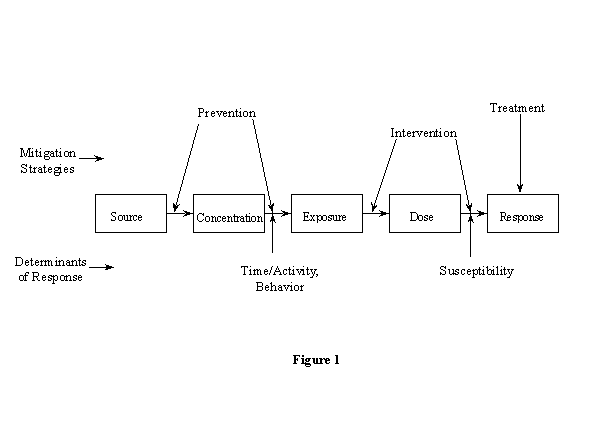
The paradigm allows the identification of points at which prevention,
intervention, and treatment strategies can be applied, and point to the
highlights specific research needs and actions that can help improve health
outcomes from deployments. Although generic, fFiigure 1can be appliesd
to a wwide range of exposures, including environmental toxins, contamination
by radiological materials, infectious agents, and stressorsSuch an application
to a specific type of exposure or multiple exposures will help to identify
specific strategies and actions.
Identification of research directed towards prevention, intervention,
and treatment is accomplished by applying the risk assessment paradigm
to a service member’s life-cycle defined later in (fFigure 2). For example,
exposure to stressors occurs during the immediate pre-deployment, deployment,
and post-deployment phases., There are several time points in the life-cycle
of the service member. during which mMitigation strategies can be applied.
The role of research is to identify potential mitigation techniques
and test their effectivenessAnother example is potential exposure to chemical
warfare agents. In the case of potential exposure to chemical warfare agents,
for example, Rresearch can help in the identifyication of effective means
of protection. Such means would include such as improved protective clothing
and improved detection devices.
Finally, research directed at improved biologically -based dose-response
models is important to overall research efforts on causal relationships
between exposure and response.
Setting Research Priorities for Goal 2
There are aA variety of health risk factors and exposures are associated
with a military deployment. For this strategic plan to be effective, it
is necessary to limit consideration of specific risk factors and exposures
to those that are considered most important. To accomplish this, the answers
to tThe following questions were used to identify those exposures and risk
factors worth consideration for research purposes:
-
Based on best estimates,does could the risk factor or exposure cause widespread
morbidity (and mortality) amongdeployed troops during or after deployment?
-
Is the degree of potential widespread harm high when balanced against the
probability that the risk factor (or threat) would be present during a
deployment?
-
DoAre anticipated advancesments from research and development efforts have
a high probability likely to of leading to significant reductions in morbidity
and mortality?
-
Is current risk factor research within the military communitycurrently
insufficient?
The risk factors or exposures commonly associated with virtually any deployment
include:
-
Traumatic combat injuries (e.g., weapons fire and explosion, etc.).
-
Psychological stressors (e.g., psychological trauma, fear, and confinement,
etc.).
-
Infectious diseases (e.g., endemic and non-endemic).
-
Unintentional injuries (e.g., vehicle collisions and falls, etc.).
-
Collateral health effects from weapons systems (e.g., exposure to propellants
and heavy metals, etc.).
Other risk factors, although less likely to be present during any particular
deployment, could pose a high degree of harm both in extent and severity
include:
-
Intentional or accidental exposure to industrial high levels of hazardous
chemicals – (i.e., environmental exposures).
-
Chemical, biological, and radiological warfare agent exposures.
Risk reduction should be the overriding focus in conducting research on
these risk factors. Risk reduction can be accomplished through prevention,
intervention, and treatment, which can potentially be applied at all stages
of military life: induction, training, pre-deployment, deployment, immediate
post-deployment, and long-term post-deployment. Eachof these stages is
considered in the context of research opportunities for improved risk reduction.
Research Area 1. Chemical, Biological, and Radiological Warfare Agents
Although there have been few documented uses of chemical, biological,
or radiological weapons in combat during this century, a number of recent
assessments confirm our concerns about their potential future application
and thus the need for continued research. Due to their high degree of acute
toxicity, these agents have the potential for producing large numbers of
casualties and/or markedly compromising mission accomplishment. In addition
to protecting our service members from the effects of overt attacks with
chemical or biological weapons (an area which has historically received
a high degree of research attention), we must further examine the potential
health effects of incidental exposures which do not produce acute symptoms
or diseaseneeds further examination. The ultimate goal of this research
is to attain the lowest achievable incidence and severity of either short-term
or long-term injuries through a combination of detection, physical protection,
and medical countermeasures.
Research Area 2. Stressors
Psychosocial stressors of all kinds are present in all phases of a deployment.
It would be expected that the severity of health outcomes of stressors
is a function of exposure (amount and duration) and thus would vary from
deployment to deployment. However, it is reasonable to assume thatno every
deploymentis without has stressors and the potential for both short- and
long-term health consequences.
Research Area 3,. Emerging Health Concerns
The armed forces are engaging in deployments to increasingly complex
and novel environments with the potential for a variety of exposures with
potential health consequences. For example, deployments to heavily industrialized
areas raise the potential for exposure to myriad industrial chemicals with
toxic potential. These potential exposures and combinations of exposures
must be considered as potential deployment-related threats.
As weapons technologies change, new health concernsalso begin to arise.
For example, the introduction of depleted uranium as a material in kinetic
energy weapons to enable piercing of armor has created some concern over
heavy metal toxicity and potential radiation effects. The military and
veteran health communities must, therefore, be alert to these emerging
technologies and be prepared to address health issues potentially associated
with them at the earliest stages of development and implementation.
LastlyFinally, force protection measures, such as the use of prophylactic
agents against biological and chemical threats, may carry with them potential
health consequences that must be weighed against their potential utility.
Research must be specifically applied to ascertain such potential health
consequences in military populations. Such knowledge will better inform
commanders of risk and benefit associated with protective measures.
Research Area 4. Infectious Diseases
Infectious diseases are associated with all deployments. There are the
problems of infectious agents associated with poor sanitation and close
living conditions. Then there are the problems associated with infectious
agents that are endemic to particular parts of the world and create unique
and threatening health hazards, e.g., malaria, yellow fever, schistosomiasis,
and leishmaniasis, etc. Effective prevention, intervention, and treatment
continue to be areas where significant advances can be made.
Research Area 5. Occupational Risk Factors and Non-Combat Injuries
Because physical combat injuries and their long-term sequelae have been
a part of DoD and VA research agendas for decades, the value-added for
additional research in this area would be minimal. However, disease and
non-battle injuries (DNBI) associated with deployments currently account
for the vast majority of deployment-related casualties.
This priority area focuses on issues of motor vehicle-related injuries,
fatigue, and sleep loss, and the links between stress and health, as they
relate to performance of service members in the field. This ensures that
the spectrum of critical research needs concerning preventing occupational
risk factors and non-combat injuries during deploymentare is addressed.
The strategies, when taken together, should address the major non-combat
injury and occupational morbidity and mortality risks faced by service
members and during deployment.
Goal 3. The U.S. gGovernment will have
the capability to collect systematically population-based demographic and
health data to enable longitudinal evaluation of the health of all service
personnel (active duty, reservist, nNational gGuard) throughout their military
careers and after leaving military service.
Objective 3.1. An interdepartmentally coordinated, centralized,
and computerized repository of health data, physical examination data,
and laboratory analyses that would serve as the basis of a longitudinal
database for military personnel.
Strategy 3.1.1. Create an interagency coordinating body with
a clearly defined charge and scope of responsibility and authority to provide
the necessary interagency coordination.
Strategy 3.1.2. Develop the structure and detailed contents of
self-administered health questionnaires specific to different periods of
a service member’s life--cycle beginning with the new recruit and extending
into veteran status.
Strategy 3.1.3. Develop and implement a computerized system for
monitoring baseline health status data on all new recruits.
Strategy 3.1.4. Fully implement the current system of routine,
periodic self-administered health assessments during military service.
Objective 3.2. Standardization of current data elements to facilitate
their utility in forming relational databases to augment self-administered
questionnaire data.
Strategy 3.2.1. Assess current data collection and storage
activities by each service with the purpose of encouraging standardization
across services.
Strategy 3.2.2. Create relational databases of centralized computerized
administrative, personnel and medical data sets, as they become available.
Strategy 3.2.3. Continue to maintain the existing centralized
biological specimen bank.
Objective 3.3. Mechanisms for long-term outcome follow-up after
discharge.
Strategy 3.3.1. Longitudinally follow appropriate populations
of discharged individuals using self-administered questionnaires.
Strategy 3.3.2. Study feasibility of maintaining accurate post-discharge
data for service members’ addresses. Create database if feasible.
Strategy 3.3.3. Extract data from other sources (i.e., VA Patient
Treatment File, BIRLS Beneficiary Identification and Record Locator Subsystem,
National Death Index, Medicare, etc.) and link with health assessment data
described above.
Objective 3.4. Safeguards for protection of database confidentiality
and of the basic human rights of all service members relative to the achievement
of this goal.
Strategy 3.4.1. Develop guidelines for access to databases.
Strategy 3.4.2. Develop ethical guidelines for the collection
of information from service members.
Strategy 3.4.3. Develop ethical guidelines for the use of information
in the database for non-research purposeds.
Supporting Narrative
Figure 2 illustrates the requirements to satisfy the overarching and
recurring need to be able to conduct population-based epidemiological studies
that can compare pre- versus post-deployment health status. Ideally, as
is shown in the figure, aAccurate health status data are desirable at all
points during a service member’s life--cycle.
It should be noted that the pre- and post- deployment health status
is a continuum with routine occupational exposures involving the same agents
as during deployment. Therefore, effects from multiple exposures (e.g.,
from cumulative doses) must be assessed since these exposure patterns can
lead to acute/chronic health outcomes and can have a direct bearing on
deployment-related health outcomes.
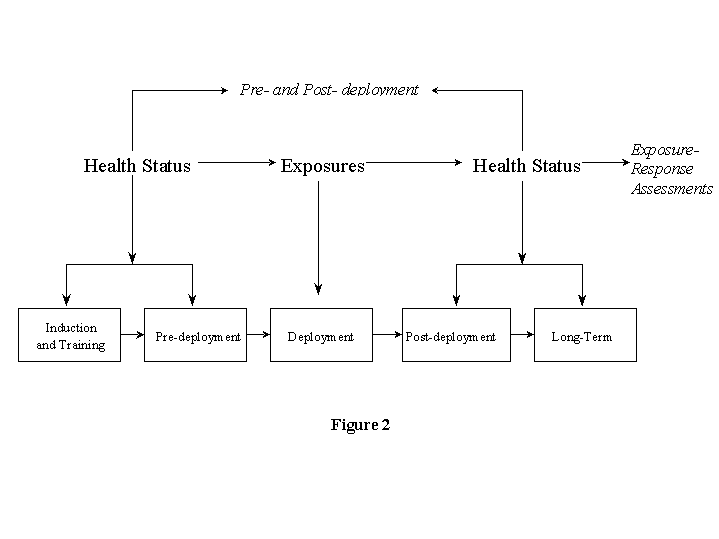
Essential to any longitudinal
research activity on the impact of deployment cCollection of baseline health
assessment data on all military personnel is essential to any longitudinal
research on the impact of deployment. This type of data forms the cornerstone
of any longitudinal database.
Already DoD has designed the Health Enrollment Assessment Review (HEAR)
survey to collect personal information from MHS beneficiaries. Primaryily
health care personnel use this information to plan health care delivery
needs.
Existing data elements that would be of use in tracking the health of
military personnel include administrative, personnel, medical record, pharmacy,
immunization, reportable diseases, physical profile, dental class, and
other databases (see chapter 3). These should be standardized across services
and data should be centralized. While these efforts would enhance the primary
utility of these data sets for their current uses, they would also enable
the data to be downloaded to the centralized database (described above).
Banked baseline biological specimens are of considerable use in exploringto
explore biochemical and genetic associationsas well to provide the potential
and make it possible to explore the interactions of lifestyle, medical
history, and biochemical, and genetic interactions. DoD has already initiated
such banking.
A large central repository of personnel and health data of military
personnel would allow investigators to propose research projects on targeted
groups of individuals. A mechanism should be put in place to make these
data sets available for research purposes.
Goal 4. The U.S. Government will have
the capability to collect and assess data associated with anticipated exposures
during deployments (also see chapter 3).
Objective 4.1. Simple and effective methods to assess exposures
of troops to environmental pollutants using personal, area, and biological
monitoring.
Strategy 4.1.1. Identify the organizations that collect information
relevant to exposure on a regional and/or worldwide basis, and assess the
current extent of that knowledge.
Strategy 4.1.2. Determine spectrum of potential exposures.
Strategy 4.1.3. Compile in a computerized database all relevant
environmental exposure and threat data on a country/regional basis.
Strategy 4.1.4. Determine the current state of the art for sampling
and detecting various exposures and environmental media during deployments.
Strategy 4.1.5. Conduct research to develop smaller, lighter,
simpler, more sensitive, and more rugged personal and area environmental
samplers and detectors that are capable of measuring and/or sampling multiple
exposures/chemicals at toxicologically relevant levels.
Strategy 4.1.6. Expand research in human biological monitoring
to increase the number of chemicals that can be assessed and improve the
analysis time and data interpretation.
Objective 4.2. Improved meteorological and dispersion models to
predict environmental exposures to troops in the absence of actual sample
data or incomplete data.
Strategy 4.2.1. Survey and evaluate existing environmental,
dispersion and meteorological models for their ability to predict exposures
to deployed forces.
Strategy 4.2.2. Expand the knowledge base of environmental modeling
and the ability of models to predict accurately exposures to deployed forces.
Objective 4.3. Methods for measuring exposure of service members
to psychological stressors.
Objective 4.4. Simple and effective methods to measure toxicologically
relevant exposures of service members to chemical/biological agents using
personal and area monitoring.
Strategy 4.4.1. Expand existing toxicological database to determine
physiologically relevant occupational and environmental exposure standards.
Strategy 4.4.2. Assess deficiencies in current technologies and
practices and develop essential equipment, methods, and procedures for
operational use.
Strategy 4.4.3. Develop passive detection capabilities for application
as personal monitors or archival devices.
Objective 4.5. Improved methods for tracking troops, both individual
service members and units, in space and time.
Strategy 4.5.1. Survey and evaluate the current methods and
technologies being developed in universities, private industry, DoD, and
other government agencies that are applicablefor to tracking individual
troops, troop units, and vehicles.
Strategy 4.5.2. Conduct research on potential methods, technologies,
and systems capable of tracking and recording troop locations on an individual
and unit basis, and that are capable of providing this information on a
real time basis.
Strategy 4.5.3. Conduct research into systems capable of integrating
troop location data with exposure and medical outcome data, on as near
a real time basis as possible and maintaining appropriate confidentially
protections.
Supporting Narrative
There are a variety of exposures that troops experience during a deployment
(environmental chemicals, occupational chemicals, stress, vaccines, pesticides,
radiological,etc., or any combination thereof). Many of these exposures
are common to all deployments, whether they are peacekeeping missions or
an actual armed conflict. Many are also the same, and at the same level,
as the troops receive when they are at installations in the United States
or stationed abroad. Current epidemiological research on Gulf War veterans’
illnesses has frequently been hampered by reliance upon self-reported exposures,
leading to reporting bias. Thus, deployment-related exposures potentially
associated with adverse health outcomes are important to measure directly.
There is currently a certain level of exposure surveillance that occurs
during major military deployments (environmental sampling, medical record
keeping and questionnaires, serum samples, etc.). It generally employs
near state- of-the-art methodology, much of which is used by the civilian
community and government regulatory agencies in this country. There is
also a new DoD Directive and implementing Iinstruction on Jjoint Mmedical
Ssurveillance. Nevertheless, more work can and should be for exposure surveillance
during military deployments. Much of this additional effort is dependent
depends on research that will provide expeditious methods of conducting
exposure surveillance at the lowest operational level under battle conditions.
Expanded research into development of biological markers of exposure would
reduce the need for quantitative environmental monitoring under actual
deployment conditions and would provide better data about actual exposures
of individual service members.
The first priority of exposure surveillance is to determine the spectrum
of potential exposures, and the resultant health outcomes that could occur
during a deployment. There is aA number of intelligence, environmental,
health, and government agenciesthat partially fulfill this need. However,
there is noone central system or source for this type of rapidly changing
information. Before exposure surveillance needs and countermeasures can
be planned and carried out, the extent of the exposure threat must first
be ascertained.
Many current methods of environmental monitoring require large cumbersome
equipment that have has extensive power requirements,are is often difficult
to operate,are is sensitive to environmental conditions, andare isvery
fragile. These characteristics clearly make this equipment unsuitable for
most of the environmental monitoring that occurs during a deployment. Much
of the smaller, simpler equipment does not have the required sensitivity
to detect low levels of chemical contamination. Once we know the potential
exposures that exist during a deployment,it is we mustimperative that we
determine the actual type and level the troops really encounter. Only with
this information available can we determine if the health outcomes experienced
by troops are related to the exposures they experienced during a deployment.
Often it is notIt is seldom possible to collect quantitative data when
an exposure incident occurs. The data also may be inadequate from a spatial,
temporal, or sensitivity standpoint. Therefore, it is often necessary to
reconstruct the exposure by modeling the incident. Currently, nNumerous
environmental models are used to predict exposure. However, their accuracy
and precision are sometimes questioned and their ability to handle different
chemicals and atmospheric conditions can be a problem. In the absence of
actual exposure data, model predictions are critical to determine if health
outcomes that troops experience during and following deployments are associated
with environmental exposures.
To determine the exposure of service members using environmental modeling,
area monitoring, or exposure incident proximity, it is necessary to know
their locations at the time the possible exposure occurred. This task is
difficult Wwith the present systemthat is now a difficult task to accomplish.
. Currently troop location data are on a unit basis and are generally compiled
from paper records after the deploymentis over. Therefore,improvements
to the system must be made improved to characterize better the exposures
that occur during deployments and the potential medical outcomesbetter.
The ultimate objective of environmental exposure monitoring and assessment
is to determine whether there are associations between exposures that occurred
during a deployment and adverse health outcomes in deployed troops. To
make this determination we must be able to catalogue the exposure that
an individual service member receives and link those data to individual
health records. To accomplish this objective we must create a computerized
database that stores all relevant exposure data for an individual and is
capable of linking those data with individual health records, to determine
if exposure is responsible for adverse health outcomes. It may, however,
never be possible to capture all the relevant exposure data that may be
needed to determine if an exposure is responsible for an adverse health
outcome.
Goal 5. The U.S. Government will have
a reasonable capability to monitor deployments for the appearance of novel
or unanticipated health risks and to deploy quickly the means to collect
and assess data relevant to such threats.
Objective 5.1. Mechanisms to determine, before all deployments,
the potential for novel exposures associated with a deployment region.
Strategy 5.5.1.5.1.1. The U.S. Government, under the leadership
of a group formed by theas advised by a working group chaired by the NSC,
National Security Council (NSC), should integrate organizational expertise
to identify and assess the potential for novel or unanticipated exposures
associated with major deployments or large scale contingency operations.
Objective 5.2. Personnel, resources, and equipment will be available
before a deployment to collect the data necessary to assess these novel
exposures.
Strategy 5.2.1. The NSC chaired working group should make recommendations
for research on sampling and detection equipment to address their requirements.
Strategy 5.2.2. Before a deployment, DoD should assemble and
prepare for deployment the necessary equipment and personnel to rapidly
collect and assess data associated with exposures. These assets must be
available and capable of deployment to protect U.S. forces.
Objective 5.3. Methods, models, and systems that permit better and
more timely assessment of potential biological and health responses to
novel or unanticipated exposures, especially for complex or combined exposures
and unusual exposure conditions associated with military operations.
Strategy 5.3.1. Based on intelligence input, develop research
approaches that permit more timely screening or assessment of potential
agents and combinations of agents (biological, multi-chemical, physical,
stress) for harmful outcomes prior to deployments in order to establish
operational exposure limits.
Strategy 5.3.2. Develop deployable (compact, rugged, simple)
screening or test systems that can rapidly assess the potential biological
and health responses to novel or unanticipated exposures and exposure conditions,
including complex, mixed exposures.
Strategy 5.3.3. Conduct research needed to develop more sophisticated
laboratory test systems that can be used post-deployment to evaluate experimentally
the biological and health responses to exposures encountered during deployments.
Supporting Narrative
When exposures can be anticipated, mechanisms to measure and assess
them are theoretically possible (see above). Indeed, deployment planners
know the vast majority of deployment-related exposures, and appropriate
responses to these exposures (e.g., medical intervention, protective equipment,
environmental monitoring, etc.) are planned and executed during the deployment.
However, the unpredictable nature of war can lead to unexpected or novel
exposures. If possible, mechanisms to anticipate and measure novel or unanticipated
exposures should be available.
Goal 6. The U.S. Government will maintain
a wide range of national and international collaborative relationships
to enhance research efforts.
Objective 6.1. Maintain an ongoing interdepartmental review of
and input into research strategies and programs for preventing and reducing
adverse health outcomes associated with military deployment.
Strategy 6.6.1. Establish a permanent interdepartmental research
coordinating body, consisting of scientists and senior managers fromthe
Departments of Defense DoD,Veterans Affairs VA, andHealth and Human Services
DHHS, and other agencies as appropriate. This committee will meet on routine
basis to ensure continued implementation of the current research strategy.
Strategy 6.6.2. Provide liaison to the National Security Council
NSC and the Office of Science and Technology Policy (OSTP) to ensure appropriate
strategies are in place to address unique health concerns associated with
specific deployments in support of the National Military Strategy.
Strategy 6.6.3. Integrate available intelligence into threat-based
research protocols.
Objective 6.2. Establish and maintain appropriate collaborations
between U.S. and international investigators.
Strategy 6.2.1. The interdepartmental research coordinating
body should work with ongoing international strategic research alliance
structures.
Strategy 6.2.2. The interdepartmental research coordinating body,
along with its international partners, should ensure appropriate exchange
of information on the most effective research strategies for preventing
and reducing adverse health outcomes associated with military deployment.
Supporting Narrative
Research on deployment-related health issues spans a wide array of
research areas. In order t To maximize the efficiency of research investigations
and the application of research to deployment health problems, it is important
that deployment-related health research efforts engage appropriate government
research sectors, university-based research, private research, and research
conducted in other countries. Only through coordinated efforts with all
sectors of research, nationally and internationally, can significant progress
be made in this area.
Ongoing interdepartmental input and review is essential for ensuring
that an appropriate research strategy based on the most current scientific
knowledge is implemented. Planning for special meetings associated with
specific deployments is equally important as not all health outcomes or
environmental exposures can be anticipatedin advance.
Many countries have considerable experience in addressing the health
consequences of military service. A priority should be placed on establishing
a mechanism for ensuring collaboration with international research organizations.
Such collaboration amongUnited States U.S. and international investigators
will enhance U.S. efforts to address the health concerns of its military
personnel by ensuring that new scientific findings are integrated into
the research strategy in a timely manner.
SETTING RESEARCH PRIORITIES
Although eachof the Goals, Objectives, and Strategyies is important,
it is necessary to identify priorities. The goals related to data needs
(Goals 3-5) are crosscutting across all aspects of deployment health and,
therefore, of highest importance for deployment health.
Althoughthe availability of population and exposure data is a prerequisite
for much research, the acquisition and maintenance of such data are not,
per se, research. Thus, within the narrower context of research, additional
priorities need to be set. Of the two primary research goals identified
(Goals 1-2), Goal 1 is the highest priority. Maintenance of the capability
and capacity to conduct deployment-related epidemiological research ensures
the continued flow of vital information needed to assess the health consequences
of deployments, and to stimulate new research directed toward improved
prevention, intervention, and treatment strategies.
Goal 6 is an organizational priority requiring not so much a commitment
of resources as but a commitment of will to engage a wide range of national
and international scientific communities in this endeavor. Therefore Based
on its, minimal cost, but and potentially high impact, of Goal 6 argues
for it receiving should receive high priorityconsideration.
Within each goal of this research strategy, objectives are listed
in order of importance to the goal. Likewise, within each objective, strategies
are listed in order of their importance to the objective.
Chapter 5
Recommendations
The Federal Government has an unwavering obligation to care for the
health of those placed in harm’s way to defend the vital interests of the
Nnation. Therefore, the Federal Government must be able to respond promptly
and effectively to the health needs of our military, veterans, and their
families. In particular, when health problems are identified following
a military deployment, plans must be in place to improve and facilitate
cooperation and coordination among DoD, VA, and DHHS, as well as among
other appropriate agencies of the Executive Branch. This report, prepared
in response to PRD/NSTC-5, provides the first comprehensive set of recommendations
designed to help ensure that this obligation is met in a manner that takes
into consideration the successes and failures of past deployments.
The numerous goals, objectives, and strategies contained in the report
provide a roadmap to improve the health preparedness associated with troop
deployments. Each strategy recommends specific actions needed to achieve
the stated goals and objectives. This chapter provides the IWG's assessment
of the major recommendations that emerged from its deliberations.
These recommendations can be divided into two main categories:
-
Recommendationsdesigned to that improve coordination across DoD, VA, and
DHHS on a continuous basis.; and
-
Recommendations that require agencies to adopt changes that may require
interagency coordination, but are more dependent on significant programmatic
changesoccurring within agencies.
IMPROVING COORDINATION
Creation of a Military and Veterans Health
Coordinating Board
To achieve many of the goals laid out in this plan, there must be ongoing
coordination of all agencies involved in maintaining the health of military
members (active, guard and reserve component), veterans, and their families.
This could be accomplished through the creation of a Military and Veterans
Health Coordinating Board (MVHCB). Once established, the MVHCB would ensure
coordination between the VA, DoD, and DHHS on a broad range of health care
and research issues relating to past, present, and future military service
in the U.S. Armed Forces.
To be optimally effective, the Board should be chaired by the Secretaries
of VA, DoD, and DHHS. Representation on the Board should include policy
and program level staff from these departments as well as liaison representatives
from veterans service organizations and other agencies, as deemed necessary.
Note, for example, that the U.S. Coast Guard functions as part of the U.S.
DOT except in time of war, when it becomes part of the U.S. Navy. Representation
on the Board from DOT is appropriate.
The work of the Board must take into account that National Guard forces
after a deployment are the responsibility of their respective state governments.
It must also take into account that state and community public health officials
have roles and responsibilities related to the health of veterans and their
families residing in their state. States and communities may be responsible
for the health and health care of veterans and their dependents who choose
not to use VA health care services. In addition, health problems in the
population that are not initially recognized as being associated with military
service may first come to the attention of the state and community public
health officials. In these cases, the states may call upon various components
of DHHS to assist in responding to such health problems.
The Board should provide oversight, coordination, and linkages to other
related efforts in the fFederal gGovernment in the areas of deployment
health, health care, research, health risk communication and education,
record keeping, and compensation. The Board should establish working groups
to carry out its mandate.
Outreach
The MVHCB would make information available as needed to other Executive
Branch agencies, the Congress, the medical and scientific community, and
the public. It is critical to the success of the Board that it adopts an
inclusive mode of operation. In addition to other fFederal gGovernment
entities, the Board must have effective avenues of outreach to veterans’
service organizations, scientific professional societies, the press, state
and community governments, and our Nation’s international partners. As
part of its outreach mission, the MVHCB would develop and implement a protocol
and infrastructure for establishing an integrated electronic web page to
communicate health information related to future combat operations.
The Board Staff
To be effective, the MVHCB will require a dedicated staff that is committed
to achieving the goals and objectives detailed in this interagency plan.
At a minimum, the Board will require one full-time professional in each
of the following positions: executive director,medical director military
public health officer, health scientist, health risk communication specialist,
and administrator/program analyst.
Creation of an Information Management/Information
Technology Task Force
DoD and VA, in consultation with DHHS, will establish an Information
Management/ Information Technology Task Force (IM/IT Task Force) to provide
direction and coordination for health and personnel information management
and record keeping activities, especially activities associated with combat
operations and deployments. The primary responsibilities of this Task Force
will be toas follows:
-
Monitor the development of health and personnel data requirements by the
Departments and by the Military and Veterans Health Coordinating Board
MVHCB Working Groups identified in this plan.
-
Incorporate necessary IM/IT standards to ensure the accurate and efficient
information exchange between DoD and VA of health data and deployment-related
personnel and exposure data;
-
Support electronic capture, storage, and transfer of deployment-related
data; and
-
Coordinate interagency health and personnel IM/IT efforts.
The Task Force members will meet with MVHCB Working Groups and incorporate
functional information requirements defined by MVHCB Working Groups into
data models and integrate data sets into existing or planned IM/IT activities.
RECOMMENDATIONS FOR SPECIFIC AGENCY ACTIONS
In addition to identifying the need for ongoing interagency coordination,
each Task Force developed strategies, which in essence are recommendations
for continuing or new actions to achieve goals and specific objectives.
The IWG identified the following recommendations emanating from the interagency
plan that clearly represented essential strategies for successfully meeting
the broad objectives of thePresidential Review Directive PRD.
Deployment Health
-
The Joint Staff and the military services shall complete implementation
of the DoD dDirective and iInstruction on joint medical surveillance by
December 31, 1998.
-
DoD and DHHS (FDA) should accelerate
their efforts to not only identify regulatory issues associated with the
use of investigational products during military exigencies, but also develop
strategies to resolve them. Although relevant in some cases, use of investigational
products by civilians, for example as countermeasures for domestic terrorism,
is outside the scope of this activity.
-
DoD shall proceed with its contract withthe National Academy of Sciences
NAS andthe National Research Council NRC for a 3-year program of scientific,
technical, and policy analysis activities entitled "Strategies to Protect
the Health of Deployed U.S. Forces" that is scheduled for completion in
September 2000.
-
DoD, in consultation with DHHS, shallestablish a pilot conduct a study
to determine the feasibility of establishing a program to conduct birth
defects surveillance among beneficiaries of the MHS in San Diego County,
California, by September 30, 1998.
Record Keeping
-
DoD shall continue to execute and develop implementation plans based on
the DoD MHS Strategic Plan, the Medical Readiness Strategic Plan (MRSP).
-
DoD shall continue toexecute implementation of implement the recommendations
of the Defense Science Board Task Force on Military Personnel Information
Management to design, develop, and implement the Defense Integrated Military
Human Resources System (DIMHRS).
-
DoD, in consultation with VA and DHHS, will ensure that the DIMHRS database
contains and maintains service member’s demographic, occupational, and
military experience data in a longitudinal record that allows transfer
of pertinent data among DoD systems and VA by 2004. When pertinent, quantifiable
data on personal occupational, environmental, and deployment-related exposures
and events shall be included.
-
DHHS, VA, and DoDshall will establish post-deployment registry templates
and data systems by June 30, 1998 December 31, 1998.
-
DoD and VA, in consultation with DHHS, shall establish a Recruit Assessment
Program to develop and maintain comprehensive electronic health and risk
factor information on all recruits and officer accessions at the time of
initial military training, in a manner that pertinent information is transferable
between DoD and VA by September 31,30, 2000. The program shall be pilot
tested by June 30, 1999.
-
VA and DoD shall establish a computer-based patient record that will accurately
and efficiently exchange information between DoD and VA.
Health Risk Communication
-
VA, DoD, and DHHS should develop and implement a coordinated interagency
health risk communication program .to communicate The program will convey
to military members, veterans, family members, and the public health risk
information related to current and future deployments, especially combat
operations. health risk information related to current and future deployments,
especially combat operations, to military members, veterans, family members,
and the public by March 31, 1999.
-
DHHS, VA, and DoD, in consultation with DHHS, will develop and implement
an interagency applied research program on health risk communication for
military members, veterans, and their families.
-
DHHS, VA, and DoD will assess the feasibility, options, and costs to expand
the build essential capacity for electronic communications with state and
community public health departments to enhance the dissemination of health
risk information to veterans and their families through local public health
infrastructures.
-
DHHS, VA, and DoD will assess the feasibility, options, and costs to provide
training to local public health officials on the use of essential information
technologies to disseminate and receive health risk information from veterans
and their families.
Research
-
DoD and VA shall maintain a robust, biomedical RDT&E research, development,
testing, and evaluation program emphasizing research priority areas identified
by the PRD-5, including medical counter measures for chemical, biological,
and radiological warfare agents; stressors; emerging health concerns; infectious
diseases; and occupational risk factors and non-combat injuries.
-
DoD shall consider for funding, under the Defense Program Element for Gulf
War Illnesses (GWI) Research, Fforce Hhealth Pprotection research initiatives
that will help preclude GWI-like health outcomes following future deployments.
Such initiatives may include deployment health related research, population-based
troop health assessments before, during, and after deployments, and epidemiological
research to determine whether deployment-related exposures are associated
with post-deployment health problems.
-
DoD shall facilitate external technical reviews of Fforce Hhealth Pprotection
science and technology initiatives.
-
DoD shall ensure that military medical manpower requirements include scientists
trained in the medical specialties essential for Fforce health Pprotection
research including epidemiologyist, preventive medicinespecialist, and
public healthpractitioners.
Appendix A
A
Guide to Health Risk Communications
This appendix provides a planning guide for health risk communications
managers and planners involved during the training, pre-deployment, deployment,
and post-deployment stages of a given military exercise or peacekeeping
mission.
The planning guide is designed to help:
-
Improve an organization’s ability to develop and deliver health risk and
health communication messages;
-
Strengthen an organization’s communication skills and confidence in its
communication ability; and
-
Improve an organization’s ability to protect the health status of the intended
audience using effective communication techniques.
Whether a large unit or a smaller field unit,tThis guide will help in the
assessment of the capacity of an organization whether a large unit or a
smaller field unit to implement health communication projects, analyze
a unit’s working environment, and plan to increase the effectiveness of
health communication interventions.
HOW TO USE
THIS GUIDE
This guide presents a diagnostic process that involves a series of basic
key communication elements organized by the six general goals and related
objectives and strategies necessary to develop and implement a successful
communication activity.
Completion of the six- goal planning process will identify areas of
need and opportunity for your organization and provide a structure to lead
the reader through an effective health risk communication process. A major
theme of this process is involvement of the intended primary and secondary
audiences as well as appropriate external partners in both the identification
of their needs and the selection of communication messages and strategies.
Outreach
Although this guide is intended for communication managers, the organizational
development process works best if other staff members, the intended audience,
and, when appropriate, external partners have input into key planning discussions.
By involving these groups,you one receives realistic feedback from the
intended audience, external partners, and the field personnel responsible
for much of the intervention work.
Training
This strategic planning guide can be used for occasional communication
support, choosing a strategy, or planning an idea that is needed at a given
moment. However, to be most effective field personnel should test this
process in the intended environment. Results and necessary adjustments
should then be folded into a continuing staff training program for health
communication personnel. Above all, these materials provide a planning
structure that must be continuously modified based on the realities of
the communication environment.
HEALTH RISK
COMMUNICATION GOALS, OBJECTIVES, AND STRATEGIES
Goal 1. Develop a health communication
plan and select a strategy.
The planning stage of a program provides guidance for managing
the entire health communication process. Planning is a systematic and creative
process in which information, attitudes, and ideas are managed to be exchanged
and transmitted via specific messages and channels. The efforts to shape
and disseminate messagesin order to accomplish established objectives and
goals become the elements of communication planning. Careful assessment
of a health problem and strategy selection in the beginning of the process
will reduce flawed decision making and improve outcomes.
Objective 1.1. Develop a written purpose statement.
The first component of a sound communication plan is a written purpose
statement based on a thorough understanding of the health problem as dealt
with by those expected to be most burdened— - the intended primary audience.
Good planning will help with identification of the audience’s beliefs and
current behavior regarding the health problem., which in turn will serve
to define the feasible behaviors that the communication intervention will
ask the intended audience to know and perform. The health communicator
turns the expected knowledge or behavior of the audience into specific
communication messages with specific objectives. These messages are translated
into communication materials (print, video, electronic, etc.) and pre-tested
in the field with a sample of the recipient audience. Final dissemination
of health messages is based upon a clear health problem statement, pre-tested
materials, andclear achievable communication objectives.
Objective 1.2. Assessyour the environment.
Before developingyour a communication program, it is importantfirst
to complete an analysis ofyour the operating environment. This external
assessment will provide an overall picture of who is active in the communication
area, whereyou one might find support foryour the activities, how to avoid
duplication of efforts, and the human and resource capacity to actually
develop and manage the communication intervention within your organization.
The answers to the following questions will help guide your assessment:
-
Whatare the groupsthat may interact withyour the organization?
-
What is the relationship of these groups toyour the organization?
-
Who are or should be the primary and secondary audiences foryour the current
and future services?
-
Who are the key decision makers affectingyour daily work?
-
What are the health interventionsthat doesyour each unit plans to address?
-
What areyour the key funding sources?
-
What other organizations both internally and externally arecurrently involved
in similar health interventions and are working with the same audience?
-
How can your organization’s relationships with other groups be strengthened
to increase audience support?
Objective 1.3. Develop a written health problem statement.
Early in the planning processyou one must set priorities anddefine develop
a health problem statement. One Ddefines this problem by asking yourself
the following questions:
-
What is the health problem (e.g., mortality, morbidity prevalence, geographic
location, etc.),? including wWhat is happening, where and when, to whom,
and with what effects?
-
What are the risk factors related to the problem?
-
What are the anticipated obstacles?
-
What are the known problem causes and preventive measures?
-
What information is needed (e.g., gaps analysis, research plan, etc.)?
-
What resources are readily available?
Objective 1.4. Develop a written health communication strategic
plan.
Developing a written health communication strategy forces the health
communicator to consider all the elements of the strategic planning processIn
developing a written health communication strategy, the health communicator
must consider all elements of a strategic planning process (overall strategy
statement, dissemination strategy, written communication objectives, and
health messages). and to place them in a strategy that will give the target
audience the motivation to understand and act upon the proposed communication
product. The elements of thehealth communication strategic plan may vary
considerably as the environment changes from training, pre-deployment,
deployment, and post-deployment phases.
TheA health communication strategic planis composed includes of the
following elements:
-
A strategy that encourages the health communicator to see interventions
from the point of view of the intended audience (recipient);
-
The selection of strategies for developing communication objectives and
messages;
-
Identification of communication channels (e.g.,, print, electronic,
video, face-to-faceetc...) and their accompanying materials for disseminating
messages;
-
Information delivery systems that are creative and cost effective for distributing
materials and receiving feedback from the intended audience; and
-
A realistic, comprehensive tracking system thatprovides provides for monitoringing
and evaluation ion of the communication intervention.
Implementation Strategies
Strategy 1. Establish within DoD both administrative level
and unit (or installation) level health risk communication teams responsible
for health risk communications during the training, pre-deployment, deployment,
and post-deployment phases. The administrative teams should oversee the
activities of the local or installation level team.
Strategy 2. Develop guidelines to identify generic threats common
to all deployments. Establish appropriate health risk communication strategies
for each generic threat.
Strategy 3. Develop interdepartmental guidelines for writing
health communication problem statements and a quick-response mechanism
to integrate new threats.
Strategy 4. Link surveillance data with communication planning
as troops movements change during deployment.
Strategy 5. Develop a written guidebook that details how post-deployment
service personnel and veterans can continue to receive health information
and communicate their health concerns to medical personnel.
Strategy 6. Develop a strategic communication media planning
guide that will be used to answer the "who, what, where, when, why and
how" types ofquestions.
Goal 2. Analyze and segment intended audiences.
Audience analysis is the gathering, interpretation, and application
of demographic, behavioral, and psycho-graphic information related to audience
interest.
Segmentation is the process of breaking down a largeintended
audience into a small number of subgroups that are internally as homogeneous
as possible and as different from each other as possible. Dividing a large
population into homogeneous subsets of priority audiences helps to better
describe and understand a segment, Segmentation makes it easier to describe
and understand each subset, predict behavior, develop tailored messages,
and meet specific needs. Segments may be demographic (e.g., age,
sex, education, etc.), geographic (e.g., theater of service, physical
location in post deployment stage, etc.) or psycho-graphic (e.g., medical
usage patterns, risk factors, health status, benefits sought, information
patterns, trusted sources, etc.).
Objective 2.1. Describe and segment intended audiences.
Risk communicators need to be especially alertto describe the in describing
their audience(s). that are to receive the communication intervention.
Few messages are appropriate for everyoneincluded in the military population
given the diverse interests, needs, concerns, and priorities during the
various stages of training, deployment, and post-deployment. Trying to
reach all recipients with one message or strategy is rarely successful
and tends to dilute the message. Single message dissemination may only
be appropriate when the intent of the communication is merely to raise
recipient awareness.
The four major purposes of audience segmentation are as follows:
-
Decide resource allocation;
-
Develop important delivery profiles based upon key characteristics of the
recipient;
-
Devise communication strategies based upon audience profiles; and
-
Develop audience-specific messages and pre-test.
The health communication team must think carefully about the feasibility
of the segments chosen. Linking feasible health risk communication activities
and appropriate audiences will help focus activities on disseminating useful
information for individual decision making. In addition, segmentation can
increase the confidence and the credibility of the health risk communication
team and demonstrate their trust and effectiveness of their message and
strategy selection.
Objective 2.2. Apply segmentation criteria to segment audiences.
Useful criteria for choosing audience segmentsto focus as focuses for
a communication intervention include the following:
-
Audience segments most affected by the health problem (e.g., health
status, exposure registrants, seriousness etc.);
-
Size of the segment;
-
Availability of outside partners and resources to assist in dealing with
the problem;
-
Ability of the audience segment to cope with the problem and the level
of assistance needed; and
-
Accessibility, availability, and willingness of the audience.
Objective 2.3. Develop working relationships with important partners.
Organizational partners from within a particular community can provide
audience insight and key information that will help communicators design
and implement health communication interventions. These sources include
influential local leaders, private veterans groups, local health professionals,
and special interest groups.
Network partners can help solve the numerous communication problems
that will emerge and can provide needed support and comfort to the primary
audience. These sources include health professionals, family members, and
religious groups.
Media partners can effectively and efficiently reach a large audience.
Coverage of a health issue in the media can increase the salience of the
topic in people’s minds. These sources include local and national print,
audio, video, and electronic groups.
Objective 2.4. Use field experience to improve your audience
outreach.
Appropriate identification of the intended audience at the start of
a program results in a much more cost- effective and successful intervention.
After the initial health problem has been described, it is necessary to
identify the primary and secondary audiences involved in the problem and
to learn more about their behavior through field research. The use of local
organizations and specific geographic databases, which provide much needed
psycho-graphic information, can assist message development and channel
selection to reach identified recipients in the post-deployment stage.
Strong partner identification, outreach, and selection techniques are all
necessary to gather the most useful information from the intended audiences
to plan the communication intervention.
Implementation Strategies
Strategy 1. Develop guidelines for determining primary and
secondary intended audiences.
Strategy 2. Establish advisory mechanisms to involve intended
audiences, to assist needs assessment, and to improve information dissemination
and retrieval.
Strategy 3. Develop an electronic information system tobetter
send and receive information better.
Strategy 4. Encourage "science literacy" by integrating baseline
service member "health and science information" with basic/advanced training.
Strategy 5. Develop a self-administered "science based" questionnaire
specific to the service member life cycle.
Goal 3. Select appropriate messages and
channels.
Messages are the essential communication themes and ideas that
are delivered by the communicator and acted upon by the recipient. Channels
describe the route of message delivery (e.g., mass media, face -to- face,
print, electronic, video etc.). Channels should always be considered as
two-way vehicles for transmitting information.
Objective 3.1. Explain the "what, so what, why now, and now what."
Good messages depend on knowing the audience,and what it wants to know,
and what steps it might take. An effective message has three main purposesas
follows:
-
Explaining the W"what?" The basic risk information being conveyed—it
may be factual information, it may break down expected audience reactions
into small steps, or it may directly address a concern or problem by offering
alternatives or solutions.
-
Explaining the "Sso Wwhat, Wwhy Nnow?" The reasons or benefits for
action. Specifically, what are the health benefits and incentives for action?
What action is important now and why is it compelling? What is the threat
if current inaction continues? What are the immediate benefits to the intended
audience?
-
Explaining the "Nnow Wwhat?" Clearly defines some desirable and
productive action by the intended audience. It may mean seeking out further
information, reaching out to someone or some important network or organization,
or taking a small step to "test the water" of some proposed solution.
Objective 3.2. Use written criteria to develop health risk messages.
Not allof the messages can be transmitted at the same time. The communication
team will need to set priorities for the messages and select those that
are absolutely necessary for initial knowledge and effective first trial.
As the target audience learns and acts on the messages, the communicator
can deliver other messages in succeeding phases.
How does the communication team define the messages to be used in a
health communication intervention? Important criteria for successful message
development include the following:
-
Emphasize information relevant to practical actions that recipients can
take;
-
Emphasize clear, concise message themes written in plain language; and
-
Develop messages initially to inform recipients about a health concern
while research is underway or information is being gathered. As the environment
changes and more health risk data becomes known, provide useful information
for audience decision- making.
Objective 3.3. Address message elements of special concern.
The health risk communicator should be aware of special elements that
must be addressed for message development and delivery. These elements
are as follows:
Uncertainty: Health risk messages and supporting materials should
not minimizethe existence of the scientific uncertainty of a given risk
from an identified hazard. Research needs and data gaps should be acknowledged
up front, as should any disagreement among experts. The level of confidence
of risk estimates should be conveyed in the format, style and "mental model"
of recipients.
Comparing Risks: Risk comparisons can be helpful in message development,
particularly among scientists and risk managers. In health communications,
there are proven pitfalls when risks of diverse character (e.g., seat belt
use, smoking cessation, etc.) are compared with chemical or safety hazards,
especially when the intent of the comparisoncan be seen as minimizing is
intended to minimize health risk. Multiple comparisons that list a specific
range of known health effects and exposure conditions may provide more
useful and trusted information.
Multiple Messages: In mMost health risk communication interventionsthere
will be include multiple messages which that concernreporting risk analysisissues,
special interestsissues, value questions, and trustissues. For this reason,
tThe health risk communication development process includes the full range
of messages. Thus, a health risk message designed to convey information
regarding a specific finding may also need to address issues of audience
values and communicator credibility. To the extent feasible, the health
risk communicator should anticipate and plan for these multiple messages.
Theme Line: For all audiences, the message should prominently
present a summary statement that captures the main idea, theme, or finding.
Distillation of key theme lines is critical in reporting findings of scientific
research.
Vividness: For most audiences, messages should use lively language,
striking but accurate statements, relevant facts, and appropriate visuals.
Appropriateness: Risk information delivery should be consistent
with the general norms and preferences of the intended audience.
Objective 3.4. Pre-test messages with the intended audience.
The communication strategic plan and the information collected during
the audience analysis and segmentation process provide the blueprint for
developing message concepts. These concepts should be considered
in "rough draft" until they can be tested with a representative sample
of the recipient audience. Pre-test each message concept to make sure it
complies withyour the communication strategy and objectives. Consider testing
alternative concepts with the intended audience to help predict the impact
of scientific information or testing the message with a group of volunteers
to better clarify how the health risk information will impact the public.
Pre-test the messages well in advance of final message development to allow
ample time to make appropriate modifications. Plan for the modifications.
Testing message and materials should provide the communication team
with the following:
-
Assessment of message comprehension and delivery mechanisms;
-
Identification of strong and weak points of message themes;
-
Determination of personal relevance to the audience segment;
-
A gauge of unclear, sensitive, or controversial elements;
-
Identification of language used by the recipient audience; and
-
A channel for intended audience input and feedback.
Objective 3.5. Select the appropriate channel.
It is important to consider what type of communication channels is best
suited to achieve different objectives. Generally, media and electronic
mail are the least interactive method to reach people, but are appropriate
mechanisms to disseminate simple one-way messages. Face-to-face communication
(by a trusted commander, trainer, health professional,etc. for instance)
allows for much greater audience participation. Use face-to-face messages
for situations where the audience needs feedback and an opportunity to
shape the communication. Face-to-face meetings in small group settings
serve as an appropriate venue for providing detailed health information.
This mechanism is particularly appropriate during the training, and deployment
phases.
Special community meetings, town hall sessions, and conferences share
characteristics of both media and face-to-face communication. Town hall
sessions often provide a good opportunity for recipient feedback; however,
communicators should expect concerns about vested interests and value differences,
as well as general mistrust of expert knowledge seen often as serving a
"special interest."
Finally, 800 numbers and electronic mail provide an effective way to
disseminate information in large quantities and in a timely manner. However,
because many audiences may have access problems, use intermediaries (e.g.,
local librarians) to assist recipients to "get on line." "Chat rooms" provide
a mechanism for two-way electronic exchange of information, but they are
susceptible to message overload from multiple sources.
Base the ultimate decision inUltimately, selecting channels based on
whatyour the intended audience already listens to, views, or reads.
Objective 3.6. Use different types of channels.
Consider the following channels in selecting the mix of delivery mechanisms:
-
Face-to-face: one on one communication, home visits, group discussions,
counseling, or town hall meetings.
-
Written documents and audio-visuals: pamphlets, fact sheets, point-
of- contact displays, videotapes, or slides.
-
Electronic and Mmass Mmedia: Radio, television, newspapers, magazines,FAX
fax, Internet, Intranet, or 800 numbers.
Objective 3.7. Use criteria for selecting a channel of communication.
Develop communication dissemination activities that will indicate the
following:
-
Which channels the intended audience uses, trusts, and has access to;
-
Which channels are most effective for communicating research findings;
and
-
Which channels are best for delivering the type of information the audience
wants to receive.
Match the ability of the channel to deliver the message by applying the
following elements:
-
Is the channel of communication a trusted source of information for motivating
recipients to learn new information or adopt a behavior?
-
Does the communication format lend itself to the content of the message?
For example, fact sheets may be effective for some content but expert two-way
dialogue may be required to support research findings.
-
Is the desired language more visual, written, or sound based? Is it a combination
of all three?
-
Will the channel reach the intended audience at the level of depth needed?
For example, introducing a new health research project of broad interest
may require a more general information activity (TV and radio) than the
discussion of a health research finding of most interest to (primary health
care providers).
Analyze the frequency and reach of the selected channel as follows:
-
Which and how many people need to be reached? What is needed at what moment
in the communication strategy?
-
What is the frequency of message repetition? Some channels,, like radio,
can repeat a message up to15 times per day at a reasonable cost.
Develop a written inventory of administration costs and potential barriers.
-
What can be accomplished with current personnel and other resources available?
What networks and organizations can assist information delivery?
-
Some channels are more costly than others are. What are the tradeoffs?
Is the goal to transmit a simple message or to ask the intended audience
to adopt a certain positive health behavior?
Implementation Strategies
Strategy 1. Define guidelines and criteria for developing appropriate
communication messages and channels.
Strategy 2. Use extensive outreach mechanisms (focus groups,
intercept interviews, surveys) to determine the general channel preferences
of the audience(s).
Strategy 3. Develop links with external public health communication
experts who will provide advice and assistance in developing and pre-testing
message and channel selection.
Strategy 4. Conduct or sponsor research to determine communication
research factors that improve message development and are determinants
of positive outcomes.
Strategy 5. Use POM (preparation for overseas movements) activities
as an effective communication channel.
Strategy 6. Develop channel mechanisms to provide information
to all training units and interested network, media, and partner groups.
Strategy 7. Develop "easy- to- read" single page fact sheets
for hazardous exposures or safety issues of concern.
Strategy 8. Work with the American Library Association to link
local libraries and their electronic media resources to serve veterans
and veterans service organizations.
Goal 4: Develop written communication objectives.
Goal 1 outlinesd the importance of strategic planning and general goal
development. Goal 2 and Goal 3 addressed audience, channel, and messages
issues. The results from implementing these goals provide the necessary
framework needed to write specific communication objectives.
Communication objectives are short written statements that indicate
the expected change in health status, behavior, knowledge/attitude, or
process in the intended audience as a result of the communication strategy.
Communication objectives should address the following questions:
-
What will be addressed (e.g.,, health status, behavior, knowledge,
attitudes, process etc.)?
-
To what degree?
-
Over what time?
-
To what outcome?
Objective 4.1. Address key objective setting elements.
Each written objective should::
-
Be directed to a single intended audience;
-
Specify expected changes in knowledge, attitudes, and, where appropriate,
the behavior of the intended audience;
-
Describe expected results;
-
Be time specific and precise; and
-
Be attainable ("actionable") over a reasonable time.
Objective 4.2. Write objectives with audience outcomes in mind.
When preparing objectives, focus on expected results rather than on
describing activities. For example, training is a program activity. A communication
objective should describe what the audience is expected to do or learn
as a result of the training.
A well-defined communication objective should be interpreted in the
same way by everyone. If there is any misunderstanding or confusion, change
the objective to make it clear. Accordingly, an objective should not include
vague or confusing words that lend themselves to a number of different
interpretations. Instead, communication objectives should use action words.
Examples of confusing words: internalize, know, understand, appreciate,
value, recognize, learn, sensitize.
Examples of action words: complete, use, try, enumerate, define,
explain, design, summarize, resolve, construct, prepare, make, organize,
select, compare, list.
Ask the following questions whenyou are writingyour objectives:
-
Could another person use these objectives to understand exactly what the
recipient needs to do?
-
Isthere any objective on the listthat is vague or confusing? If two people
have different interpretations, change the objective to make it clear.
-
Does the list describe all the results that should be achieved?
-
Is thereDoes any objective on the list thatdescribes an activity instead
of a result?
Communication objectives serve as a blue print for program development,
implementation, and evaluation. If they are not clear and "actionable,"
the communication program will be unfocused, unclear, and ultimately unsuccessful.
Objective 4.3. Write communication objectives for four intended
audiences.
The health communicator must address four important intended audiences
when writing communication objectives, as follows:
-
Individual (primary audience)
-
Networks (primary or secondary audience)
-
Organizations (including legislative and media)
-
Media (radio, TV, written press)
Individual: The most important health-related communication outcomes
at the individual level are generally health behaviors, physical actions,
health access, and health status. The important outcomes (particularly
during training and pre-deployment stages) are antecedents of health behavior,
including awareness, knowledge, attitudes, self-efficacy, and skills for
behavior change.
Networks: Social networks have a profound impact on health communication
messages and strategies. Health risk communicators should seek to influence
the information flow (two way) in a social group. Influential persons (e.g.,
spouse, family members, health providers etc.) often provide entry into
social networks.
Organizations: Organizational settings include work sites, training
venues, health care facilities, private advocacy organizations, and veterans
groups. The use of organizations as channels to deliver and receive health
information allows risk communicators to better tailor messages, reach
priority audiences with internal channels, and multiply efforts by using
existing organizational resources. Gatekeepers often provide entry to these
organizations.
Media: Mediainfluences shape the health message. Theyincrease
affect the importance intended audiences attach to an issue by increasing
mass media coverage, discussions by politicians and scientists, and by
agenda setting. The health communicator must develop links to the media
early in the communication process and, where appropriate, develop clear,
unambiguous theme lines concerning health risks.
The communicator should develop communication objectives for each of
these four audiences. As individuals become concerned about an issue through
individual or media channels, theywill likely are likely to discuss it
in their social networks or organizations.
Implementation Strategies
Strategy 1. Develop a case study- based "style manual" for
writing communication objectives in the training, pre-deployment, deployment,
and post-deployment stages.
Strategy 2. Provide guidelines for writing communication objectives
for all intended audiences, including but not limited to: service members,
veterans, spouses, family members, health providers, veterans groups, media,
public affairs personnel, and field staff.
Strategy 3. Train field personnel in writing useful communication
objectives.
Strategy 4. Provide a quick response system to add, modify, or
eliminate communication objectives in each operation phase.
Strategy 5. Develop an interagency system that links research
protocols, findings, and surveillance activities with communication objectives.
Goal 5: Develop a written implementation
and monitoring plan.
Implementation refers here to the act of converting communication
objectives into actions through detailed knowledge of administration requirements,
available resources, and organizational policies and procedures. Monitoring
is the process of tracking the program through all phases of the health
risk communication process and using tracking data to improve program performance.
The selection of communication objectives, messages, channels, and strategieswas
is based on consideration of available resources. The main purpose of implementation
is to assess those resources, match resources to communication methods
and strategies, and budget human and material resources. Monitoring provides
a mechanism to identify flaws or oversights before they become major impediments
to success and to provide a solid database for claiming success.
Objective 5.1. Develop a written assessment of resources needed.
Assess the resources required by the proposed communication intervention.
This requires an examination of the time frames needed for accomplishment
of the written objectives and of the type and numbers of people needed
to carry out the program.
Objective 5.2. Develop a written assessment of available resources.
Goals 1-4 of the strategic planning process identifyied objectives,
strategies and materials in support of written communication objectives.
Such materials might need to be developed from scratch, while in some cases
existing materials and delivery mechanisms may be available to your unit.
However, such materials and mechanisms may not be tailored to the intended
audience. Such tradeoffs will arise throughout implementation. If the communication
plan requires more personnel than the sponsoring unit has available, thenyou
one may need to budget for additional costs, or reduce the cost of your
activity.
Objective 5.3. Develop a written assessment of regulations and
operating policy.
Beforeyour the communication plan can be implemented, determine whether
it is consistent with existing policy, regulation, and organization. The
communicator must show how the health risk communication plan serves the
overall legislative mandate, organizational mission, and operating policy
of the organization.
Objective 5.4. Develop a written promotion plan.
The fully developed communication program should be introduced and promoted
to the intended audiences. Promotion and distribution begin through dissemination
activities for all channels. Before the program starts, one should ask
the following questions:
-
Do you haveIs there a media plan (if appropriate) for each phase ofyour
the communication plan?
-
Does every network and organization that should be involved know aboutyour
the program?
-
How preparedyour is the sstaff and others to respond to inquiries?
-
Are all supporting materials in place?
-
Are all intended audiences aware of the new program and supportive of it?
-
Do you haveAre there mechanisms in place to track progress and identify
successes and problems?
Objective 5.5. Develop a written monitoring plan.
Monitoring the program, through all phases of implementation, provides
a mechanism to identify flaws or oversights before they become major impediments
to success. and a Monitoring also provides solid database for claiming
success. A periodic review of planned tasks and time schedules will helpyou
one anticipate the need to alter any plans that might be affected by unexpected
events or delays. Anticipate altering plans to fit the situation.
The discovery of problems and flaws inyour the communication strategyreflects
the vitality of your program because it provides the opportunity to correct
problems in time to avoid serious damage. Monitoring allowsyou one to correct
the problems and to adapt constantly to changing situations and the emerging
needs of the intended audience.
Objective 5.6. Decide on the purposes of monitoring.
Consider the following monitoring purposes:
-
To reveal what inyour the strategy is working (and not working) as expected;
-
To indicate what links toyour the intended audience are appropriate for
receiving feedback and input;
-
To permit modification of the health risk communication strategic plan;
and
-
To allow an ongoing review of project outcomes.
Objective 5.5. Decide strategies for tracking.
Consider the following strategies in developingyour the tracking system:
-
Provide computer or manual services for intended audience feedback;
-
Identify and train organizations and network leaders in becoming involved
in tracking;
-
Follow up with sampling of participants to assure continued involvement;
and
-
Develop a regular system of involvement and rewards for key partners.
Objective 5.7. Decide what to monitor.
Consider the following:
-
Distribution of materials;
-
Media activities;
-
Feedback on implementation strategies;
-
Identifying new, unexpected barriers;
-
Identifying the need for additional or different messages and channels;
-
Identifying the need for new or different audiences; and
-
Comparisons of the costs of materials and methods.
Objective 5.8. Select appropriate monitoring methods.
Monitoring is done in many ways using multiple forms of follow- up.
Among the most common methods of monitoring are the following:
-
Regular audits of materials, messages, and channels at the point of dissemination
including audience feedback;
-
Reviewing Internet Web traffic and media audits to identify which messages
are having impact and which need to be reinforced or refined;
-
Utilizing focus groups and intercept interviews to receive intended audience
feedback on appropriate channels, message impact, usefulness, and satisfaction;
-
Developing key indicators (e.g., Aan increase in screening visits by the
intended audience); and
-
Recording in-depth observations at dissemination points (e.g., Ttown hall
meetings, Internet use), using written protocols.
Implementation Strategies
Strategy 1. Develop guidelines to secure and manage interagency
resources needed for effective health risk communication implementation
and monitoring.
Strategy 2. Develop a written assessment of requirements and
needs to assure complimentary implementation of communication programs
within current agency regulations and operating policy.
Strategy 3. Develop guidelines that encourage a problem solving
or veterans need- based approach to the development of communication promotion
plans for key communication activities.
Strategy 4. Develop an integrated project monitoring plan to
improve the coordination of interagency program tracking.
Strategy 5. Develop a "how to" tracking manual and provide necessary
training for headquarters and administrative personnel on key indicators
and measures of communication project management.
Strategy 6. Develop an electronic information clearinghouse to
disseminate tracking information.
Strategy 7. Create and maintain a centralized tracking system
in the form of an electronic databaseto that may be queried for the status
of particular research reports, interim reports, and findings.
Strategy 8. Create and maintain an automated FAXfax and, phone
system, andworld wide a website (with an appropriate graphical user interface)
which allows individuals to immediately download backgroundsupporting science
documents.
Strategy 9. Identify, train, and support key network and organizational
leaders to assist in program tracking.
Goal 6. Assess effectiveness.
Goal 5 of the strategic planning process developed and implemented a
monitoring system. In this final step, you will focus on ways to carry
out an evaluation. Evaluation of your health risk communication intervention
should build on data collected in monitoring, which will enrich your understanding
of the project for reporting purposes, changes, revisions, or expansions.
Evaluation is a purposeful effort to determine the effectiveness
of the health risk communication activity.
Evaluation is essential because it provides feedback about whether the
intended audience received, understood, and internalized the risk messages.
Furthermore, cCommunicators cannot choose the most effective messages and
strategies without evaluation. Therefore, evaluation affects both the quality
of the communication intervention and the primary goal: improving and protecting
the health of the primary intended audience. In addition, evaluation results
are valuable for other uses:
-
Identify success and justify a particular strategy;
-
Provide evidence of need for additional resources;
-
Increase understanding of and support for health risk communication activities;
and
-
Avoid making the same mistakes in future efforts.
Objective 6.1. Decide what questions the evaluation will answer.
Consider the following:
-
Did the intended audience make the expected change?
-
How, when, and with which audiences did the changes occur?
-
What aspects of the communication contributed to these changes?
-
What aspects of the communication should be changed?
-
How cost-effective was the communication activity?
-
What lessons were learned?
Objective 6.2. Select the evaluation approach.
Process and other descriptive evaluations document what and how
events occurred. Impact (or outcome) evaluations measure
what changes occurred and the extent to which they can be attributed to
the communication intervention.
The Table below shows the questions these two approaches answer and
the best time to collect data during the intervention.
|
Type Of Evaluation
|
Critical Questions
|
Data Collection
|
| Process evaluation |
Is the communication strategy performing
to expected standards? |
Throughout the program. |
| Impact Evaluation
Short Term
Long Term |
-
Are health behaviors changing? If so, to what extent?
-
Did the intended audience’s health status improve?
-
Was the health risk communication program effective?
|
-
At important transition points, and at the end
-
At important transition points, and at the end
|
Objective 6.3. Decide what questions the process evaluation will
answer.
Process evaluation describes the implementation of the health risk communication
process and demonstrates the efficiency of the program implementation.
It answers the following general questions:
-
What happened during the implementation?
-
How was each goal carried out or not carried out?
-
Were activities consistent with the overall strategic plan?
Objective 6.4. Select a technique to do the process evaluation.
Several process evaluation techniques can be applied in different ways
and for different purposes as follows:
-
Observation of individual or group behavior, incidents, or activities.
These observations should follow written interview guidelines.
-
Individual interviews using open-ended questions, revealing information
on what happened during implementation.
-
Record review, interpretation, and analysis of documents (e.g., activity
reports, minutes, meeting summaries, etc...), revealing what happened during
implementation.
Objective 6.5. Select a techniqueto do for doing the impact evaluation.
Usually, in the case of communication activities, impact evaluations
focus on the behavioral changes defined by the communication objectives.
Data from impact evaluations will help you determine if and to what extent
the intended audience assimilated the expected knowledge, and changed their
attitudes andtheir its level of action;, fFor example,was there an increased
did use of health facilities for screening purposes increase?
Impact evaluations compare one group both before and after the intervention
or compare a group that did not benefit from the program with a group that
did. A relatively simple method of comparison is to use time series charts,
in which data for a given group, organization, or individual are entered
in a time chart. For example, chart the numbers of weekly screening visits
to selected clinics by veterans before and after the communication intervention
(e.g., a major media campaign).
Objective 6.6. Design an evaluation plan with written evaluation
objectives.
The following four steps will guide you in designing an evaluation plan
for youthe communication activity:
Step 1: Establish Evaluation Objectives and Indicators. It is
necessary to establish the objectives of your evaluation. They are different
from your communication strategy objectives, but will be linked to them.
They are indicators of expected changes in knowledge, practices, or health
status as the result of your intervention. The following questions will
help you develop a list of evaluation objectives:
-
Why are we conducting this evaluation?
-
What do we hope to measure or demonstrate?
-
Who is our audience for the evaluation findings?
-
Who will use the findings?
-
What decisions will be based on these findings?
Step 2: Determine a Research Design. The design should respond to
the evaluation objectives. you selected.
Step 3: Analyze Evaluation Results. Analyze the evaluation results
based on the key findings, communication objectives, adoption of feasible
behaviors, change in knowledge and attitudes, and affect on health status.
Step 4: Make Use of Your Evaluation Data. Use the evaluation
results to consider different strategies for the next phase of the health
communication program, improve the program, and develop new implementation
strategies and direction.
Implementation Strategies
Strategy 1. Develop an "easy- tto- read" (and implement) field-tested
evaluation manual to improve the effectiveness of health communication
messages and strategies.
Strategy 2. Train field personnel on the application of communication
evaluation techniques and "tools"."
Strategy 3. Identify and select a list of peer evaluation counselors
including veterans and service personnel to advise DoD and VA on evaluation
strategies and programs.
Strategy 4. Disseminate the results of interagency evaluation
efforts to include peer-reviewed literature, conferences, and workshops.
Strategy 5. Maintain an easily accessible electronic clearinghouse
of evaluation efforts.
Strategy 6. Develop and support a fFederal health risk communication
research program to investigate and recommend improved health risk communication
techniques and outcome measures, specifically intended for military personnel
and their families.
Appendix B
PRD/NSTC-5
Interagency Working Group and Task Forces
Interagency Working Group Members
Department
of Defense
Mr. Gary Christopherson (Co-Chair, Deployment Health)
Office of the Assistant Secretary for Health Affairs
RADM Michael Cowan, MC, USN (Co-Chair, Deployment Health)
The Joint Staff
Mr. James Reardon (Co-Chair, Record Keeping)
Office of the Assistant Secretary for Health Affairs
Ms. Norma St. Claire (Co-Chair, Record Keeping)
Office of the Under Secretary for Personnel and Readiness
Department
of Veterans Affairs
Mr. Michael Baker (Co-Chair, Record Keeping)
Office of the Under Secretary for Benefits
Dr. Timothy Gerrity (Chair, Research)
Research and Development Office
Dr. Frances Murphy
Public Health and Environmental Hazards
Department
of Health and Human Services
LCDR Drue Barrett
Centers for Disease Control and Prevention/National Center for Environmental
Health
CAPT G. Bryan Jones
Office of the Secretary
Dr. Max Lum
Centers for Disease Control and Prevention/National Institute of Occupational
Safety and Health
CAPT Peter P. Mazzella, Jr.
Office of the Secretary
LCDR Patrick McNeilly
Office of the Secretary
Mr. Christopher Olenec
Centers for Disease Control and Prevention/National Institute for Occupational
Safety and Health
Dr. Christopher Schonwalder (Chair, Health Risk Communications)
National Institutes of Health/National Institute for Environmental Health
Sciences
Executive
Office of the President
RADM Paul Busick, USCG
National Security Council
Dr. Clifford Gabriel (Chair, IWG)
Office of Science and Technology Policy
Dr. Gregory Henry
Office of Management and Budget
CRD Philip Heyl, USCG
National Institute of Environmental Health SciencesCDR Phillip Heyl,
USCG
National Security Council
Dr. Carolyn Huntoon
Office of Science and Technology Policy
Ms. Alexandra Lehr
Office of Management and Budget
Ms. Suzanne White
Office of Management and Budget
Deployment
Health Task Force Members
Department
of Defense
Lt ColLTCLtCol David V. Adams, NC, USAF
The Joint Staff
Mr. Gary Christopherson, (Co-Chair)
Office of the Assistant Secretary for Health Affairs
RADM Michael Cowan, MC, USN (Co-Chair)
The Joint Staff
CAPT David Trump, MC, USN
Office of the Assistant Secretary for Health Affairs
LTG Dale Vesser, USA (Retired)
Office of the Special Assistant for Gulf War Illnesses
Department
of Health and Human Services
CDR Peter Delany
National Institutes of Health/National Institute on Drug Abuse
CAPT Brian Flynn
Substance Abuse and Mental Health Services Administration/Center for
Mental Health Services
CAPT G. Bryan Jones
Office of the Secretary
Dr. Louis Mahoney
Health Resources and Services Administration
Dr. William Reeves
Centers for Disease Control and Prevention/National Center for Infectious
Diseases
CAPT William Robinson
Health Resources and Services Administration
CAPT David Snyder
Health Resources and Services Administration
CAPT Armen Thoumaian
Health Care Financing Administration/
CDR Kevin Tonat/Office of the Secretary
CAPT Armen Thoumaian
Health Care Financing Administration
Department
of Veterans Affairs
Dr. Timothy Gerrity
Research and Development Office
Dr. Susan Mather
Public Health and Environmental Hazards
Dr. Timothy Gerrity
Research and Development Office
Dr. Frances Murphy
Public Health and Environmental Hazards
Record
Keeping Task Force Members
Department
of Veterans Affairs
Mr. Michael Baker (Co-Chair)
Under Secretary for Benefits
Department
of Defense
Ms. Norma St. Claire (Co-Chair)
Office of the Under Secretary for Personnel and Readiness
Ms. Pat Collins
Office of the Assistant Secretary for Health Affairs
Ms. Marty Hamed
Office of the Under Secretary for Personnel and Readiness
Ms. Bette Mahoney
Office of the Under Secretary for Personnel and Readiness
LtCol Mary Ann Morreale
Office of the Assistant Secretary for Health Affairs
Ms. Nancy Orvis
Office of the Assistant Secretary for Health Affairs
Mr. James Reardon (Co-Chair)
Office of the Assistant Secretary for Health Affairs
Department
of Health and Human Services
Mr. Brian Malkin
Food and Drug Administration
Research
Task Force Members
Department
of Veterans Affairs
Dr. Matthew Friedman
National Center for Post-Traumatic Stress Disorder
Dr. J. Michael Gaziano
VA Medical Center, West Roxbury
Dr. Timothy R. Gerrity (Chair)
Office of Research and Development
Dr. Matthew Friedman
National Center for Post-Traumatic Stress Disorder
Dr. J. Michael Gaziano
VA Medical Center, West Roxbury
Dr. Han Kang
Public Health and Environmental Hazards
Dr. Frances Murphy
Public Health and Environmental Hazards
Dr. Roberta F. White
VA Medical Center, Boston
Department
of Defense
Ms. Christine Eisemann
Office of the Director, Defense Research and Engineering
LTC Charles Engel, MC, USA
Uniformed Services University of the Health Sciences
Ms. Christine Eisemann
Dr. John M. Ferriter
Col Gary Gackstetter, BSC, USAF
Uniformed Services University of the Health Sciences
Dr. Jack M. Heller
U.S. Army Center for Health Promotion and Preventive Medicine
CAPT K. Craig Hyams, MC, USN
Naval Medical Research Institute
Dr. Anna Johnson-Winegar
Office of the Director, Defense Research and Engineering
Lt ColLTCLtCol James Riddle, BSC, USAF
Office of the Assistant Secretary for Health Affairs
LTC James Romano, MSC, USA
U.S. Army Medical Research and Materiel Command
CAPT Steven Torrey, MC, USN
Office of the Special Assistant for Gulf War Illnesses
CAPT David Trump, MC, USN
Office of the Assistant Secretary for Health Affairs
Department
of Health and Human Services
CAPT Michael Alavanja
National Institutes of Health/National Cancer Institute
LCDR Drue Barrett
Centers for Disease Control and Prevention/National Center for Environmental
Health
CAPT Glen Drew
Food and Drug Administration
CAPT Bryan Hardin
Centers for Disease Control and Prevention
CAPT G. Bryan Jones
Office of the Secretary
Mr. Brian Malkin
Food and Drug Administration
Dr. Sheila Newton
National Institutes of Health/National Institute for Environmental Health
Sciences
Environmental
Protection Agency
Dr. Andrew Bond
Office of Research and Development
Persian Gulf
Veterans Coordinating Board
CDR David Edman, MSC, USN
Health
Risk Communications Task Force
Department
of Health and Human Services
LCDR Drue Barrett
Centers for Disease Control and Prevention/National Center for Environmental
Health
Dr. Mary Jo Deering
Office of the Secretary
Ms. Gail Hayes
Centers for Disease Control and Prevention/Office of Public Affairs
CAPT Bryan Jones
Office of Military Liaison and Veterans Affairs/Office of the Secretary
Dr. Max Lum
Centers for Disease Control and Prevention/National Institute for Occupational
Safety and Health
Mr. Jim Mathews
Office of the Secretary
Mr. Christopher Olenec
Centers for Disease Control and Prevention/National Institute for Occupational
Safety and Health
Dr. Christopher Schonwalder (Chair)
National Institutes of Health/National Institute for Environmental Health
Sciences
Mr. Christopher Olenec
Centers for Disease Control and Prevention/National Institute for Occupational
Safety and Health
Mr. Jim Mathews
Office of the Secretary
CAPT Bryan Jones - Director, Office of Military Liaison and Veterans
Affairs
Office of the Secretary
Dr. Mary Jo Deering
Office of the Secretary
Dr. Max Lum
Centers for Disease Control and Prevention/National Institute for Occupational
Safety and Health
Ms. Diana Swindel
Centers for Disease Control and Prevention/National Center for Environmental
Health
Mr. Phil Talboy
Centers for Disease Control and Prevention/National Center for Environmental
Health
Dr. Tim Tinker
Centers for Disease Control and Prevention/Agency for Toxic Substances
and Disease Registry
LCDR Drue Barrett
Centers for Disease Control and Prevention/National Center for Environmental
Health
Department
of Defense
Dr. Kelley Brix
Office of the Special Assistant for Gulf War Illnesses/SRA International
Ms. Pat Collins
Office of the Assistant Secretary for Health Affairs
MAJ Andrea Crunkhorn, MSC, USA
Office of the Assistant Surgeon General for Force Projection, U.S. Army
BG John Parker, MC, USA
Office of the Surgeon General, U.S. Army
MAJ Andrea Crunkhorn, MSC, USA
Office of the Assistant Surgeon General for Force Projection, U.S. Army
Ms. Pat Collins
Office of the Assistant Secretary for Health Affairs
Dr. Kelley Brix
Office of the Special Assistant for Gulf War Illnesses/SRA International
Department
of Veterans Affairs
Dr. Timothy Gerrity
Office of Research and Development
Ms. Kathy Jurado
Public and Intergovernmental Affairs
Dr. Timothy Gerrity
Office of Research and Development
Mr. John Kraemer
Public Health and Environmental Hazards
Dr. Frances Murphy
Public Health and Environmental Hazards
Mr. Donald J. Rosenbloom
Public Health and Environmental Hazards
Mr. John Kraemer
Public Health and Environmental Hazards
Executive
Office of the President
CAPT Philip HyelCDR Phillip Heyl
National Security Council
Persian Gulf
Veterans Coordinating Board
CDR David Edman, MSC, USN
Interagency Support Office
Environmental
Protection Agency
Dr. Frederick Allen
Office of Strategic Planning and Environmental Data
CAPT Alvin Chun
Air and Toxics Division
Mr. Ken Stroech
Deputy Emergency Coordinator
CAPT Alvin Chun
Air and Toxics Division
Appendix C
Establishment
of NSTC/PRD-5
Development of Interagency Plans to Address Health Preparedness
for and Readjustment of Veterans and Their Families After Future Deployments
President Clinton established the Presidential Advisory Committee on Gulf
War Veterans= Illnesses
on May 26, 1995, to ensure an independent, open and comprehensive examination
of health concerns related to Gulf War service. The Committee issued its
final report on December 31, 1996, documenting its review of the government=s
outreach, medical care, research, efforts to protect against and to assess
exposure to chemical and biological weapons, and coordination activities
pertinent to Gulf War veterans=
illnesses. During the course of the Committee=s
deliberations, government efforts to address and to resolve veterans=
concerns continued, consistent with respective agencies=
missions to provide for the health and welfare of active, reserve, and
retired service personnel and their dependents. The issuance of the Committee=s
recommendations provides valuable guidance to the Federal gGovernment in
reviewing policies and programs and developing a coordinated, interagency
plan for minimizing or preventing similar post-conflict health concerns
in the future, to the extent possible.
Extensive public review and analysis of Gulf War veterans=
illnesses and risk factors have identified a number of opportunities for
government action aimed at minimizing or preventing future post-conflict
health concerns. Ameliorating, avoiding or, ideally, preventing such health
effects can be approached through a variety of means. These include improving
service personnel=s understanding
of health risk information; enhancing government collection of health and
exposure data; coordinating agency research programs; and improving the
delivery of health care services to veterans and their families, as could
be accomplished by establishing effective linkages between health information
systems.
The Presidential Advisory Committee on Gulf War Veterans=
Illnesses recommended that the National Science and Technology Council
(NSTC) Adevelop an interagency
plan to address health preparedness for and readjustment of veterans and
families after future conflicts and peacekeeping missions.@
This directive responds to the Committee=s
recommendation. The agencies identified above, and others as appropriate,
are asked to review policies and programs and identify relevant actions
that may be taken by the Federal gGovernment to better safeguard those
individuals who risk their lives to defend our Nation=s
interests. Agency recommendations will be reviewed, programs will be coordinated,
and the result will be integrated into an NSTC report. In accordance with
the Advisory Committee=s
proposal, the NSTC report will be submitted for outside expert review.
Agency Rrecommendations are expected to address:
C Health (e.g., stress prevention,
treatment, research; medical surveillance adequacy, coordination; interventions
for families);
C Outreach and health risk communication;
C Record keeping (e.g., accountability,
timeliness, cross-agency coordination, application of new technologies);
C Research (e.g., adequacy, quality,
coordination, dissemination of results);
C Biological and chemical weapons
preparedness and research;
C Application of emerging technologies
(e.g., telemedicine, technology transfer); and
C International cooperation and
coordination, especially on research and technology matters.
It is crucial that the lessons from the Gulf War experience be applied
in improving protection of troops, responding to health concerns and assisting
veterans and their family members through difficult transitions. A comprehensive,
coordinated set of interagency plans is necessary to build upon what we
have learned and ensure that the burden borne by those who risk their lives
and well-being to protect our country’s interests is minimized.
Assessment Contexts
These recommendations should be accommodated within and among the rest
of the agency’s budget priorities. Each agency must report on how it intends
to accomplish these programs and policies within its budgetary allowances,
subject to its resource constraints.
Schedule
The report should be completed and approved by the NSTC by April 21,1998.
At that time, it will be submitted to the President=s
Committee of Advisors on Science and Technology (PCAST) and other national
experts for review and comment. This process is expected to take approximately
3 months. Another 3 months are allocated for analysis and revision of the
plan, after which it will be resubmitted to NSTC.
External Advice
The NSTC may seek advice, in accordance with existing laws, from members
of the PCAST, National Academy of Sciences, Institute of Medicine, and
other appropriate representatives of industry, academia, the non-profit
private sector, and state governments in preparing the report.
Resources
Agencies shall provide the NSTC with the administrative resources needed
for agency review and preparation of the NSTC’s report.
Appendix D
List
of Abbreviations
Agency for Toxic substances and Disease Registry (ATSDR)
Centralized Credentials Quality Assurance System (CCQAS)
Chemical and biological weapons (CBW)
Chemical, Biological, and Radiological Warfare Agents (CBR)
Commanders in Chief (CINC)
Composite Health Care System (CHCS)
Defense Personnel Records Imaging System (DPRIS)
Defense Enrollment Eligibility Reporting System (DEERS)
Defense Personnel Data Model (DPDM)
Defense Casualty Information Processing system (DCIPS)
Defense Integrated Military Human Resources System (DIMHRS)
Department of Veterans Affairs (VA)
Department of Health and Human Services (DHHS)
Department of Defense (DoD)
Environmental Protection Agency (EPA)
Food and Drug Administration (FDA)
Global Command and Control System (GCCS)
Global Combat Support System (GCSS)
Gulf War Illnesses (GWI)
Health Enrollment Appraisal Review (HEAR)
Information technology (IT)
Information management (IM)
Interagency Working Group (IWG)
Joint Disability Evaluation Tracking system (JDETS)
Joint Personnel Asset Visibility (JPAV)
Joint Integration Group (JIG)
Master Patient Index (MPI)
Military Personnel Policy Review Committee (PRC)
Military and Veterans Health Coordinating Board (MVHCB)
Military Health System (MHS)
National Archives and Records Administration (NARA)
National Research Council (NRC)
National Institute for Occupational Safety and health (NIOSH)
National Science and Technology Council (NTSC)
National Academy of Sciences (NAS)
Office of Science and Technology Policy (OSTP)
Office of the Assistant Secretary of Defense for Health Affairs (OASD
(HA))
Office of the Secretary of Defense (OSD)
Patient Administration Real-time Reporting and Tracking System (PARRTS)
Personal Information Carrier (PIC)
Personnel and Readiness (P&R)
Presidential Advisory Committee (PAC)
Presidential Review Directive (PRD)
Preventive Health Care System (PHCS)
Social Security Number (SSN)
Transportation Command Regulating and Command and Control and Evacuation
System
(TRAC2ES)
Under Secretary of Defense (USD)
Under Secretary of Defense Personnel and Readiness (USD (P&R))
Unit Identification Code (UIC)