 Downing ReportDowning Report
INTRODUCTION
On June 25, 1996, a terrorist truck bomb exploded outside the northern perimeter of Khobar Towers, Dhahran, Saudi Arabia, a facility housing U.S. and allied forces supporting the coalition air operation over Iraq, Operation SOUTHERN WATCH. Estimates of the size of the bomb range from the equivalent of 3,000 to more than 30,000 pounds of TNT. The Task Force estimated that the bomb was between 3,000 and 8,000 pounds, most likely about 5,000 pounds. While U.S. Air Force Security Police observers on the roof of the building overlooking the perimeter identified the attack in progress and alerted many occupants to the threat, evacuation was incomplete when the bomb exploded. Nineteen fatalities and approximately 500 U.S. wounded resulted from the attack. The perpetrators escaped. Subsequently, the Secretary of Defense directed an assessment of facts and circumstances surrounding this attack and of the security of U.S. forces in the U.S. Central Command Area of Responsibility.
CHARTER: ASSESSMENT OF THE KHOBAR TOWERS BOMBING
Purpose of the Task Force. On June 28, 1996, the Secretary of Defense appointed retired General Wayne Downing, the former Commander-in-Chief of U.S. Special Operations Command, to conduct an assessment of the facts and circumstances surrounding the Khobar Towers bombing. General Downing was directed to assemble a Task Force and assess the following areas:
|
The Charter emphasized that the assessment was "...not a criminal investigation." The Charter granted General Downing and his Task Force access to all information pertinent to the assessment. The Task Force was charged to visit such places as the Director deemed necessary to accomplish his objectives.
| GENERAL WAYNE A.
DOWNING, U.S. ARMY (RETIRED) TASK FORCE DIRECTOR |
General Downing retired as the Commander-in-Chief of the U.S. Special Operations Command in April 1996. With almost thirty-four years of active military service, he is recognized as an authority on combating terrorism. He is highly regarded as a leader and expert by friends and allies in the Special Operations community around the world. His knowledge of the issues was considered essential to an objective assessment of the Khobar Towers bombing and security measures in the region. His previous commands include Commanding General, U.S. Army Special Operations Command; Commander, Joint Special Operations Command; and Commander, 75th Ranger Regiment. He is a highly decorated combat veteran with two combat tours in Vietnam and service in both Operation JUST CAUSE in Panama and Operation DESERT STORM. As the Commander of a Joint Special Operations Task Force assigned to U.S. Central Command during Operation DESERT STORM, he planned and led operations in support of the coalition war effort. |
Additional Taskings. Supplemental tasks assigned to the Task Force following publication of the Charter focused on questions about the perimeter fence in the vicinity of Building 131, Khobar Towers, and actions to improve security in this area.
Composition of the Task Force. General Downing assembled a joint service task force from multiple disciplines to cover all areas of the assessment. The Task Force was composed of active and retired military persons, Department of Defense civilians, and representatives from multiple U.S. Government agencies, including the State Department, Department of Energy, and Federal Bureau of Investigation. It included experts in intelligence, counterintelligence, terrorism, force protection and antiterrorism, physical security, operations security, explosives, programming and budgeting, command relationships, training and education, medical matters, and the southwest Asia region.
The Assessment Task Force was led by General Downing. Retired Air Force Lieutenant General James Clapper served as the head of the intelligence assessment team.
| LIEUTENANT
GENERAL JAMES R. CLAPPER, U.S. AIR FORCE (RETIRED) INTELLIGENCE ADVISOR |
As the former Director of the Defense Intelligence Agency (DIA), General Clapper brought unique insights and knowledge of the Intelligence Community to the Task Force. General Clapper has also served as the Director of Intelligence of three unified commands: U.S. Forces Korea, U.S. Pacific Command, and Strategic Air Command, as well as the senior intelligence officer of the Air Force. He flew 73 combat support missions over Laos and Cambodia. General Clapper retired in 1995 with over thirty-two years of active military service. |
METHODOLOGY OF THE ASSESSMENT TASK FORCE
The Task Force undertook the assessment in two distinct phases. Phase I focused on research and analysis of previous reports, documents, policies, assessments, statutes, directives, instructions, and regulations relevant to force protection in the Department of Defense and the U.S. Central Command Area of Responsibility. Phase II included on-site assessments of the security of U.S. military forces and facilities in the theater and detailed interviews with commanders, staff, and service members at all levels involved in security matters at Khobar Towers and other U.S. military facilities in southwest Asia.
Phase I: Review of Past Reports. The Task Force review of past studies relevant to the Khobar Towers bombing included the following:
Long Commission Report. On October 23, 1983, a large truck laden with the equivalent of over 12,000 pounds of TNT crashed through the perimeter of the U.S. contingent of the Multinational Force compound at Beirut International Airport. It penetrated the Battalion Landing Team headquarters building and exploded, destroying the building and resulting in the deaths of 241 U.S. servicemen. The Commission found that the command had failed to take adequate security measures commensurate with the increasing Threat Level in Lebanon. While the Battalion Landing Team had adapted to the threat from indirect fire and sniper attack, it had created an exploitable vulnerability by concentrating troops in the headquarters building. Importantly, the Commission determined that as the mission of the U.S. contingent to the Multinational Force and the threat to that contingent changed over time, no senior U.S. commander had compared the evolving mission with previous guidance to determine whether it was adequate to protect the Marine force on the ground. This was exacerbated by a complex, unwieldy chain of command.
Inman Commission Report. Following the devastating bombings of the U.S. Embassy in Beirut in April and November 1983, the Secretary of State Advisory Panel on Overseas Security developed 90 recommendations on improving the protection and hardening of U.S. Government facilities overseas. The recommendations of the Report became standards of protection for the Chief of Mission and Regional Security Officer that are also applied to Department of Defense noncombatant forces overseas.
Report on Corrective Actions on the Shootdown of Two U.S. Army UH-60 Blackhawk Helicopters over Northern Iraq. This 1995 assessment identified the challenge of transitioning a Joint Task Force from a contingency operation to a semi-permanent mission functioning under largely peacetime conditions and constraints. The changing nature of the Joint Task Force in Operation PROVIDE COMFORT led to failures in command and control and contributed to the shootdown. The report recommended a review of Joint Task Forces supporting contingency operations worldwide to assess their continued need and the appropriateness of their structure for the mission.
Vulnerability Assessments of Locations in the Arabian Gulf. Two Vulnerability Assessments of Khobar Towers were made by the Air Force Office of Special Investigations prior to the bombing. The first Vulnerability Assessment was completed on July 18, 1995. The second Assessment was completed on January 8, 1996 in reaction to the Office of the Program Manager, Saudi Arabian National Guard bombing in Riyadh. Corrective actions for deficiencies noted in the January 1996 assessment were essentially complete at the time of the bombing. Exceptions included the "...relocating (of) mission personnel to other facilities within the compound, thereby eliminating the concentration of aircrews..." and adding "Shatter Resistant Window Film to all windows within the compound."
Antiterrorism Task Force Report. In response to the November 13, 1995 Office of the Program Manager, Saudi Arabian National Guard car bombing in Riyadh, a DoD-wide assessment of antiterrorism readiness was conducted. The Antiterrorism Task Force reviewed the security posture of DoD facilities and personnel in representative countries, antiterrorism education and training, and the effectiveness of interagency antiterrorism coordination, including intelligence sharing and dissemination. Further, it developed a phased program of improvement, currently being implemented within the Department of Defense. The Antiterrorism Task Force did not visit Saudi Arabia during its assessment of the U.S. Central Command Area of Responsibility.
Office of Program Manager, Saudi Arabian National Guard Bombing, Riyadh, November 13, 1995 Accountability Review Board. Following the bombing, the Deputy Secretary of State directed an investigation pursuant to the Omnibus Diplomatic Security and Antiterrorism Act of 1986. The Board looked at security systems and procedures; availability of intelligence; U.S. Government security threat analysis and assessment systems; policies governing Department of Defense/Department of State relationships; lines of authority between military commands in Saudi Arabia and parent commands; and the special U.S.-Saudi relationship. The Accountability Review Board determined that in the mindset of U.S. elements in Saudi Arabia, the threat from terrorism was low. U.S. elements were resistant to actions that might have questioned the host nation's ability to protect U.S. service members. Because of the systemic assumption that security was not a problem in Saudi Arabia, the Accountability Review Board found no individual responsibility for the bombing. The Board recommended clarification of the responsibilities of the combatant commander and Chief of Mission for security of DoD forces in Saudi Arabia.
Phase II. Assessment of the Khobar Towers Bombing. Based on the Phase I review, the Task Force prepared detailed questions related to each assessment area specified in the Charter and then developed supporting data collection plans for relevant U.S. military sites in Saudi Arabia and selected locations in other countries of the U.S. Central Command Area of Responsibility. To provide background information and context, as well as to develop an understanding of the responsibilities and authorities of U.S. Central Command, the Task Force started its assessment at Headquarters, U.S. Central Command, MacDill Air Force Base, Florida. Concurrently with this visit, other members of the Assessment Task Force interviewed airmen who were at Khobar Towers at the time of the bombing at their home stations at Eglin and Patrick Air Force Bases. The Task Force then proceeded to Riyadh and Dhahran, Saudi Arabia where the preponderance of the assessment effort was concentrated. The Task Force examined force protection measures, readiness, policies, programs, lines of responsibility, training, intelligence support, and medical care to determine the facts surrounding the bombing and the current state of security in Dhahran, Riyadh, and Jeddah. General Downing met with Saudi officials to discuss their understanding of responsibilities for force protection of U.S. forces, measures adopted to secure U.S. facilities in the Kingdom, and the extent of U.S.-Saudi cooperation. The Task Force then traveled to Kuwait, Bahrain, United Arab Emirates, Qatar, and Egypt to assess force protection at representative sites where U.S. forces are concentrated. General Downing met with host country officials in each country. The Task Force assessed the security posture at all sites visited in the theater and provided appropriate commanders a debriefing of those findings and recommendations that would immediately enhance force protection. In all, the Task Force visited 36 sites and conducted over 400 interviews from the Commander-in-Chief, U.S. Central Command to individual soldiers, marines, sailors, and airmen stationed in southwest Asia. Finally, General Downing and a small team visited Israel, Jordan, France and United Kingdom to discuss force protection issues with antiterrorism experts in those countries.
PART I: BACKGROUND
SECURITY OF U.S. FORCES IN THE POST COLD WAR ENVIRONMENT
The Changed Security Environment. For nearly 50 years following the end of World War II, the United States and its allies engaged in a protracted struggle with the former Soviet Union and its client states. This conflict, often manifested in bloody civil wars in which U.S. and Soviet forces participated both directly and in support of proxies, was fought to prevent Communist expansion and to promote democratic ideals and free market economic systems. The specter of nuclear war limited direct confrontation between U.S. and Soviet forces and caused both nations to restrain the hostile actions of allies and friends. This phenomenon created a bipolar world with relatively well defined "rules" of political and military conduct. However, even in this relatively controlled environment, U.S. military forces stationed overseas came under periodic attack from terrorist elements operating both independently and under state sponsorship.
In the few short years since the end of the Cold War, the international security environment remains unsettled. The expected peace from the end of the Cold War has not materialized. Regional and intra-state conflict, once suppressed by the influence of the United States and Soviet Union, has occurred frequently in formerly peaceful regions. Peacekeeping and peace enforcement operations, primarily under the auspices of the United Nations, but most recently in Bosnia under the authority of NATO, have increased in number and scope during this period. Other threats to peace have emerged as well. The proliferation of weapons of mass destruction and their delivery means in some regions threaten long-term prospects for peace. Terrorism of a more virulent nature has struck at both civilian and military targets to weaken resolve and coerce stronger powers into acceding to the will of the few.
In this environment, the strategy of engagement and enlargement has committed the United States to the security of friends and allies throughout the world in an effort to develop a community of nations with shared interests in peace and stability and the economic benefits that accrue from this condition. U.S. forces operating overseas remain a critical component of this strategy. These forces are engaged daily in operations to deter and prevent hostile action against friends and allies and in security assistance activities to provide these nations a self-defense capability over the longer term. Their presence demonstrates U.S. commitment to the security of these friends and allies and grants the United States access to critical facilities needed to defend its vital interests. Executing the national strategy requires the physical presence of U.S. forces in many nations, exposing them to a variety of hostile acts.
Threats to U.S. Forces. Even with the downsizing of their armed forces, the United States and its allies retain conventional force dominance across all military dimensions. The inability of enemies to challenge this U.S. and allied military power directly will likely lead to their asymmetric use of force to deter U.S. initiatives, attack forward deployed forces, and attempt to drive a wedge between the United States and its coalition partners. These attacks are intended to weaken U.S. resolve to maintain a force presence in threatened regions and to influence U.S. public and congressional opinion. Asymmetric use of force could include employment of weapons of mass destruction and terrorism. In either case, the target will be U.S. citizens. Creation of casualties, whether from attacks like the one on Khobar Towers or more discrete attacks designed to establish a pattern of insecurity and helplessness, allows an enemy to demonstrate U.S. vulnerabilities at overseas locations and achieve his political aims through indirect means.
Terrorism--An Undeclared War Against the United States. Some describe terrorism as "a weapon of the weak," but it is no less a powerful strategy. At least since 1983, certain states have supported terrorism against the United States and its allies. Terrorism provides these nations a force projection capability far beyond their conventional military means.
In some cases, terrorist organizations have no direct state affiliation, but operate with impunity across national borders in support of multiple causes. The emergence of Afghan war mujahadin veterans from across the Muslim world has created a loose network of international terrorists, the "terrorist's Internet," whose potential for violence is immense.
The DoD defines terrorism as "...the calculated use of unlawful violence or threat of unlawful violence to inculcate fear; intended to coerce or to intimidate governments or societies in the pursuit of goals that are generally political, religious, or ideological." U.S. military members, their families, and facilities have become important, and increasingly frequent, targets over the past 25 years. Terrorist attacks have killed over 300 DoD service members and civilians and injured more than 1,000 during this period, including the attack on Khobar Towers. The losses in property damage total in the millions of dollars. Recent terrorist attacks indicate a tendency toward more lethal devices. The estimated 3,000 to 8,000 pound bomb employed at Khobar Towers represents a continuing escalation of violence in Saudi Arabia. The use of chemicals in the Tokyo subway by the Aum Shinrikyo demonstrated the potential that these weapons could have in the hands of well-financed terrorists.
The small group of rogue nations and transnational terrorist organizations, operating outside the norms and conventions of international law, will continue to present a viable threat to U.S. and allied interests. They and their state sponsors have begun an undeclared war on the United States. These terrorists are not criminals in the conventional sense. They must be seen as "soldiers" employing different means of achieving their political and military goals. They wear uniforms we cannot recognize and use tactics that we find repugnant and cowardly. Cells are the military units of terrorists, notoriously difficult to penetrate and attack. Conventional analysis provides few clues to their targets, priorities, and mode of attack.
To counter this enemy capability, U.S. armed forces must develop appropriate countermeasures. Combating terrorism must focus on offensive and defensive means to preempt, deter, or thwart terrorist attacks on U.S. servicemen and women, their families, and facilities and mitigate damage when attacks succeed.
Future intelligence collection and analysis must provide improved indications and warnings of attack and increased specificity at the tactical level. Because the terrorist has the ability to choose "where, when, and how" he will attack, his actions will always be difficult to predict. He has the advantage of time - time to select his target and the choice of the exact time of attack. Fanatics will be prepared to sacrifice their lives to achieve their goals. Human intelligence (HUMINT) will assume greater importance to the effort than technical intelligence, although they will remain complementary disciplines and cannot succeed in isolation from each other. Precise warning of terrorist attacks depends on HUMINT to identify specific targets and the time and nature of the attack. The United States must invest more time, effort, and resources into developing these crucial sources of information. Moreover, policy restrictions on recruitment of sources may hamper the efforts of national intelligence agencies and must be reexamined.
If the United States proves incapable of responding, terrorism will continue to be a threat to the nation.
U.S. Military Involvement in Peacetime Operations. To a far greater extent than just five years ago, the U.S. armed forces are engaged in ad hoc peacetime missions around the world, some without any definable end date. The five regional combatant commanders plan and execute operations daily in their theaters involving thousands of troops trained, equipped and prepared by their parent services. These missions include peacekeeping, peace enforcement, humanitarian assistance, training with allies and other friends, deterrence of aggression through force presence and rapid force projection, and limited combat operations. The increased level of activity has important impacts on the far smaller armed forces of today.
Units often deploy several times a year to overseas missions, which adversely affects their training, maintenance, and readiness for major warfighting contingencies. Service members spend longer periods of time away from their home stations, families, and friends. The austerity of living conditions and severity of the climates affect morale and are only partially offset by the opportunity to practice their profession in demanding environments. In many cases, these non-traditional peacetime missions are not addressed by current doctrine, tactics, techniques and procedures, requiring leaders and soldiers to adapt as they execute their tasks. Importantly, they have performed extraordinarily well, applying their superior training and education to unfamiliar situations, making prudent decisions even when senior leaders are not on the scene, and accomplishing the myriad tasks they have been assigned with enormous success.
For example, following Operation DESERT STORM, U.S. forces deployed into southeastern Turkey to protect Kurdish refugees from Iraqi repression and provide humanitarian assistance. Begun in 1991 as a contingency operation, the Joint Task Force-PROVIDE COMFORT mission continues today, having assumed a semi-permanence transcending the original intent. In 1993-1994, U.S. joint forces were engaged in humanitarian assistance and peace enforcement in Somalia, first through the U.S.-led operation UNITAF and then a UN-sponsored, multinational coalition operation under UNOSOM II. U.S. forces also remain committed to security in the Balkans, with an armored division and air elements engaged with the Implementation Force (JOINT ENDEAVOR), a general support hospital in Zagreb (UNPROFOR), a peacekeeping force in Macedonia (ABLE SENTRY), and naval forces committed to operations off the coast of the Former Yugoslavia (SHARP GUARD). Many of these forces have been in place for two and three years. Commitments to Rwanda and Haiti have further stretched U.S. capabilities to respond to crises in other regions of the world.
The commitment of U.S. forces to Saudi Arabia and the Arabian Gulf following the war with Iraq later became semi-permanent. Over time the mission changed. Although the United States maintains a strength of almost 6,000 servicemen and women in Saudi Arabia to support Operations SOUTHERN WATCH and DESERT FALCON, the rotation policies established by the services mean that over 25,000 servicemen and women serve in the Kingdom in any given year. This creates enormous challenges for continuity of operations, teamwork and unit cohesion, development of cooperative relations with the Saudi military and police, and ultimately for security of the force. Protection of U.S. forces against the terrorist threat in the Gulf, as well as in other regions of the world, must be considered in light of existing force policies, strategies, and procedures established to meet the challenges of this high tempo of operations worldwide.
DoD Focus for Combating Terrorism. The Task Force found in its interviews, discussions with senior leaders, and site surveys that there was no single element in the DoD responsible for force protection. This had an adverse impact on the posture of forces in the field. Security policies and standards, doctrine, tactics, techniques, and procedures, and resources available varied significantly among both service and joint forces. Threat assessments varied within the Department of Defense. Antiterrorism efforts did not have sufficient priority to posture forces effectively against the threat. The strategic strength of the United States in technology has not been applied to contraband detection devices, protective measures, and facility hardening that could have saved lives and simultaneously decreased manpower requirements for force protection. The episodic nature of terrorist acts against the United States did not sustain efforts to enhance force protection over time.
The continued threat from terrorism strongly argues for a single element within the DoD to develop policy and standards for force protection, to act as an advocate for greater priority to this effort, to assist commanders in developing and implementing force protection measures at overseas sites, and to manage resources on both a routine and emergency basis. This agency must have resources, authority to act, and the mandate to support directly forces challenged by terrorist threats. Importantly, it should direct an aggressive research and development program, in cooperation with U.S. allies, to develop and field force protection devices and systems. This DoD focal point should have responsibility within its force protection mandate for both antiterrorism and counterterrorism.
The DoD element should not become a substitute for commanders at all levels applying experience, expertise, and resources to the protection of their forces. Force protection is a responsibility of command.
PART II: ADEQUACY OF SECURITY POLICIES, INFRASTRUCTURE, AND SYSTEMS IN THE U.S. CENTRAL COMMAND AREA OF RESPONSIBILITY
Part II addresses the major force protection policies, infrastructure, and systems in place in the U.S. Central Command Area of Responsibility at the time of the Khobar Towers bombing. It will discuss the evolution of DoD and U.S. Central Command policies and responses to the new circumstances that have emerged since Operation DESERT STORM. Where appropriate, the Report discusses service policies, as well. In accordance with the Charter, training and education, the sufficiency and effectiveness of intelligence, and the division of responsibilities for force protection matters between the United States and the countries in the region are addressed. The Report also discusses application of the Department of State/Department of Defense Memorandum of Understanding on Overseas Security Support to forces in southwest Asia. Finally, this part presents an assessment of the security posture of U.S. forces throughout the Area of Responsibility. It is important to note that the Task Force did not conduct in-depth assessments of the security of U.S. military persons and facilities at each location. Findings in the Report identify major shortcomings or systemic problems that require resolution. Specific measures to improve immediate security were provided to commanders prior to the Task Force's departure from each site visited.
Both combatant and noncombatant U.S. forces are represented in the theater. Combatant forces are those forces charged with conducting military operations to support U.S. policy and are assigned to the unified combatant commander. Noncombatant forces, as defined by the Department of Defense/Department of State Memorandum of Understanding, are those DoD personnel not assigned to, and under the command of, a unified combatant commander. Most noncombatant forces provide military representation, security assistance, and other support to the host nation for the U.S. Chief of Mission . (See the discussion and recommendations in Finding 16)
DoD PHYSICAL SECURITY STANDARDS FOR FORCE PROTECTION
FINDING 1: There are no published DoD physical security standards for force protection of fixed facilities.
DoD Handbook 0-2000.12-H, Protection of DoD Personnel and Activities Against Acts of Terrorism and Political Turbulence, provides suggested actions that service components should consider in their efforts to combat terrorism. The foreword states:
The suggested protected measures in this Handbook are not established as formal DoD guidance, but should be considered for evaluation and implementation by the DoD Components in executing their responsibilities assigned in the DoD Directive 2000.12.
This Handbook provides guidance on physical security measures in a number of areas, including:
Because neither the Handbook nor any DoD directive provides formal force protection standards with which the service components must comply, commanders are left to a subjective determination of what is safe or unsafe.
Unlike the Department of Defense, the Department of State has mandated physical security standards. The preface to the Department of State, Bureau of Diplomatic Security Security Standards states:
Therefore, these standards, most of which have been developed in consultation with the Overseas Security Policy Group, will apply, except where indicated otherwise, to all agencies under the authority of the Chief of Mission.
Regional Security Officers are responsible for ensuring compliance with the standards which are detailed and descriptive. They rely in part on the assessed Threat Level in the country. They are regularly supplemented. Most importantly, they are recognized as requirements by the Department of State.
In many interviews with the Task Force, it was evident that leaders were unaware that the DoD Handbook existed and provided guidelines for use in antiterrorism planning. It was not found in many locations. Although no standard can ensure safety, they can establish a baseline from which a commander can meaningfully assess the threat and plan for future improvements.
Vulnerability Assessments. The vulnerability assessment is one tool suggested by DoD Handbook O-2000.12-H which can assist the commander. The purpose of a vulnerability assessment is to aid commanders in identifying:
The DoD Handbook recommends that vulnerability assessments be performed on a "regular basis", but does not establish a standard for frequency, format, or content.
U.S. Air Force vulnerability assessments are the responsibility of the Air Force Office of Special Investigations. Air Force Office of Special Investigations Pamphlet 71-104, Volume 1, Antiterrorism Services, March 1, 1995, outlines the scope of their support to Air Force and DoD antiterrorism programs. It provides an extensive set of guidelines for conducting vulnerability assessments. The pamphlet is not, however, directive in nature. The U.S. Army Military Police provide the same service to Army commanders. A variety of regulations and pamphlets provide guidance for commanders on risk assessments and physical security standards.
USCENTCOM Regulation 525-22, Operations, Force Protection Board, April 24, 1996, created the Force Protection Board. This entity monitors vulnerability assessment schedules for the Command and ensures vulnerability assessments are conducted "...IAW standards that satisfy all service and DOS requirements," but does not define those requirements. The regulation directs the Force Protection Board to "...monitor vulnerability assessment results, compiling requests for assistance from local commanders unable to implement measures recommended by assessments." Prior to the publication of this regulation, there is no indication of any requirement for review or monitoring of vulnerability assessments at any level in U.S. Central Command.
Standards for New Construction and Modification of Existing Structures. The nature of U.S. contingency operations often precludes new construction overseas. U.S. forces must frequently accept operating locations, installations, and facilities that present serious force protection challenges. Facilities at sites in the Gulf region ranged from military provided temperate shelters to portable, sheet-metal buildings, to prefabricated concrete high-rise apartment buildings, to custom-built reinforced concrete housing. Locations varied from relatively isolated areas, to host nation military bases, to crowded, urban residential areas.
DoD O-2000.12-H provides guidance on physical security for U.S. occupied facilities. It does not consider the structural characteristics of buildings to be protected. It does not define standards for design, materials, or construction of new buildings or modification of existing buildings. Expedient and even long-term upgrades to buildings to enhance force protection are often based solely on the experience of the construction engineer and the availability of funds. Commanders and staffs throughout the theater did not have an adequate appreciation for force protection standards against the range of possible terrorist attacks. Construction and modification standards are required to ensure that buildings occupied by U.S. forces provide appropriate protection in the specific threat environment in each country.
The addition of Shatter Resistant Window Film is listed in the DoD Handbook as a suggested measure to mitigate the effects of blast, but it is not required.
Stand-Off Distances. The DoD Handbook provides some guidance on stand-off distance which applies to new construction at DoD sites. There is no guidance for stand-off distances for existing structures. Most of the individuals interviewed believed that at least 100 feet of stand-off was required.
The most recent Vulnerability Assessment of Khobar Towers completed in January 1996 did not mention any requirement for stand-off from the perimeter. However, Captain Christopher McLane, an Explosive Ordnance Detachment officer with the 4404th Wing (Provisional), prepared a background paper, which was appended to this Vulnerability Assessment, on explosive effects of a 200-pound bomb at Khobar Towers. The paper emphasized the importance of stand-off to the protection of service members.
The Significance of Blast. DoD must address the significance of blast effects with formal standards. At Khobar Towers, blast effects caused concrete spalling and severe window frame failure. Glass fragmentation was a critical factor in the large number of injuries and contributed significantly to the cause of death. Two of the 19 deceased had injuries known to be caused by glass fragments that were severe enough to cause death even without other contributing forces. Of the remaining 17 deceased, 10 had glass injuries that were significant and which may have caused death even without blunt force trauma. Thus, for 12 of 19 deaths, glass fragmentation was a significant factor.
More than 90% of the people injured suffered laceration injuries, many of which were significant. For many individuals, lacerations were the only listed injuries. The lack of emergency lighting systems in the building hallways and stairwells and, with few exceptions, outside on the compound contributed to secondary injury as people encountered shattered glass during the evacuation of buildings.
Warning System. There are no DoD standards for warning systems. This was a significant factor that contributed to the injuries sustained in the attack on Khobar Towers. Saudi construction standards for Khobar Towers-type buildings did not require a fire alarm system. The warning systems in the U.S.-occupied portion of Khobar Towers were limited to Giant Voice, a system used during Operation DESERT STORM to alert people of Scud missile attacks, and manual warnings, like knocking on doors. Standards must address requirements for and utility of warning systems in a range of potential environments.
RECOMMENDATIONS:
Establish prescriptive DoD physical security standards.
Designate a single agency within DoD to develop, issue, and inspect compliance with force protection physical security standards.
Provide this DoD agency with sufficient resources to assist field commanders on a worldwide basis with force protection matters. Consider designating an existing organization, such as a national laboratory, Defense Special Weapons Agency, or the Corps of Engineers, to provide this expertise.
Provide funds and authority to this agency to manage Research, Development, Test and Evaluation (RDT&E) efforts to enhance force protection and physical security measures.
DoD FUNDING AND RESOURCES FOR FORCE PROTECTION
FINDING 2: Force protection requirements had not been given high priority for funding.
Priorities for Force Protection. Until the June 25, 1996 bombing attack on Khobar Towers, force protection of personnel and facilities in the U.S. Central Command theater did not have a high priority.
Accordingly, the services and the service component commands did not identify force protection requirements or assign them an appropriate funding priority. For example, annual budget guidance from the service components of U.S. Central Command to units in the region did not emphasize force protection as a budget consideration. Consequently, the budget submissions for fiscal years 1994 through 1996 from units in the U. S. Central Command Area of Responsibility did not reflect force protection measures as a major funding requirement.
Funding for force protection was not an issue with commanders in the region, based on interviews with the Task Force. Units in Saudi Arabia and Kuwait, where the preponderance of U.S. forces resided, were taking full advantage of resources available through Foreign Military Sales cases, host nation support, and assistance-in-kind. These sources provided security guards, housing, vehicles, and facilities maintenance. The availability of these alternative funding sources reduced the amount of DoD funding requested through the service budget processes for force protection.
With one exception, U. S Naval Forces Central Command in fiscal year 1995, all unfunded requirements of U.S. Central Command units in the theater were fully funded through the normal service budget processes. In fact, U.S. Army Forces Central Command-Saudi Arabia was unable to obligate all of its allocated funds in fiscal year 1995 before the end of the fiscal year.
Guidance on Force Protection Funding. Service components of combatant commands have responsibility for requesting and justifying resources, and allocating appropriate funding to subordinate commands to meet requirements of the combatant commander. U.S. Central Command has no direct involvement in the service components' budget formulation processes that support its requirements. The Command addresses funding issues of the components only by exception. Combatant commands can exert influence on service Program Objectives Memorandums (POM) through the Commander-in-Chief's Integrated Priorities List (IPL), submitted annually to the Secretary of Defense. However, Integrated Priorities Lists have not identified force protection as a high priority item in the past.
DoD and U.S. Central Command have not published guidance on force protection standards (see Finding 1) and program and budget priorities that would allow force protection requirements to compete for service funds on a sustained basis. The current emphasis on force protection and antiterrorism results from the two recent bombings and may decline without greater emphasis on long-term planning and programming. As an example, since the Office of the Program Manager, Saudi Arabian National Guard bombing in November 1995, U.S. Naval Forces Central Command has received a special Chief of Naval Operations force protection allocation of $6.5 million, of which $6 million was reallocated from other Navy programs. From Fiscal Year 1994 to the present, U.S. Naval Forces Central Command force protection funding requirements have increased from $315,100 to $7,241,000. Antiterrorism and force protection initiatives have become an urgent priority.
Even if guidance were provided, no process exists to clearly identify and communicate force protection requirements for decision in the DoD Planning, Programming, and Budgeting System (PPBS). As identified by the Antiterrorism Task Force, the DoD does not have a distinct budget category or program element for force protection. Currently, service program and budget processes can only identify high dollar programs or significant force protection facility improvements. Most often included in Operations and Maintenance accounts, force protection requirements and related budget items are not readily visible to DoD decision makers.
RECOMMENDATIONS:
Establish priorities for force protection requirements in the Defense Planning Guidance and, as recommended by the Antiterrorism Task Force report, include force protection as a Defense-wide special interest item.
Coordinate DoD priorities for force protection of noncombatant forces with the Department of State (See Finding 16).
Address force protection in the Joint Warfighting Capabilities Assessment (JWCA) process.
Implement the recommendations of the Antiterrorism Task Force on establishment of a separate Office of the Secretary of Defense-managed program element to fund high priority antiterrorism requirements.
Encourage combatant commanders to articulate and prioritize force protection requirements in their Integrated Priorities List.
DoD REVIEW OF JOINT TASK FORCES
FINDING 3: Joint Task Force-Southwest Asia and other U.S. Central Command units in the region were not structured and supported to sustain a long-term commitment that involved expanded missions, to include increased force protection from an emerging and viable terrorist threat.
Historical Perspective. Joint Task Force - Southwest Asia was activated in August 1992. Its duties included the enforcement of the United Nations Security Council Resolutions in the Gulf region.
In October 1994, USCENTCOM responded to Iraqi massed armor units at the Kuwaiti border by sending air and ground forces to the region (Operation VIGILANT WARRIOR). This action was in support of United Nations Security Council Resolution 949 which prohibited Iraqi force enhancements south of 32 degrees North latitude.
Operation SOUTHERN WATCH remains a long-term U.S. Central Command operational commitment and the primary mission for the standing Joint Task Force-Southwest Asia. Joint Task Force operations continue to support United Nations missions, maintain forces fully prepared for contingency operations and transition to war, and support working relationships with allied partners, the British, French, and Saudis.
The presence of the 4404th Wing (Provisional) in Saudi Arabia predates Joint Task Force-Southwest Asia. Activated on March 13, 1991 at Al Kharj Air Base, it primarily comprised the assets of the 4th Tactical Fighter Wing (Provisional) which had operated in the theater during the Gulf War. On June 23, 1992, the Wing moved to its current location at Dhahran. It is the only U.S. Air Force combatant unit in the southwest Asia Area of Responsibility.
Structure. The Joint Task Force-Southwest Asia staff includes service members from the Army, Navy, Marine Corps, and Air Force. As stated, the Joint Task Force commander is an Air Force major general. The Deputy Commander is either a Navy rear admiral or Marine Corps brigadier or major general. The staff includes 185 personnel, of which 183 are on a temporary 90-day assignment to the Headquarters. Two positions, the commander and the recently requested position of Force Protection Officer, are 12-month unaccompanied tours. Of the 185 persons assigned to the Joint Task Force, 14 are Army, 28 are Navy, and 129 are Air Force. Additionally, there are 14 other billets that include DoD contractors and a National Intelligence Support Team.
|
"A JTF may be established on a geographical area or
functional basis when the mission has a specific limited
objective and does
not require overall centralized control of logistics. The mission
assigned to a JTF should require execution of responsibilities involving a joint
force on a significant scale and close integration of effort, or should require
coordination within a subordinate area or coordination of local defense of a
subordinate area. A JTF is dissolved by the proper authority when the purpose
for which it was created has been achieved or when it is no longer needed."
Joint Publication 0-2 Unified Action Armed Forces (UNAAF) |
An examination of the organization and structure of Joint Task Force-Southwest Asia indicates that it is functionally organized as a Joint Force Air Component Command (JFACC) staff. To carry out his mission, the Commander, Joint Task Force-Southwest Asia serves primarily as the Joint Force Air Component Commander (Forward) for the Commander, U.S. Air Forces Central Command. During the transition from peacetime to wartime operations, Joint Task Force-Southwest Asia and its Air Operations Center become the nucleus of the Joint Force Air Component Command staff and is absorbed by the Commander, U.S. Air Forces Central Command, the JFACC in war.
|
"The joint force air component commander's (JFACC) responsibilities
will be assigned by the joint force commander (normally these would include, but
not be limited to, planning, coordination, allocation, and tasking based on the
joint force commander's apportionment decision). Using the joint force
commander's guidance and authority, and in coordination with other Service
component commanders and other assigned or supporting commanders, the joint
force air component commander will recommend to the joint force commander
apportionment of air sorties to various missions or geographic areas."
Joint Publication 1-02 Department of Defense Dictionary of Military and Associated Terms |
|
"One week we are constructing and tracking metrics, just like a MAJCOM
headquarters staff, the next week we could be preparing for very senior visitors
during advanced terrorist threat conditions, and the next week we do the normal
work required in a contingency zone. To make matters worse, on 12 December, we
intended to conduct a mass casualty exercise from a simulated bomb explosion in
a facility in Khobar Towers! This is probably the most likely scenario for a
real world terrorist tragedy in Dhahran. ... For some reason, we cannot or
will not decide whether we are in a contingency deployment, a normal TDY, or
assigned to a MAJCOM staff. The constantly changing of gears confuses the
troops, erodes our effectiveness as leaders, and adversely impacts the mission."
Former squadron commander in end-of-tour report |
The mission of the 4404th Wing (Provisional) is to "...serve as the front line defense against possible Iraqi aggression. To enforce UN Security Council Resolutions 687, 688, and 949 and protect US forces stationed in Kuwait, United Arab Emirates and Saudi Arabia" The 4404th Wing (Provisional) consists of six provisional groups and has over 5,000 personnel assigned at nine locations in three countries. From the start of Operation SOUTHERN WATCH, the Wing was structured and manned to carry out a temporary mission, insuring that Iraq complied with the post-Operation DESERT STORM United Nations sanctions. It is manned primarily by airmen who rotate on temporary duty assignments. Eleven individuals are on one-year tours with the Wing. They include the Wing Commander, Senior Enlisted Advisor, Operations Group Commander, Logistics Group Commander, Support Group Commander, 4409th Operations Group Commander in Riyadh, 4406th Air Support Operations Group commander in Al Jaber, Kuwait, 4404th Civil Engineer Squadron Commander, Support Squadron Commander, and two contracting officers. Plans are to expand the number of one-year tours to eighteen individuals in the near future. The flying units assigned to the Wing deploy to the Area of Responsibility as integral squadrons and detachments. As a result of its ad hoc origins, the Wing, like the Joint Task Force headquarters, does not possess the support infrastructure found in a permanently established organization.
Manning Policies. While Operation SOUTHERN WATCH remains a long-term U.S. Central Command operational commitment under the standing Joint Task Force-Southwest Asia, the Joint Task Force staff is manned and supported with temporary duty people as a short term contingency operation. As the Joint Task Force mission continued into 1995, the Commander-in-Chief, U.S. Central Command decided to extend the tour length of the commander of the Joint Task Force to a one year assignment. Since the Khobar Towers bombing, the Joint Task Force has requested only that the position of the Force Protection Officer on the Joint Task Force staff be extended to a one year tour. However, plans are currently being developed to expand the number of permanent party to as many as 12 additional staff.
| The 4404th Wing (Provisional) Installation Security Plan (dated 15 May 1996) assumes a "...low ground attack threat area, and the employment of existing security procedures by both security personnel and personnel working around US resources will deter most clandestine activities by groups or individuals." It also states that "...available security forces are capable of maintaining up to THREATCON Bravo posture for an extended period of time. |
Except for a brief period during Operation VIGILANT WARRIOR, when its strength peaked at over 7,000 airmen, the 4404th Wing (Provisional) has been manned at minimum levels. This policy was intended to reduce the visibility of U.S. forces in Saudi Arabia, limit exposure to risk, reduce the impact on Air Force units worldwide from whom the airmen were assigned, and insure that they were fully committed during their short tours of duty. This manning provided little flexibility to respond to changes in threat or mission requirements. Any increase in threat and resulting declaration of increased Threat Condition required an enhanced state of alert with commensurate additions to normal guard force manning. This taxed the limited capabilities of the 4404th Security Police Squadron. For example, in April 1996, when the 4404th Support Group Commander considered raising the Wing Threat Condition from BRAVO to CHARLIE, he was told by the Security Police Squadron commander that there were insufficient personnel to sustain the number of posts required at Threat Condition CHARLIE. The low manning level of the 4404th Wing (Provisional) results, in part, from the U.S. Air Forces Central Command manpower policy of no growth in the theater and elimination of unnecessary requirements wherever possible. (See Finding 10 which addresses Threat Levels and Threat Conditions)
Rotation Policy. U.S. Central Command service component commanders establish temporary duty policies and, as a result, there are no standard rotation policies for units or individual augmentees supporting contingency operations in the Gulf region.
In the Air Force, operational organizations deploy as units with existing chains of command, while the majority of support personnel, to include Air Force Security Police, rotate as individuals. Air Force flying squadrons are assigned as units to the 4404th Wing (Provisional) on 15-, 30-, 45-, 60-, and 90-day rotations depending on the type unit. Army Patriot units in Saudi Arabia rotate every 120 days. Embarked naval personnel deploy for 179 days from home port for duty in the Arabian Gulf region. The temporary duty tour lengths for individuals ashore in the Gulf region vary by service: Army - 120 to 179 days, Navy - 105 days, and Air Force - 15 to 179 days with 90 days as the norm. Permanent duty tour lengths are consistent throughout the region, 24 months for accompanied tours and 12 months for unaccompanied tours.
These extremely short tours adversely affected the continuity and effectiveness of force protection teams and individuals. Security Police commanders, Air Force Office of Special Investigations agents, and the Wing Intelligence officers are all assigned on 90 day tours of duty. This inhibited the development of institutional knowledge of the security environment.
At the small unit level, the Security Police do not have the opportunity to develop the teamwork critical to security operations in a high threat environment. They currently man observation posts and entry control points primarily as individuals, but do not have the time or manpower to develop the unit skills needed for patrolling, escort duties, or response to a penetration of the perimeter. The frequency of individual rotations into the Security Police Squadron means that the squadron always has a wide mix of experience and knowledge. It never stabilizes long enough to conduct training and develop unit cohesion. Some individuals are learning procedures unique to Khobar Towers and the region, while the others are training new arrivals on-the-job in the techniques and procedures of police work at Khobar Towers and manning guard posts in the austere operating environment in the command.
Frequent rotations of intelligence and counterintelligence personnel in the region have had adverse impacts on both intelligence collection and force protection. The typical Air Force 90-day temporary duty rotation does not support effective liaison with host nation counterparts and force protection teams. Experienced collectors in the region noted that, given the nature of the host nation culture, counterpart relationships take at least one year to establish. Where information of more tactical relevance is collected, short tour lengths inhibit the establishment of adequate working relationships with local police and security officials.
The frequent rotation of individual augmentees has an adverse impact on continuity of operations and force protection initiatives. The rotation policy for Joint Task Force-Southwest Asia and the 4404th Wing (Provisional) conforms with the U.S. Air Force policy of insuring that airmen do not exceed 120-days of temporary duty annually. This policy creates a turnover of between 200 to 300 personnel each week, about 10% of the 4404th Wing's total manning at Dhahran.
In contrast, the rotation policy for U.S. units and individual augmentees temporarily assigned in support of the Implementation Force (IFOR) in Bosnia-Herzegovina was recommended by the Commander-in-Chief, European Command and approved by the Chairman, Joint Chiefs of Staff; units deploy for one year and individual augmentees for 179 days.
Short-term Contingency versus Semi-Permanent Force. Over almost a four year period, Joint Task Force-Southwest Asia missions have grown and, as a result of the November 1995 bombing at the Office of Program Manager, Saudi Arabian National Guard, the command has found itself operating in an increasingly hostile terrorist threat environment. Despite these changes in mission and threat and the indefinite extension of the Task Force time horizon, the force structure and attendant support policies have remained essentially unchanged.
Policy reviews did take place. As a result of the shootdown of two U.S. Army UH-60 Blackhawk helicopters by two U.S. Air Force F-15s over northern Iraq in April 1994, an investigation was conducted. In June 1995, the Joint Staff addressed one of the findings of the investigation which stated:
...JTFs are designed to be of limited duration, but several of our JTFs have been in operation for several years, and in many cases they are staffed by personnel on temporary assignment from their regular station and duties.
Subsequently, "Each Theater Commander-in-Chief was directed by the Chairman, Joint Chiefs of Staff to review Joint Task Force operations to ensure that each is conducted in accordance with published joint doctrine and to establish programs of regular oversight of all Joint Task Forces." The Commander-in-Chief, U.S. Central Command determined that the program to require "seamless" transitions of individuals at Joint Task Force-Southwest Asia and the 4404th Wing (Provisional) ensured continuity for commanders, staff personnel, and operating forces.
Further, during the period April 11 to April 25, 1996, a team from the Joint Staff/J-7, Evaluation and Analysis Division, began the Chairman, Joint Chiefs of Staff Joint Task Force Review Program with a visit to Joint Task Force-Southwest Asia to observe U.S. Central Command exercise INITIAL LINK 96. The observation team made many positive comments concerning the mission focus of the Joint Task Force and how they continued to overcome the many challenges presented by limited resources when working short rotations in a joint and combined arena. One of the recommendations of the J-7 team to the Chairman, Joint Chiefs of Staff was to "...consider investigation of force options or doctrinal adjustments to meet demands arising from transition between a Joint Task Force and a semi-permanent force." Specifically, changes to the force package and/or doctrinal procedures were needed to resolve the problems associated with a long term presence.
The Task Force supports this last Joint Staff/J-7 recommendation. It is apparent that the current organization and structure of Joint Task Force-Southwest Asia and the 4404th Wing (Provisional) are not suited for a long term presence in Saudi Arabia under existing threat conditions.
RECOMMENDATIONS:
Review the composition of Joint Task Force-Southwest Asia and other U.S. Central Command units to insure that they are structured and have resources appropriate for the mission and the conditions.
Review current manning and rotation policies, to include tour lengths for key leaders and staff, with the aim of promoting continuity in the chain of command and unit cohesion.
U.S. CENTRAL COMMAND COMMAND RELATIONSHIPS
FINDING 4: Current U.S. Central Command command relationships do not contribute to enhanced security for forces operating in the region.
Doctrine. Joint Publication 0-2, Unified Action Armed Forces, states: "The authority vested in a commander must be commensurate with the responsibility assigned." In the past two years, the responsibilities of the Commander, Joint Task Force-Southwest Asia have expanded beyond the enforcement of a no-fly zone over southern Iraq to include the enforcement of a no-drive zone in southern Iraq. Following the Office of the Program Manager, Saudi Arabian National Guard bombing in November 1995, he assumed oversight for force protection against a viable terrorist threat for all U.S. combatant forces in Saudi Arabia. His command authority has not changed commensurably with the assignment of the force protection mission.
Command Relationships. The Unified Command Plan assigns unified combatant commanders responsibility for "...maintaining the security of the command, including its assigned or attached forces and assets." Since the end of Operation DESERT STORM, the U.S. Central Command has had ground, naval and air forces continuously assigned in its Area of Responsibility. Without a forward headquarters in the theater, the Commander-in-Chief, U.S. Central Command has exercised operational control of these assigned combatant forces through his service component commanders, who, with the exception of U.S. Naval Forces Central Command, are located over 7,000 miles away.
As stated in Finding 3, Joint Task Force-Southwest Asia was established on August 26, 1992. The first 90-day rotation of Joint Task Force-Southwest Asia commanders began on November 17, 1992. At that time, the Joint Task Force-Southwest Asia command relationships were clarified by U.S. Central Command as follows:
With this command relationship arrangement, the authority of the Commander, Joint Task Force-Southwest Asia is limited. Under tactical control, he can task assigned units to accomplish missions and control their movements or maneuvers, but he does not have the authority to structure and direct those units to carry out other specified tasks, such as directing where they will live and what specific force protection measures they are to take. Only the commander who has operational control over these forces can direct the execution of these other specified tasks. Authority for these tasks for Air Force units rested with the Air Component Commander at Shaw Air Force Base, South Carolina, who exercised operational control of deployed forces through the Commander, 4404th Wing (Provisional).
|
Operational control: ". . . includes authoritative
direction over all aspects of military operations . . . normally provides full
authority to organize commands and forces and to employ those forces as the
commander in operational control considers necessary to accomplish assigned
missions . . . It does not, in and of itself, include authoritative direction
for logistics or matters of administration, discipline, internal organization,
or unit training."
Tactical control: "Command authority over assigned or attached forces or commands, or military capability or forces made available for tasking, that is limited to the detailed and, usually, local direction and control of movements or maneuvers necessary to accomplish missions or tasks assigned." Joint Publication 0-2, Unified Action Armed Forces (UNAAF) |
Since the Gulf War, U. S. Army forces in the Central Command Area of Responsibility have remained under the operational control of the Commander, U.S. Army Forces Central Command, located at Ft McPherson, Georgia. Army forces in Saudi Arabia include the Headquarters, U.S. Army Forces Central Command-Saudi Arabia and a rotating U.S. Army Patriot missile battalion task force which is deployed on a 120-day rotation. The Patriot Task Force has the mission of conducting tactical ballistic missile defense of specified assets in southwest Asia and maintaining pre-positioned Patriot missile equipment in the theater. The Commander, U.S. Army Forces Central Command exercises operational control of Army forces in Saudi Arabia through the Commander, U.S. Army Forces Central Command-Saudi Arabia, located at Lucky Base in Dhahran, Saudi Arabia and the Commander, U.S. Army Forces Central Command-Kuwait, located at Camp Doha outside of Kuwait City, Kuwait.
U.S. Naval Forces Central Command, located at Manama, Bahrain, exercises operational control of U. S. Navy forces in the Area of Responsibility. The commander is the only U.S. Central Command component commander forward deployed in the theater. The 5th Fleet, his other combatant position, was activated on July 1, 1995.
The Commander, U.S. Marine Corps Forces Pacific, located at Camp H.M. Smith, Hawaii, is dual-hatted as the Commander, U.S. Marine Forces Central Command (Designate) for planning. When designated, he exercises operational control of Marine Corps forces in the Area of Responsibility.
U.S. Central Command peacetime command relationships are depicted below.
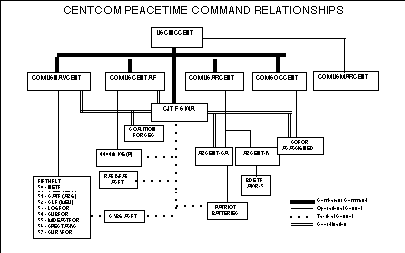
The Commander, Special Operations Command Central, located at MacDill Air Force Base, Florida, exercises operational control of special operations forces in the Area of Responsibility. He coordinates operations with Joint Task Force-Southwest Asia as required.
Guidance. As a result of the November 13, 1995 Office of Program Manager, Saudi Arabian National Guard bombing, the Commander-in-Chief, U.S. Central Command published a Letter of Instruction for Force Protection, dated April 12, 1996. The Letter of Instruction stated that "...mission and operational command and control authority are not issues herein, only the clarification of existing lines of authority and responsibility for security and protection of DoD forces within the Kingdom of Saudi Arabia." In this Letter of Instruction, the Commander, Joint Task Force-Southwest Asia was assigned responsibility for force protection oversight for all combatant forces operating in the Kingdom of Saudi Arabia; but he was not given sufficient authority to direct force protection actions.
As the Joint Task Force-Southwest Asia commander during the November 13, 1995 bombing, then-Major General Carl Franklin took action to enhance the force protection of all U.S. forces in Saudi Arabia, despite not having been assigned that authority. He created a permanent Joint Task Force-Southwest Asia Force Protection Officer position and established a Force Protection Working Group composed of representatives from each combatant unit. The Working Group developed a concept of operations to implement the Joint Task Force force protection responsibilities later tasked in the April 14, 1996 U.S. Central Command Letter of Instruction.
Major General Kurt Anderson assumed command of Joint Task Force-Southwest Asia on April 22, 1996, but was not briefed by the Commander-in-Chief, U.S. Central Command on force protection issues prior to assuming his post. Without operational control of Operation SOUTHERN WATCH forces, Major General Anderson did not view his responsibilities as directive in nature, a change from the position of his predecessor.
Following the Khobar Towers bombing, the Commander in Chief, U.S. Central Command published Force Protection Operations Order 96-01, dated July 14, 1996, which outlined force protection responsibilities for combatant and noncombatant command forces within the U. S. Central Command Area of Responsibility. The Operations Order states: "USCENTCOM designated senior officers will assume authority and responsibility for force protection of combatant command units in specified country." Although the Operations Order assigns designated senior officers force protection "authority and responsibility" for combatant command forces in each country, only one designated senior officer, the Commander, U. S. Naval Forces Central Command, has operational control of the forces for whom he assumes force protection responsibilities. The other "designated senior officers" throughout the theater do not have the authority to structure and direct the command to carry out those force protection responsibilities. This has created confusion regarding force protection authorities and responsibilities. For example:
The command relationships do not contribute to enhanced security for U.S. forces in the region. An exception, Commander, U.S. Naval Forces Central Command has force protection responsibilities for both combatant and noncombatant forces in Bahrain, as well as operational control of all U.S. Navy forces operating in the Area of Responsibility. Operational control of forces provides the Commander, U.S. Naval Forces Central Command the authority to structure and direct the command to carry out force protection responsibilities. As a result, there appeared to be a markedly better level and standardization of force protection in Bahrain than in other countries in the region, especially Saudi Arabia.
RECOMMENDATION: Assign operational control of all combatant forces operating in Saudi Arabia and the Gulf region to one headquarters.
U.S. CENTRAL COMMAND SECURITY POLICIES
FORCE PROTECTION PRACTICES
FINDING 5: Force protection practices were inconsistent in Saudi Arabia and the Arabian Gulf region.
Because of the lack of published standards (Finding 1), inadequate command structure (Finding 3), and existing command relationships (Finding 4), standards and practices for force protection vary widely. In the absence of definitive guidance, site commanders approach force protection based on general guidance from their service component commands and/or their own knowledge and experience and that of their staff.
Oversight and Manning. As discussed in Finding 4, force protection oversight for combatant forces was first assigned to the Commander, Joint Task Force-Southwest Asia in the April 12, 1996 Letter of Instruction. It was strengthened as a new mission for the Joint Task Force in the July 14, 1996 U.S. Central Command Operations Order 96-01. Even with the recent establishment of the one-person, possibly increasing to 13-person, Joint Task Force-Southwest Asia Force Protection Office, challenges will continue. The scope of the Office is limited to combatant forces in Saudi Arabia. Consequently, the Office will not have the ability to affect directly the security of combatant units in other countries of the region, even though forces operating in these countries are under the tactical control of Joint Task Force-Southwest Asia. Nor will it have the ability to standardize policies and procedures within the region.
Similarly, the 4404th Wing (Provisional) was not manned to adequately supervise force protection at its numerous bases throughout the region.
Tactics and Techniques. Based upon site surveys at each location, the Task Force determined that tactics and techniques for protecting entry onto installations varied widely, even among those installations in the same Threat Condition. At Eskan Village, Riyadh, service members entering the base went through two checkpoints. The first was manned by Saudi forces, who checked all members, including U.S., host nation, and Third Country National citizens. The second check point was manned by U.S. forces, who also checked all people. This contrasted with Khobar Towers, where all base entry points were manned by both Saudi and U.S. forces. At Camp Doha, Kuwait, an initial checkpoint several kilometers from the base was manned by both Kuwaiti and U.S. military forces, while the base entry point was manned by armed contract security guards. At Ali Al-Salem Air Base, Kuwait, Bangladeshi military forces, contracted by the government of Kuwait, provided entry control. At the Sahara Residence, a billeting facility in Abu Dhabi, United Arab Emirates, entry was controlled by unarmed contract security guards, while at Manai Plaza in Bahrain, another billeting complex, entry was controlled by Marines from the U.S. Marine Corps Fleet Antiterrorist Security Team (FAST) and Bahrainian special forces troops. Entry control at the Administrative Support Unit Bahrain was provided by U.S. Navy and Bahrainian forces, with heavy weapons support from the Marine Fleet Antiterrorist Security Team.
Security for travel of U.S. servicemembers between housing and work areas was inconsistent, based on observations of the Task Force.
The Task Force noted that personnel restrictions based on Threat Condition varied widely. In Kuwait, airmen at Al Jaber Air Base, also in Threat Condition CHARLIE, were restricted to their compound, while Army troops at Camp Doha, in the same Threat Condition were not restricted to base. However, Air Force forces at Camp Doha, under the command of the 4404th Wing (Provisional), were restricted to the base.
| The U.S. Marine FAST security teams were the most impressive security forces observed in the theater. They are superbly trained, well equipped, and well led. They provide a useful model for development of service training programs. |
Security assets in the theater ranged from solely host nation forces at Jeddah, Saudi Arabia, to a combination of armed contract forces and Army Military Police at Camp Doha, Kuwait. At Manai Plaza, Bahrain, the superbly trained and well-equipped Marine Fleet Antiterrorist Security Team had deployed from the United States specifically to perform security missions. The layered security provided by U.S. Air Force Security Police at the Air Expeditionary Force III operation at Doha Air Base, Qatar, afforded excellent protection to people and aircraft. At Camp Doha, Kuwait, U.S. forces freely patrolled the outside of the installation, in close coordination with Kuwaiti forces. At Khobar Towers and King Abd Al Aziz Air Base, Dhahran, Saudi Arabia, U.S. forces were not allowed to patrol outside of their area of the Base, but were allowed to patrol the route between the housing area and the Air Base.
U.S.
Marine Fleet Antiterrorism Security Team (FAST) Company
|
The adequacy of coordination with host country officials on antiterrorism measures varied by country. In some countries in the region, U.S. security officials established a continuing dialogue with the local chief and regional commander of the military police. This included mutual inspections of the perimeter and discussions on entry control. In other countries, the relationship between U.S. and local security force personnel had not developed to the degree where an easy exchange of information or coordination was possible.
RECOMMENDATION:
Develop common guidance, procedures, and standards to protect the force. Assigning operational control of all combatant forces to one headquarters (Finding 4) will facilitate a common approach.
Closely coordinate all antiterrorism countermeasures with host country agencies.
TRAINING AND EDUCATION POLICIES
FINDING 6: There is no theater-specific training guidance for individuals or units deploying to the U.S. Central Command Area of Responsibility.
General pre-deployment and in-country sustainment training. U.S. Central Command relies on the service component commands to develop pre-deployment and in-country sustainment standards for preparation and training of units and people deploying to southwest Asia.This has resulted in differences in the level of preparedness of units and individuals assigned.
In contrast U.S. European Command has developed and directed minimum standards of preparation and training for units and individuals deploying to Operation JOINT ENDEAVOR in Former Yugoslavia. This directive applies to all services and supporting combatant commands.
U.S. Army units from U.S. European Command tasked to support U.S. Central Command in Saudi Arabia use the European Command approach in their preparation for deployment. In the absence of direction from U.S. Central Command, they have developed specific training programs which include force protection. Likewise, Army air defense units from the continental United States follow a pre-deployment training model based upon their evaluation of mission requirements. The only directed training requirements come from U.S. Army Forces Central Command-Saudi Arabia and relate to proficiency in guard force Standing Operating Procedures for sites in Saudi Arabia, Bahrain, and Qatar./
| Task Force 6-52 Air Defense Artillery, the 120-day rotational Patriot Battalion Task Force, was temporarily assigned to U.S. Army Forces Central Command, but permanently assigned to U.S. European Command. The Task Force provided pre-deployment and in-country sustainment force protection training and education, as well as mission related training, to its soldiers. This training complied with, and exceeds, requirements in existing U.S. Army Regulation 525-13, The Army Combating Terrorism Program, and Commander-in-Chief, U.S. Army Europe directive for Operation JOINT ENDEAVOR. The training requirements provided in the above regulation and message were more definitive than those provided to U.S. Air Force units in the U.S. Central Command Area of Responsibility. |
Air Force units and members are prepared for worldwide deployment through the Operational Readiness Inspection Program and in accordance with the U.S. Air Force Instructions (AFI 10-403 Deployment Planning; AFI 10-215 Support for Contingency Operations). These documents provide guidelines for the administrative preparation and basic equipment requirements for airmen deploying for more than 15 days. This preparation does not include any regional orientation or specific training on force protection.
U.S. Central Command has provided direction to deploying forces for defense against weapons of mass destruction. This includes equipment required for deployment to the Area of Responsibility, as well as individual and unit training requirements.
Antiterrorism pre-deployment and in-country training and education.
...the key to an effective antiterrorism program is to develop an awareness that is both sustained and expanded as the Service member progresses from initial entry to termination of a military career...the member must be trained in the techniques of protection and security commensurate with the threat in his locale...
Existing regulations and instructions, including DoD Instructions, Directives and Handbooks O-2000.12, O-2000.12-H, and 2000.14, and Joint Publication 3-07.2, provide broad, non-specific guidance on required antiterrorism training for a temporary duty deployment.
U.S. Central Command regulations and orders (CENTCOM Regulation 190-2, OPORD 96-01) provide guidance on antiterrorism training requirements only for those soldiers who are on temporary duty from the Headquarters, U.S. Central Command or assigned to an overseas Security Assistance Office.
The U.S. Army and U.S. Navy antiterrorism/combating terrorism instructions and regulations provide specific guidance on antiterrorism training and education for service members in a temporary duty status. In comparison, USAF Instruction 31-210, The Air Force Antiterrorism Program, only provides general guidance and is vague as to what is required for service members on temporary duty.
DoD instructions and service regulations concerning the training requirements of the unit and installation-appointed antiterrorism officer(s) were being met. For some of these officers, their training was received several years prior to their assignment to an antiterrorism officer position. For example, the antiterrorism officer at Khobar Towers was the Security Police commander, Lieutenant Colonel James Traister. He received the required training "five to ten" years prior to his assignment. Even though he met requirements, he personally felt that he was not current.
Guard force pre-deployment and in-country training. The U.S. Air Force Security Police and guard forces had no specific guidance, directives, or training programs for operations in the U.S. Central Command Area of Responsibility.
As stated earlier in this Finding, U.S. Army Forces Central Command-Saudi Arabia established a guard force Standard Operating Procedure which included training programs and certification procedures for all soldiers assigned to a guard force or post.
RECOMMENDATIONS:
Establish training qualification and certification procedures for all units, individuals, and civilians prior to deployment to and after arrival in the Area of Responsibility. This should include force protection measures and be applicable to service members on both permanent change of station and temporary duty assignment.
Conduct mandatory force protection and risk management training for all officers and senior noncommissioned officers deploying to high threat areas. Integrate this training into officer and noncommissioned officer professional military education to assure long-term development of knowledge and skills to combat terrorism at all levels.
Support development of antiterrorism training and education supporting materials, using innovative media methodologies, as recommended by the Antiterrorism Task Force and directed by the Chairman, Joint Chiefs of Staff.
Conduct refresher training for installation/unit antiterrorism officers immediately prior to assignment in the theater, as outlined in DoD Instruction 2000.14.
SUFFICIENCY AND EFFECTIVENESS OF INTELLIGENCE IN THE
U.S. CENTRAL COMMAND AREA OF RESPONSIBILITY
WARNING OF THE TERRORIST THREAT
FINDING 7: Intelligence provided warning of the terrorist threat to U.S. forces in Saudi Arabia.
Prior to the Fall of 1994, the terrorist threat in Saudi Arabia was benign, marred only by three isolated attacks against U.S. military targets in early 1991 during Operation DESERT STORM and the hijacking of a Saudi Airbus in 1994. Two incidents occurred almost simultaneously on February 3, 1991, in Jeddah. Unknown persons doused a U.S. transport bus with kerosene. Individuals fired shots at an other U.S. military bus, injuring three U.S. soldiers and a Saudi guard. On March 28, 1991, an unknown individual fired at least six shots at a U.S. Marine vehicle, slightly injuring three Marines. The internal security picture in Saudi Arabia began to change in late 1994. The volume and tone of reporting on potential terrorist threats became more ominous. The hypothesis was that much of this activity was a product of state-sponsored actions.
After the Office of the Program Manager, Saudi Arabian National Guard bombing on November 13, 1995, the security situation in Saudi Arabia became a matter of greater concern to U.S. officials. The volume of reporting on terrorist-related developments grew, as did the pace and intensity of meetings, briefings, and other actions. The military commanders in the theater issued warnings and directed various security enhancements based on this reporting. For example, in April 1995, U.S. Central Command, at the behest of the Joint Task Force-Southwest Asia commander, then-Major General Franklin, dispatched a message to all U.S. military units in the Area of Responsibility conveying concern about the general security environment and enjoining commanders to heighten security awareness.
Overall, the intelligence provided commanders warning that the terrorist threat to U.S. servicemembers and facilities was increasing. As a result, those responsible for force protection at Khobar Towers and other U.S. Government facilities in Saudi Arabia had time and motivation to reduce vulnerabilities. (See Finding 20 and 22)
INTELLIGENCE ORGANIZATION
FINDING 8: This finding and its recommendations are classified in their entirety.
INTELLIGENCE ANALYSIS
FINDING 9: The ability of the theater and national intelligence community to conduct in-depth, long term analysis of trends, intentions, and capabilities of terrorists is deficient.
At the national level, developments in Saudi Arabia were closely monitored in parallel with the country team. Beginning in the spring 1995, concerns about the possibility of terrorism began to increase. The Intelligence Community responded to the new information with a series of reports which were expanded and updated as new intelligence was collected. Additionally, these events were documented in the Defense Intelligence Terrorism Summary, the National Military Joint Intelligence Center Executive Highlights, the Chairman, Joint Chiefs of Staff, Daily Intelligence Briefing, and the Military Intelligence Digest.
However, the focus of this reporting was on current events and the promulgation of timely warnings and advisories. The military intelligence community lacks sufficient in-depth, long-term analysis of trends, intentions, and capabilities of terrorists. For example, Defense Intelligence Agency had 40 people assigned to the terrorist mission at the time of the Khobar Towers bombing, yet only seven analysts were committed to accomplish detailed assessments because of other priority commitments. Similar conditions exist at the service component commands and in the military department elements charged with analyzing terrorism. This is particularly critical in the realm of terrorism analysis which must promote insight and anticipation of future potential, not just repetition of historical anecdote.
RECOMMENDATION: Allocate sufficient analytic resources to conduct in-depth, detailed analysis of trends, intentions, and capabilities of terrorists.
THREAT LEVEL ASSESSMENTS
FINDING 10: The Department of State and elements within the DoD ascribe different Threat Level assessments for countries of the same region, causing confusion among recipients of this information.
In the DoD, the Threat Level provides an estimate of the risk to personnel, facilities, or interests from terrorist attack. Analysis to derive Threat Levels is performed by the intelligence staff at each level of command, and the resulting Threat Levels can differ at each echelon. The Threat Levels range from NEGLIGIBLE to LOW, MEDIUM, HIGH or CRITICAL, based on a systematic analysis of the factors of existence of terrorism, terrorist capability, history of terrorism, intentions of terrorist groups, and targeting by terrorist groups. A matrix below reflects these factors and the judgments made for each:
| DoD THREAT ANALYSIS FACTORS | |||||
| THREAT LEVEL |
Existence | Capability | History | Intentions | Targeting |
| CRITICAL | X | X | O | O | X |
| HIGH | X | X | X | X | |
| MEDIUM | X | X | X | O | |
| LOW | X | X | O | ||
| NEGLIGIBLE | O | ||||
X - Factor MUST be Present O - Factor MAY or MAY NOT be Present
In response to Threat Levels, commanders adopt or change Threat Conditions (THREATCONS), which are measures to protect people and facilities from the postulated threat. THREATCONS range from NORMAL through ALPHA, BRAVO, CHARLIE, and DELTA. Each THREATCON potentially entails increasingly stringent security measures. These terms, criteria, and their relationships in DoD are illustrated below:
| DoD TERRORIST THREAT INFORMATION | ||||
| THREATCON LEVEL |
Intelligence Assessments |
Warning Reports |
Spot Reports |
Law Enforcement Reports |
| DELTA | . | . | . | . |
| CHARLIE | . | . | . | . |
| BRAVO | . | . | . | . |
| ALPHA | . | . | . | . |
| NORMAL | . | . | . | . |
While the Department of Defense focuses exclusively on terrorism factors when determining Threat Levels, the Department of State addresses broader factors, such as political violence--which encompasses terrorism, counterintelligence, anti-U.S. technical intelligence, and activities against the U.S. community. These factors reflect wider U.S. interests in each country. The Department of State assesses Threat Levels annually for each country, and these Threat Levels serve to justify annual budget requirements for security upgrades. The Department of State Threat Levels range from NO DATA to LOW, MEDIUM, HIGH, and CRITICAL, as shown below:
| DoS THREAT INFORMATION | ||||
| THREAT LEVEL |
Poitical Violence |
Counter- intelligence |
Anti-US Technical Intelligence |
Activities vs. US Community |
| Critical | . | . | . | . |
| High | . | . | . | . |
| Medium | . | . | . | . |
| Low | . | . | . | . |
| No Data | . | . | . | . |
CRITICAL: U.S. interests targeted, attacks occurred
HIGH: Credible threat exists, anti-U.S. incidents occurred
MEDIUM: Potential for anti-U.S. activity, political instability
LOW: Little evidence of anti-U.S. activity, stable country
NO DATA: No data available
Similarly, the Department of State Threat Conditions (THREATCONs) use the same levels as the Department of Defense, but they, too, are defined differently. THREATCONs are an amalgam of the factors of national terrorist threat warning, which would derive from the assessment of Threat Levels, other Human Intelligence input, regional surveys, and other threat assessments from the Department of Defense or host nation, as shown below:
| DoS TERRORIST THREAT INFORMATION | ||||
| THREATCON LEVEL |
National Terrorist Threat Warning |
HUMINT Input |
Regional DOS Survey Teams |
DoD/Host Nation Threat Assessments |
| DELTA | . | . | . | . |
| CHARLIE | . | . | . | . |
| BRAVO | . | . | . | . |
| ALPHA | . | . | . | . |
In Saudi Arabia, the U.S. Central Command, DIA and Department of State terrorist threat levels were modified based on incidents or updated intelligence. However, they were inconsistent.
U.S. service members, depending on their organizational affiliation, fall under different jurisdictions for purposes of assessing Threat Levels and Conditions. Restrictions on members activities based on these threat declarations varied accordingly. In Dhahran, for example, combatant forces were in Threat Condition CHARLIE and restricted to base. As cited in Finding 5, in Kuwait, airmen at Al Jaber Air Base under Threat Condition CHARLIE were restricted to their compound, while Army troops at Camp Doha, in the same Threat Condition, were not restricted to base. However, Air Force airmen at Camp Doha, under the command of the 4404th Wing (Provisional), were restricted to base. Similar disparities in threat assessments prevail in Egypt. Senior officials at both U.S. Central Command headquarters and in the Area of Responsibility observed that these parallel systems caused confusion, particularly in a country in which both combatant and noncombatant forces were stationed.
Previous studies, notably the DoD Antiterrorism Task Force report and the Accountability Review Board report, addressed this issue. The former recommended adoption of the DoD terrorism threat assessment methodology as the interagency standard. The latter recommended (a) adopting a single interagency-agreed Threat Level for locations with elements under Chief of Mission Authority, except in the situation where the threat is specific to one element; (b) avoiding dual Threat Levels for one location; and (c) keeping resource allocation considerations separate from Threat Level assessments.
RECOMMENDATION: Institute one interagency methodology for assessing and declaring terrorist Threat Levels, allowing commanders to determine Threat Conditions in a local area.
INTELLIGENCE SUPPORT TO SECURITY POLICE
FINDING 11: The lack of an organic intelligence support capability in U.S. Air Force Security Police units adversely affects their ability to accomplish the base defense mission.
U.S. Air Force Security Police forces do not have a dedicated, organic intelligence element to support operations in a high-threat, air base defense environment. The Security Police units depend on a combination of the local Air Force Office of Special Investigations Detachment and the Wing Intelligence staff to provide their intelligence. The Air Force Office of Special Investigations focuses on intelligence collection, liaison with host country officials, assessing physical vulnerabilities, and advising the Wing Commander and other installation officials. The Wing Intelligence staff focuses on support to the operational flying mission, in this case, Operation SOUTHERN WATCH, as its highest and most time consuming priority. The Wing Intelligence staff does not commit analytic resources to the Security Police base defense mission.
At Khobar Towers, the Security Police unit depended upon periodic vulnerability assessments performed by ad hoc composite assessment teams to determine vulnerabilities. The Security Police commander essentially served as his own intelligence officer for base defense with assistance from the Air Force Office of Special Investigations Detachment. Given the scope of his responsibilities and austere manning levels, he had little opportunity to conduct base defense-related intelligence assessments.
In contrast, U.S. Army Military Police battalions have an assigned intelligence section. In an Air Force context, such an intelligence staff would perform "Intelligence Preparation of the Battlefield" analytic functions, such as assessment of avenues of approach and methods of attack; levy collection requirements on the Air Force Office of Special Investigations; and keep the front-line Security Policemen trained and current on the threat. Just as dedicated intelligence staffs support combat flying squadrons in the planning, conduct, and assessment of their missions, so should the Security Police have benefit of an analogous organic capability in the conduct of their combat mission--particularly in a high threat environment, such as Saudi Arabia. This intelligence support requirement for base defense applies in any expeditionary context.
RECOMMENDATION: Provide U.S. Air Force Security Police units assigned an air base defense mission an organic intelligence capability.
COUNTERINTELLIGENCE SUPPORT
FINDING 12: This finding and its recommendation are classified in their entirety.
U.S. AND SAUDI COOPERATION ON INFORMATION EXCHANGE
FINDING 13: This finding is classified in its entirety (there was no recommendation for this finding).
COMMUNICATIONS ARCHITECTURE TO SUPPORT INTELLIGENCE
FINDING 14: While the communications architecture in the U.S. Central Command Area of Responsibility supported the flow of intelligence throughout the upper echelons of the chain of command, field units had limited access due to classification restrictions.
The proliferation of secure phones, facsimile machines, and video teleconferencing capabilities and general upgrades in connectivity were evident throughout the Area of Responsibility. At almost every location, users cited the utility of certain systems. U.S. Central Command and Headquarters, Air Force Office of Special Investigations extensively used terrorism-specific systems to provide analytical support to the field. U.S. Central Command and U.S. Army Forces Central Command-Saudi Arabia commended the message-handling capabilities of the systems employed.
Despite the improved capabilities these systems provided, classification levels often restricted their utility at the field level. The small number of Sensitive Compartmented Information Facilities in the Area of Responsibility limited the dissemination of certain highly classified messages. Additionally, not all of the systems used at the command level and above, such as the Defense Intelligence Threat Data System, were readily available at lower levels.
RECOMMENDATIONS:
Make collateral communication systems available to the lowest appropriate level.
Distribute appropriate information to all key force protection officials, as well as coalition partners.
CLARITY OF THE DIVISION OF RESPONSIBILITY FOR SECURITY
BETWEEN HOST NATIONS AND U.S. CENTRAL COMMAND
FINDING 15: The division of responsibility between U.S. and host nation police and military forces for security at facilities throughout Saudi Arabia and the Arabian Gulf is clear.
Throughout the region, the Task Force found that security responsibilities between U.S. and host nation forces were clearly understood. External security responsibilities, from the fence line outward, are the domain of the host nation, while most internal security matters, inside the fence, are the responsibility of U.S. forces. However, the Task Force was unable to find any instance of this division of responsibility formalized in a memorandum of understanding.
Language barriers between U.S. and host nation forces significantly degrade response times and would hinder overall command and control measures during a terrorist incident. During the assessment, Task Force members did not find interpreters assigned to any security force in the Area of Responsibility. For example, at Khobar Towers, the 4404th Wing (Provisional) had only one interpreter, on duty or on-call 24-hours a day. When the Security Police needed to talk to their Saudi civilian police counterparts, they first had to contact the interpreter, brief him on the situation, and request that he contact the Saudi police.
RECOMMENDATIONS:
Promulgate memorandums of understanding (MOU) between host nation and U.S. forces, delineating responsibilities for protecting U.S. operated facilities, to include procedures for upgrading security when Threat Levels change.
Increase the number of interpreters available to security forces.
DIVISION OF RESPONSIBILITY BETWEEN THE
DEPARTMENT OF STATE AND DEPARTMENT OF DEFENSE
FOR OVERSEAS SECURITY IN THE REGION
FINDING 16: (a) U.S. Embassy security resources are insufficient to adequately protect large numbers of noncombatant military forces in selected countries.
(b) The U.S. Defense Representative has insufficient resources to adequately protect large numbers of noncombatant military forces in selected countries.
(c) The U.S. Defense Representative does not have directive authority over selected "stovepipe" organizations.
"Stovepipe" is a term that refers to military organizations that are located in a combatant command area of responsibility, but are not assigned to the combatant command itself. Some of these organizations are under the direction of the Chief of Mission for force protection in accordance with the Omnibus Diplomatic Security and Antiterrorism Act of 1986 and the Department of State/Department of Defense Memorandum of Understanding. However, they may be under the operational control of their service, joint command, or defense agency in the United States. Generally, these organizations are not security assistance organizations in the U.S. mission, but may perform security assistance-related functions.
Responsibility. By statute, presidential letter of instruction, and memorandum of understanding, the Secretary of State is responsible for the security of service members assigned to diplomatic missions and their dependents. The exception to this responsibility is for those forces "...under the command of a [combatant commander]."
The unified combatant commander, in this case the Commander-in-Chief, U.S. Central Command, has command of "...all forces operating within the geographic area assigned, except as directed by the Secretary of Defense." Inherent within command is responsibility for force protection of those assigned. With these complementary responsibilities, two issues arise:
The Unified Command Plan, dated December 28, 1995, makes the unified combatant commander responsible for maintaining the security of the command, including its assigned or attached forces and assets and protecting the United States, its possessions and bases against the attack or hostile incursion.
Under the Department of State/Department of Defense (DOS/DoD) Memorandum of Understanding, the responsibility for protection of "combatant" forces remains with combatant commanders. This includes service members and dependents performing strictly military functions, not otherwise assigned to the Chief of Mission [emphasis added.] The DoD activities overseas which fall under the control of the Chief of Mission include those of the Defense Security Assistance Agency, Defense Attach€ Office, Joint U.S. Military Aid Group, Office of Military Cooperation, Security Assistance Office, U.S. Military Training Mission and other similar activities. Generally, these activities are considered "noncombatant."
Within Saudi Arabia, the U.S. Military Training Mission and Office of the Program Manager, Saudi Arabian National Guard are two separate "noncombatant" organizations. The Office of the Program Manager, Saudi Arabian National Guard, a "stovepipe" organization reporting to the U.S. Army Materiel Command, Alexandria, Virginia, has at least 136 U.S. service members and five separate compounds. Its mission as a security assistance organization is to train the Saudi Arabian National Guard for land defense of the Kingdom of Saudi Arabia. The U.S. Military Training Mission, a joint security assistance organization, has approximately 190 U.S. military employees at various locations. There are other stovepipe organizations in the theater. They include numerous Technical Assistance Field Teams (TAFT) and offices and individuals from the U.S. Army Corps of Engineers, Air Force Materiel Command, Center for Naval Analysis, Defense Logistics Agency, DoD Schools System, Defense Courier Service, Defense Commissary Agency, Air Mobility Command, Military Sealift Command, and Military Transportation Management Command, among others. None of these organizations are assigned to U.S. Central Command. They are specifically exempted by the Secretary of Defense.
The Chief, U.S. Military Training Mission is the U.S. Defense Representative for Saudi Arabia. He is not in the chain of command of the Program Manager, Saudi Arabian National Guard or any other stovepipe organization.
Standards. A DoD noncombatant activity must comply with the minimum standards promulgated by the Department of State and must coordinate with the Regional Security Officer when it desires to exceed those standards or provide protection at a higher Threat Level and must then provide the resources for that higher level of protection through "established funding mechanisms". The Department of State is responsible for conducting surveys of all Defense component offices attached to U.S. missions abroad and makes recommendations based on standards established in the Physical Security Standards Handbook, the so-called "Inman Standards" established following the bombing of the U.S. Embassy Beirut in 1983.
Resources. The U.S. Embassy Riyadh has a limited capability to assess the security of U.S. military noncombatant forces in Saudi Arabia, particularly given the large size and geographic dispersion of these commands. The Regional Security Officer in Riyadh currently has only one full time assistant. The State Department has had to augment his staff with temporary duty people during heightened threat levels. Prior to the November 1995 bombing of the Office of the Program Manager, Saudi Arabian National Guard, the Regional Security Officer focused on non-military elements of the U.S. community in country. Now, with the added security requirements of the military community assigned to the Mission, his office cannot provide timely support. Other embassies had similar problems meeting the force protection requirements of large noncombatant elements in their countries.
There is a disparity in the availability of funding for noncombatant organizations. Some can use individual Foreign Military Sales, so-called "case," funds for security matters without coordination with the U.S. Defense Representative. As an example, the Office of the Program Manager, Saudi Arabian National Guard has access to a master case which can be used anywhere for the security of its operations. Other case funds are dependent on prior agreements with the host nation.
There is also a disparity in manpower resources. U.S. Military Training Mission did not have a force protection officer until one was sent on temporary duty by the Commander-in-Chief, U.S. Central Command after the Khobar Towers bombing. Because of the Saudis' flexibility, the Office of the Program Manager, Saudi Arabian National Guard hired a Special Assistant for Security for at least one year with its own case funds.
The U.S. Defense Representative is the U.S. Central Command representative to the Chief of Mission. He is a coordinator for security matters for DoD noncombatant command forces. Without responsibility and directive authority, the other noncombatant commanders cannot be directed to take force protection actions by the U.S. Defense Representative. Currently, U.S. Defense Representatives in the U.S. Central Command theater require written agreements with stovepipe organizations which set out responsibilities and acknowledge the position of the U.S. Defense Representative, but do not shift force protection responsibility.
Execution of Policy. The Chief of Mission and Regional Security Officer in Saudi Arabia and Kuwait have been diligent in carrying out their responsibilities. Both country teams were engaged and proactive in force protection matters. This included intelligence dissemination and physical security awareness. The breadth of the mission, however, especially where there was a substantial increase in the threat, caused a workload beyond the manning of these staffs. Chiefs of Mission and Regional Security Officers throughout the U.S. Central Command area visited by the Task Force do not have sufficient resources to coordinate and oversee force protection for large contingents of servicemen and women. This includes a lack of staff to conduct vulnerability assessments and verify that standards have been met.
As an example, the Department of State Inspector General conducted a security oversight inspection of Embassy Riyadh, Saudi Arabia, and constituent posts in September 1994 and did not examine any noncombatant activities. The report indicates that, because of the low terrorism threat at that time, the physical and residential security programs required a minimum of the Regional Security Officer's and on-post security officer's time. However, the threat began to change significantly shortly afterward. Before the Department of State Threat Level was changed, the Program Manager, Saudi Arabian National Guard (SANG), in lieu of asking the Regional Security Officer, asked the 202d Military Intelligence Detachment to conduct a vulnerability assessment of U.S. SANG sites and residences in September 1995. The vulnerability assessment was completed and reviewed by the 202d Military Intelligence Detachment. The Regional Security Officer in Riyadh was unable to accomplish this task because of the lack of resources.
The DoD Antiterrorism Task Force report and DoD's Draft response to the Accountability Review Board report recognized many of these issues. The Board recommended shifting responsibility for security of noncombatant forces to DoD. The Memorandum of Understanding recognizes, at least, a mechanism to allow DoD to use its assets to supplement what it believes are appropriate and necessary force protection measures which cannot be supplied by the Department of State.
There are some stovepipe organizations which are not accountable to either the unified combatant commander or the Chief of Mission for force protection. For example, in Qatar, the organizations which unload and guard equipment from Army War Reserve ships at the port of Um Said are assigned to the U.S. Army Military Transportation Management Command and Army Materiel Command, not to the unified combatant commander. Although the Chief of Mission and his staff, including the U.S. Liaison Officer, LTC Bruce Deane, are addressing the force protection requirements of these organizations, confusion persists about their authority and responsibility for doing so.
Force protection activities functioned best in countries such as Bahrain where the U.S. Defense Representative was "triple-hatted" as U.S. Defense Representative, a commander of combatant forces, and a service component commander. This allowed a single DOD office to represent and fully protect both combatant and non-combatant forces. The central management of assets by the U.S. Defense Representative is necessary. However, limitations on case funds and directive authority impede centralization of force protection activities in the single U.S. Defense Representative, especially where the combatant command forces have a large, semi-permanent presence.
The Secretary of Defense has the statutory authority to assign all DoD forces to a combatant command under the provisions of the Goldwater-Nichols Act. By assigning all forces to the combatant commander, except for those who actually work under the direction of the Chief of Mission (for example, the Defense Attache, the Security Assistance Officer, and the Marine Security Detachment should remain assigned to the Chief of Mission), the Secretary of Defense could achieve a unity of command throughout the theater for force protection for combatants and noncombatants alike. Under 10 U.S.C. 164, the Secretary of Defense may assign to the unified combatant commander necessary resources to accomplish the force protection mission. The Secretary and the unified combatant commander may also structure and tailor the missions of designated stovepipe organizations, newly assigned to the unified combatant commander, to accommodate the concerns of the Secretary of State as expressed in the DoD/Department of State Memorandum of Understanding.
RECOMMENDATIONS:
Assign all DoD personnel to the unified combatant commander, except those whose principal function supports the Chief of Mission.
Provide the U.S. Defense Representative directive authority for force protection matters over ALL DoD personnel not assigned to the unified combatant commander.
Provide the U.S. Defense Representative with appropriate staff to assist the Chief of Mission in the execution of force protection responsibilities, to include conducting vulnerability assessments, identifying funds for force protection, and developing force protection standards.
SECURITY OF U.S. FORCES AND FACILITIES IN THE REGION
FINDING 17: U.S. forces and facilities in Saudi Arabia and the region are vulnerable to terrorist attack.
U.S. forces and facilities in Saudi Arabia remain vulnerable to various forms of terrorist attack. The proposed move to Prince Sultan Air Base at Al-Kharj will resolve vulnerabilities related to the forces supporting Operation SOUTHERN WATCH, but will create other challenges because U.S. airmen and aircraft will then be concentrated in fewer locations. U.S. military persons remaining in Riyadh and Jeddah will remain vulnerable.
The security posture of U.S. forces and facilities varied throughout the Area of Responsibility. (See Findings 1, 3, 4, and 6) Force protection practices were inconsistent. (See Finding 5) The threat changes continually and must be monitored closely. Those facilities located in the most populated and commercialized areas within the region were the most difficult to defend. Commanders who did not take a proactive approach to force protection and antiterrorism and whose facilities were located in populated areas were more vulnerable to terrorist attack. Specific recommendations for force protection enhancement were provided to commanders at each site.
The Assessment Task Force visited the following locations:
Saudi Arabia
Khobar Towers, Dhahran
King Abd Al Aziz Air Base, Dhahran
Office of Program Manager, Saudi Arabian National Guard, Riyadh
U.S. Military Training Mission, Riyadh
Eskan Village, Riyadh
ELF-1 Riyadh Air Base, Riyadh
Patriot Battery (Charlie), Riyadh
Patriot Battery (Delta), Riyadh
Prince Sultan Air Base, Al-Kharj
Oscar Site, Al-Kharj
P-3 Operating Location, Jeddah
Arabian Homes (Sierra Village), Jeddah
Kuwait
Al Jaber Air Base
Camp Doha
Ali Al-Salem Air Base
Flag officer quarters, Commander, U.S. Naval Forces Central Command
Bahrain
Naval Administrative Support Unit
Headquarters, U.S. Navy Central Command
DoD Dependent School
Manai Towers
Mina Sulman Pier
Aviation Unit (U.S. Naval Forces Central Command)
Flag officer quarters
Shaykh Isa Air Base
Qatar
Doha International Airport
Army Prepositioned Equipment Site, Al Sayliyah
Army housing area Jasmine
Umm Saeed Port
United Arab Emirates
Sahara Residence, Abu Dhabi
Al Dhafra Air Base
Egypt
Peace Vector Site I
Peace Vector Site III
Peace Vector Site IV
Naval Medical Research Unit-3
Commissary / warehouse
Office of Military Cooperation housing sites
Commander, Office of Military Cooperation, quarters
RECOMMENDATIONS:
GENERAL SECURITY
Conduct vulnerability assessments for every site within the Area of Responsibility and repeat them on an appropriate schedule. Each site must be examined individually and in-depth.
Locate facilities in secluded areas, wherever possible.
Assign all security force members a weapon. Rifles and machine guns must be zeroed and fired for sustainment training. Identify special weapons requirements early and train to meet requirements. Stress weapons maintenance.
Examine and prioritize terrorist threats for both potential of occurrence and degree of vulnerability at each site. Prepare defenses accordingly.
Coordinate with host nation police and military forces to develop and maintain a combined ability to counter the surface-to-air missile threat from terrorist elements.
PHYSICAL SECURITY
Employ integrated technology, including intrusion detection systems, ground sensors, closed circuit television, day and night surveillance cameras, thermal imaging, perimeter lighting, and advanced communication equipment, to improve the security of all sites.
Employ technology-based explosive detection and countermeasure devices.
Physically harden structures based on the threat.
Develop guidance on required stand-off distances and the construction of blast walls and the hardening of buildings.
Relocate and consolidate units at vulnerable facilities to more secure, U.S.-controlled compounds or bases.
Reinforce the entry control points to U.S. facilities and provide defense in depth.
Cable single rows of Jersey barriers together.
Use enhanced barriers, similar to those designed by the United Kingdom and Israel, to shield and protect vulnerable compounds and structures. (See Finding 26)
Establish threat based stand-off or exclusion areas around compounds and bases.
Procure personal protective equipment suitable for extreme hot weather operations.
The last recommendation of Finding 17 Physical Security is classified.
TRANSPORTATION
Harden or procure armored buses to transport service members between housing areas and work sites.
Provide armed guards, at a minimum in pairs, on buses and provide armored escort vehicles.
Ensure host country military and police are actively involved in securing routes of travel.
Provide and maintain communications for all modes of transportation and centrally control and monitor transportation movements.
TRAINING
Provide personal protection antiterrorism training to all deployed service members and their families.
Conduct training exercises to rehearse responses to a terrorist attack, including building evacuation and re-assembly procedures.
Develop and use an extensive list of potential terrorist scenarios to assess force protection measures at each site in the Area of Responsibility.
FOLLOW-ON ASSESSMENTS
The Task Force could not physically survey all locations in the U.S. Central Command Area of Responsibility within the time frame of this Report. Locations in the theater which the Task Force did not survey should be assessed as soon as possible. These include Eritrea, Ethiopia, Jordan, Kenya, Pakistan, Oman, Sudan, and Yemen. The Task Force had only a limited opportunity to assess force protection in Saudi Arabia, Kuwait, Egypt, United Arab Emirates, Qatar, and Bahrain. Urgent priorities to improve force protection have been identified at U.S. facilities in these countries. A follow-on assessment team should conduct a more in-depth survey of these sites.
PART III: FACTS AND CIRCUMSTANCES SURROUNDING THE BOMBING ATTACK ON KHOBAR TOWERS
Part III describes policies, procedures, and actions of the 4404th Wing (Provisional) at Dhahran, Kingdom of Saudi Arabia, to maintain a force protection posture commensurate with the threat to U.S. service members and facilities. It specifically addresses the security infrastructure and systems in place at the time of the June 25, 1996 bomb attack on Khobar Towers, the housing and administrative complex for the 4404th Wing (Provisional) and for U.S. Army, British, French, and Saudi forces in the Dhahran area. Questions related to the fence surrounding the complex and initiatives to move the fence to achieve greater stand-off distance between the external perimeter and buildings on the interior are addressed. This part also discusses medical care and resources available for force protection.
As at all U.S. overseas facilities, the host nation exercised sovereignty over its territory outside of U.S. installations and assumed responsibility for the overall security and safety of U.S. servicemen and women.
SECURITY INFRASTRUCTURE AND SYSTEMS
The security infrastructure and systems at Khobar Towers proved inadequate to deter and defend against the June 25, 1996 terrorist bomb attack. This was despite significant efforts by the United States and Saudi Arabia to enhance security of the facility following the November 13, 1995 bombing of the Office of the Program Manager, Saudi Arabian National Guard in Riyadh. The following findings discuss physical security of the Towers, including measures taken with regard to the interior and exterior of the complex, the guard force, and the warning system. As it did at all other sites visited, the Assessment Task Force provided immediate recommendations to improve security of service members and facilities to the Commander, 4404th Wing (Provisional) prior to its departure.
The 4404th Wing (Provisional) initiated extensive force protection measures beginning in November 1995. These initiatives focused on the threat from a bomb penetrating to the interior of Khobar Towers. The Wing did not take adequate protective measures to meet other viable terrorist threats to service members and facilities in the Dhahran area. These threats included attacks by stand-off weapons, assassination and/or kidnapping of individuals, ambush of vehicles, and stand-off bombs.
INTELLIGENCE WARNING OF ATTACK ON KHOBAR TOWERS
FINDING 18: While intelligence did not provide the tactical details of date, time, place, and exact method of attack on Khobar Towers, a considerable body of information was available that indicated terrorists had the capability and intention to target U.S. interests in Saudi Arabia, and that Khobar Towers was a potential target.
As described in Finding 7, much of the local in-country intelligence effort was devoted to pursuing leads on alleged plots, anonymous threats, visual and photographic surveillance of U.S. installations and people, travel of suspected terrorists, and other fragmentary reports. A general picture of an increasingly threatening environment emerged. In March 1996, a senior intelligence official wrote:
Briefed BGen Schwalier, Commander of the 4404th ...and the Air Force Office of Special Investigations Detachment in Dhahran. Stated that there was an increasing amount of circumstantial information indicating that some terrorist activity could occur during and immediately after the Hajj (the annual pilgrimage to Mecca, 19 April to 17 May 1996)...BGen Schwalier stated he appreciated the briefing and was very much concerned about possible terrorist activity.
The commander of the Air Force Office of Special Investigations Detachment at Dhahran Air Base sent a message on April 4, 1996 to Headquarters, Air Force Office of Special Investigations, Bolling Air Force Base, Washington, D.C., which recounted the general threat situation at Khobar Towers and identified the vulnerabilities of the installation and specifically highlighted concern for the portion of the perimeter adjacent to the parking lot in the vicinity of Buildings 131 and 133.He observed that:
Security measures here are outstanding, which in my view would lead a would-be terrorist to attempt an attack from a position outside the perimeter...
and...
...if a truck parks close to the fence line, and the driver makes a quick getaway, I think the building should be cleared immediately.
Although he did not show the April 4th message to any member of the 4404th Wing (Provisional) chain of command, the Office of Special Investigations Detachment Commander stated that, over a period of time, he briefed the commander and his senior staff on the contents of his message.
In response to this message, Headquarters, Air Force Office of Special Investigations sent a Special Agent to Khobar Towers from May 22 through May 25, 1996 to assess physical security. The Special Agent gave a memorandum to the Office of Special Investigations Detachment Commander on May 28, 1996, but never spoke with Brigadier General Schwalier, who was unaware of the Special Agent visit. Furthermore, the Office of Special Investigations Detachment Commander never briefed the Commander on the recommendations made by the Special Agent, citing that "...most [of the recommendations] have been implemented" and that he did not think the "...command would build a wall based solely on this recommendation."
On April 12, 1996, the Office of Special Investigations Detachment Commander briefed Brigadier General Schwalier and ten of his selected key staff. He explained the significance of the Hajj season and described the current threat, to include a large quantity of explosives destined for coalition military targets with the potential for use in a bombing attack. In his concluding summary, the Office of Special Investigations Detachment Commander pointed out that this "...information is sensitive and cannot be released down the chain of command." He said that security measures must be implemented without saying why. The Office of Special Investigations Detachment Commander was conservative in his strict interpretation of the rules on protecting intelligence information. The Wing did not initiate any changes in the security posture or Threat Level of the command as a result of this briefing. The prevalent view among the Wing leadership was that any bomb attack would be of the magnitude of the bomb which exploded at the Office of the Program Manager, Saudi Arabian National Guard. Brigadier General Schwalier commented that his frame of reference with respect to the size of a potential bomb was "small." Similarly, Lieutenant Colonel James Traister, Commander, 4404th Security Police Squadron, never considered a bomb the size of the one that exploded on June 25th to be a viable threat. He said "...in my mind 200 pounds is a large size. Three hundred pounds is large. Five hundred pounds is large. I did not in any way, shape or form expect three to five (thousand pounds).
In April and May 1996, several incidents occurred which, while individually insignificant, indicated possible reconnaissance and surveillance of the Khobar Towers complex. None of these incidents have yet been linked to the actual attack.
On June 17, 1996, an intelligence report on increased security in Saudi Arabia appeared in the Defense Intelligence Agency Military Intelligence Digest (MID). The Military Intelligence Digest provides a high-level, executive summary of intelligence reporting to a large number of recipients. Published five days a week, the MID is not designed nor intended as a medium for time sensitive warnings. The report in question summarized original field reporting by the Air Force Office of Special Investigations. In an insert box near the end of the article, it stated that "...in light of growing anti-U.S. sentiment and the increased frequency of these incidents, a pattern appears to be developing that warrants improved security efforts." The information in this report was known to appropriate U.S. command officials in Saudi Arabia.
The Military Intelligence Digest is also routinely distributed electronically, and it is common practice for recipients to extract articles which are pertinent locally to include in their own tailored summaries. This was done at Headquarters, U.S. Central Command. The article was read by the Commander-in-Chief. Similarly, the 4404th Wing Director of Intelligence included the text of the article in an intelligence reading file intended for Brigadier General Schwalier. Neither these key individuals nor their intelligence directors regarded the article as new information or as warning of an imminent attack.
There was no intelligence from any source which warned specifically of the nature, timing, and magnitude of the June 25, 1996 attack on Khobar Towers. However, a considerable body of information, including a series of ten suspicious incidents in the preceding 90 days, was available that indicated terrorists had both the capability and intention to target U.S. interests in Saudi Arabia, and that Khobar Towers was a potential target.
Brigadier General Schwalier was not well served by an ad hoc intelligence structure. He did not have a dedicated, organic, and focused intelligence analytic capability. The combination of frequent rotations, inconsistency in the professional qualifications of officers assigned to counterintelligence duties, and their lack of area expertise degraded the support provided to the Wing Commander.
RECOMMENDATIONS:
The first two recommendations for Finding 18 are classified.
Provide commanders of units operating in a high threat air base defense environment direct access to a dedicated intelligence analytic capability. (See Finding 11)
FACTS AND CIRCUMSTANCES SURROUNDING THE BOMBING
THE CHAIN OF COMMAND
FINDING 19: The chain of command did not provide adequate guidance and support to the Commander, 4404th Wing (Provisional).
The Assessment Task Force has been directed to "Examine the facts and circumstances surrounding the June 25, 1996 bomb attack against Khobar Towers in Dhahran, Saudi Arabia, and assess whether the extent to which the casualties and damage sustained was the result of inadequate security infrastructures, policies, or systems...." The Task Force determined that conditions and circumstances created at all levels of the chain of command caused vulnerabilities that were exploited in the actual attack. This Finding summarizes facts presented elsewhere in this Report. It provides examples of inadequate guidance and support from each level of the chain of command above the Commander, 4404th Wing (Provisional). The actions of the Commander, 4404th Wing are discussed in Findings 20 and 22.
Department of Defense
U.S. Central Command
U.S. Air Forces Central Command. U.S. Air Forces Central Command had operational control of the 4404th Wing (Provisional) under the command relationships established by the Commander-in-Chief, U.S. Central Command. Commander, U.S. Air Forces Central Command, did not provide sufficient guidance and assistance to adequately protect the 4404th Wing (Provisional). Headquarters, U.S. Air Forces Central Command was not organized or structured to execute its full responsibilities for the security of forces in the Area of Responsibility. It relied upon Headquarters, U.S. Air Combat Command for some critical functions, like Inspector General inspections. This reliance on Air Combat Command did not, however, relieve U.S. Air Forces Central Command of its command responsibilities.
RECOMMENDATION: That the Secretary of Defense take action, as appropriate.
RESPONSIBILITY FOR THE SECURITY OF KHOBAR TOWERS
Background. Khobar Towers is a housing complex built by the Saudis in 1979 near the city of Dhahran, Eastern Province, Saudi Arabia, but essentially unoccupied until the Gulf War in 1990. During and following the War, coalition forces operating in the Dhahran area occupied the Towers, including service members from the United States, Saudi Arabia, France, and the United Kingdom. Saudi military families currently live in the southern section of the complex. The living quarters are primarily high-rise apartments up to eight stories tall. The complex also includes office space and administrative facilities. The perimeter of the U.S., French, and British area is surrounded by a fence and a row of concrete Jersey barriers. Buildings 131 and 133, the buildings most severely damaged during the bombing, are eight-story apartment complexes facing the north perimeter. There is a parking lot outside of the north perimeter which is adjacent to a park and a small group of houses. (Figure 2 and Diagram 1, Khobar Towers)
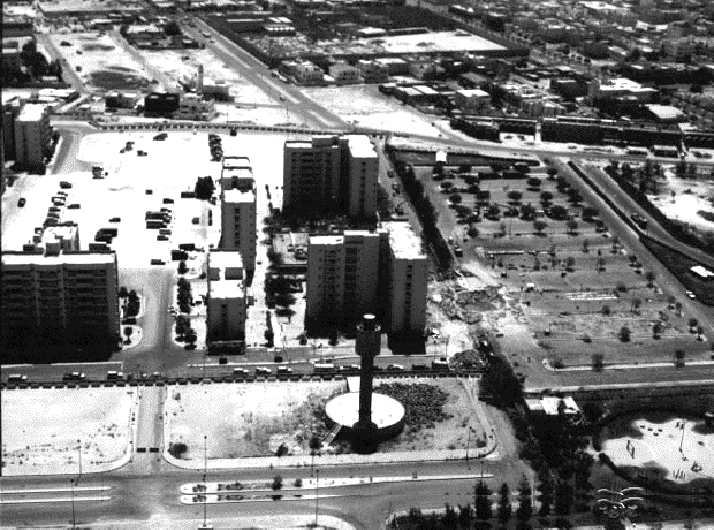
Figure 2. Photograph of Khobar Towers after the Bombing
The Fence.The fence surrounding the Khobar Towers housing complex had not changed substantially since U.S. forces first occupied the complex in 1990. The fence was not substantially repaired or upgraded until after the Office of the Program Manager, Saudi Arabian National Guard bombing on November 13, 1995. At that time, the perimeter fence was a chain link fence approximately seven to eight feet high, including three strands of barbed wire or one row of concertina along the top. It was surrounded with Jersey barriers. There were few lights, and no surveillance cameras, sensors, or alarms were in use.
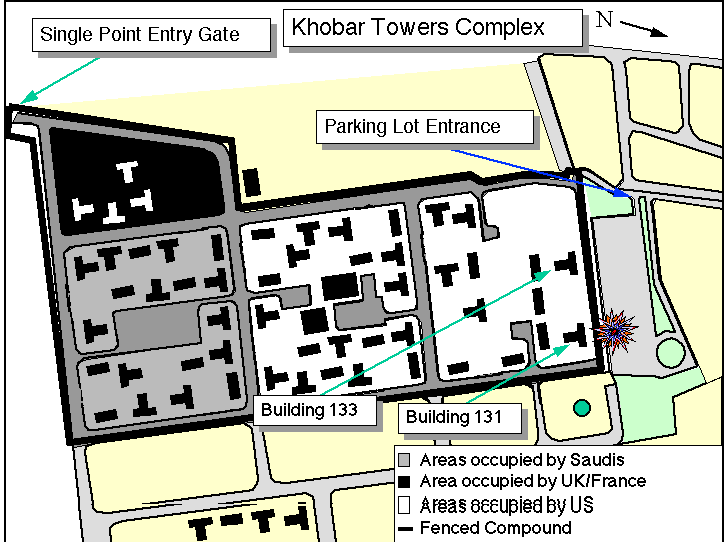
Diagram 1. Sketch of Khobar Towers
FINDING 20: The Commander, 4404th Wing (Provisional) did not adequately protect his forces from a terrorist attack.
Background. A vulnerability assessment of Khobar Towers was initiated on June 26, 1995, five months before the Office of the Program Manager, Saudi Arabian National Guard bombing. This assessment was completed on July 18, 1995 and received three months later by the 4404th Wing (Provisional) in September or October 1995. A review of end-of-tour reports written by previous commanders of the 4404th Security Police Squadron revealed little activity in force protection or physical security upgrades until after the November 1995 bombing.
Following the November 1995 bombing in Riyadh, the Air Force Office of Special Investigations began immediately updating the July 18, 1995 Vulnerability Assessment. The updated assessment was provided to the Commander, 4404th Wing (Provisional) in January 1996. This assessment made 39 recommendations. Some of the vulnerabilities noted in the January 8, 1996 report included:
Neither vulnerability assessment specifically addressed the north parking area outside of the fence as a vulnerability, other than noting the overgrown vegetation.
Also after the November 1995 bombing, the Commander-in-Chief, U.S. Central Command sent a message to his component commanders and the Commander, Joint Task Force-Southwest Asia emphasizing the importance of force protection. In it, he identified areas of concern, one of which was Khobar Towers. Then-Major General Carl Franklin, Commander, Joint Task Force-Southwest Asia, sent a memorandum to Brigadier General Schwalier indicating that he planned to assess the status of security in Saudi Arabia and throughout the Area of Responsibility, even though as a commander exercising tactical control, he technically did not have this authority. General Franklin asked of Brigadier General Schwalier that "...we work to identify potential weaknesses, shortfalls, and requirements." He also stated that intelligence reports indicated that Khobar Towers was an area requiring specific attention and increased emphasis.
In November 1995 after the bombing at the Office of the Program Manager, Saudi Arabian National Guard, Colonel Gary Boyle, the 4404th Support Group Commander, and the Saudi Royal Air Force liaison officer between the U.S. and Saudi military, toured the perimeter of Khobar Towers and inspected the condition of the fence. Colonel Boyle directed the liaison officer's attention to a number of deficiencies, including the state of repair of the fence. The barbed wire atop the approximately seven to eight foot high fence had been removed in some locations permitting easier access to the complex. The bottom of the fence had been cut away in several other locations. The lack of security on the north perimeter was specifically addressed. The liaison officer indicated that the deficiencies noted outside the fence were the responsibility of the Saudi civilian police. Colonel Boyle testified that he asked the liaison officer if the fence could be moved 10 to 15 feet to expand the perimeter near Building 131. As stated in Colonel Boyle's testimony, the liaison officer explained to Boyle that he did not have the authority to move the perimeter. However, the liaison officer stated that he would coordinate with Saudi civilian officials who could address the problem. The liaison officer informed the Task Force that he was never asked by U.S. officials to move the fence.
| The
defense of Khobar Towers is to stop and eliminate any threat (human bomber or
car bomber) from getting past 12th Street into the compound. This is the
assumption that all personnel perform their jobs, and everything falls into
place, with lots of luck. This plan is not designed to stop stand-off type
weapons, like RPG, mortar fire, or sniper fire. Our intent is to make the base
as hard a target as possible to force the enemy to go elsewhere. Lieutenant Colonel Traister, Chief, Security Police, 4404th Wing (Provisional) at Khobar Towers, from his end-of-tour report, dated June 21, 1996 |
When Lieutenant Colonel James Traister, the new Security Police Squadron commander, arrived at Dhahran in March 1996, he met with the Wing Commander, Brigadier General Schwalier, to discuss security concerns and priorities. During this initial meeting on March 20, 1996, General Schwalier asked Lieutenant Colonel Traister how he would prevent a car bomb from entering Khobar Towers and destroying the complex. Lieutenant Colonel Traister made that concern his primary focus as he surveyed the physical security of the facility. He improved security measures at the main gate and strengthened the perimeter fence to prevent vehicles from crashing through. Additional Jersey barriers were added inside the fence around the entire perimeter. Another checkpoint was placed at the entry control point, resulting in two separate check stations. The serpentine approach to the gate was lengthened, insuring that vehicles approaching the complex slowed sufficiently for the security force to react to a possible penetration. M-60 machine guns were positioned on either side of the entry road in reinforced bunkers at the second checkpoint to defeat a forced entry. Additionally, two large trucks were positioned and continuously manned on either side of the road just behind the check point to block the road or ram any vehicle attempting to run the gate.
In late March, Lieutenant Colonel Traister, the Office of Special Investigations Detachment Commander, Captain Washburn, the Security Police operations officer and second-in-command to Lieutenant Colonel Traister, and the 4404th Wing interpreter, met with an officer of the Royal Saudi Military Police. They toured the perimeter and discussed security enhancements. The officer agreed to move barriers that were directly against the outside of the fence to a distance of five feet from the fence and to place two rows of concertina wire along the bottom of the barriers and one along the top to delay or prevent people from crossing the barriers. Lieutenant Colonel Traister asked the officer if the vegetation along the fence could be trimmed to allow better observation of the perimeter. The officer replied that it could not be cut down, explaining that the vegetation served as a barrier to prevent local Saudis from viewing what Americans were doing inside the compound.
As these improvements were being made, intelligence reporting indicated an escalating threat of terrorist activity, including several suspicious incidents in the vicinity of Khobar Towers. During this period, Lieutenant Colonel Traister took several additional security measures.
Leaders and staffs at various levels met regularly to discuss force protection in committees formed for that purpose. A partial list includes:
| GROUP
Executive Force Protection Committee Riyadh Force Protection Committee Various 4404th Wing Security Council 4404th Wing Security Council, Phase II 4404th Wing Installation Readiness Council Threat Working Group Coalition Threat Working Group | HEADQUARTERS JTF-SWA 4404th Wing (Provisional) 4404th Wing (Provisional) 4404th Wing (Provisional) 4404th Wing (Provisional) 4404th Wing (Provisional) 4404th Wing (Provisional) |
As an ancillary matter, regular meetings were held concerning force protection which included Saudi military officials. These officials provided copies of contemporaneous letters written to discuss the matters covered at these meetings. They were not translated or retained by the 4404th Wing (Provisional). They were not otherwise filed or kept as a matter of record. This made it difficult, and in some instances impossible, to ascertain what happened and what concerns were raised at these meetings. The Task Force did obtain some notes kept by Saudi military officials and the U.S. contract interpreter. There was no mention in these notes of the expansion of the perimeter.
These groups "reviewed and coordinated" measures to counter terrorism. The Force Protection/Security Councils provided a forum to share ideas, but implementation remained a command responsibility. There was little or no physical command inspection or follow-up.
| Lessons
Learned: The things learned are there is a lack of follow-up on
projects, the leadership are [sic] unaware of problems until too late, little or
no Staff Assistant Visits or Assessment at Dhahran flightline. Minutes from March 26, 1996 4404th Wing Security Council meeting. Lt Col Traister, Recorder |
The Wing relied on Saudi officials to exercise their responsibilities outside the perimeter. In response to verbal requests from the Security Police, Saudi military officials wrote to civilian police officials on May 12, 1996, requesting increased Saudi police patrols in the north parking lot near Building 131. Subsequently, more frequent patrols were observed by U.S. forces.
At 9:49PM June 25, 1996, the night of the bomb attack, security police, while conducting a check on the observation post on top of Building 131, observed two individuals park a tanker truck against the vegetation growing on the north perimeter fence in front of the building. The guards on duty, observed the two individuals leave the truck, run, enter a car, and depart the parking lot at a high rate of speed. They immediately recognized the threat posed by the truck to Building 131, and began alerting building occupants by running down the hallways and knocking on doors. Although alerted by the sentries, the Security Police Command Center had not contacted the Wing Operations Center to activate the Giant Voice warning system by the time the bomb exploded at 9:55PM. Only the top three floors had been notified. At 9:56PM, all telephone communications were lost and were not restored until 10:35PM.
| CHRONOLOGY OF EVENTS LEADING UP TO THE JUNE 25, 1996 BOMBING | ||
| 1979 | Khobar Towers construction completed by Saudi Government | |
| 1990 | First use of Khobar Towers by U.S. forces. | |
| 1992 | In June, the 4404th Wing (Provisional) moves into Khobar Towers. | |
| 1995 | ||
| September or October | 4404th Wing (Provisional) receives July 1995 AFOSI Vulnerability Assessment. | |
| November | Colonel Boyle, 4404th Support Group Commander, and Saudi Royal Air Force liaison officer, tour Khobar Towers perimeter and inspect fence. | |
| November 13 | OPM/SANG bombing, Riyadh, Saudi Arabia. | |
| 1996 | ||
| Juanuary 8 | AFOSI completes Vulnerability Assessment of Khobar Towers | |
| March 20 | Lieutenant Colonel Traister, new Security Police Squadron commander, has initial meeting with Brigadier General Schwalier. Traister begins aggressive effort to protect against a vehicle entering the base with a bomb. | |
| March | Late March, Lieutenant Colonel Traister, the Office of Special Investigations Detachment Commander, and the Wing interpreter meet with Royal Saudi Military Police. Lieutenant Colonel Traister verbally requests fence be moved; told by the Saudi official that he cannot take action. | |
| April 3 | Request for four additional explosive detection dog teams sent to U.S. Central Command Air Forces. Teams arrive on 14 April. | |
| April 1-25 | Security Police report five incidents of possible surveillance of Khobar Towers. | |
| April 12 | The Office of Special Investigations Detachment Commander briefs Brigadier General Schwalier and key 4404th Wing staff on the current threat. | |
| May 12 | Saudi official sends a letter to the Chief of Police, Eastern Sector requesting increased police patrols in the Khobar Towers area. | |
| May 31 | Perpetrators of the OPM/SANG bombing on November 13, 1995 beheaded. | |
| June 25 | 9:49PM - Security police observe suspicious activity. They begin alerting building occupants in Building 131. 9:55PM - Bomb detonates. | |
ACTIONS AND OMISSIONS BY THE COMMANDER, 4404th WING (PROVISIONAL)
General.Brigadier General Schwalier had both command responsibility and command authority for force protection matters in the 4404th Wing (Provisional). Therefore, he could take appropriate measures to protect his force and had the responsibility to notify his superiors when he was unable to do so.
During his one-year tenure, two vulnerability assessments of Khobar Towers were conducted. Khobar Towers was identified to General Schwalier as one of the three highest priority soft targets in the region. Additionally, he was made aware of the terrorist threat in the area, a point underscored by the bombing at the Office of the Program Manager, Saudi Arabian National Guard in November 1995.
In his end-of-tour report, written on the morning before the bombing of Khobar Towers, Brigadier General Schwalier stated:
During my tour, the Wing focused on the following three areas:
1) Improving combat capability;
2) Improving relationships with host nations; and
3) Improving work, recreation, and living areas - as well as improving ourselves.
Force protection, despite the significant change in terrorist threat during his command tenure, was not mentioned.
During his tour of duty, Brigadier General Schwalier never raised to his superiors force protection matters that were beyond his capability to correct. Nor did he raise the issue of expanding the perimeter or security outside of the fence with his Saudi counterparts in the Eastern Province. (See Finding 21)
Intelligence. Intelligence is a fundamental responsibility of command. It is now evident that Brigadier General Schwalier was not well served by an ad hoc intelligence structure. He lacked direct access to a dedicated, organic, and focused intelligence analytic capability. The Air Force Office of Special Investigations "stovepipe" system, in effect, denied him direct access to the Office of Special Investigations Detachment Commander's prophetic April 4 message. This same system did not allow him to receive the TDY Special Agent's germane force protection recommendations one month before the bombing. (See Finding 18)
Nevertheless, the Commander was aware of a considerable body of information, including the series of ten suspicious incidents from April through June 1996. These incidents and information, taken together, indicated that terrorists had demonstrated the capability and intention to target U.S. interests in Saudi Arabia, and that Khobar Towers was a potential target. This is discussed in detail in Finding 18.
Focus of Force Protection. The vulnerability assessment completed in January 1996 addressed five possible terrorist scenarios developed by the Department of State. These scenarios included a suicide car bombing that could be "..quite large," a parked and abandoned car bomb, a man portable bomb device, a man-pack bomb or body charge, and a letter or package bomb. Recognizing that the host nation was responsible for external security, the 4404th Wing (Provisional) chose to concentrate the majority of its force protection efforts on preventing a penetration of the perimeter by a car, truck, or man-pack suicide bomb.
The Commander did not take actions that could have mitigated the effects of other forms of terrorist attack or secondary effects of a penetrating bomb.
Glass Fragmentation.
| Glass
Fragmentation at Khobar Towers ...windows throughout Khobar Towers are untreated and are not protected by any blast mitigation scheme. The blast from a car bomb or other device would shatter windows sending shrapnel into quarters and offices throughout the affected buildings. January 8, 1996 Vulnerability Assessment, Khobar Towers |
In the 4404th Wing (Provisional) budget, items such as Mylar, a shatter resistant window film coating, and surveillance systems for the fence line were deferred until budgets in later years, despite the fact that funds for requested items, even unfunded requirements, had never been denied by U.S. Air Forces Central Command or U.S. Air Combat Command. The decision to budget Mylar in later years was made despite Recommendation #36 in the January 1996 Vulnerability Assessment:
| RECOMMENDATION 36: Install 4 mil SRWF on all perimeter glass. According to US Embassy Sources SRWF has an approximate cost of $50.00 per square meter. If the cost of upgrading all perimeter windows is deemed too great, begin with the perimeter faces of buildings 133 and 131, then work roughly clockwise around KT through to building 117. (emphasis added) |
Also included in the January 1996 Vulnerability Assessment was a "Bullet Background Paper on Explosive Effects" prepared on November 19, 1995 by Captain McLane, Dhahran Explosive Ordnance Detachment. The assessment, also discussed at Finding 1, assumed a 200 pound car bomb and determined the effects of the resulting blast on buildings in Khobar Towers. The paper compared over pressures from a notional explosive device using 200 pounds of plastic explosive C4. It determined that such a bomb exploding at 165 feet (the actual distance on June 25, 1996 was 80 feet) would damage buildings and kill or injure exposed people. Captain McLane went on to recommend a 300 foot (92.5 meter) perimeter to mitigate the effects of a 200 pound blast. There is no evidence that any action was taken regarding this aspect of the assessment by the Commander.
| The
Effect of a 200 Pound Bomb at Khobar Towers Even if the bomb at Khobar Towers had been much smaller -- similar to that used at OPM/SANG on November 13, 1995 -- the casualties would have been significant. A Task Force explosives expert calculated that if a 200 pound bomb had exploded 80 feet from Building 131, severe window frame failure and spalling of reinforced concrete would have resulted. Injuries from glass fragments would have been extensive. Major structural damage would probably have caused the building to be condemned. The Task Force estimated between five and 11 deaths would have occurred from the 200 pound blast. The estimate assumes that people were in approximately the same position as they were on June 25th. Deaths would have resulted from the effects of the flying glass and not from blunt trauma. |
Stand-off Distance. Lieutenant Colonel Traister had coordinated with the commander of the local Saudi Military Police about expanding the north perimeter of the fence line in April 1996 and, according to U.S. sources, received the same response that Colonel Boyle had received from a Saudi official in November 1995. Brigadier General Schwalier did not appeal this decision to his counterpart or refer it to his superiors. In any event, the impetus to move the fence was prompted by the requirement for 10 to 15 feet of additional clear zone that would allow improved U.S. observation of the exterior. Neither Colonel Boyle nor Lieutenant Colonel Traister sought additional stand-off distance against a bomb attack.
Movement of Personnel to Less Vulnerable Buildings.The vulnerability assessments completed in July 1995 and January 1996 did not directly address the danger presented by the northern perimeter of Khobar Towers and did not recommend moving airmen from Buildings 131 or 133. The January 1996 Vulnerability Assessment indirectly mentioned movement of personnel to safer buildings. Recommendations #23 and #24 of that Assessment called for "...contingency planning for relocation of mission essential personnel to other facilities within the compound..." and "...alternative lodging of key personnel and distinguished visitors during increased threat conditions." Relocation of mission essential personnel to other buildings within the compound was considered by the Wing and rejected in order to maintain unit integrity within buildings. Alternative lodging of key personnel and distinguished visitors was briefed as being implemented; however, the Task Force could find no evidence supporting this assertion.
Despite the risk to airmen identified in Findings #23 and #24 of the January 1996 Assessment, the rooms facing the vulnerable exterior perimeter of Khobar Towers remained occupied. Colonel Boyle stated that it would have adversely affected the quality of life at Khobar Towers had the Wing been forced to put two or three persons into each room of the interior buildings. Brigadier General Schwalier testified that he never thought of evacuating these rooms.
Guard Force at Khobar Towers. The Security Police had no special training program on the threat they were facing, and terrorist response exercises were not conducted. Rather than specific Rules of Engagement, general law enforcement doctrine on the use of force was in effect. The Security Police were not drilled using theater-specific situational training exercises. Guards were on 12-hour shifts for six days or longer. Some worked on the same observation post for 12 hours at a time, exposed to 100 degree heat, with only meal and comfort breaks.
During interviews of security force personnel by the Task Force, most related that they had been briefed on the threat from a vehicle bomb, but could not recall being briefed on the magnitude and nature of other threats. Without exception, they knew the Threat Level and Threat Condition at Khobar Towers. There is evidence that the Security Police commander would brief his forces when information was received. Occasionally, an Office of Special Investigations agent would brief sentries at Guard Mount. However, some only remembered being briefed to be "Be careful and alert out there!" during briefings given at the beginning of their shift.
Although Security Police arrived trained and qualified on their weapons, they did not deploy with assigned weapons from their home base. This practice resulted in a situation where individuals were issued weapons that they had not maintained, zeroed, or fired. This situation was exacerbated by the lack of weapons training conducted in-country by the 4404th Security Police Squadron.
The Task Force observed weapons which were dirty and/or not well maintained at Khobar Towers and other locations in the region. In some instances, it was doubtful that these weapons would have functioned properly, if fired.
Manning. As was pointed out in Finding 3, the guard force was not manned to sustain the security measures inherent in high Threat Conditions. Prior to the Office of the Program Manager, Saudi Arabian National Guard bombing in Riyadh, the Security Police manning at Dhahran was set at 165 airmen. This number was based on validated requirements to provide security for both Khobar Towers and King Abd Al Aziz Air Base. These requirements were adequate for protection based on the past threat in Saudi Arabia and allowed the security force to work eight-hour shift schedules, similar to stateside bases. After the Riyadh bombing on November 13, 1995, the Security Police implemented additional measures to bolster security at Khobar Towers. As the threat continued to rise, they increased manning at static posts, doubled roving patrols in the complex, and added observation posts on the rooftops of several buildings, including Building 131. These additional posts required that security forces work extended shifts. The only request for additional manning of the Security Police came shortly after Lieutenant Colonel Traister arrived in March 1996, when he requested permission from Brigadier General Schwalier to obtain four more explosive detection dog teams. The request was submitted to the Security Police Office at Headquarters, U.S. Air Forces Central Command, Shaw Air Force Base, South Carolina on April 3, 1996, and the teams arrived on April 14, 1996. No other request for additional security forces was submitted.
In April 1996, as the threat escalated, the 4404thSupport Group commander, Colonel Boyle, discussed the possibility of raising the Wing Threat Condition (THREATCON) to CHARLIE. During this discussion, Lieutenant Colonel Traister stated that he did not have enough people to sustain the number of posts required for THREATCON CHARLIE and felt it would be difficult to justify a request for additional people. The decision not to go to THREATCON CHARLIE appeared to have been based on the availability of security forces and their ability to sustain operations for an extended period of time, rather than what was required by the threat.
Orientation and Training. The 4404th Security Police Squadron had no formal training program. Upon arriving at Dhahran, each airman was required to attend the "Right Start" briefing which informed them of local conditions and the generic threat. Then they were assigned to a shift, where area and specific post and duty requirements were learned on-the-job. Some personnel stated that they believed that they weren't allowed to conduct exercises because that would upset the Saudi population in the local area.
Antiterrorism measures adopted by the 4404th Wing (Provisional) focused on Khobar Towers and did not extend beyond the perimeter of the compound. Based on current threat information, there was a risk to personnel traveling outside of Khobar Towers and 4404th Wing airmen were vulnerable to attack from snipers, assassination, kidnapping, and indirect fire.
Overall, the orientation and training of personnel was inadequate for the environment in which they were operating.
The Threat from Third Country National Workers. Although warned of the threat posed by Third Country National workers to the operational security of Khobar Towers, the 4404th Wing commander continued to employ them extensively. When the Task Force visited Dhahran, it observed a large number of Third Country National workers throughout Khobar Towers. They were observed sweeping the halls adjacent to a briefing room at the Air Operations Center during an aircrew briefing.
Evacuation and Warning Procedures. The 4404th Wing (Provisional) and subordinate groups and squadrons did not practice evacuation procedures. There was an evacuation of two buildings for a suspected package bomb in May 1996 which served to replace a planned rehearsal of evacuation procedures. One planned exercise was apparently canceled because of Saudi sensitivities.
As was pointed out in Finding 1, there are no DoD standards for warning systems, and Saudi construction standards for Khobar Towers-type buildings did not require a fire alarm system. Consequently, U.S. forces moved into facilities that did not have a system that could have served for mass warning notification of an attack. Nor did the buildings have emergency lighting systems. The warning systems in the U.S.-occupied portion of Khobar Towers were limited to Giant Voice, a system designed during Operation DESERT STORM to alert people of Scud missile attacks, and manual warnings, like knocking on doors. On the night of the bomb attack, three Security Policemen attempted to conduct floor-by-floor manual notification. This process allowed them to alert only the top three floors of Building 131 before the bomb exploded. Figure 3 outlines the warning system procedures in place on June 25, 1996.
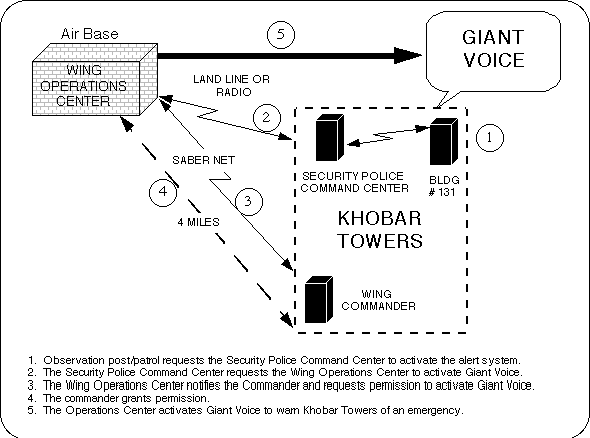
Figure 3. Giant Voice Warning System Activation Process
Although Giant Voice provided an audible siren and voice capability, the system had limited application. Personal observation by the Task Force revealed that in the voice mode, Giant Voice was barely audible from inside Khobar Towers buildings because of the noise from air conditioning units and could not be well understood outside of the buildings. Procedures to test the evacuation system and the emergency warning system at Khobar Towers were never exercised. The Giant Voice procedures were elaborate, unwieldy, and did not work.
The British contingent at Khobar Towers had installed a central fire alarm system and conducted monthly evacuation exercises at their facilities.
Summation. Brigadier General Schwalier was advised that a viable terrorist threat existed and was kept informed that his facility was a terrorist target. It was described as a "soft target," "critical target," and a "specific site of concern." Brigadier General Schwalier was informed of a number of vulnerabilities, but he concentrated almost exclusively on preventing a penetrating bomb attack. Knowing that some vulnerabilities were beyond his capability to correct, he failed to coordinate with his host nation counterpart to address these areas. He accepted the adequacy of host nation security measures in the area outside the fence. (See Finding 22) Additionally, he failed to raise any force protection issues to his superiors. Without notice and located 7,000 miles away, Brigadier General Schwalier's superiors were unable to assist him. Finally, he did not take those actions which would have mitigated the effects of clearly described vulnerabilities within his power to correct.
RECOMMENDATION: Refer to the Chain of Command for action, as appropriate.
ADEQUACY OF FUNDING AND RESOURCES FOR FORCE PROTECTION
FINDING 21:Funding for force protection requirements was not given a high priority by the 4404th Wing (Provisional).
Prior to the bomb attack on June 25, there were no significant budget requests from the 4404th Wing (Provisional) for force protection. This implies that the relatively minor force protection measures adopted during the 1996 fiscal year budget period were sufficient.
Analysis showed that every budget requirement of the 4404th Wing (Provisional) that was submitted through the normal budget process to the Wing's funding authority, U.S. Air Forces Central Command, was approved. Review of the budget requests for fiscal years 1994 through 1996 reflected few force protection requirements. However, not every force protection requirement was separately identified. Some measures to enhance force protection were integrated into requests for facility improvements submitted through Air Force civil engineering channels.
The 4404th Wing (Provisional) did not assign force protection a high funding priority. For example, the Wing submitted a fiscal year 1996 unfunded budget request (UFR) for $6.5 million to U.S. Air Forces Central Command on May 15, 1996. It identified only five items related to force protection: Bitburg barriers, video cameras for closed-circuit recording of incidents at the dormitories, computers to operate the badge system for entry of Third Country National workers onto Khobar Towers, land mobile radios for security forces, and door alarms which cumulatively totaled approximately $450,000. Of these items, a Priority #5 of 11 was the highest assigned to a force protection requirement in the unfunded requirements submissions for fiscal years 1995 and 1996. "Vision 2000," the first 4404th Wing (Provisional) long-range Facility Improvement Plan (Fiscal Years 1997-2003), provided a good example of planning for force protection. It included significant enhancements at Khobar Towers, such as Mylar shatter resistant windows film, perimeter fence improvements, surveillance equipment for the perimeter, and a vehicle entry control facility. However, none of these items was scheduled for implementation in the next year's budget, 1997. All were planned for execution beyond fiscal year 1997 and would have required deliberate consideration for submission in each year's budget.
A comparison of the command budgets for U.S. Army Forces Central Command-Saudi Arabia and the 4404th Wing (Provisional) reveals a significant difference in command emphasis. In the budget for U.S. Army Forces Central Command-Saudi Arabia, force protection measures were prioritized just behind mission readiness. In fact, preliminary budgets submitted by the staff were changed by the commander, Colonel James Ward, to reflect the force protection priority.
RECOMMENDATION: Separately identify force protection requirements in budget submissions and assign them appropriate funding priorities.
SAUDI RESPONSIBILITY FOR SECURITY
FINDING 22: (a) The division of responsibility for the protection of Khobar Towers was clearly understood by both U.S. and Saudi officials.
(b) Saudi security forces were unable to detect, deter, and prevent the truck bomb attack outside the perimeter fence at Khobar Towers.
As discussed in Finding 15, the division of responsibility for protection was clearly understood by both U.S. and Saudi officials. A Saudi military official who is Brigadier General Schwalier's counterpart, indicated that neither he nor any of his subordinates were made aware of the desire of U.S. forces to move the fence by any U.S. official. He stated that had he been requested to move the fence, he would have attempted to do so. Brigadier General Schwalier never requested additional force protection support from Saudi officials or complained of Saudi police or military performance of the security mission at Khobar Towers.
Any uneasiness U.S. personnel felt about the ability of Saudi officials to patrol the perimeter was never formally communicated to any Saudi official. Security Police and Office of Special Investigations officials made verbal requests to their Saudi counterparts. Independent monitoring of the area by the U.S. observation posts verified significant increases in both interior and exterior patrols during this time frame. There is no record of a written request to Saudi officials, by either U.S. or Saudi officials, regarding physical security.
Adequacy of Coordination on Antiterrorism Measures. As discussed in Finding 15, there were varying levels of coordination between the host nation and U.S. forces. At Khobar Towers, coordination consisted chiefly of an acknowledgment of the security responsibility between U.S. and Saudi forces. There was a Coalition Threat Working Group which discussed matters such as entry gate procedures. This forum had the potential to resolve some differences. However, this group's ability to discuss an integrated antiterrorism plan was limited. The Working Group did not address expansion of the perimeter. A myriad of other factors affected the adequacy of coordination, including the rotation policy which inhibited the development of meaningful relationships with host nation counterparts. No combined exercises with Saudi security forces were conducted.
Despite the coordination with local civilian police officials and the increased patrols of the north parking lot by the local civilian police, the terrorists exploited a vulnerability. The security of the north parking lot was clearly the responsibility of Saudi security forces.
RECOMMENDATIONS:
Establish and maintain regular working relationships between senior commanders and appropriate host nation officials.
Raise critical force protection issues to the chain of command, if unable to solve them at the local level.
POST-ATTACK MEDICAL CARE AT KHOBAR TOWERS
Finding 23: The medical care provided to the victims of the June 25 bombing at Khobar Towers was outstanding; however, mass casualty procedures could be improved.
From just minutes after the bomb exploded at 9:55PM until the conclusion of all immediate medical treatment at 5:00AM the following day, emergency medical care was exemplary. Basic first aid bandaging and splinting were immediately provided to the injured by their comrades. Victims were bandaged using available material, such as sheets and towels when normal supplies were depleted or unavailable, and transported on litters, doors, ironing boards, chairs, and by two-man carry. These actions were crucial in decreasing blood loss and preventing further injury. The injured were sorted by the severity of their wounds and cared for according to need. For a few of the more seriously injured, intravenous fluid resuscitation therapy was provided at the blast site or the triage area by Emergency Medical Technician-trained pararescue, fire, and Security Police troops. Definitive care began for the first to arrive at the medical clinic within 17 minutes of the blast, and some of the more seriously injured patients were in an ambulance, stabilized, and ready for transport just 37 minutes after the blast. Intensive resuscitative efforts were provided to two patients within the clinic, but were unsuccessful. Their autopsy reports show that these individuals had massive injuries and would not have been likely to survive regardless of the location of their care.
In total, 202 U.S. patients were assessed, treated and transported to local hospitals for further care in the first three hours after the blast. Approximately 300 more patients were treated on-site, primarily for lacerations. This included both suturing and bandaging performed at thirty different stations set up at the clinic and dining hall and through Self-Aid and Buddy Care.
Host nation support was extensive. An Arabian American Oil Company hospital physician, along with the Red Crescent Society, coordinated much of the local ambulance response, to include 20-30 ambulances making multiple hospital runs. Seven local hospital doctors and 17 nurses arrived approximately 2 1/2 hours after the blast, providing care and assisting in coordination of transportation. The care provided by the host nation hospitals was appropriate and compassionate. U.S. military medical teams, which included general surgeons and intensive care specialists who arrived on the second day, visited patients daily and found the level of care to be good. Further, they noted that the Saudis had grouped the U.S. patients together, protected them with security guards, and provided them with English language magazines and free phone calls home.
More reliable ambulance transport is needed. The 4404th Medical Group (Provisional) had only two ambulances available at the time of the blast. Regular phone communication was out, and cellular phone channels were saturated. Transportation would have been inadequate had the Saudis not responded. While the number of available vehicles was adequate, coordination of transportation was not possible initially. Even with Saudi radio communications support, coordination was not optimal.
The large number of casualties and insufficient administrative specialists made recording of identification and tracking data difficult. Airmen were not wearing identification tags requiring that individuals identify themselves or be identified by others. Further, the extent of injury with alteration of normal identifying features, and the high turn over of people contributed to the difficulty with peer identification. A lack of translator support caused problems in tracking patients when Saudi vehicle drivers could not communicate which hospitals were saturated and where they planned to transport specific patients. This was further complicated by the lack of back-up radio communication with the hospitals.
RECOMMENDATIONS:
Continue emphasis on first aid, bandaging and splinting, and cardiopulmonary resuscitation (CPR) training for all individuals. Initiate similar training for all services, where appropriate.
Continue emphasis on realistic mass casualty training and exercise scenarios, and increase Advanced Trauma Life Support training for medical providers.
Provide an increased number of ambulances in Saudi Arabia.
Make the wearing of identification tags mandatory in contingency operations.
Provide a patient on-line data base at all medical facilities to assist in identification and treatment of patients.
Include requirements for patient administration in contingency plans for mass casualties.
Establish contingency contracting for local translator support in a crisis.
FINDING 24: This finding and its recommendation are classified in their entirety.
PART IV. OTHER CONSIDERATIONS FOR IMPROVING SECURITY IN THE U.S. CENTRAL COMMAND AREA OF RESPONSIBILITY AND OTHER OVERSEAS LOCATIONS
Force protection is a key component of all mission analyses and must be continually reevaluated and updated as the operational mission progresses. It must include offensive and defensive measures -- countersurveillance to deny the terrorist intelligence, variance in unit activities to avoid establishment of patterns, and coordination with local police and military forces to conduct patrols, as well as respond to crises. Importantly, the United States has the opportunity to integrate technology into a systems approach to security that can significantly enhance the capabilities of U.S. forces, possibly with fewer people.
Successful physical security and force protection operations rely on the ability to detect and assess threats, to delay or deny the adversary access to his target, to respond appropriately to an attack, and to mitigate the effects of an attack. The first line of defense is detection and assessment of the threat. All efforts to combat terrorism must be developed and implemented against a specific threat to service members and facilities at a specific location. A general statement of threat capabilities, like the five State Department scenarios used in the January 1996 Vulnerability Assessment of Khobar Towers, will not suffice for planning purposes.
APPLICATION OF ADVANCED TECHNOLOGIES TO FORCE PROTECTION
FINDING 25: Technology was not widely used to detect, delay, mitigate, and respond to acts of terrorism.
Modern equipment for force protection and physical security was either not available or not widely used in the theater. U.S. Army Forces Central Command locations within the theater had minimal access to such equipment. U.S. Naval Forces Central Command used rudimentary technology for perimeter security. Headquarters, U.S. Central Command had only a limited ability to provide advice and training to deployed forces on force protection systems.
Lack of Information on Technologies. There is little information or specific guidance available to assist commanders in the theater in selecting technologies for application in specific locations and scenarios.
Throughout the Area of Responsibility, manpower intensive approaches to force protection were the norm. At Khobar Towers, Security Police worked 12-hour shifts in extremely hot weather over periods of weeks. Modern physical security and force protection technology systems can provide significant enhancements to security in vulnerable locations.
RECOMMENDATIONS:
Provide professional technical assistance and information on force protection from the Department of Defense to units in the field.
Designate a DoD element to rapidly acquire and quickly field integrated force protection technology to deployed forces.
The third recommendation of Finding 25 is classified.
Train military leaders on an integrated systems approach to physical security and force protection technology.
ALLIED FORCE PROTECTION EFFORTS
FINDING 26: U.S. allies have extensive experience and have accumulated significant lessons learned on force protection applicable to the U.S. Central Command Area of Responsibility.
General Downing and three members of the Task Force met with agencies and forces of France, Israel, Jordan and the United Kingdom charged with combatting terrorism.
Each of the visited countries discussed principles of force protection. A consolidated list follows:
Technology Development. Several of the nations are engaged in on-going research and development with the United States on antiterrorism physical security standards and techniques.
Integrated Systems Approach to Force Protection. The most impressive feature of the visits to Israel, Jordan, France and the United Kingdom was the fact that each country takes an integrated systems approach to combating terrorism. They offered the following insights:
RECOMMENDATIONS:
Develop and implement an integrated systems approach to force protection planning, using lessons learned from U.S. allies.
Strengthen cooperative efforts between the United States and allies on terrorism and force protection matters.
Develop a means of sharing information obtained during cooperative exchanges with other force protection professionals in the United States.