
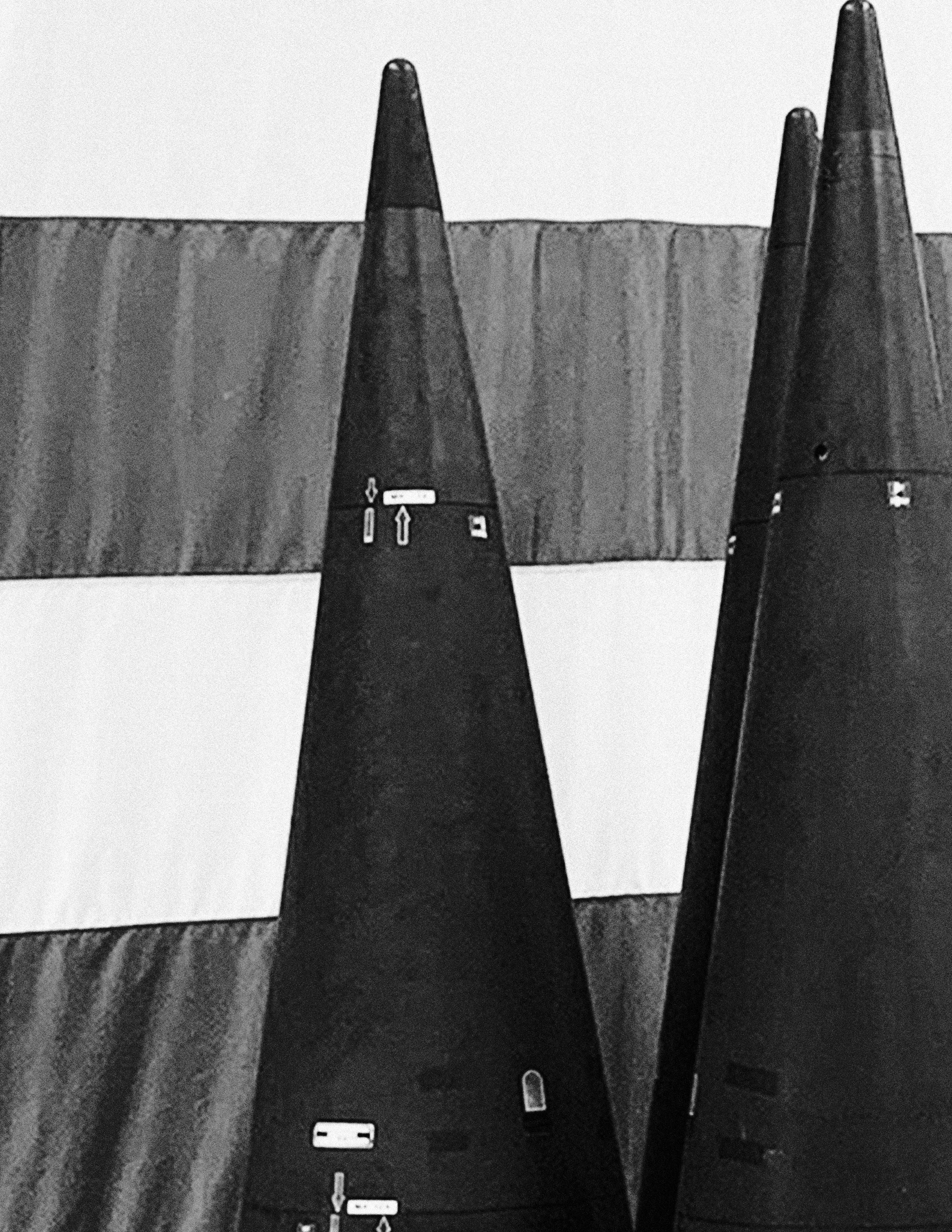

China has always held that common effort by all nations is necessary to realize disarmament and safeguard world peace. It has long stressed and supported international community's sustained efforts to promote arms control and disarmament. Since China was restored to its rightful seat in the United Nations in 1971, it has even more actively participated in international arms control and disarmament activities.
China conscientiously attends meetings of the United Nations General Assembly, the First Committee which considers issues on disarmament and international security and the Disarmament Commission of the United Nations. It sent highlevel delegations to the three UN special sessions on disarmament issues and to the UN Conference on the Relationship Between Disarmament and Development.
China stresses and supports the conclusion of arms control and disarmament agreements and treaties through negotiation. Beginning in 1980, it has formally joined in the work of the Geneva Conference on Disarmament and has actively promoted negotiations on a wide variety of disarmament issues and the conclusion of relevant conventions.
China appreciates and supports disarmament activities proposed by the
United Nations. In 1987, China, in cooperation with the United Nations,
hosted the Regional Symposium on World Disarmament Campaign in Beijing.
In response to United Nations' proposals, China carried out extensive publicity
on disarmament issues and implemented a series of nationwide
In international disarmament activities China has consistently given active support to reasonable disarmament proposals and initiatives by the Third World countries. In the early 1970s, China supported the proposal by Sri Lanka and other countries that the Indian Ocean be designated a Zone of Peace. In 1973, China signed the Additional Protocol II of the Treaty for the Prohibition of Nuclear Weapons in Latin America and the Caribbean (Treaty of Tlatelolco) and in 1987 the relevant protocols of the South Pacific Nuclear-Free Zone Treaty (Treaty of Rarotonga). China has always respected and supported the demands of the countries concerned for the establishment of nuclear-weapon-free zones on the basis of voluntary consultation and agreement and in accordance with actual local circumstances. Given this consistent position, China welcomes the African Nuclear-Weapon-Free Zone Treaty agreed upon by the African nations, and supports the proposal by relevant nations on the establishment of nuclear-free zones in the Korean Peninsula, South Asia, Southeast Asia and the Middle East. Correspondingly, China holds bilateral consultations with various nations on arms control and disarmament issues, either on regular or ad hoc basis.
China has acceded to a series of major international arms control and
disarmament treaties and conventions, including the Protocol for the Prohibition
of the Use in War of Asphyxiating, Poisonous or Other Gases, and of Bacteriological
Methods of Warfare, the Convention on Prohibition or Restriction on the
Use of Certain Conventional Weapons Which May Be Deemed to Be Excessively
Injurious or to Have Indiscriminate Effects, the Antarctic Treaty, the
Treaty on Principles
China is actively promoting the international arms control and disarmament process with both real actions on its own part and many realistic and reasonable proposals.
As early as 1963, the Chinese government issued a statement calling for the complete, thorough, utter and resolute prohibition and destruction of nuclear weapons. China has persistently exercised great restraint in the development of nuclear weapons and its nuclear arsenal has been very limited. It has developed nuclear weapons for self-defence, not as a threat to other countries. It has not joined and will not join in the nuclear arms race and has consistently maintained restraint over nuclear testing.
The Chinese government has from the beginning opposed nuclear blackmail
and the nuclear deterrent policy. On October 16, 1964, the Chinese government
offered a solemn proposal:
China advocates prevention of the proliferation of nuclear weapons as
part of the process of eliminating such weapons. In May 1995, at the Conference
on the Review and Extension of the Treaty on the Non-Proliferation of Nuclear
Weapons, China supported the decision to indefinitely extend the treaty
and the three decisions on the principles and objectives for nuclear non-proliferation
and disarmament, on enhancing the review process of the treaty and on the
Middle East Nuclear-Weapon-Free Zone. China holds that the results of the
conference
During the cold war, China resolutely opposed the arms race between the two superpowers, the United States and the Soviet Union, and stressed that the key to success in disarmament laid in the two superpowers taking real action on their own initiative. In 1978 at the First Special Session on Disarmament of the United Nations, China proposed that, as the two superpowers had more nuclear and conventional arms than any other country, they must take the lead in disarmament. In 1982 at the Second Special Session on Disarmament of the United Nations, China went a step further by putting forth a concrete proposal: The United States and the Soviet Union should stop testing, improving and producing nuclear weapons and should take the lead in drastically reducing their stockpiles of all types of nuclear weapons and means of delivery. China's proposal that the "two superpowers take the lead" met with uniform approval from the international community and has played an active role in promoting negotiations between the two nations, creating actual progress towards disarmament.
In an effort to step by step realize the objective of building a world
free from nuclear weapons, in 1994 China put forward a complete, interrelated
proposal for the nuclear disarmament process at the 49th Session of the
UN General Assembly. All nuclear-weapon states should declare unconditionally
that they will not be the first to use nuclear weapons and immediately
begin negotiations towards a treaty to this effect; efforts to establish
nuclear-weapon-free zones should be supported and guarantees given not
to use or threaten to use nuclear weapons
Nuclear disarmament and conventional disarmament have all along been the two priority tasks in the sphere of disarmament. In 1986, China presented two proposals on nuclear and conventional disarmament for the first time at the UN General Assembly, pointing out that the United States and the Soviet Union had special responsibilities both for nuclear and conventional disarmament. Subsequently, for five years China had presented these two proposals to the First Committee of the UN General Assembly, and they had been adopted by consensus. This action on China's part played an important role in generating real progress in nuclear and conventional disarmament in the late 1980s and early 1990s.
China opposes the arms race in outer space. Beginning in 1984, it has on numerous occasions proposed to the UN General Assembly draft resolutions on preventing such arms race. China maintains that outer space belongs to all mankind and should be used exclusively for peaceful purposes. No country should develop any kind of weapon to be used in outer space: outer space should be kept "weapon free."
In recent years, the issue of transparency in armaments has attracted
a great deal of attention in all countries. In 1991, China submitted a
working paper to the Disarmament Commission
China attaches great importance to regional disarmament. In 1991, China submitted a working paper on regional disarmament to the Disarmament Commission of the United Nations containing a complete set of principles and positions. Bilateral, regional and multilateral disarmament should be mutually promoting. The creation of favourable external conditions and environment is absolutely necessary in the promotion of regional disarmament; countries outside the region, particularly those with the largest arsenals, should actively cooperate with and give energetic support to regional disarmament efforts. In considering regional disarmament issues, interregional differences in security environment and level of armament should be acknowledged and respected; in terms of measures to be taken or process to be followed there is no model applicable for all regions. China's position as above was adopted in the main in the Disarmament Commission's final document.
China is located in the Asian-Pacific region, and understandably is
specially concerned with the security, stability, peace and development
in this region. In 1994, China presented three basic objectives for the
region's security: maintenance of stability and prosperity in China, safeguarding
long-term peace and stability in its surrounding environment, and initiating
dialogues and cooperation on the basis of mutual respect and
China has consistently stressed friendly, good-neighbourly relations
with adjacent countries and has actively promoted measures to establish
bilateral trust. In recent years, China has held multi-level consultations
with a number of neighbouring countries and has taken a series of practical
actions. China and the former Soviet Union signed an Agreement on Principles
Governing the Mutual Reduction of Military Forces and the Enhancement of
Confidence in the Military Field in the Border Areas. The leading figures
of China and Russia issued a joint statement "on no first use of nuclear
weapons against each other and on not targeting their respective strategic
nuclear weapons at each other." China and India concluded an